
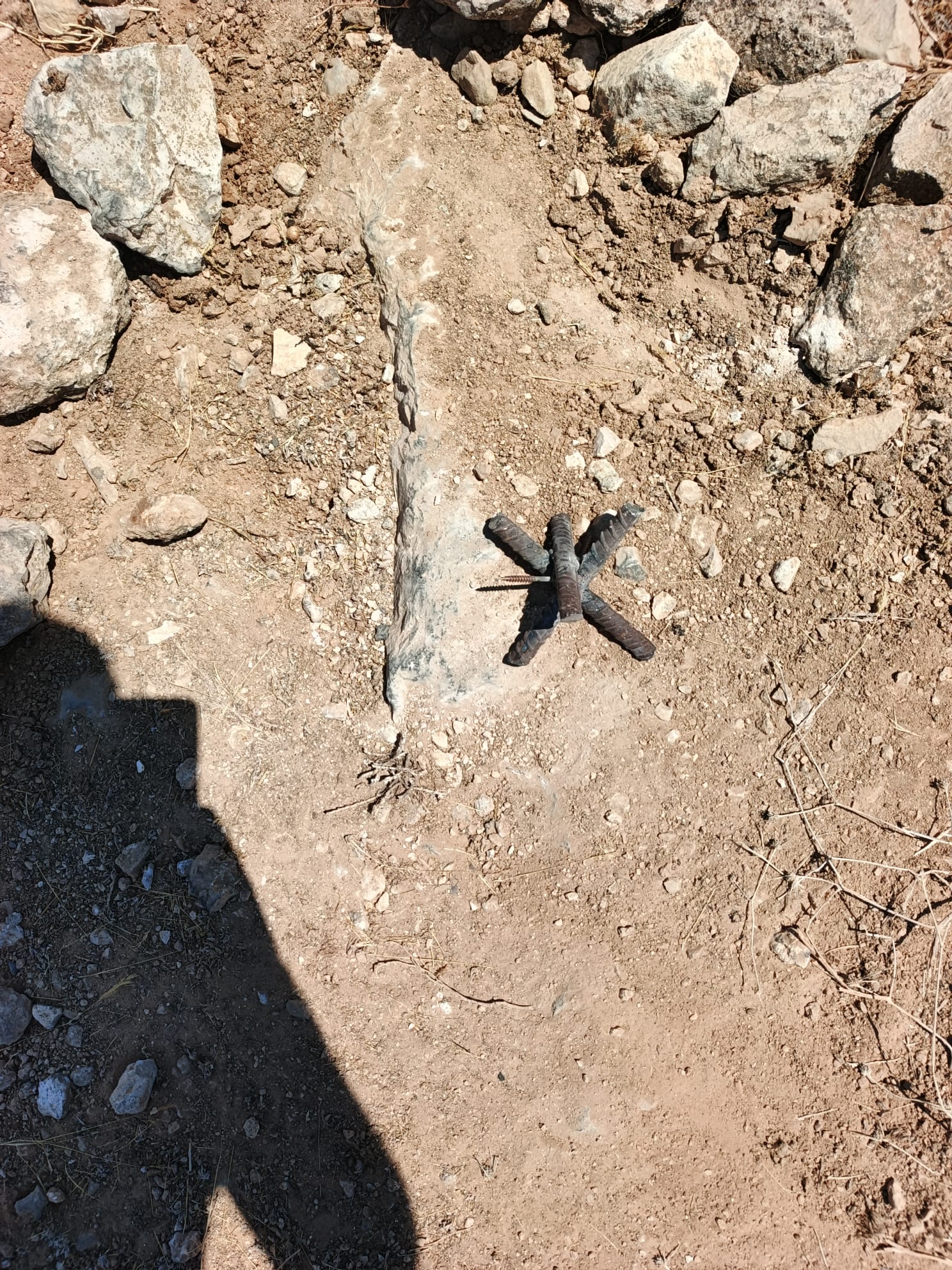
South Hebron Hills - Settlers placed an X-shaped iron with barbed wire that caused two tires to puncture
We take Route 60, the lengthy road that splits the country from the Northern West Bank all the way to the South Hebron Hills, now to be called “The Bible Road”.
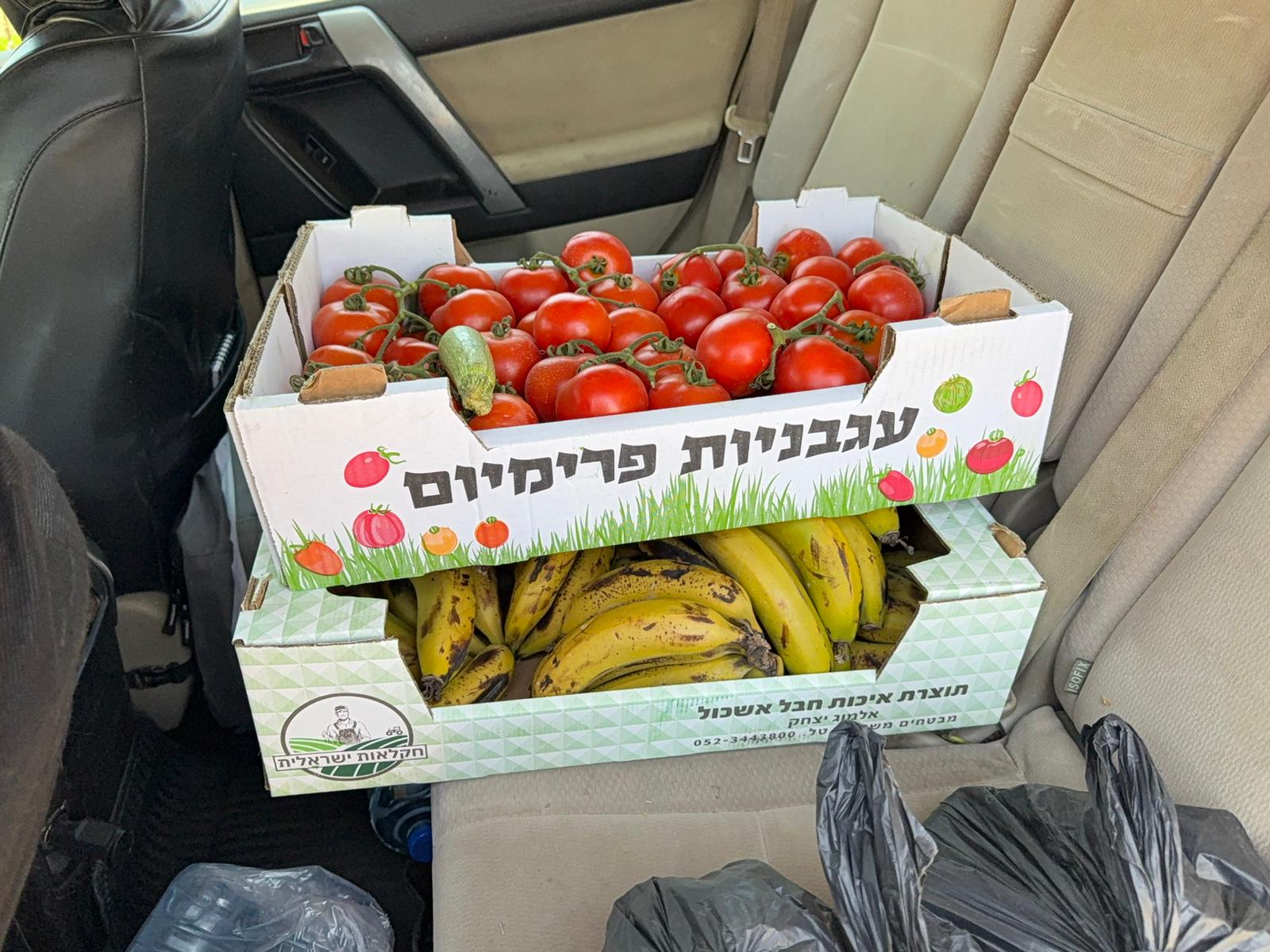
We take this road although Road 317 is much shorter, for several reasons – checking the situation of checkpoints at the entrance to towns and villages, handing over the donation of my friend N. to a Palestinian living near Idna, the purchasing food at Nabil’s grocery store at Zif Junction.
Checkpoints:
A bit before Samu’, a truck is stuck at the entrance to a dirt track, the keys must have been confiscated from the driver who was forced to leave it there.
Samu’ – open
Dhahariya – closed
Abda – closed
Dura – open
Fawwar – opened while we were there, at 10:30 a.m.
Qilqis – closed
Zif – open
N., to whom the donation is intended, tells us that a colonist outpost was erected about two weeks ago near Deir Sammet, at the Adora-Negohot region. The outpost is called Doran. He says there is not a single day without demolitions, and without soldiers showing their presence to prove who’s in charge.
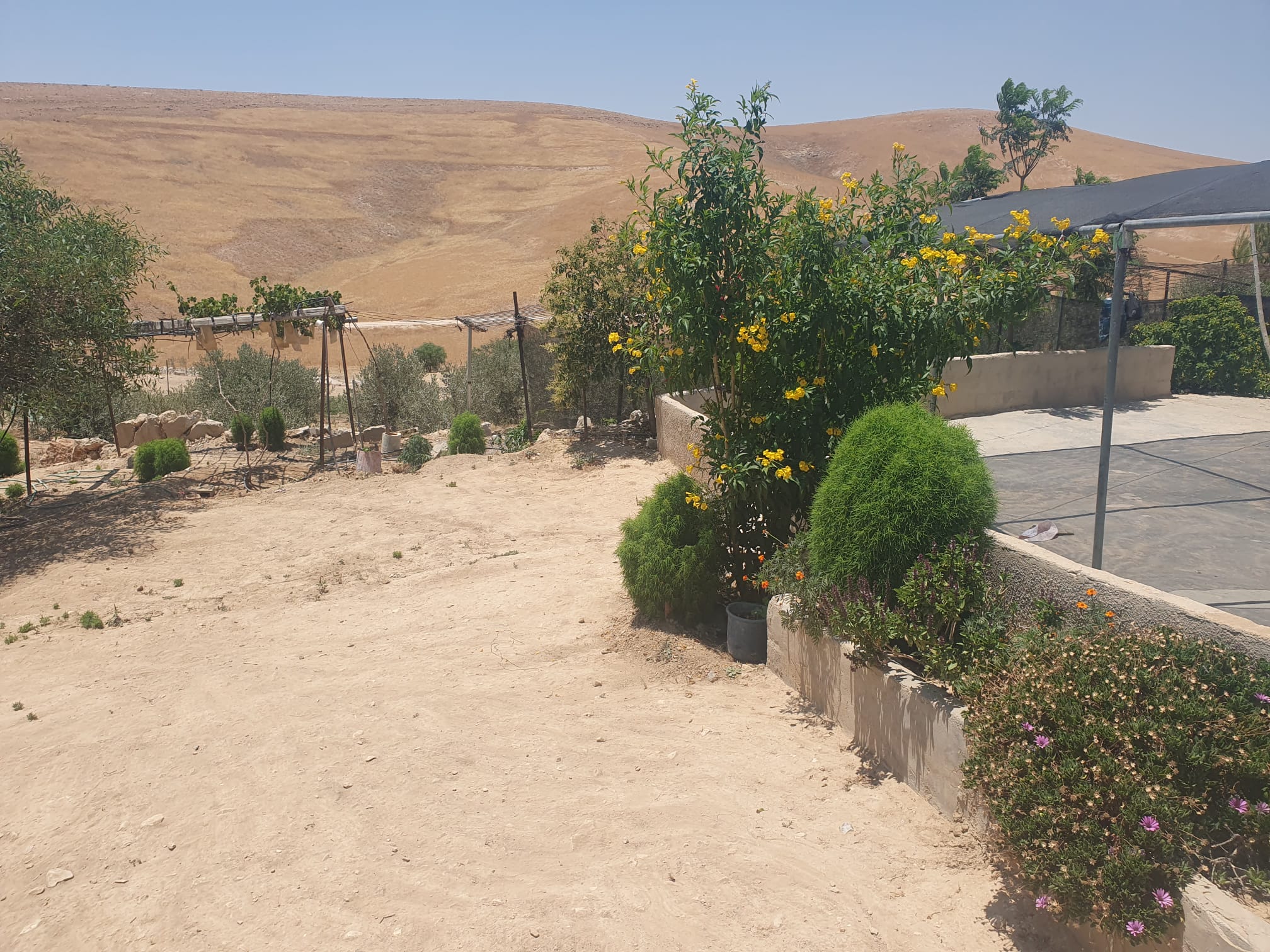
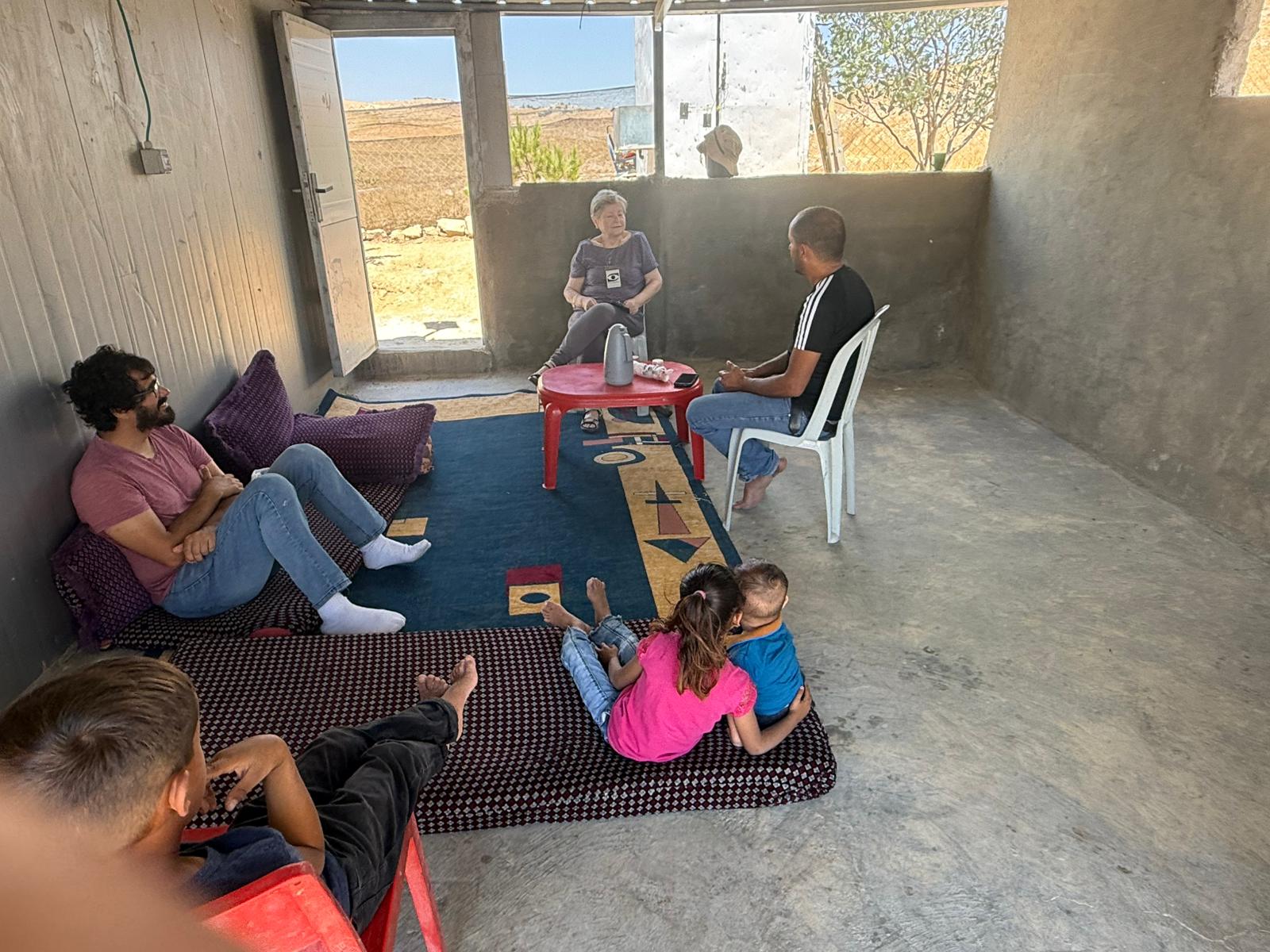
We came to Umm Qusa near Zawidin, to the family of Najeh and Nisrin. The children are home as summer vacation is here. In spite of living under occupation, they have blooming plants in flower pots, to feel at home. Najeh says that on Wednesday, June 24th, the army called his brother’s wife. She was told that her husband is wanted for a talk at the Etzyon DCO, and if he won’t come “we will break his bones”.
The next day Najeh and his brother went there, the brother was interrogated for 3 hours,
About being in Israel illegally two months ago. Then he was released.
This pattern of harassment on no grounds at all is familiar. The Palestinians are allowed to graze their camels and sheep only close to their homes, all over the occupied territories.
When they were on their way back from the interrogation, near Umm al-Khair, they felt that there were punctures in two tires. Apparently, colonists placed an X shaped iron with barbed wire that punctured them.
Colonist Yoav from Mitzpe Midrag continues to hang around the village and threaten the residents.
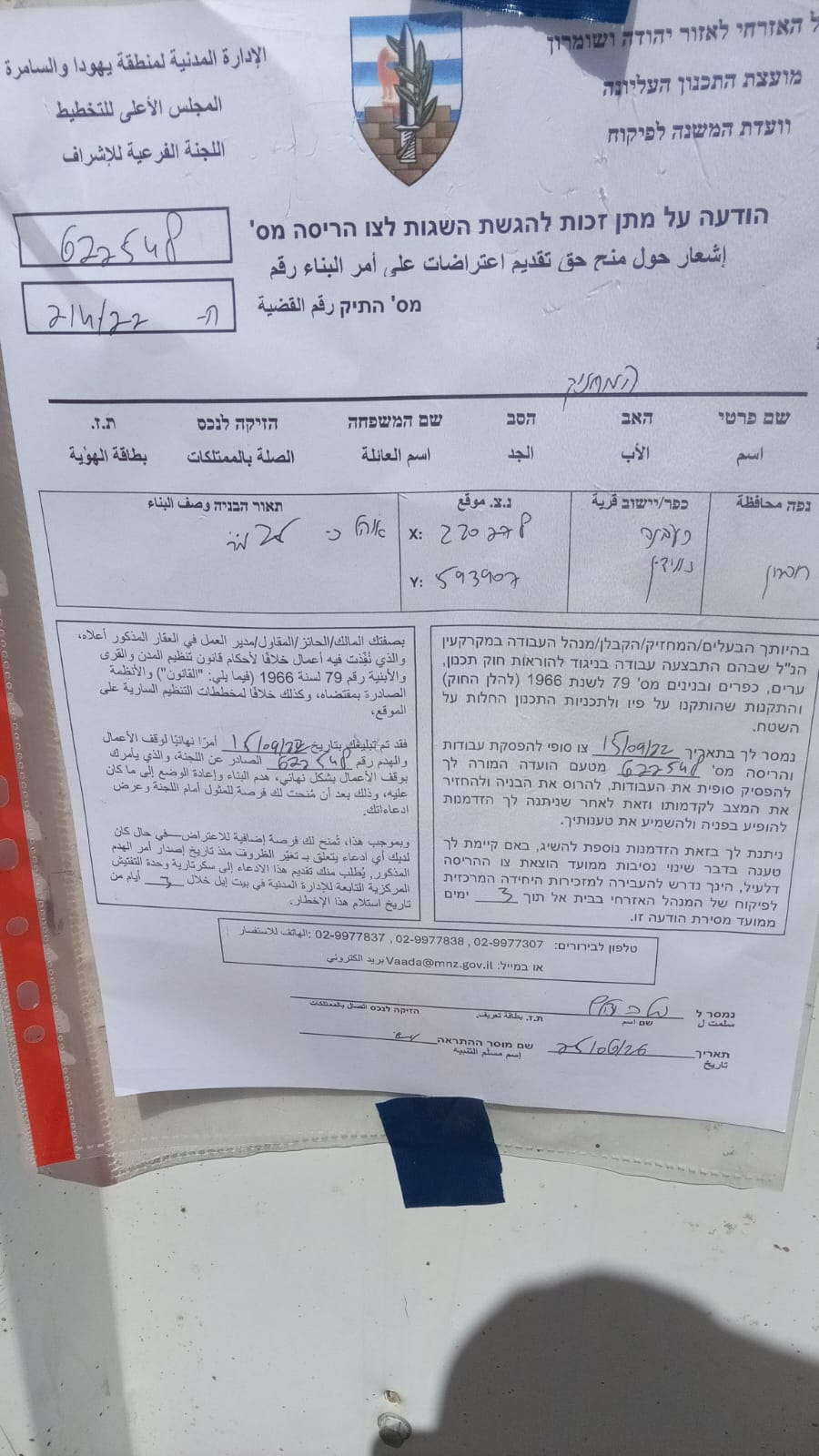
22 demolition orders were issued at Al-Hirwa which belongs to Umm Qusa. Everyone turned to attorneys for help and are paying them thousands of shekels.
We brought food, clothes and other donations. The children were happy to get Lego and other games.
Location Description
Dura Al-Fawwar Junction
See all reports for this place-
Junction on Route 60: west - the town of El Dura, east - the Al Fawwar refugee camp. There is a manned pillbox at the junction. From time to time the army sets up flying checkpoints at the entrance to El Fawwar and Al Dura. Al-Fawwar is a large refugee camp (7,000 inhabitants in 2007) established in 1949 to accommodate Palestinian refugees from Be'er Sheva and Beit Jubrin and environs. There are many incidents of stone-throwing. In the vicinity of the pillbox there are excellent agricultural areas, Farmers set up stalls adjacent to the plots close to the road. In recent months the civil administration has set up dirt embankments thereby blocking access to the stalls, and making it impossible for the farmers to sell their vegetables. Updated April 2021, Michal T.
-
South Hebron Hills
See all reports for this place-
South Hebron Hills
South Hebron Hills is a large area in the West Bank's southern part.
Yatta is a major city in this area: right in the border zone between the fertile region of Hebron and its surroundings and the desert of the Hebron Hills. Yatta has about 64,000 inhabitants.
The surrounding villages are called Masafer Yatta (Yatta's daughter villages). Their inhabitants subsist on livestock and agriculture. Agriculture is possible only in small plots, especially near streams. Most of the area consists of rocky terraces.Since the beginning of the 1980s, many settlements have been established on the agricultural land cultivated by the Palestinians in the South Hebron Hills region: Carmel, Maon, Susia, Masadot Yehuda, Othniel, and more. Since the settlements were established and Palestinians cultivation areas have been reduced; the residents of the South Hebron Hills have been suffering from harassment by the settlers. Attempts to evict and demolish houses have continued, along with withholding water and electricity. The military and police usually refrain from intervening in violent incidents between settlers and Palestinians do not enforce the law when it comes to the investigation of extensive violent Jewish settlers. The harassment in the South Hebron Hills includes attacking and attempting to burn residential tents, harassing dogs, harming herds, and preventing access to pastures.
There are several checkpoints in the South Hebron Hills, on Routes 317 and 60. In most of them, no military presence is apparent, but rather an array of pillboxes monitor the villages. Roadblocks are frequently set up according to the settlers and the army's needs. These are located at the Zif Junction, the Dura-al Fawwar crossing, and the Sheep Junction at the southern entrance to Hebron.
Updated April 2022
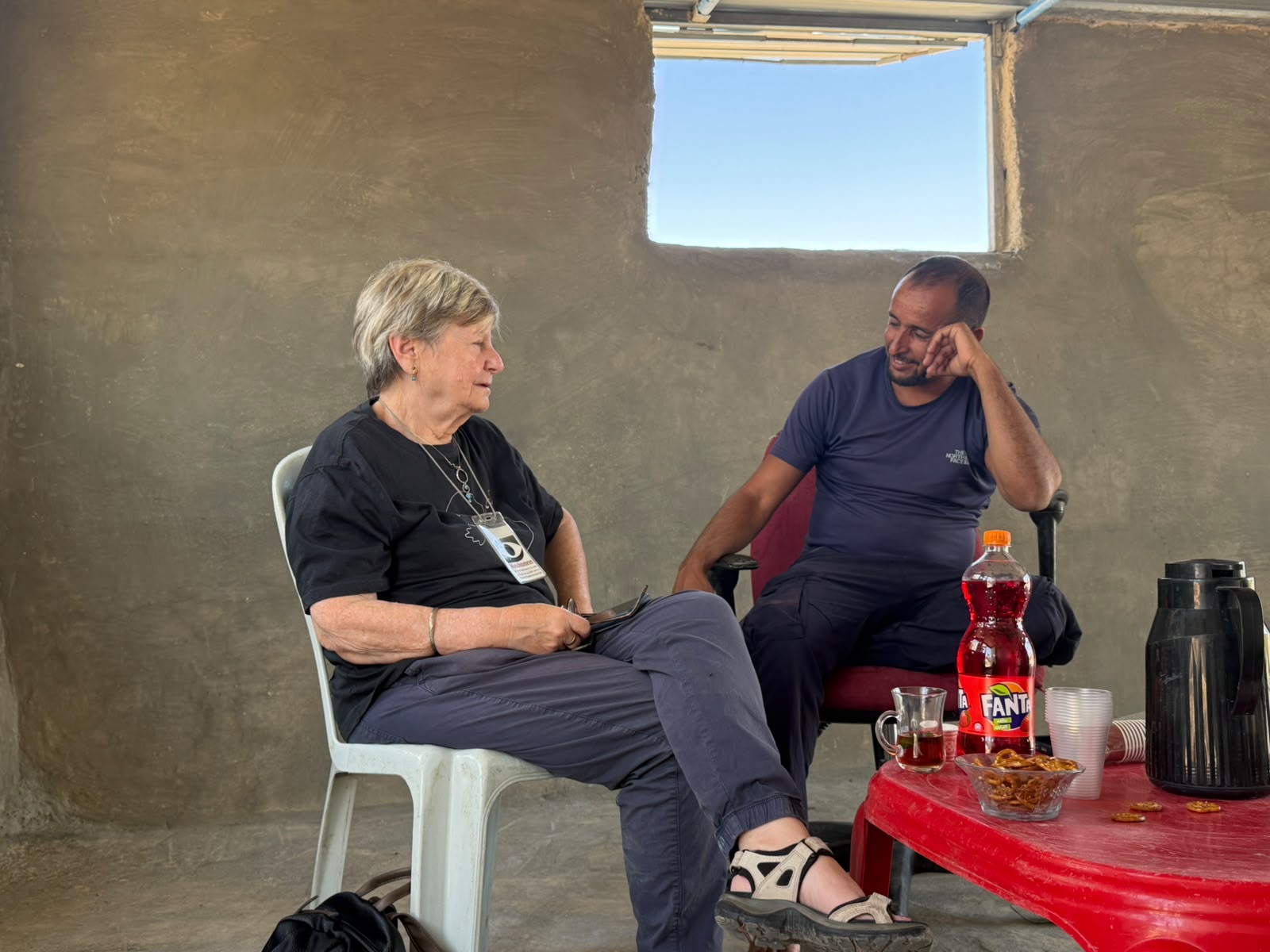 Muhammad D.Oct-10-2026Smadar with Najeh in Umm Qusa
-
Umm al-Khair
See all reports for this place-
Umm al-Kheir
A Palestinian village in the southern Hebron governorate, populated by five families. The Palestinian residents settled there decades ago, after Israel expelled them from the Arad desert and purchased the land from the residents of the Palestinian village of Yatta. The village suffers from the violence of nearby Carmel settlers, from water shortage and is subject to frequent demolition of buildings by the Civil Administration.
-
Zif Junction
See all reports for this place-
Zif Junction located on the crossroads that directs towards Road 356 to Yata. Yata is the district city of the southern Hebron Mountains. Usually, this junction is open to traffic. The nearby pillbox is unmanned. But the army and police are present occasionally, sometimes setting up a checkpoint and sometimes detaining residents from the big city. Often, the Israeli policemen inspect vehicles and distribute driving reports to Palestinian vehicles. s
-
