
The assignment: Protective Presence in the northern Palestinian Jordan Valley
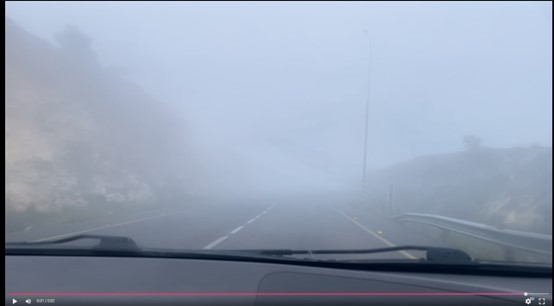
The morning began in a cloud covering the West Bank, along Road 5. As we descend to the Valley, we see a sign of the sky.
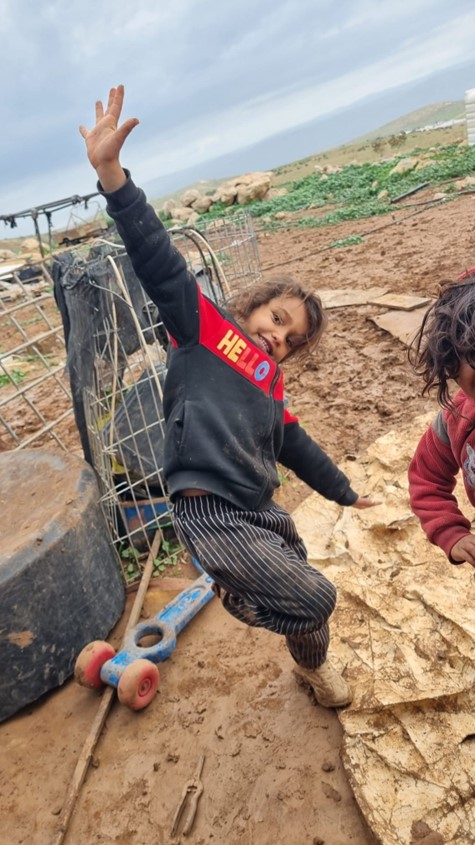
We are on our way to Hamam al Maleh, in a loaded car. At Hamra we meet Mahmoud of the strawberries on the road. A friend. We go on. Look for a place to buy food. The Beqa’ot colony has not yet opened the grocery store. At Atouf the mud does not enable us to get off the road. We continue to Mita. This is where we shall meet families we met a week ago. We will be taking down a bicycle for the tiny ones and new socks for the Ramadan. Mud rules. As in the entire Middle East. We heard explanations about red and brown mud. We should not try to get into red mud, but were already in it. With the car. And it got stuck. We shall not tarry, just say we got it out with joined forces.
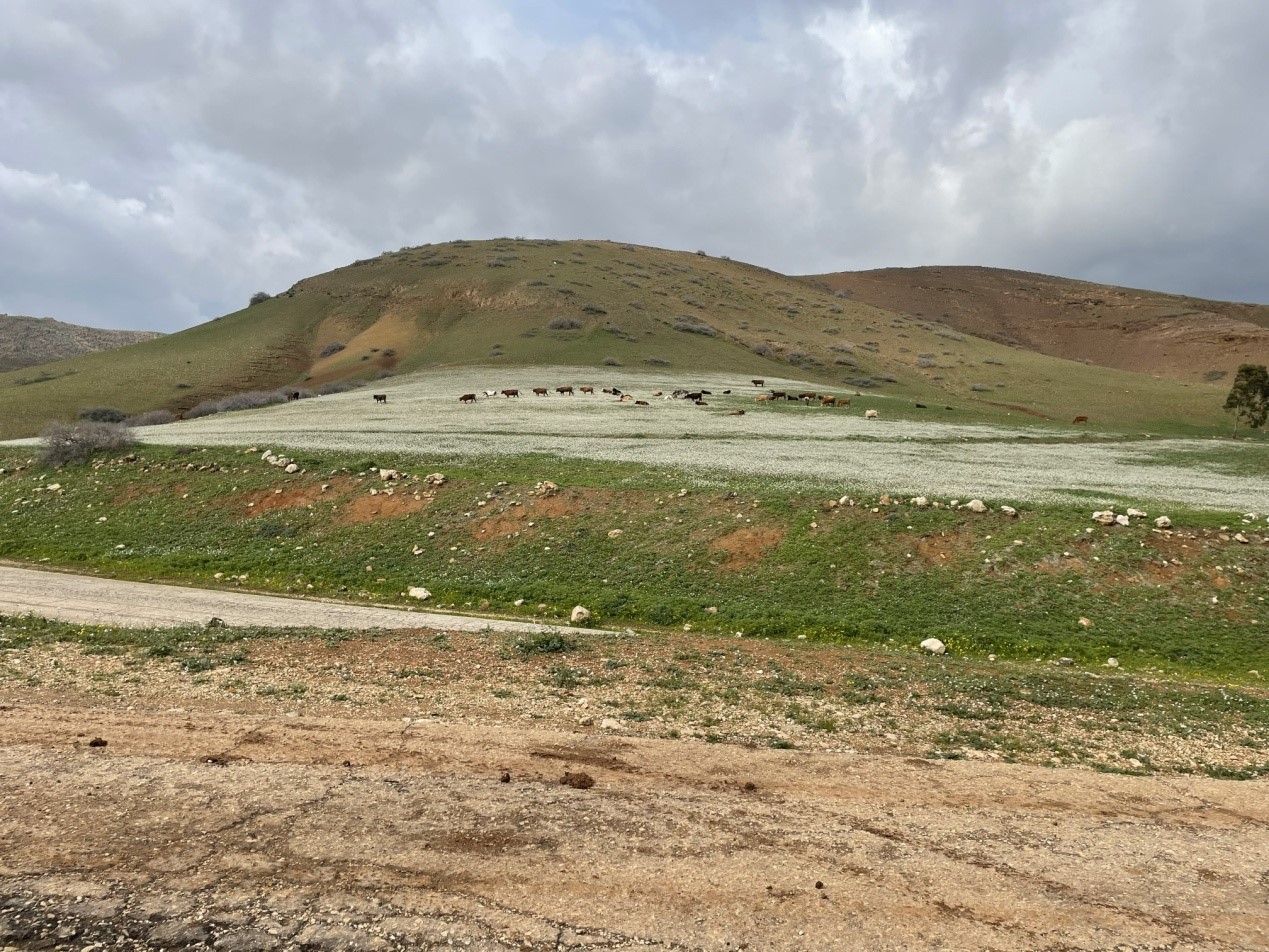
Later in the day we came back to Meyteh where colonists put up fences for their cattle last week and built themselves residences, and the cattle keep moving all around the area outside the fence and across the road. One of them, whom we shall call “the colonist and the ATV” makes the rounds all day and night, scaring the locals. The cows have no evil intentions but they finish up the grass growing for the local sheep.
The Palestinian residents need guarding for they have no voice. I mean they do, but they better not make it heard. Two international volunteers spent the night there, guarding them at night, and we replaced them in the morning. We passed from Hamam to Mita, to witness the cattle that came there too.
All our shifts in this area consist of running after ATVs and cattle, and listening to harrowing stories about soldiers raiding their residences at night. Destroying what exists. About unbearable evil, absolutely opaque. Helpless. And about questions that remain unanswered.
This morning, I woke up and the words I heard were Dunams one after the other / Thus we’ll build from north to south… (old Zionist song popular in the past), realizing again that we had not understood what our parents had done.
We had a surprising meeting today, at Hamam al Maleh. A car with Israeli license plates came, parked near us, and three religious guys existed from it (they wore small skullcaps).
We sat outside with the family around a campfire and had unceasing warm tea. After finding out that these were no colonists and did not mean any harm, they were invited for coffee. They said they teach in a lightly religious school in Jerusalem, are preparing a school outing, and remembered on their way that the Hamam has a warm water spring. They actually planned to bathe in it. Mohammad who was with us explained that the warm water ran out 15 years ago. He did not say how this happened, but Daphne always explained that the Jews knew how to dig deeper and make Palestinian water go down their own wells. Thus, the warm water spring is now dry.
They said they were rightists (Bennet followers), and (like us) they abhor flagrant Jewish violence. But do nothing against it. Teachers. That’s it. Cute. Good Zionists. “Although this land is ours, I realize there are others here, too”.
After getting home, there were cries for help on Whatsapp against the colonist with the ATV. He was entering the residence at the Hamam and harassing people there.
In another encampment a colonist said to its residents that “if you do not clear out, we’ll kill you”. Just like that.
Location Description
Susiya
See all reports for this place-
Susiya The Palestinian area lies between the settlement of Susya and a military base. The residents began to settle in areas outside the villages in the 1830s and lived in caves, tents and sukkot. To this day they maintain a traditional lifestyle and their livelihood is based on agriculture and herding. Until the 1948 war, the farmers cultivated areas that extended to the Arad area. As a result of the war, a significant portion of their land left on the Israeli side was lost. After the 1967 war and the Israeli occupation, military camps were established in the area, fire zones and nature reserves were declared, and the land area was further reduced. The Jewish settlement in Susya began in 1979. Since then, there has been a stubborn struggle to remove the remains of Palestinian residents who refuse to leave their place of birth and move to nearby town Yatta. With the development of a tourist site in Khirbet Susya in the late 1980s (an ancient synagogue), dozens of families living in caves in its vicinity were deported. In the second half of the 1990s, a new form of settlement developed in the area - shepherds' farms of individual settlers. This phenomenon increased the tension between the settlers and the original, Palestinian residents, and led to repeated harassment of the residents of the farms towards the Palestinians. At the same time, demolition of buildings and crop destruction by security forces continued, as well as water and electricity prevention. In the Palestinian Susya, as in a large part of the villages of the southern Hebron Mountains, there is no running water, but the water pipe that supplies water to the Susya Jewish settlement passes through it. Palestinians have to buy expensive water that comes in tankers. Solar electricity is provided by a collector system, installed with donation funds. But the frequent demolitions in the villages do not spare water cisterns or the solar panels and power poles designed to transfer solar electricity between the villages. Updated April 2021, Anat T.
-
