
Khirbet al-Kharaba - A few days ago, settlers in uniforms invaded and threw stun grenades
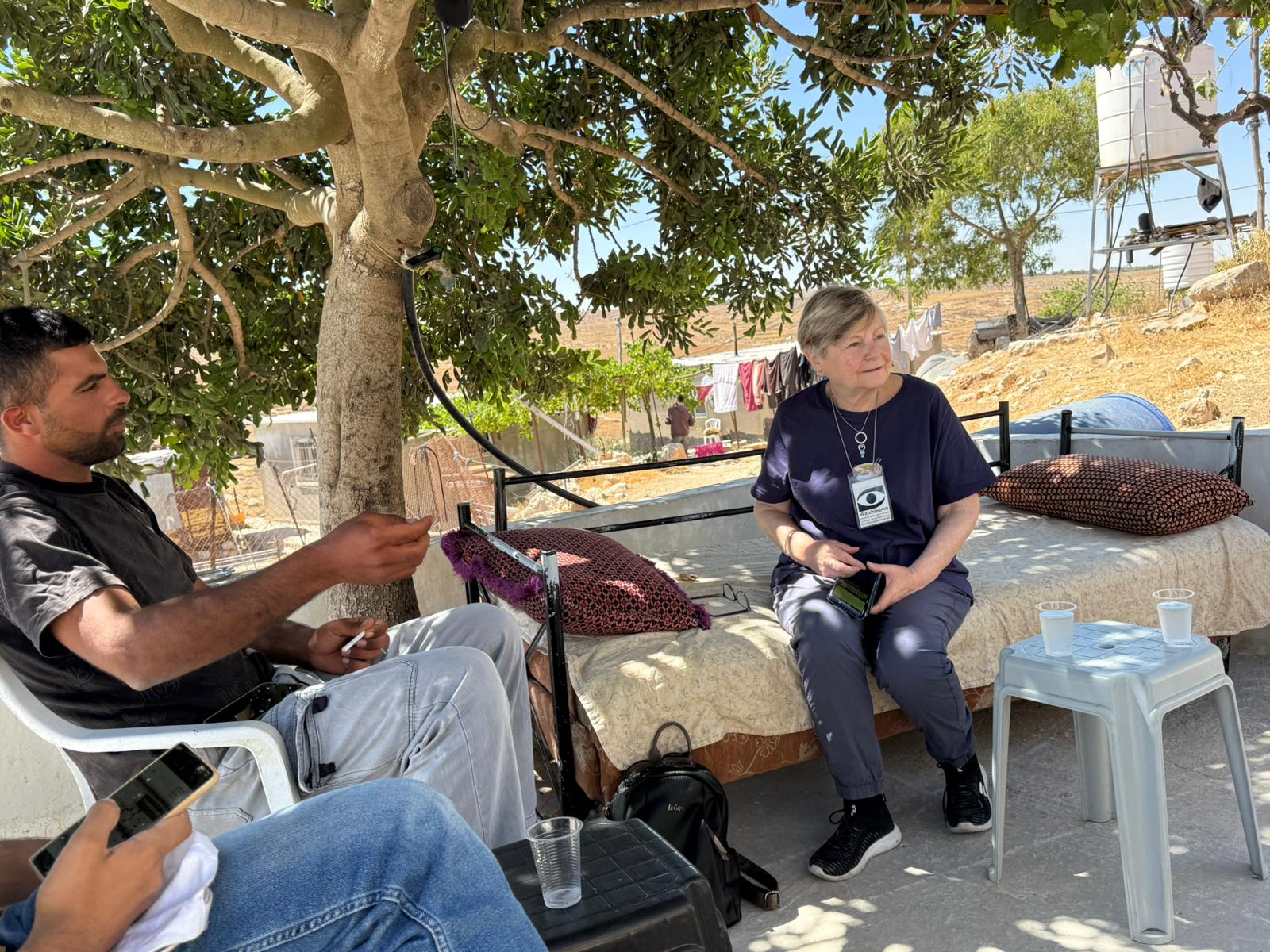
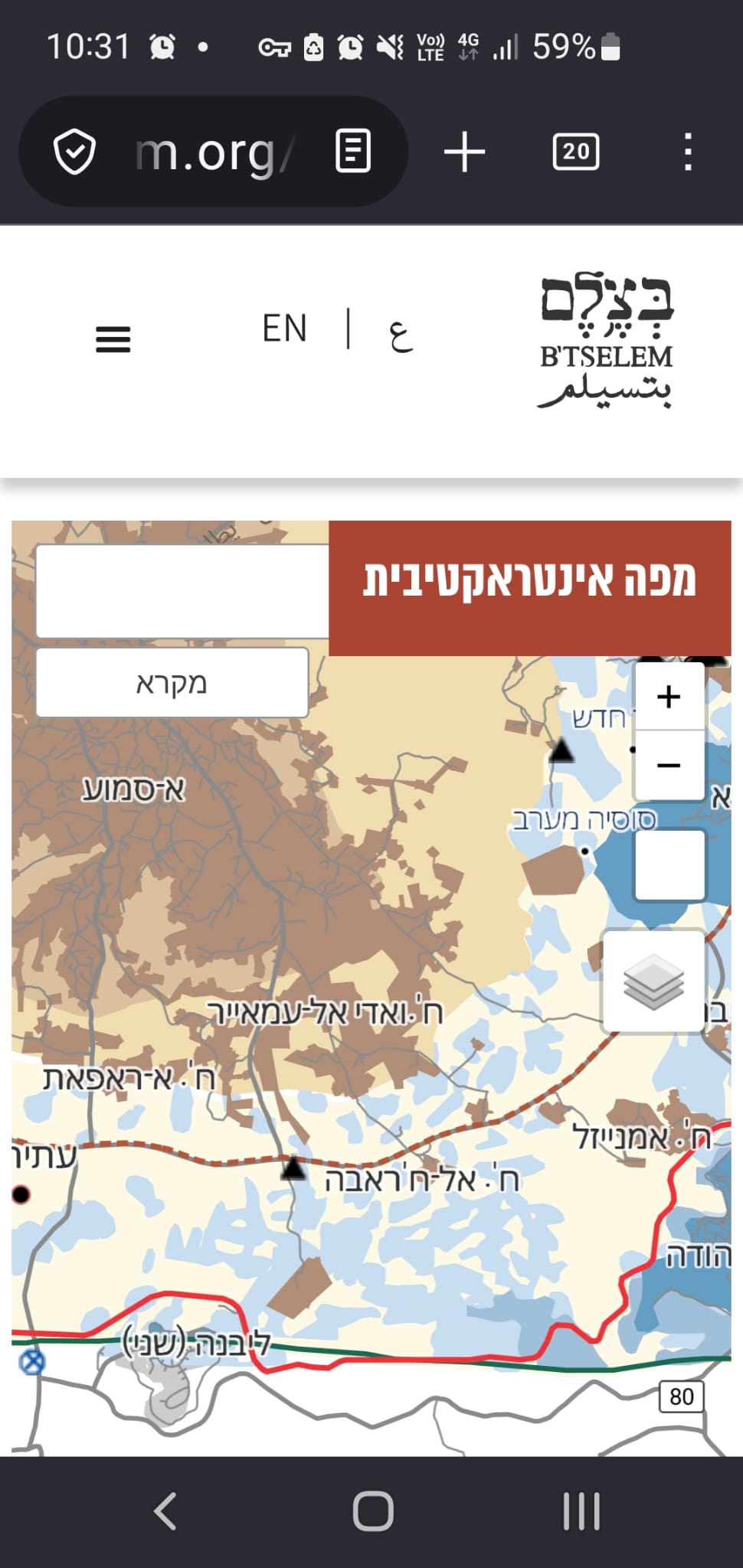
We arrive at Khirbet al Kharaba. About 2 kilometers west of Emneizal village. We are greeted by K. Daramin, whose father Ali joins us with K.’s 6 brothers who are already 3rd generation natives. Originally the family came from a village near Hura in the Negev, expelled from there in 1948. In 2021, K. and his brother M. were arrested for a month and a half at Ofer Camp although they had work permits. They were accused of forging their documents.
Near their home a colonist outpost was set up by Mordechai Zecharia with other colonists, mainly youth.
Colonist invasions like yesterday’s now happen several times a day. Mordechai’s sheep are regularly drinking from the family’s well. The water is brought either from Samu’ or from Emneizal in a water tanker at a high price. The family has 100 sheep.7 months ago there were 200 but half were sold to buy food.
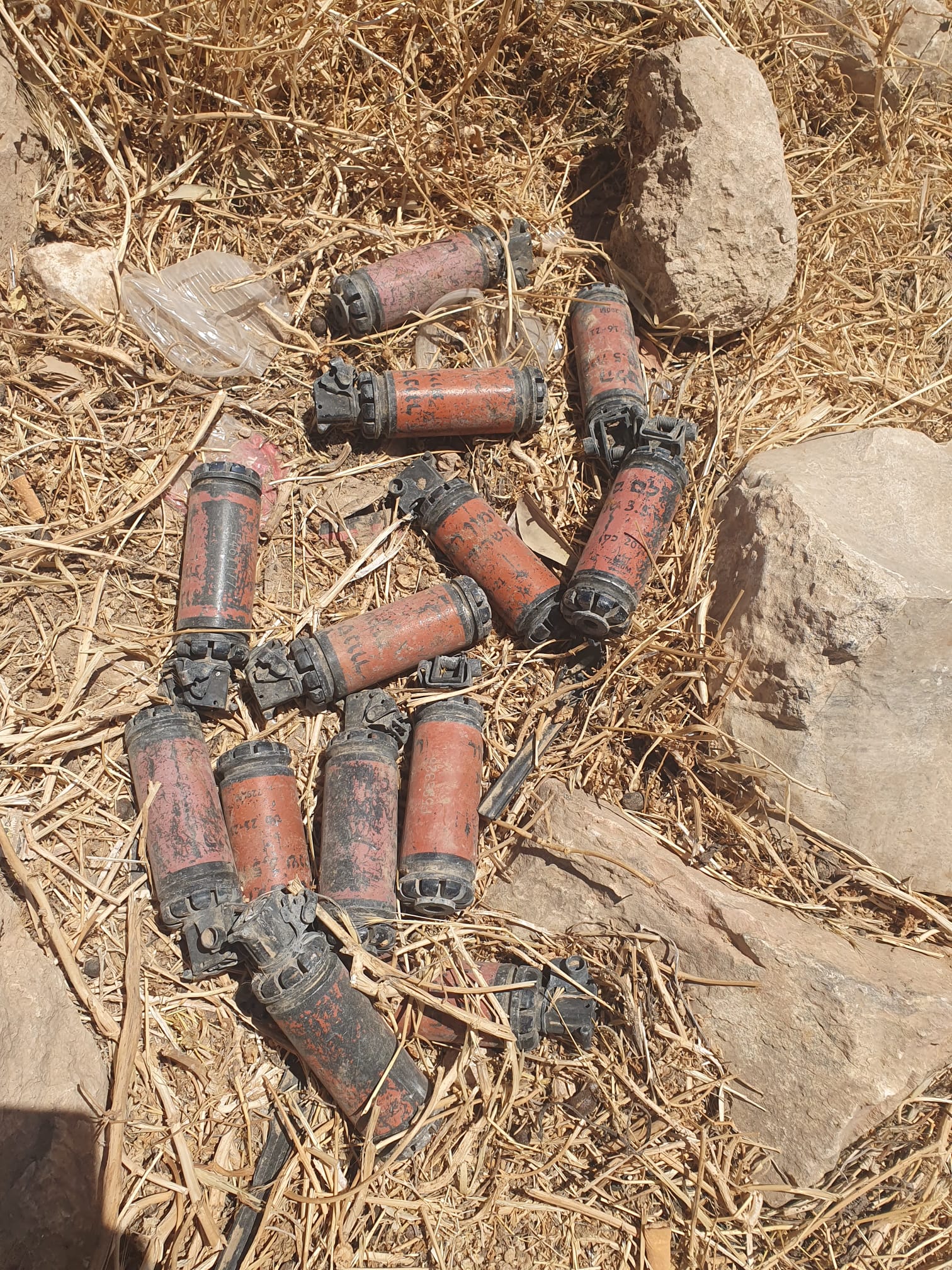
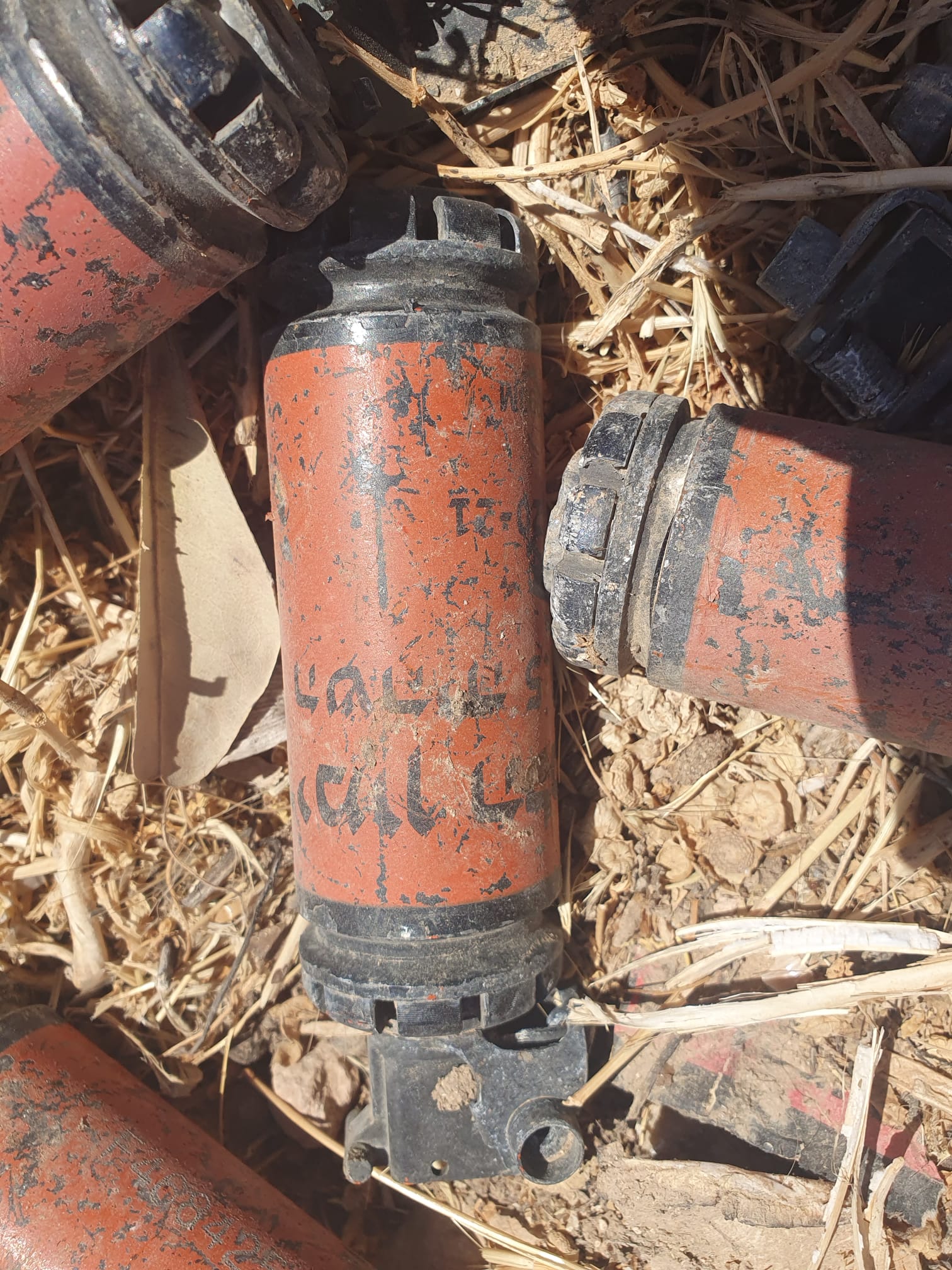
Close to the house we see the stun grenades that were thrown here a few days ago at 1 and 6 a.m.by 3 colonists wearing army garb.
The family summoned police and the army. As usual the policemen told them to call the army. It came and did nothing. The father, A., was taken into custody 3 times. The first was in February when he was arrested for 20 days as Mordecai demanded. All he did was to prevent the colonists from stealing the sheep. He was arrested another 2 times, always being beaten and wounded.
About a month ago, K. and 4 of his brothers arrived at their farmland (near Emneizal). Betzalel Talya, Mordechai Zecharia and other colonists chased the brothers away, and wouldn’t let K. move for 2 hours. They took away the barley and wheat seeds, and 200 dunams will not be sown this year.
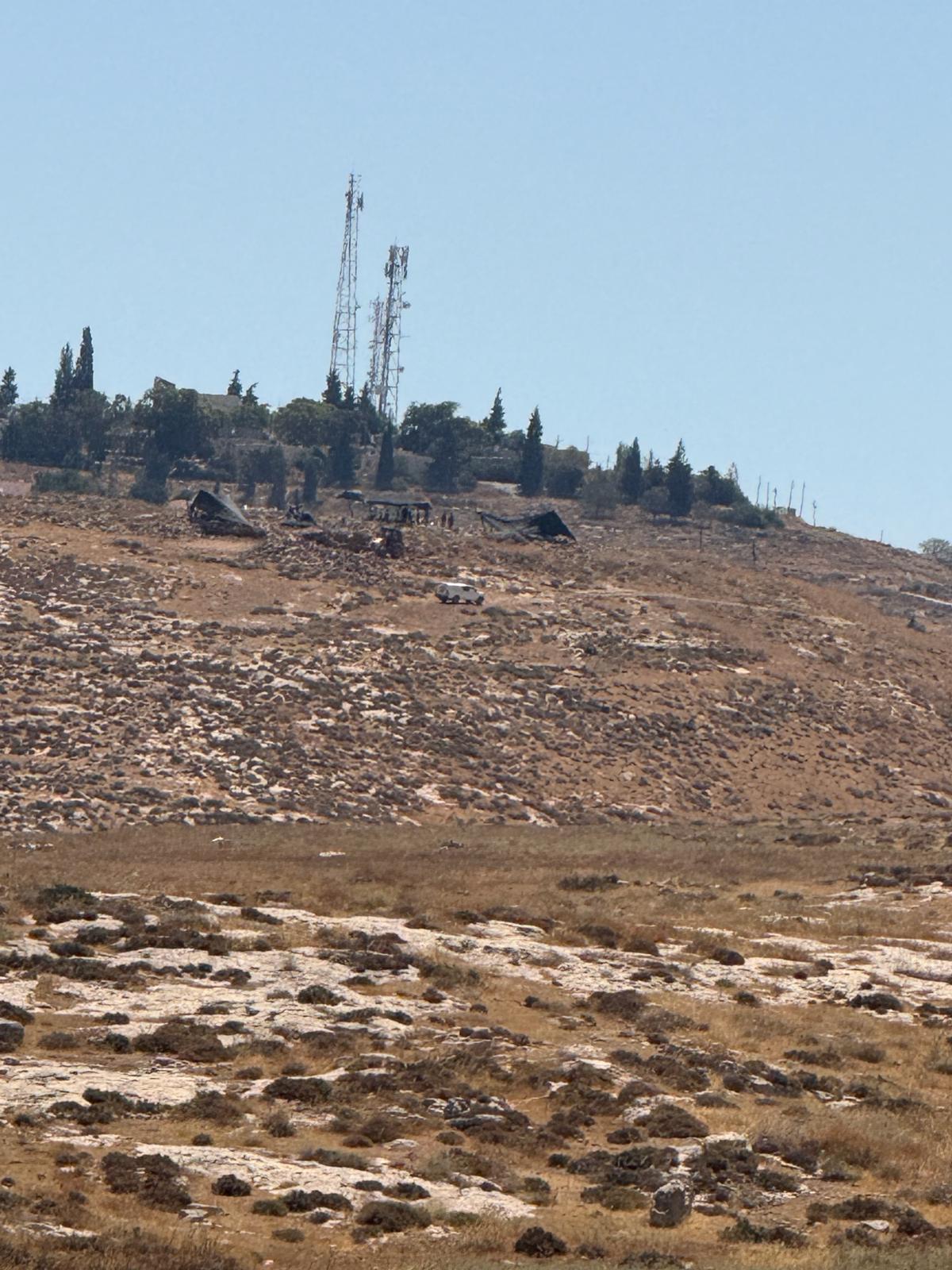
- shows us a new outpost that Mordechai Zecharia is erecting and may be seen in our photo, near Beit Yatir colony (Metzadot Yehuda) and Emneizal.
As we sit and enjoy eating the wonderful Maklouba prepared by the mother, K. says:
Here is Mordechai and his pickup truck loaded with ready hay bundles probably stolen from a Palestinian field, something they do regularly. He assumes the guy is taking it to Susia to feed the sheep and cattle of colonists living there.
Nearby lives the Hlaila family. It has been there for about 20 years, a shepherd family. Like all the Palestinian shepherds of Masafer Yatta, they are selling sheep in order to buy food. Some of them speak Hebrew after many years of work inside Israel, until October 7th.
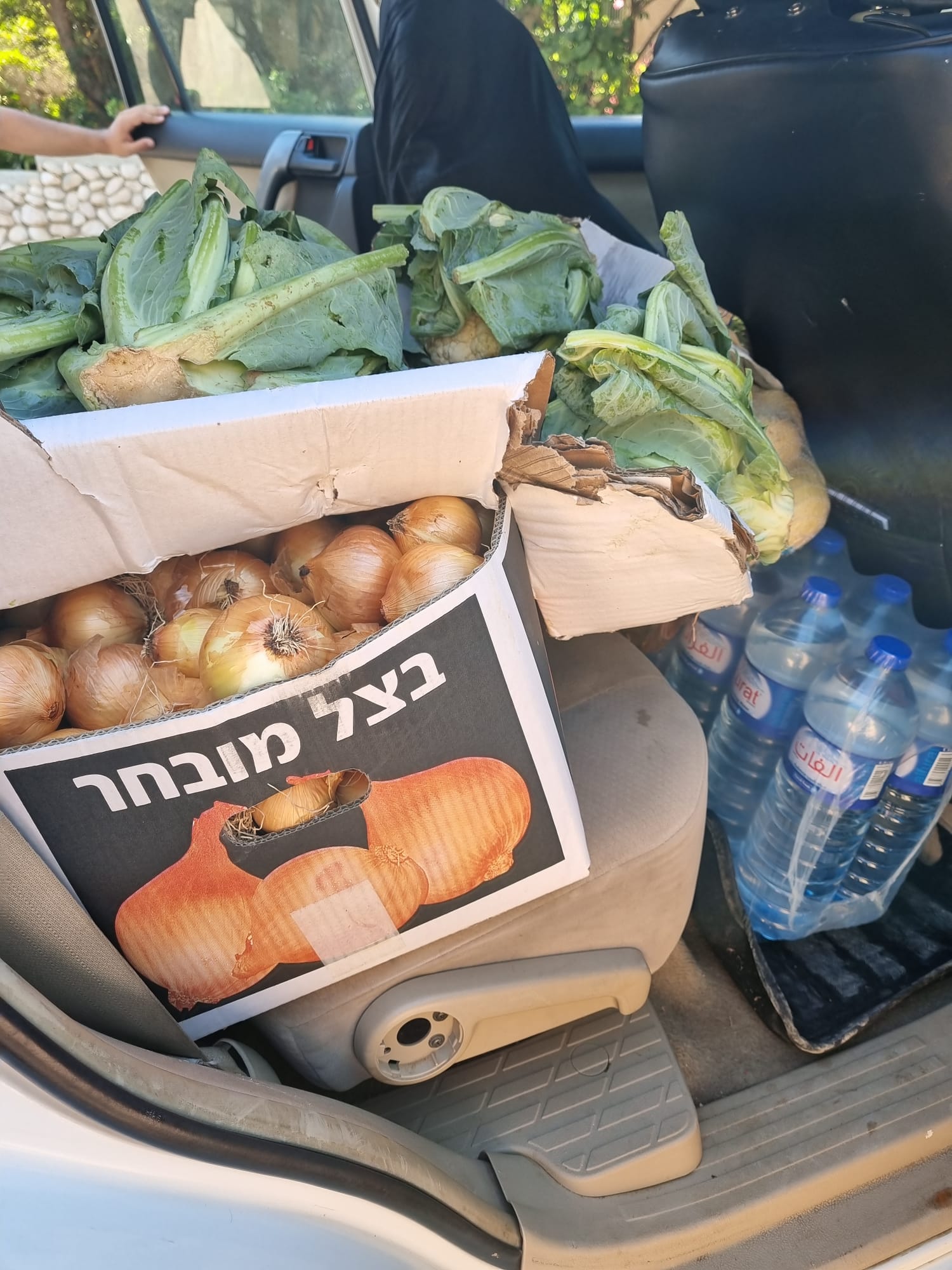
We brought food, clothes and other donations that made them glad.
It is important to mention that they have Protective Presence Israeli and international volunteers staying there nearly 24 hours a day (our respect to volunteers in all the occupied territories). We were, of course, invited to come again soon, and we shall.
Location Description
Mesafer Yatta
See all reports for this place-
This is happening in Fire Area 918 in the South Hebron Hills
On the eve of Remembrance Day (the day before Israel Independence Day), 4th May, 2022, the Israeli High Court decided on the transfer and expulsion of residents from 8 Palestinian communities in the area of Masafar Yata in the South Hebron Hills. Residents of the villages have been living under the threat of demolition, evacuation and expropriation since the IDF issued evacuation orders in 1999 based on the 1980s proclamation of their area of residence as a firing zone for IDF drills. None of the nearby settlements were included in this zone. The Masafer Yata Palestinian villages retain a special lifestyle and ancient agricultural culture. They also posess a clear historical documentation that testifies to a Palestinian settlement in this area, generations before the establishment of Israel, long ago in the caves and at later times outside them.
Evacuating residents from the area means destroying these historic villages and leaving entire families (about 2,000 people, children, adults, and the elderly) homeless. This is contrary to international law.
In June 2022, a firing drill started, and life became harder.
-
South Hebron Hills
See all reports for this place-
South Hebron Hills
South Hebron Hills is a large area in the West Bank's southern part.
Yatta is a major city in this area: right in the border zone between the fertile region of Hebron and its surroundings and the desert of the Hebron Hills. Yatta has about 64,000 inhabitants.
The surrounding villages are called Masafer Yatta (Yatta's daughter villages). Their inhabitants subsist on livestock and agriculture. Agriculture is possible only in small plots, especially near streams. Most of the area consists of rocky terraces.Since the beginning of the 1980s, many settlements have been established on the agricultural land cultivated by the Palestinians in the South Hebron Hills region: Carmel, Maon, Susia, Masadot Yehuda, Othniel, and more. Since the settlements were established and Palestinians cultivation areas have been reduced; the residents of the South Hebron Hills have been suffering from harassment by the settlers. Attempts to evict and demolish houses have continued, along with withholding water and electricity. The military and police usually refrain from intervening in violent incidents between settlers and Palestinians do not enforce the law when it comes to the investigation of extensive violent Jewish settlers. The harassment in the South Hebron Hills includes attacking and attempting to burn residential tents, harassing dogs, harming herds, and preventing access to pastures.
There are several checkpoints in the South Hebron Hills, on Routes 317 and 60. In most of them, no military presence is apparent, but rather an array of pillboxes monitor the villages. Roadblocks are frequently set up according to the settlers and the army's needs. These are located at the Zif Junction, the Dura-al Fawwar crossing, and the Sheep Junction at the southern entrance to Hebron.
Updated April 2022
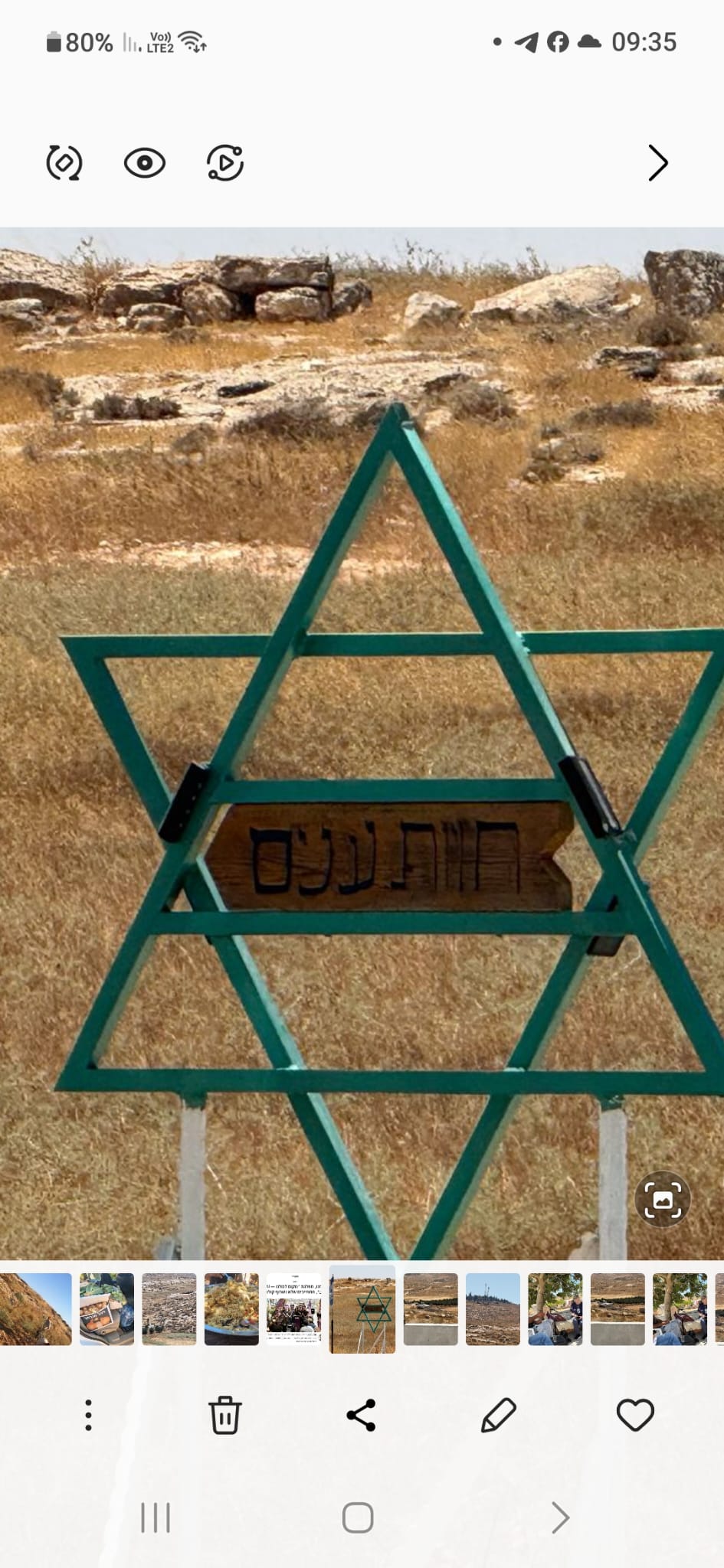
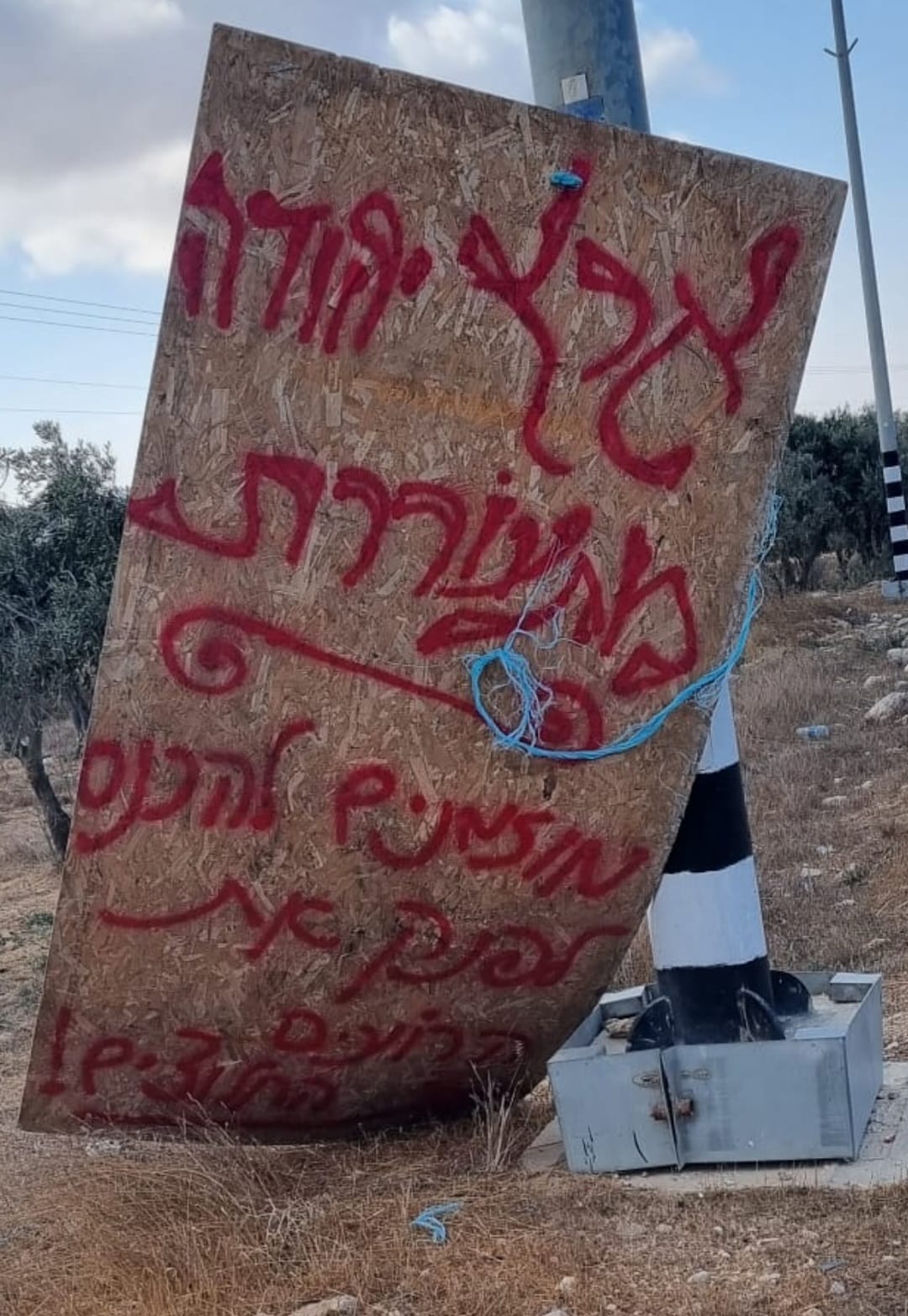 Smadar BeckerOct-17-2026A sign placed by those who call themselves the Pioneer Shepherds, at the outpost adjacent to Qawawis
-
