
Simia – Soldiers poured sacks of food for sheep on the road
Road 60, a survey of the checkpoints:
Samu’ checkpoint is open and soldiers posted there are checking vehicles entering and exiting. Vehicles waiting on both sides of the checkpoint, back to back, which means that goods have to be taken by hand into the villages which are blocked off. In this case Dahariya.
Abda – checkpoint closed. We notice a Palestinian vehicle being unloaded with 2 goats and soldiers beside them.
Dura – open after a long time of being closed.
First, we drive to meet Nader, who lives in a village near Dura. He says that it is harder to breathe every day. The army enters the villages, the lack of money for most families barely allows them to buy basic food. It hurts every time to hear.
We gave him clothes and games and money that we were asked to give him.
We returned on Highway 60 and checked the Adorayim settlement checkpoint, which is located near the road.
The checkpoint towards Khursa and Negohot is closed.
Recently, a checkpoint was also placed at the entrance to Adorayim and we are unable to enter to observe what is happening there.
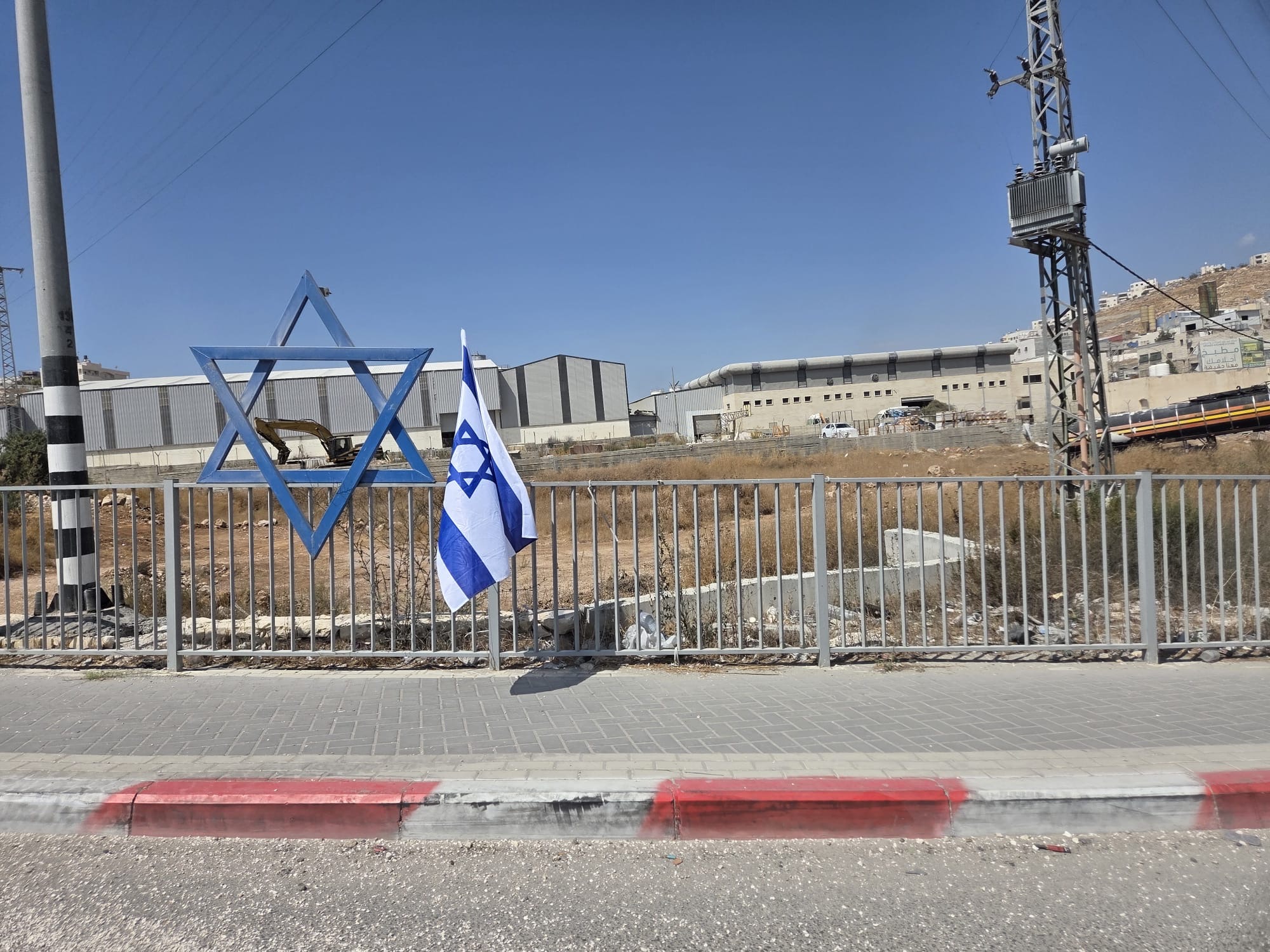
I notice that the sign that was there before with a referral to an emergency medical center has been removed. In its place are two new signs. One is Adorayim, the other is Mitzpe Reuven.
The afore mentioned observatory was built by a resident of the settlement of Adorayim in memory of his cousin, Major Reuven Shisportish, who fell in the battles at Pri Gan on 7.10.23, and worked with all his might to strengthen the Jewish hold and settlement in the country.
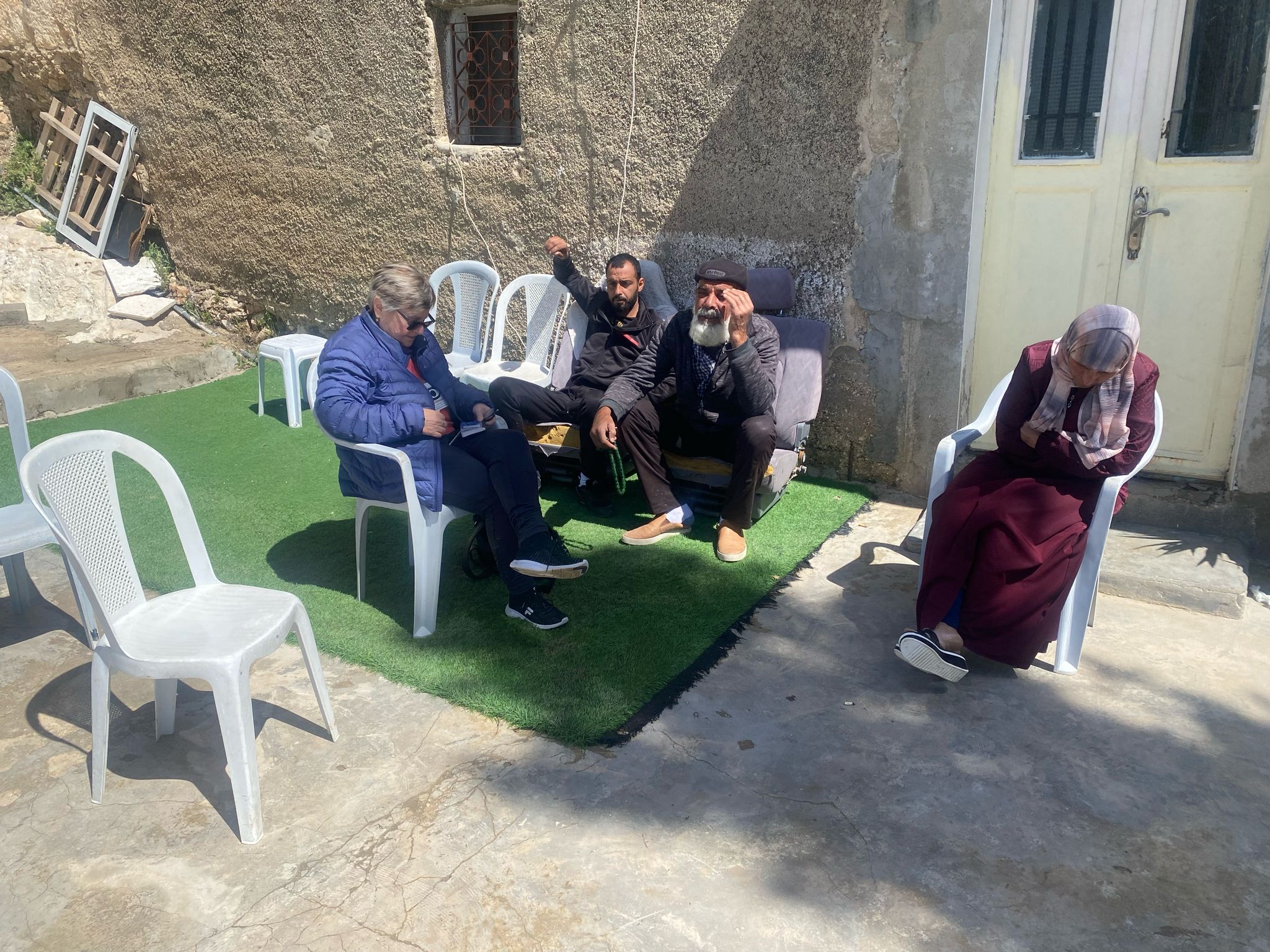
We continued to visit Farhan in Simiya, whose home is near Highway 60.
Remember that it is Ramadan, and our friends are fasting from dawn to dusk. We sit outside and watch what is happening nearby. Vehicles enter Simiya and immediately turn to continue driving towards Dahariya on alternative roads due to the main roadblocks to the city.
Several boys with digging shovels are preparing the road to make travel easier.
What Farhan tells us is related to this:
On Saturday, two days ago, when soldiers saw the boys preparing the road, they entered the area of Farhan’s house. Drivers who were frightened abandoned their vehicles and fled.
3 soldiers broke into the Farhan family’s house, claiming that they were looking for the drivers who had fled. It was a few minutes before the family sat down for the Iftar meal, the breaking of the fast. The soldiers did as they pleased, turned drawers and, according to Farhan, stole money from the bags of his daughter-in-law and daughter. While they were at home, they did not allow the family to break the fast and eat.
Yesterday, Farhan says, 4 soldiers arrived in a military van, blocked the entrance to Simiya for 6 hours. Drivers of cars who tried to pass had their car keys taken away and returned to them after a six-hour wait.
Another incident we hear about is as disturbing as the rest. A tractor carrying sacks of food for the sheep was seized by the soldiers. The driver was thrown out of the tractor, his phone and keys were taken from him. The soldiers poured the sacks of food for the sheep onto the road, and only after they left did the tractor owner, with the help of neighbors, manage to collect and save some of the contents.
We said goodbye to the family, as usual with great sadness from what we had seen and heard.
Later, Farhan told Muhammad that half an hour after we left, the army arrived and threw smoke grenades to block the road that had been breached to Dahariya.
On our way back, we stopped to document the new outpost located opposite Zanuta. The rocky ground has been prepared and is completely clean.
We will update later.
#ThisIsTheOccupation
Location Description
Dura Al-Fawwar Junction
See all reports for this place-
Junction on Route 60: west - the town of El Dura, east - the Al Fawwar refugee camp. There is a manned pillbox at the junction. From time to time the army sets up flying checkpoints at the entrance to El Fawwar and Al Dura. Al-Fawwar is a large refugee camp (7,000 inhabitants in 2007) established in 1949 to accommodate Palestinian refugees from Be'er Sheva and Beit Jubrin and environs. There are many incidents of stone-throwing. In the vicinity of the pillbox there are excellent agricultural areas, Farmers set up stalls adjacent to the plots close to the road. In recent months the civil administration has set up dirt embankments thereby blocking access to the stalls, and making it impossible for the farmers to sell their vegetables. Updated April 2021, Michal T.
-
South Hebron Hills
See all reports for this place-
South Hebron Hills
South Hebron Hills is a large area in the West Bank's southern part.
Yatta is a major city in this area: right in the border zone between the fertile region of Hebron and its surroundings and the desert of the Hebron Hills. Yatta has about 64,000 inhabitants.
The surrounding villages are called Masafer Yatta (Yatta's daughter villages). Their inhabitants subsist on livestock and agriculture. Agriculture is possible only in small plots, especially near streams. Most of the area consists of rocky terraces.Since the beginning of the 1980s, many settlements have been established on the agricultural land cultivated by the Palestinians in the South Hebron Hills region: Carmel, Maon, Susia, Masadot Yehuda, Othniel, and more. Since the settlements were established and Palestinians cultivation areas have been reduced; the residents of the South Hebron Hills have been suffering from harassment by the settlers. Attempts to evict and demolish houses have continued, along with withholding water and electricity. The military and police usually refrain from intervening in violent incidents between settlers and Palestinians do not enforce the law when it comes to the investigation of extensive violent Jewish settlers. The harassment in the South Hebron Hills includes attacking and attempting to burn residential tents, harassing dogs, harming herds, and preventing access to pastures.
There are several checkpoints in the South Hebron Hills, on Routes 317 and 60. In most of them, no military presence is apparent, but rather an array of pillboxes monitor the villages. Roadblocks are frequently set up according to the settlers and the army's needs. These are located at the Zif Junction, the Dura-al Fawwar crossing, and the Sheep Junction at the southern entrance to Hebron.
Updated April 2022
 Timna OrevSep-24-2026Replacing flags on Highway 6
-
