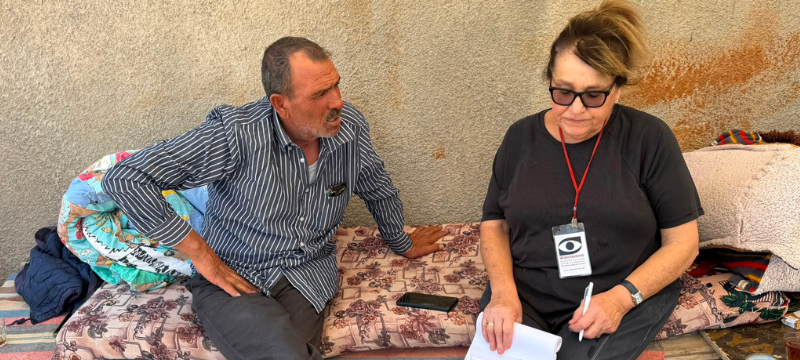
Qawawis - The children were removed to Carmil for fear of the farm settlers
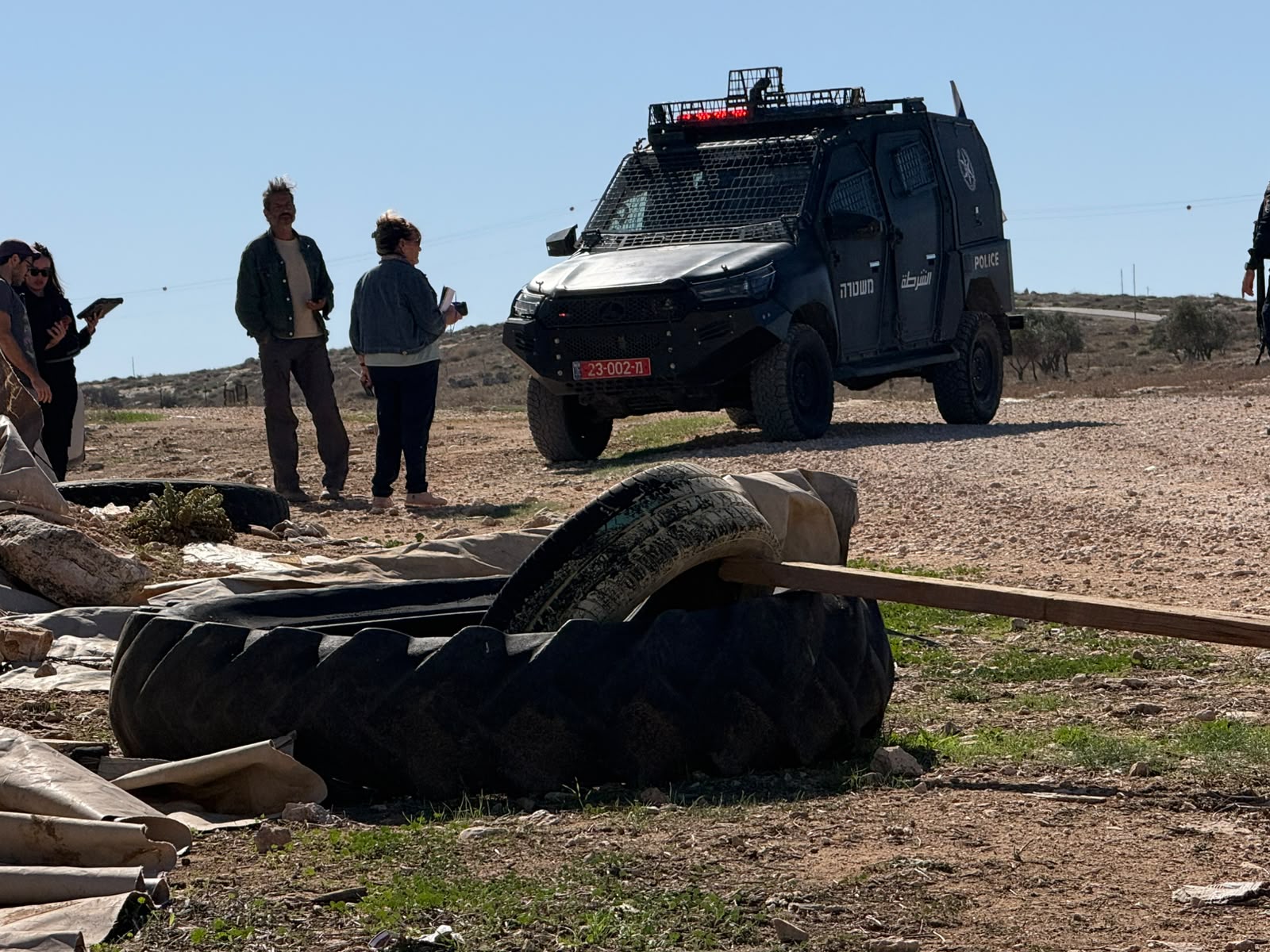
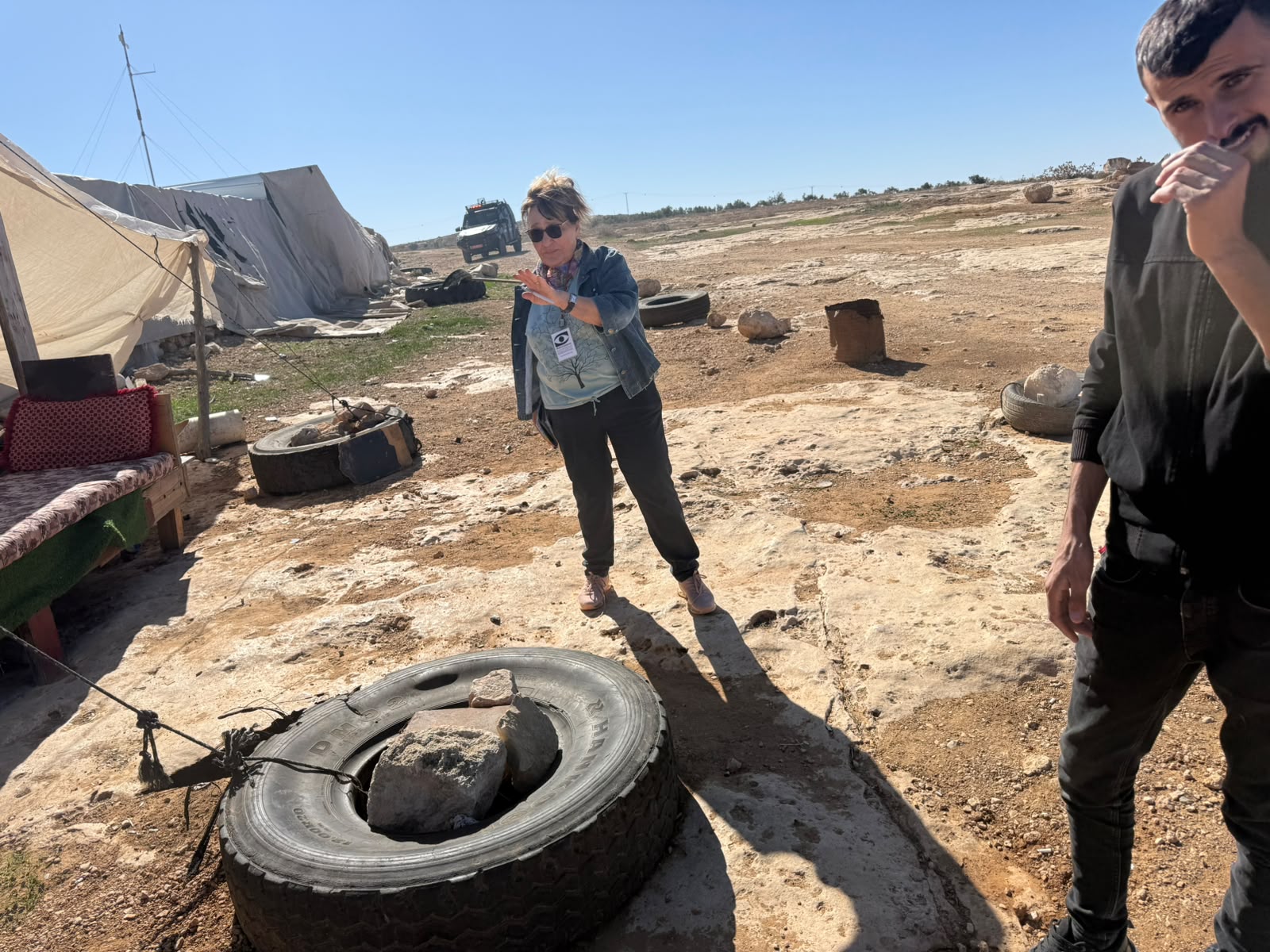
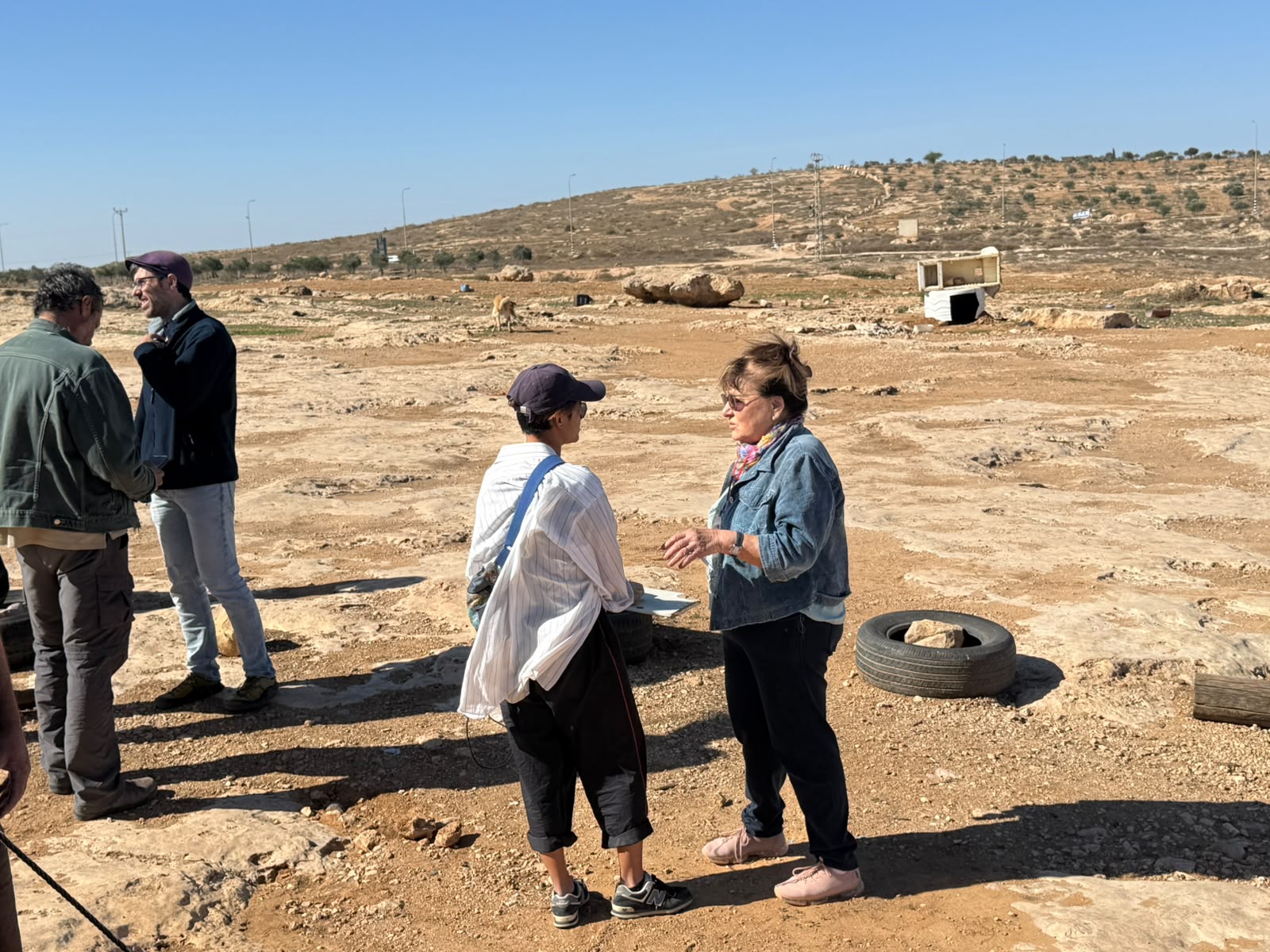
We went to Qawawis again. Its residents frequently suffer from violence at the hands of settlers who have settled about 200 metres away and harass and attack them at all hours of the day and night.
Qawawis is a small Palestinian village, a cluster of shepherding communities in Masafer Yatta. It is located two kilometres east of the Susiya settlement, northeast of the Mitzpe Yair settlement.
On arrival, we witnessed an incident unfolding in real time: two protective presence volunteers walked to the nearby main road to accompany someone returning from prayers in Carmil. Six settlers from the new outpost rushed towards them, shouting, “Get out of here! This is our land! You are not allowed to walk here!” They approached the residents’ homes. Two even got right up close to the volunteers, making threatening gestures: “Go away, don’t make trouble.”
I approached them and they moved away, but a few minutes later another group arrived from the outpost, again shouting and threatening. One, particularly loud, said: “This is the last time I’m warning you! Get off our land.” They say this while encroaching on Palestinian land. This time I approached and filmed them, trying to find out since when this land had been theirs.
We called the police, who arrived quickly because they were very close by. We had seen them on our way in. On the phone, the officers asked me not to approach the settlers or speak to them. A policeman (wearing a kippah) and a policewoman arrived and tried to justify the settlers’ behaviour towards the volunteers: “In any case, it’s difficult to know exactly what happened and when…” And this while they were being shown videos filmed in real time, just moments earlier. A volunteer asked the policeman whether he would also send a settler to file a complaint in Kiryat Arba. He stammered and evaded the question: “Look, it depends…” The policewoman also took my details. She had never heard of MachsomWatch.
And once again, it is Friday and people are going to pray. Once again, the volunteers accompanied them to the main road until they were safely beyond the danger zone.
In conversation, the residents describe a stressful situation day and night. The children have been moved away to Carmil.
We received a video they had filmed a few days earlier: settlers had come and dismantled the fence the residents had installed around their olive grove. On that occasion, too, they called the police and showed the officers footage of the fence being destroyed. The policeman said: “I don’t believe you. This isn’t from now. Go and file a complaint in Kiryat Arba.” There is clearly a date on the video, but the truth does not faze the policeman.
“Did you go and file a complaint?” I ask the man telling the story. “We didn’t go,” he replies. “There’s no point. They have never done anything about our complaints.”
The aggressive group that arrived today is new. The previous group was transferred to the Barkai neighbourhood, which adjoins Umm al-Kheir and is suffocating its residents. There is a constant turnover of groups of young people, all of whom appear to me to be under 18. I wonder why there is this turnover.
Later, Smadar said that this settlement is called Eretz Yehuda and was established by Yehoyariv, who is a second-generation Jewish terrorist.
When things had calmed down somewhat and the Jewish terrorists had gone back to where they live, we left, after unloading clothes, shoes and food from the vehicle.
The protective presence volunteers really do help a great deal by being there, giving the residents a sense of security, because both the settlers and the security forces behave differently in the presence of volunteers from Israel and abroad. I saw the rioters myself and how they backed away when they saw us.
Location Description
Mesafer Yatta
See all reports for this place-
This is happening in Fire Area 918 in the South Hebron Hills
On the eve of Remembrance Day (the day before Israel Independence Day), 4th May, 2022, the Israeli High Court decided on the transfer and expulsion of residents from 8 Palestinian communities in the area of Masafar Yata in the South Hebron Hills. Residents of the villages have been living under the threat of demolition, evacuation and expropriation since the IDF issued evacuation orders in 1999 based on the 1980s proclamation of their area of residence as a firing zone for IDF drills. None of the nearby settlements were included in this zone. The Masafer Yata Palestinian villages retain a special lifestyle and ancient agricultural culture. They also posess a clear historical documentation that testifies to a Palestinian settlement in this area, generations before the establishment of Israel, long ago in the caves and at later times outside them.
Evacuating residents from the area means destroying these historic villages and leaving entire families (about 2,000 people, children, adults, and the elderly) homeless. This is contrary to international law.
In June 2022, a firing drill started, and life became harder.
-
South Hebron Hills
See all reports for this place-
South Hebron Hills
South Hebron Hills is a large area in the West Bank's southern part.
Yatta is a major city in this area: right in the border zone between the fertile region of Hebron and its surroundings and the desert of the Hebron Hills. Yatta has about 64,000 inhabitants.
The surrounding villages are called Masafer Yatta (Yatta's daughter villages). Their inhabitants subsist on livestock and agriculture. Agriculture is possible only in small plots, especially near streams. Most of the area consists of rocky terraces.Since the beginning of the 1980s, many settlements have been established on the agricultural land cultivated by the Palestinians in the South Hebron Hills region: Carmel, Maon, Susia, Masadot Yehuda, Othniel, and more. Since the settlements were established and Palestinians cultivation areas have been reduced; the residents of the South Hebron Hills have been suffering from harassment by the settlers. Attempts to evict and demolish houses have continued, along with withholding water and electricity. The military and police usually refrain from intervening in violent incidents between settlers and Palestinians do not enforce the law when it comes to the investigation of extensive violent Jewish settlers. The harassment in the South Hebron Hills includes attacking and attempting to burn residential tents, harassing dogs, harming herds, and preventing access to pastures.
There are several checkpoints in the South Hebron Hills, on Routes 317 and 60. In most of them, no military presence is apparent, but rather an array of pillboxes monitor the villages. Roadblocks are frequently set up according to the settlers and the army's needs. These are located at the Zif Junction, the Dura-al Fawwar crossing, and the Sheep Junction at the southern entrance to Hebron.
Updated April 2022
Muhammad D.Nov-20-2026Qawawis - When the police arrived 1
-
Umm al-Khair
See all reports for this place-
Umm al-Kheir
A Palestinian village in the southern Hebron governorate, populated by five families. The Palestinian residents settled there decades ago, after Israel expelled them from the Arad desert and purchased the land from the residents of the Palestinian village of Yatta. The village suffers from the violence of nearby Carmel settlers, from water shortage and is subject to frequent demolition of buildings by the Civil Administration.
-