
Qusra and Khirbet Al Marajem: “nowhere to go” – testimonies of tension on the ground
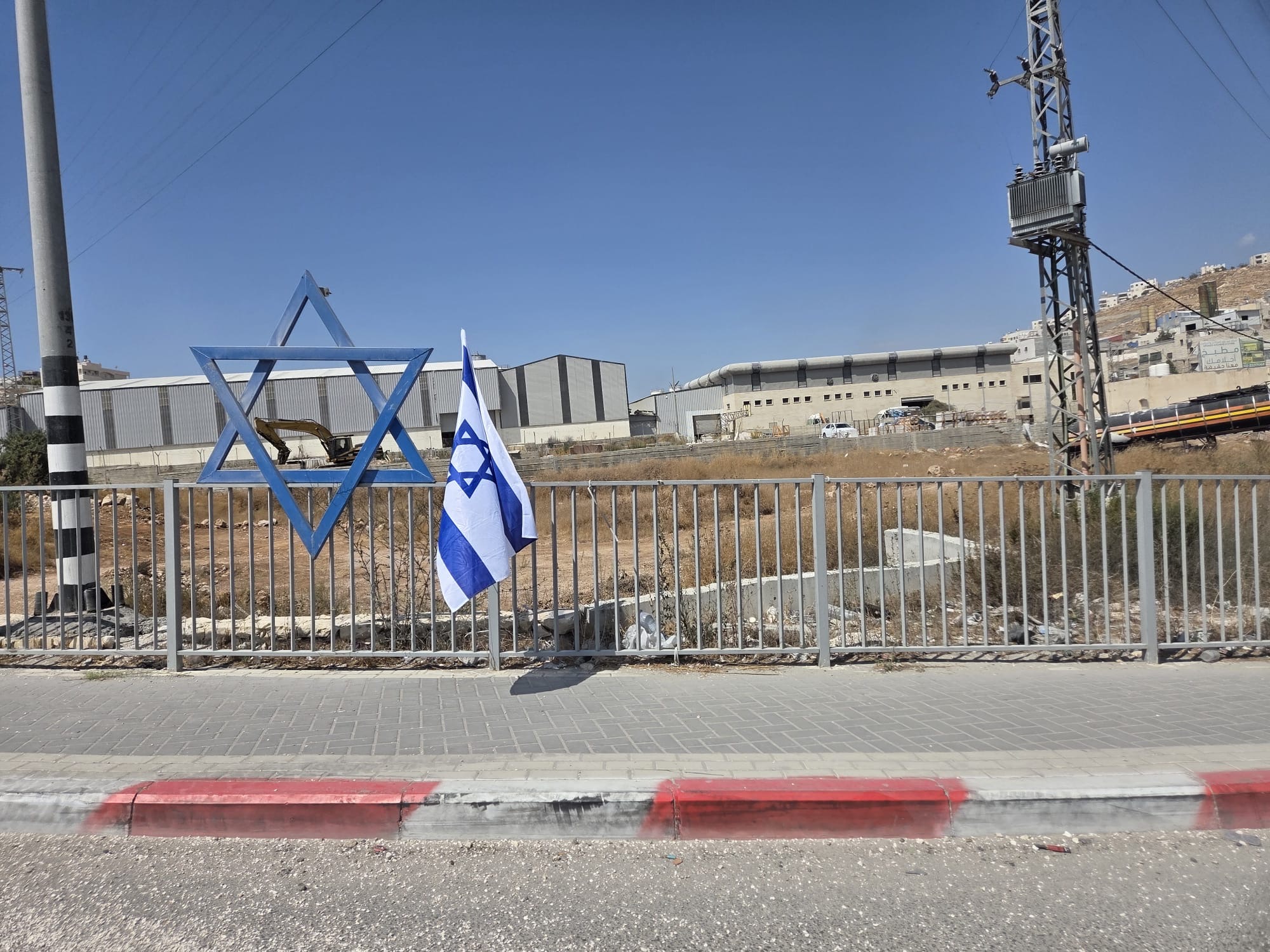
We entered via Road 5. Israel flags that had waved along the road from Ariel settlement on had been taken out, possibly for works to widen the road for which more land has been confiscated. The bus stops sport Massiah flags. Thus, too, the deserted house formerly under construction near Zeita – two Massiah flags, this time without soldiers. Tapuach Junction sports Israel flags, and on the bus stop southward we saw a Massiah flag and one of the Third Temple. From the junction to the east there are pretty raggedy Israel flags along the road.
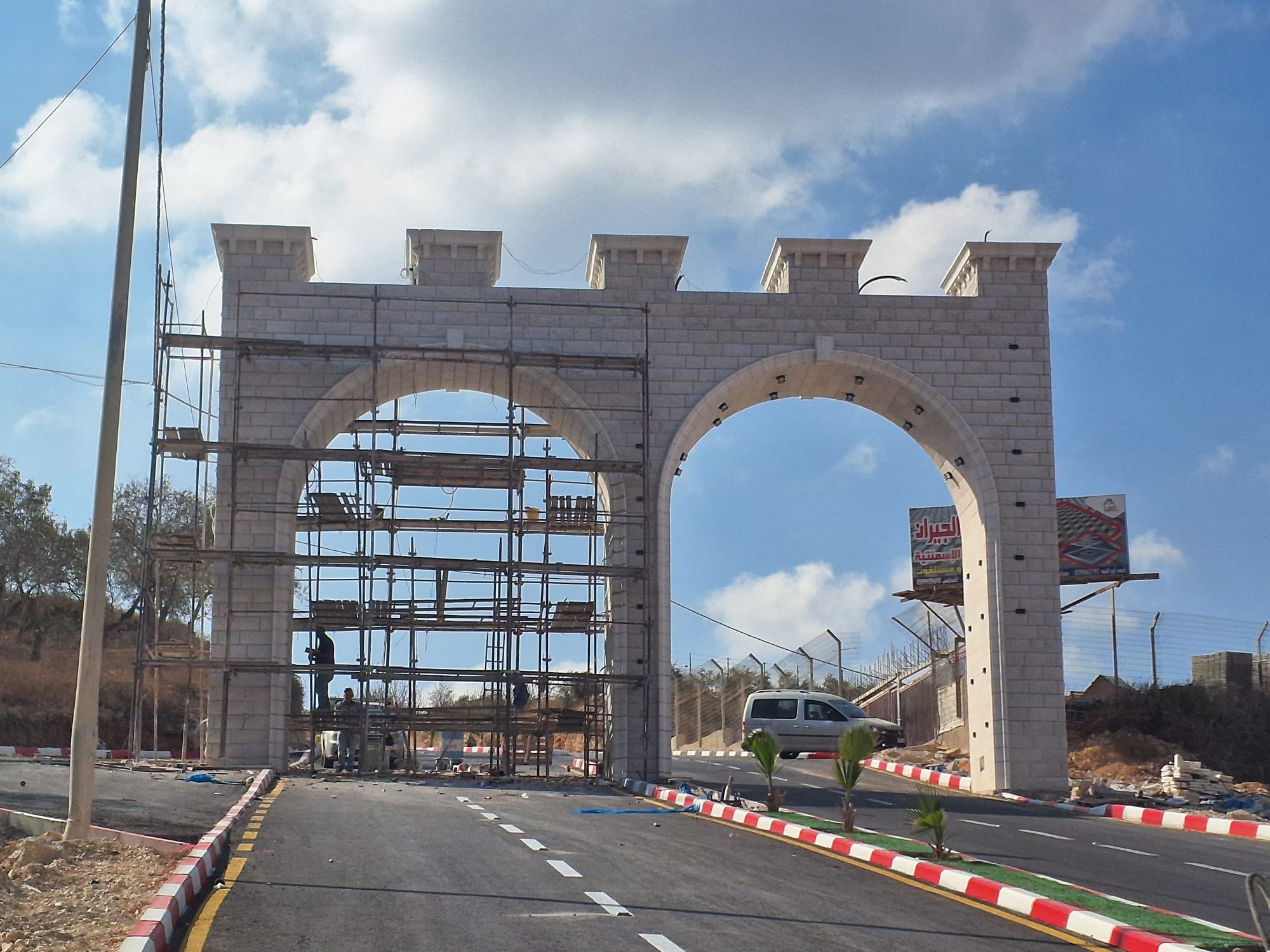
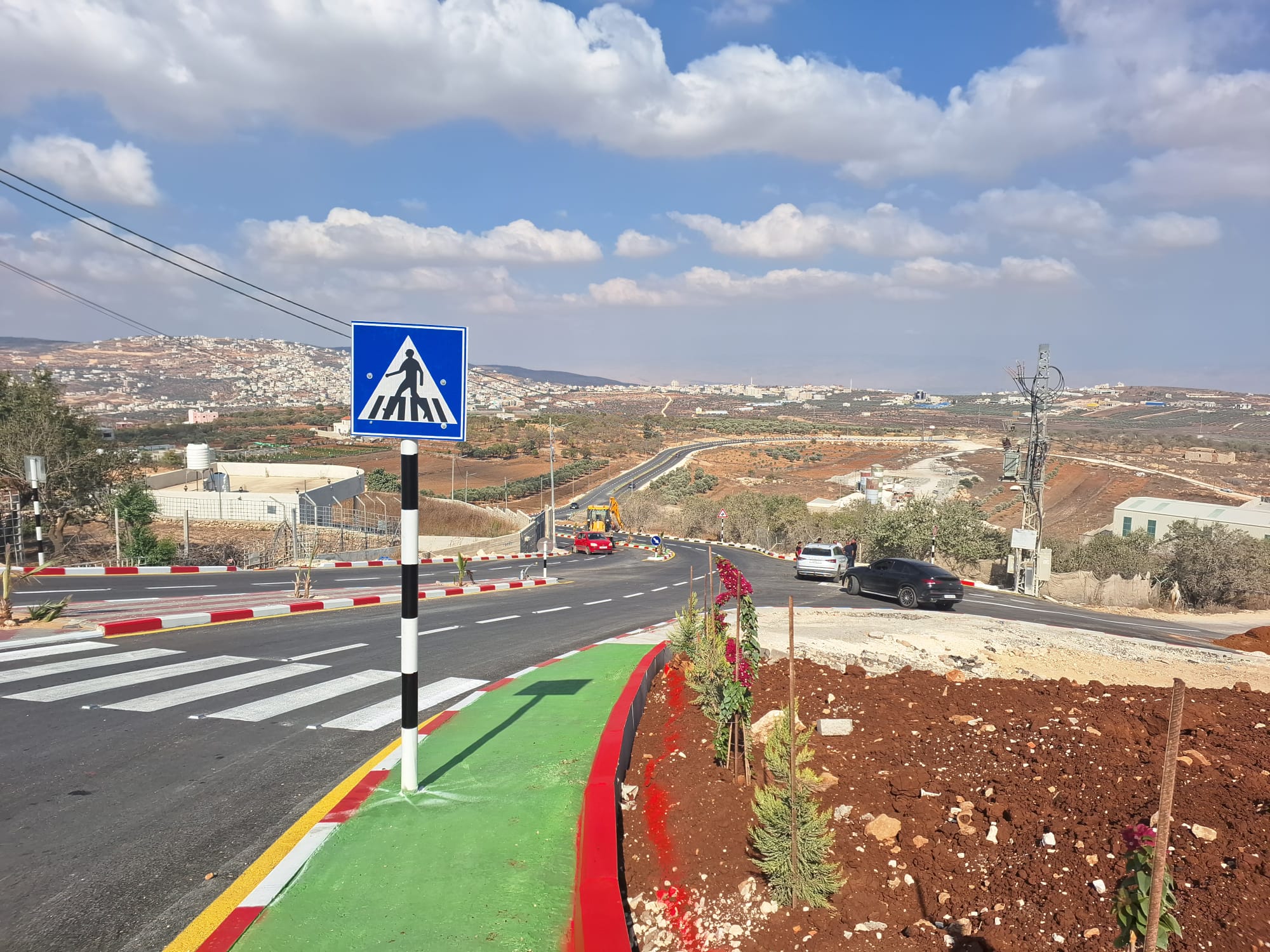
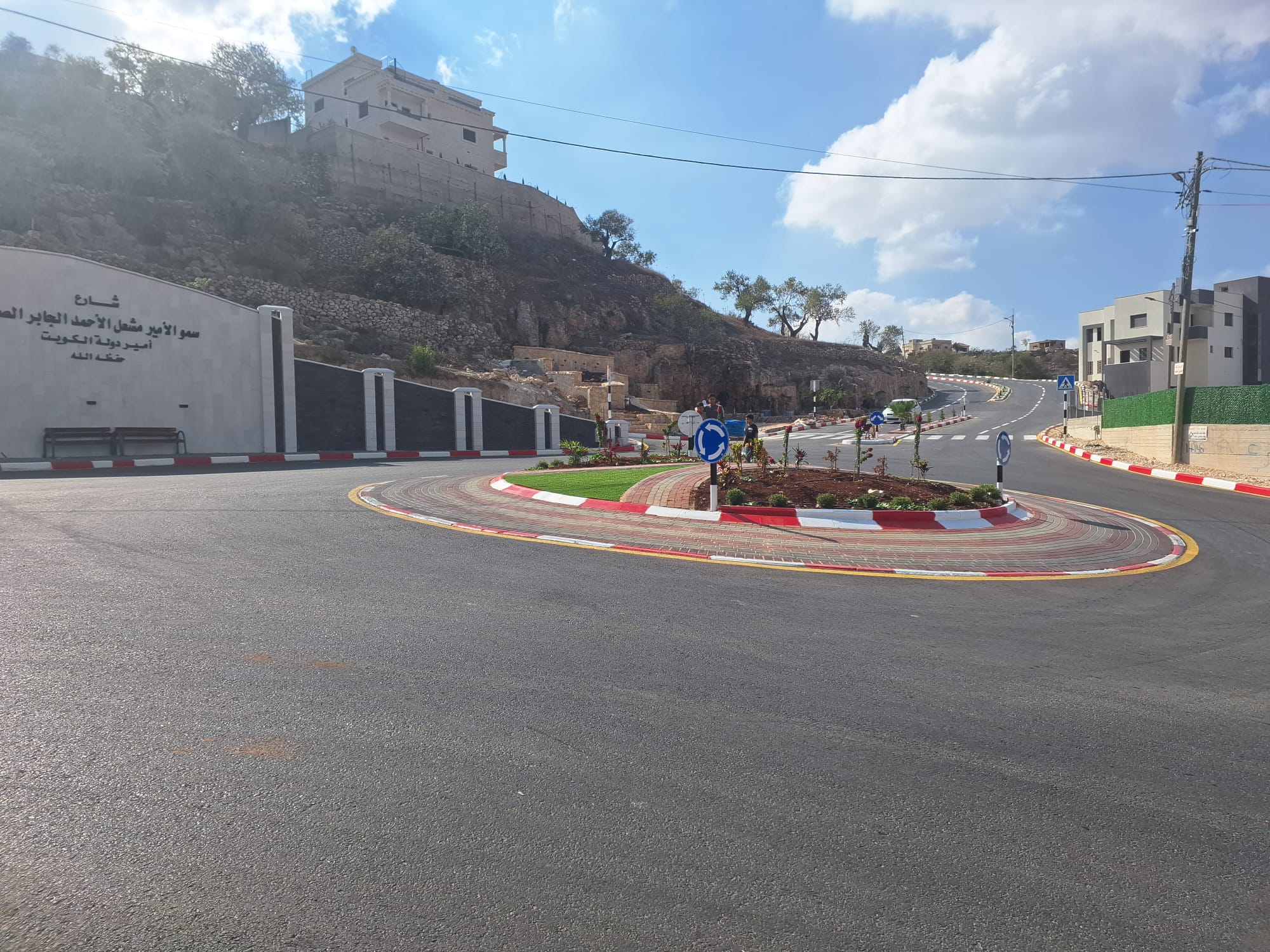
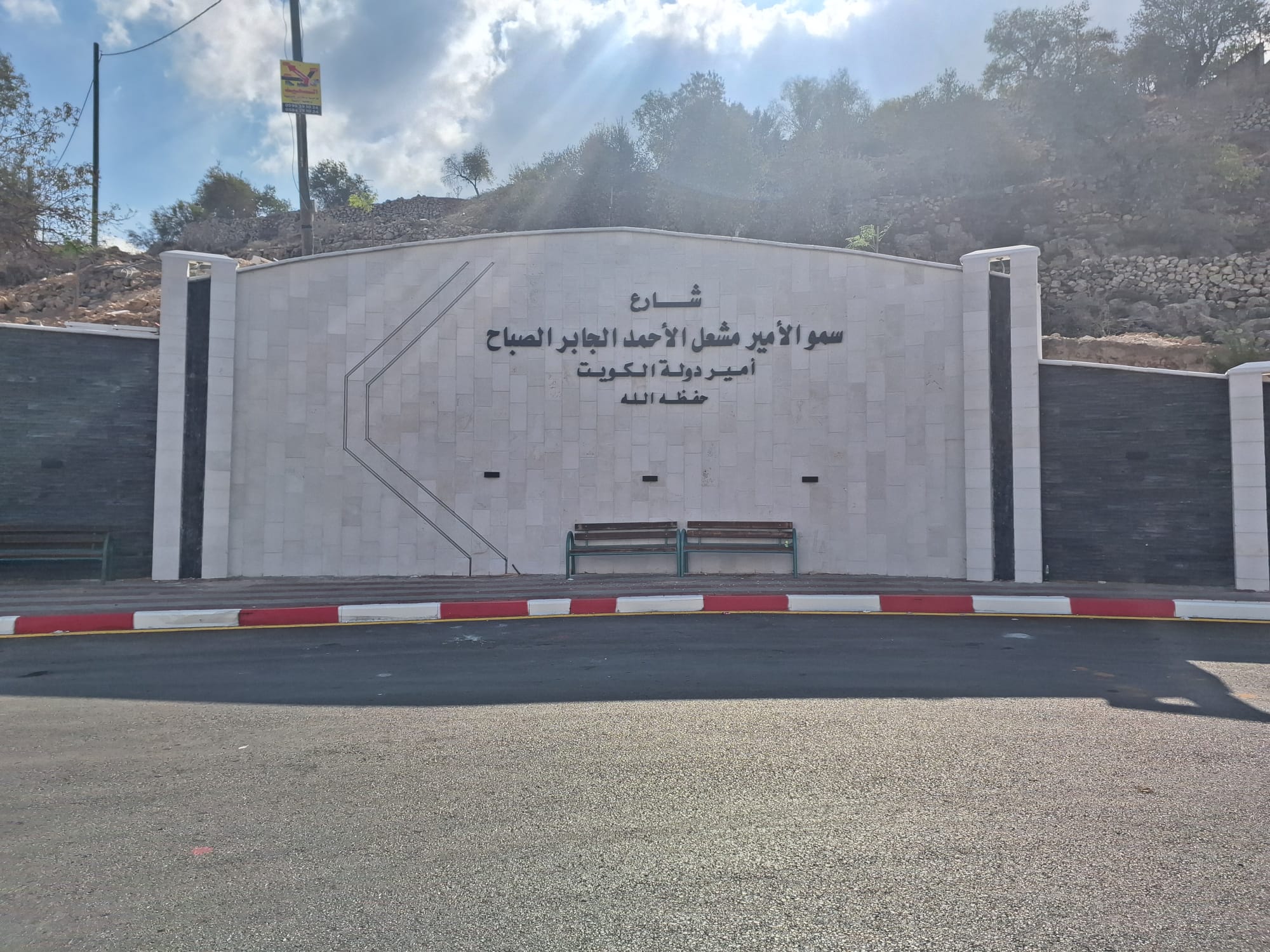
We traveled to Qusra through Jurish (the main entrance to Qusra near the entrance to Migdalim settlement has been closed since October 7, 2023). Off the road the track is potholed, but after a short while there is a wide road with four lanes, repaved. In the middle is a traffic divider with small trees and a superficial lawn. There is also a new stone gate being put up and the sides of the road are painted. The new road reaches a T junction, with a roundabout and a sign saying the road was repaved in honor of the Kuweiti ruler, who must have donated the money for the reworking of the road.
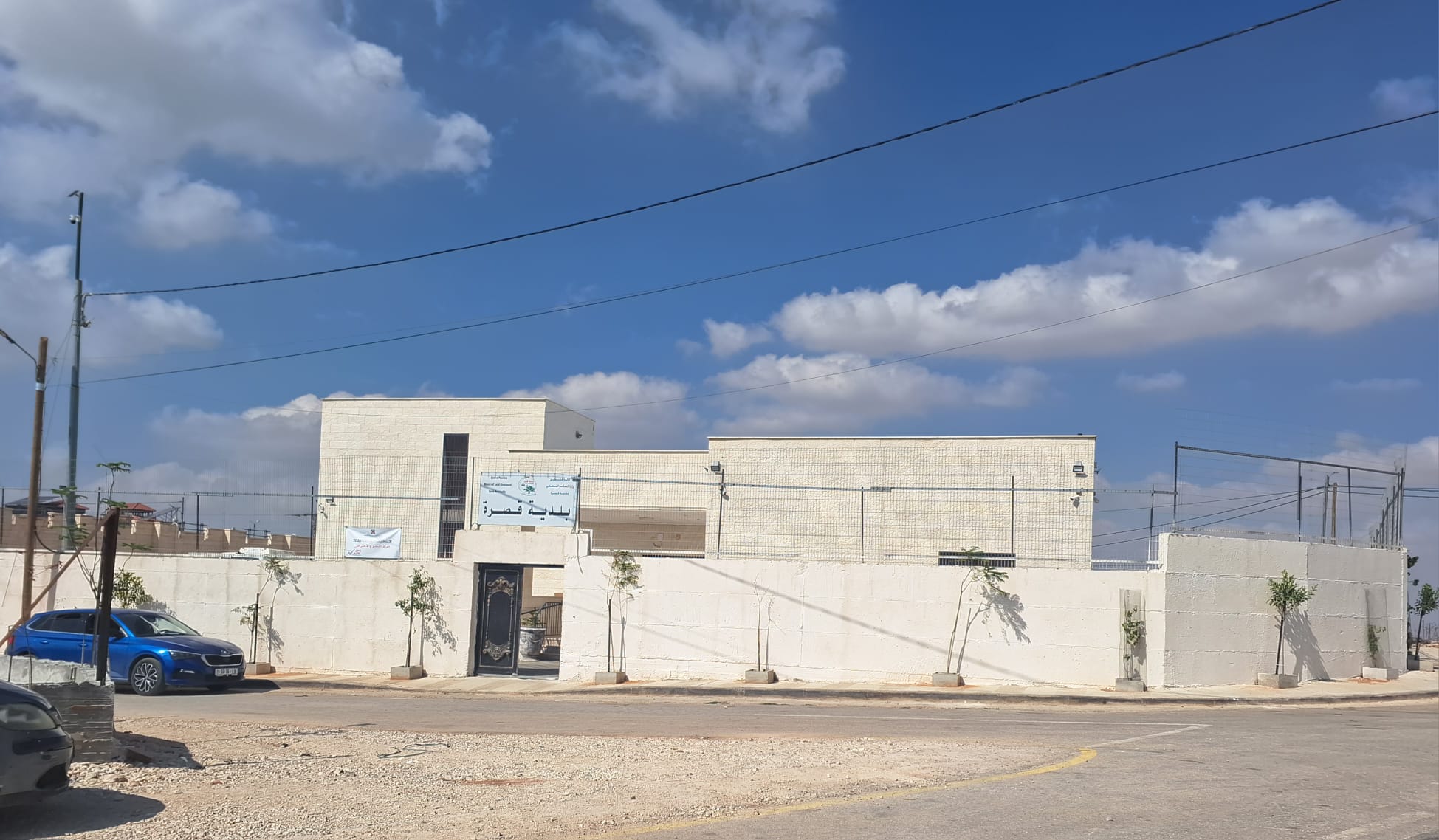
We visited the local council of Qusra. We took videos of the head of the council, Abed Al-Azim Wadih, who spoke of the dire situation there especially since October 7, 2023. According to him, it was Gaza and not the West bank, but they suffer from what is happening. He said that world leaders and other countries signed the Oslo Accords and the Palestinians are suffering now. That which was supposed to be a temporary separation into different areas has become permanent, and the Israelis do not respect even the set separation.
He switched to Hebrew to explain that for them it does not matter whether it is the Israeli army or settlers who do the harassment. He said that when was elected his policy was and is to live quietly and peacefully, and they are not allowed to do that.
He told us about their many difficulties. The settlers and the soldiers do not give them a moment’s peace. He talked about the house on the hill belonging to a Qusra resident who was living in the US. The owner came back and resettled in his home but settlers raised tents near the house and continued to harass him.
He spoke of the threats sprayed on house walls: “We shall burn you!” About two months ago the mosque was burnt.
He explained that of all Area C farmland has already been taken. Now even Area B on the outskirts of the village, is out of bounds. He showed us this on the map.
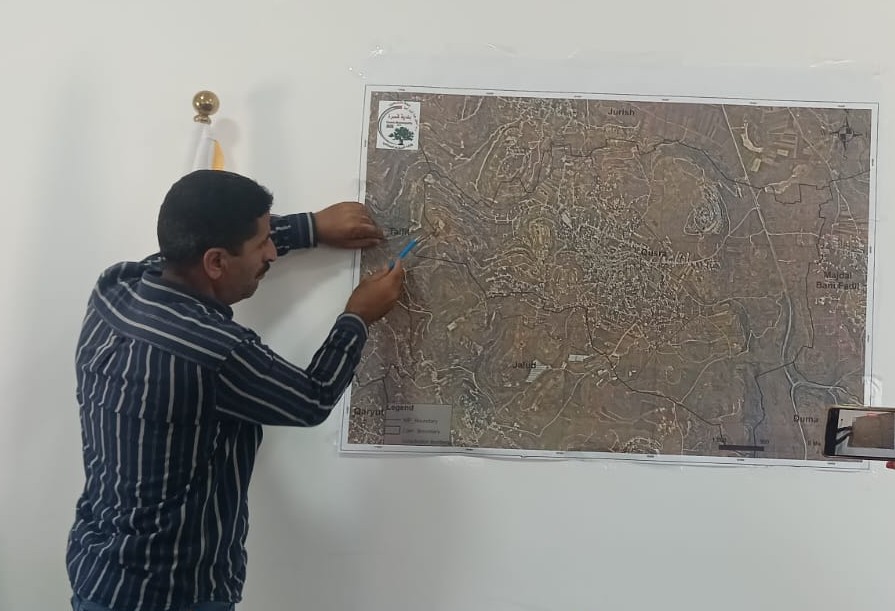
He said they also have chicken coups that have been deserted and no permits are granted to enter them, as well as houses under construction which may not be completed. Whoever dares to approach his land is shot by the soldiers from the watchtower.
The greatest problem for the villagers is that the olive harvest season is around the corner, and most groves are inside Area C. Many have already been forced to vacate their homes between areas B and C, and move to the center of the village.
The head of the council said the council is helpless, cannot help the villagers nor serve them.
He spoke of the 11 martyrs of the village and pointed to their portrait on his office wall.
Six of them were killed on one day, among them his own brother – with a large family, a senior official of the Palestinian Authority, and his own nephew – an outstanding law student.
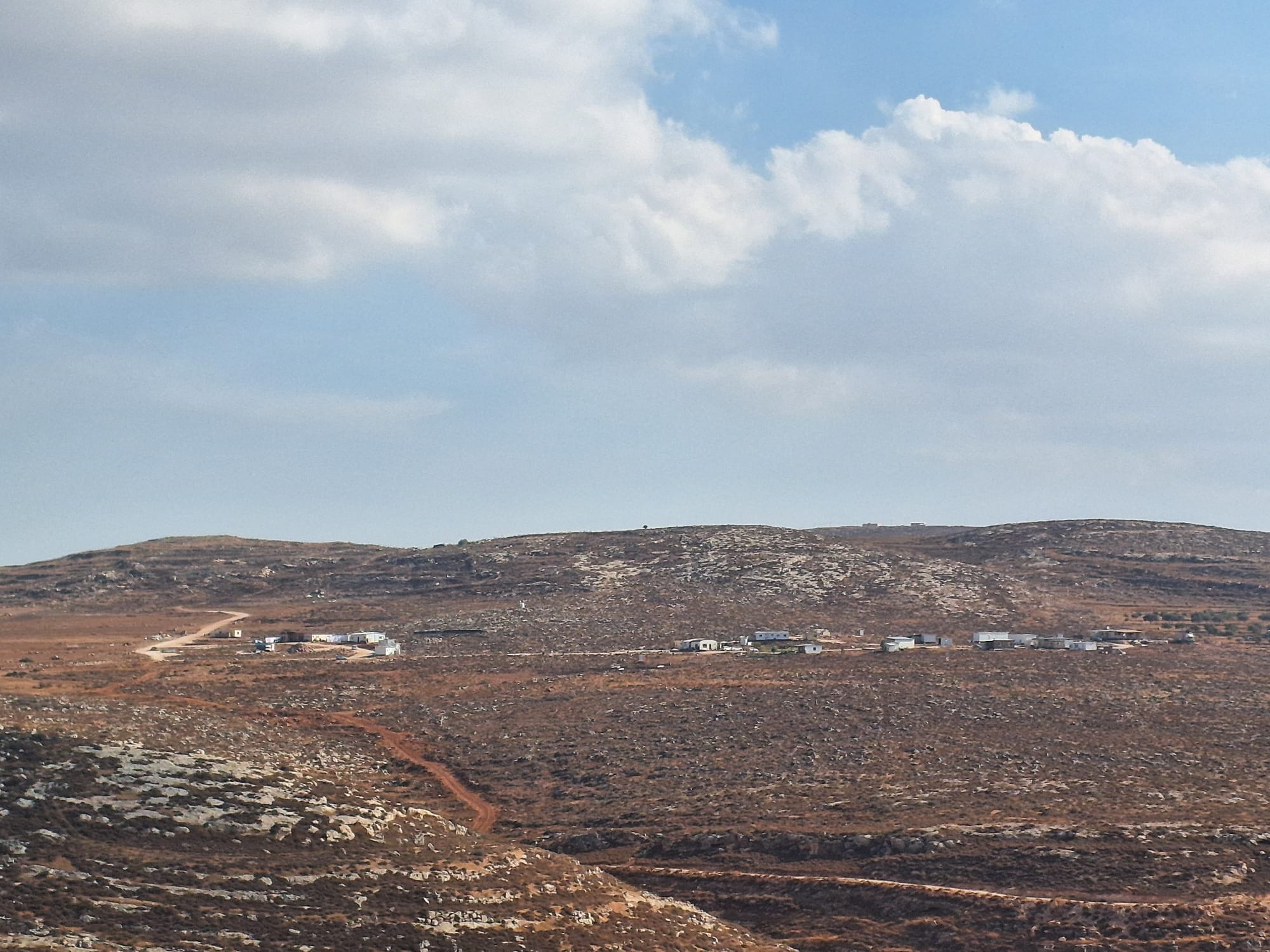
Outside we filmed the tower and the army post, the settlements (Esh Qodesh and Ahiya), as well as structures that remain unfinished and unpopulated, deserted chicken coops and others. He showed us houses and farmland in all directions that were incinerated by settlers. Among others, the settlers burnt a council hall for women that is located right next to the council house.
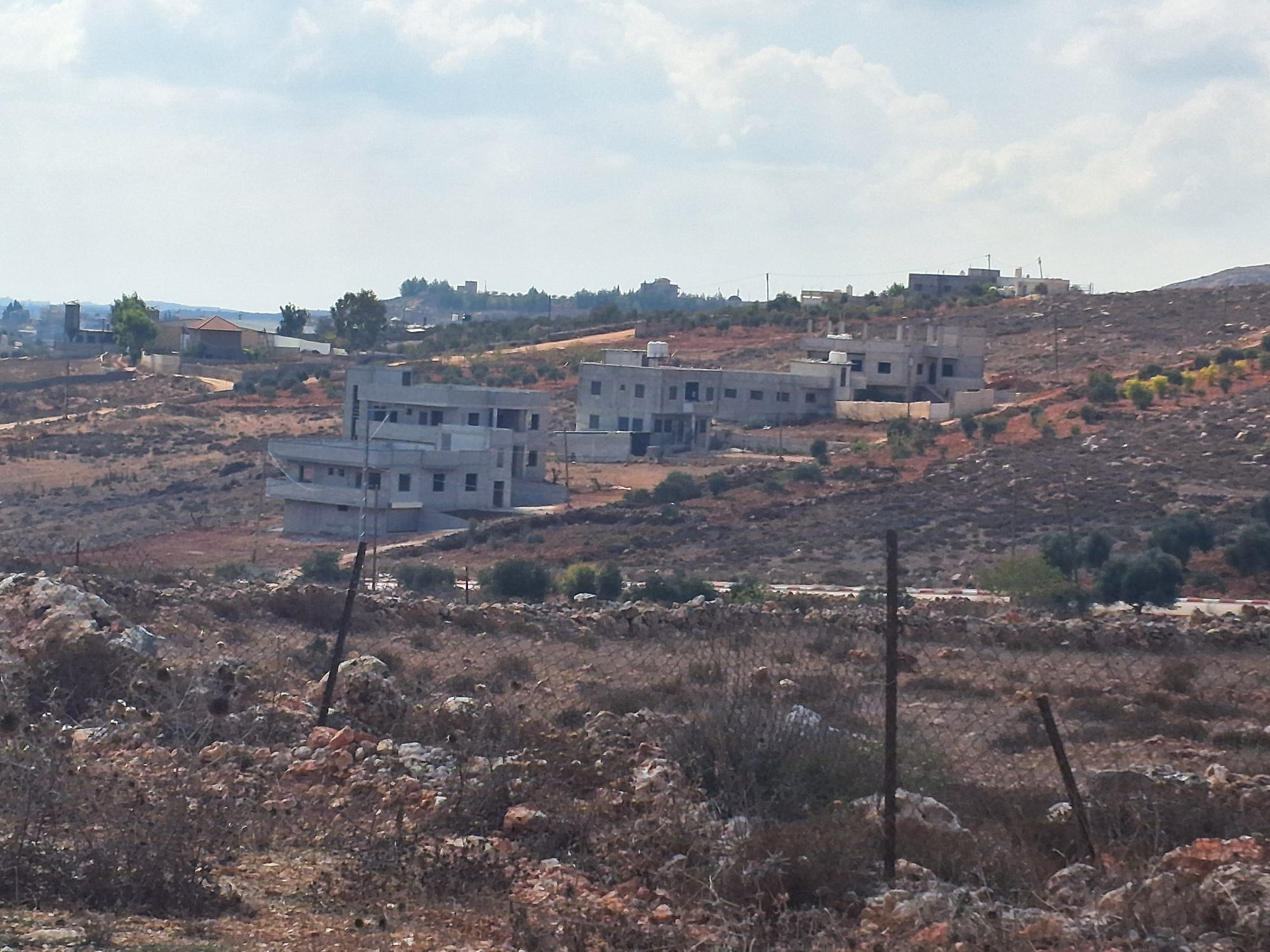
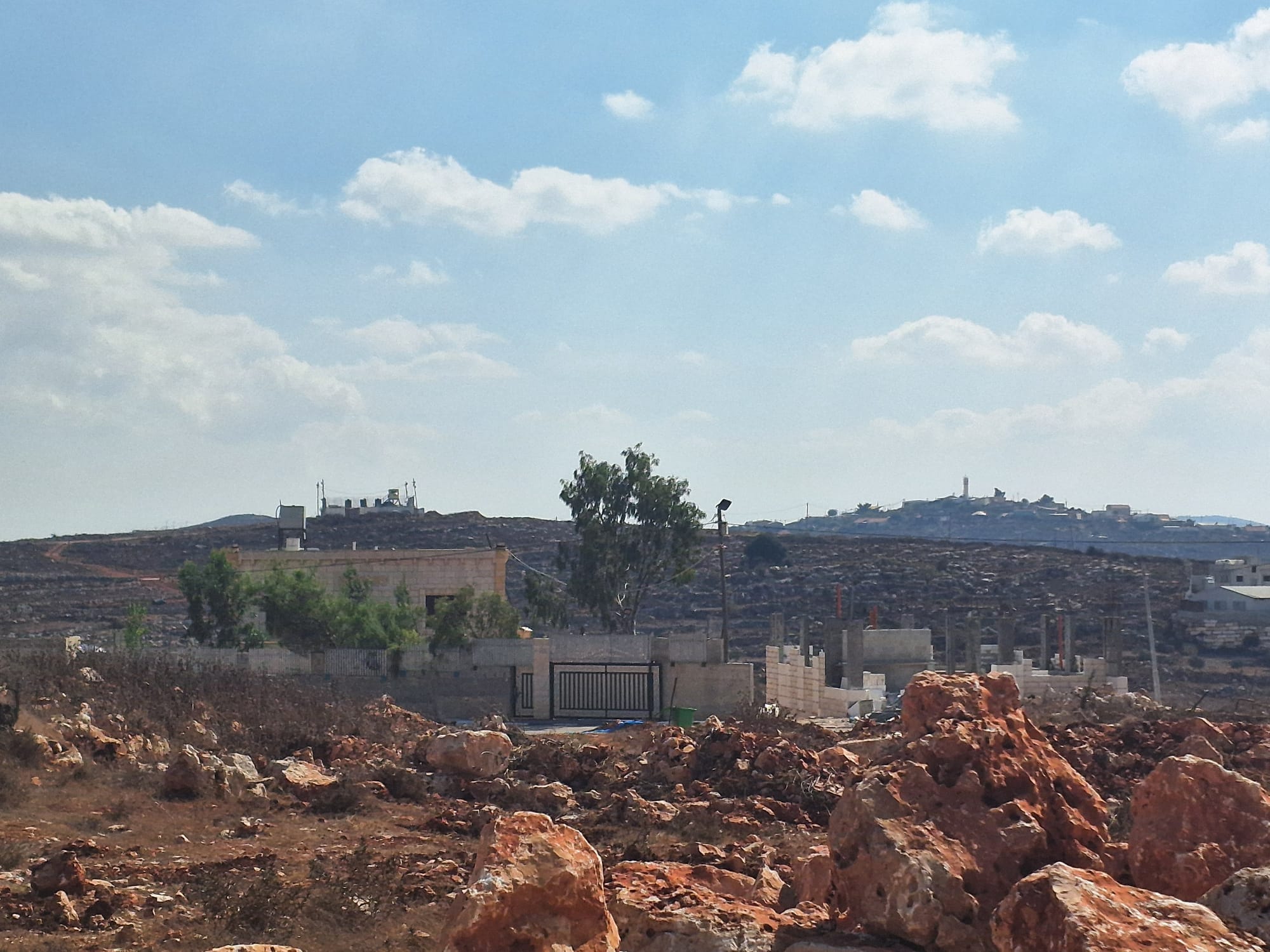
On our way out, we stopped to film the new road. The head of Jurish council was passing and stopped to talk to us. He told us that several days ago he was in his vehicle when settlers jumped and pepper-sprayed him. Next time we shall visit him.
From there we drove to Khirbet Al Marajem on the outskirts of Duma village. It was a long and hard drive, bypassing Duma in order to get to N.’s home since the family has been denied entrance through Duma. N. and his wife received us. They spoke about their hard time with the settlers. These have their area around and put up a sign saying “Amichai’s Fruit Grove”, planting vines. N. is forbidden to approach his own fig tree. His own area is now fenced and settler cattle grazes next to his home. We saw the cows. The settler sits with his dog in the shade of the tree in N.’s area, the settler cows around him. One of the cows actually entered the area underneath the house itself. Then the settler went with his cows to the neighbor’s house.
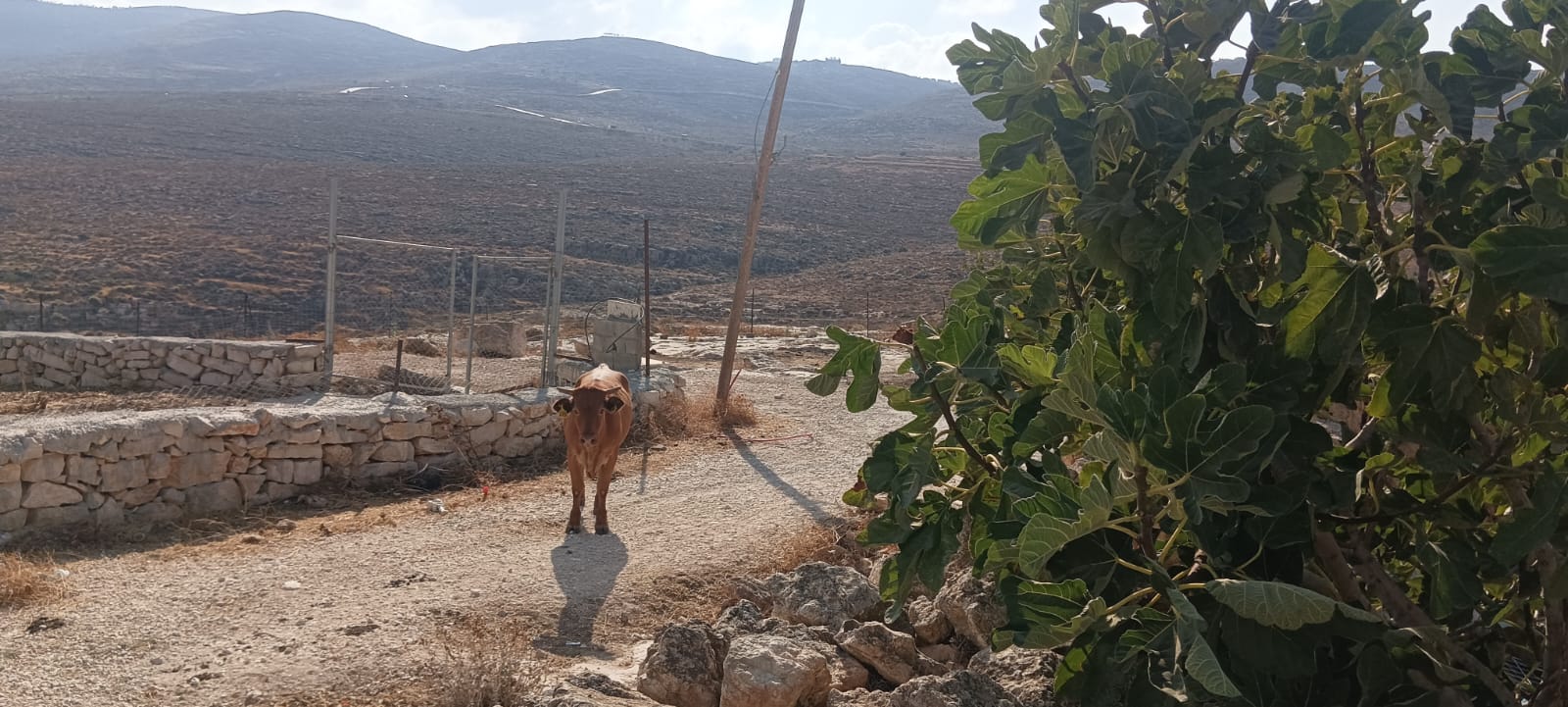
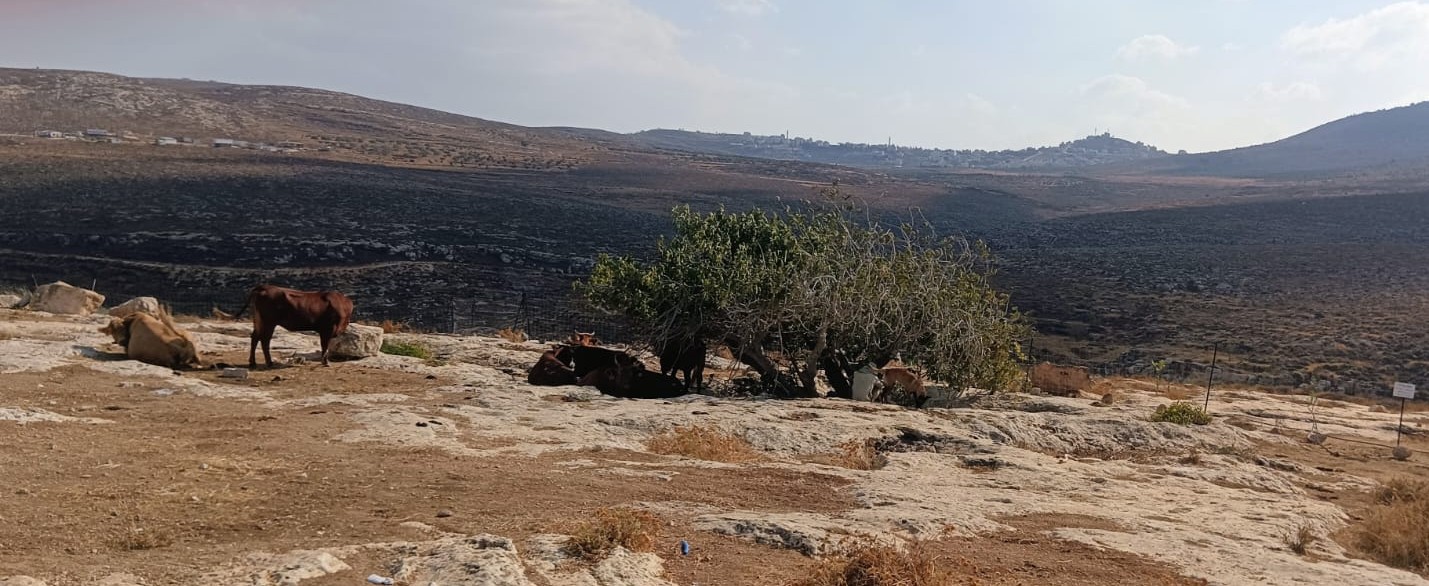
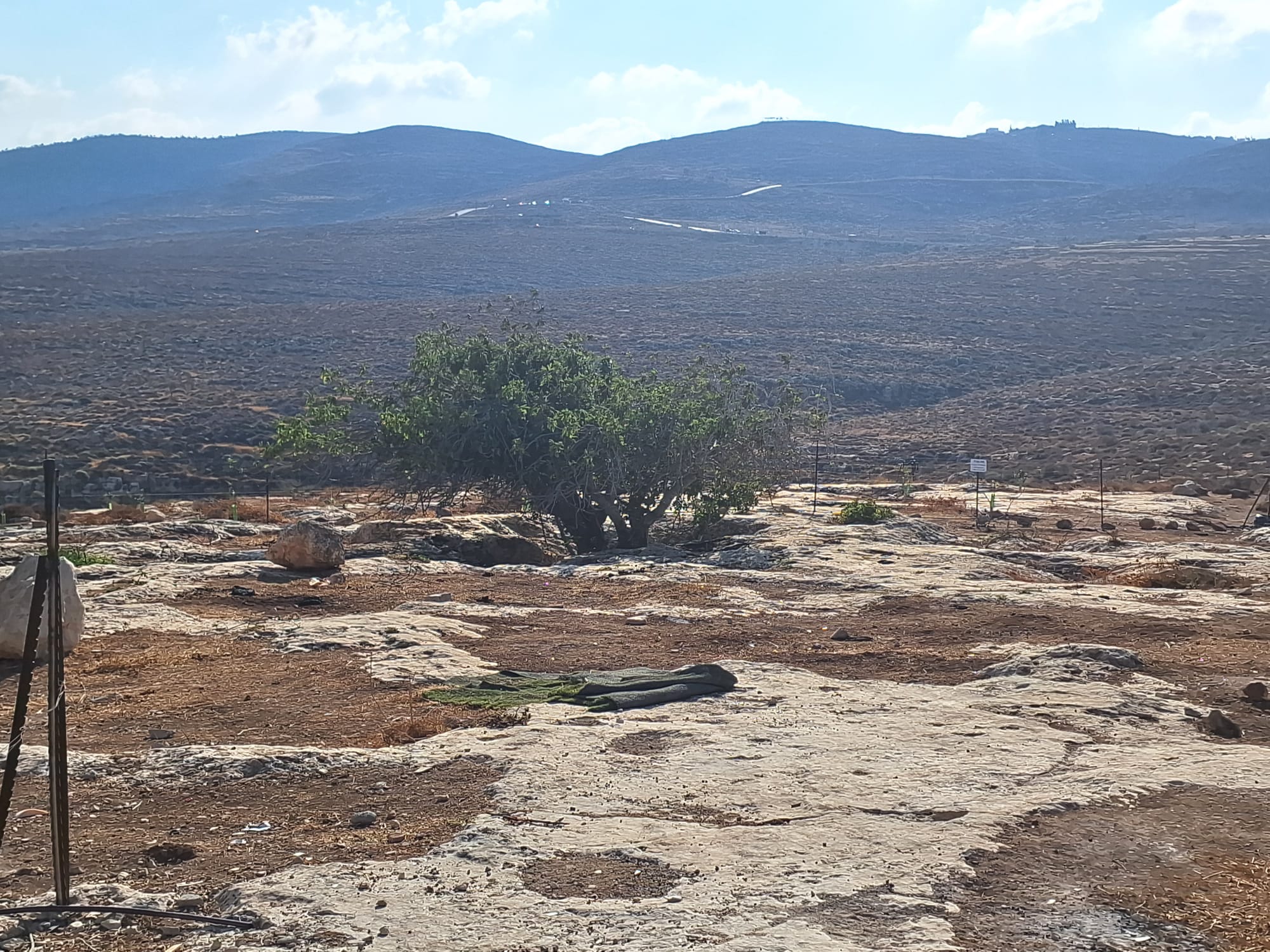
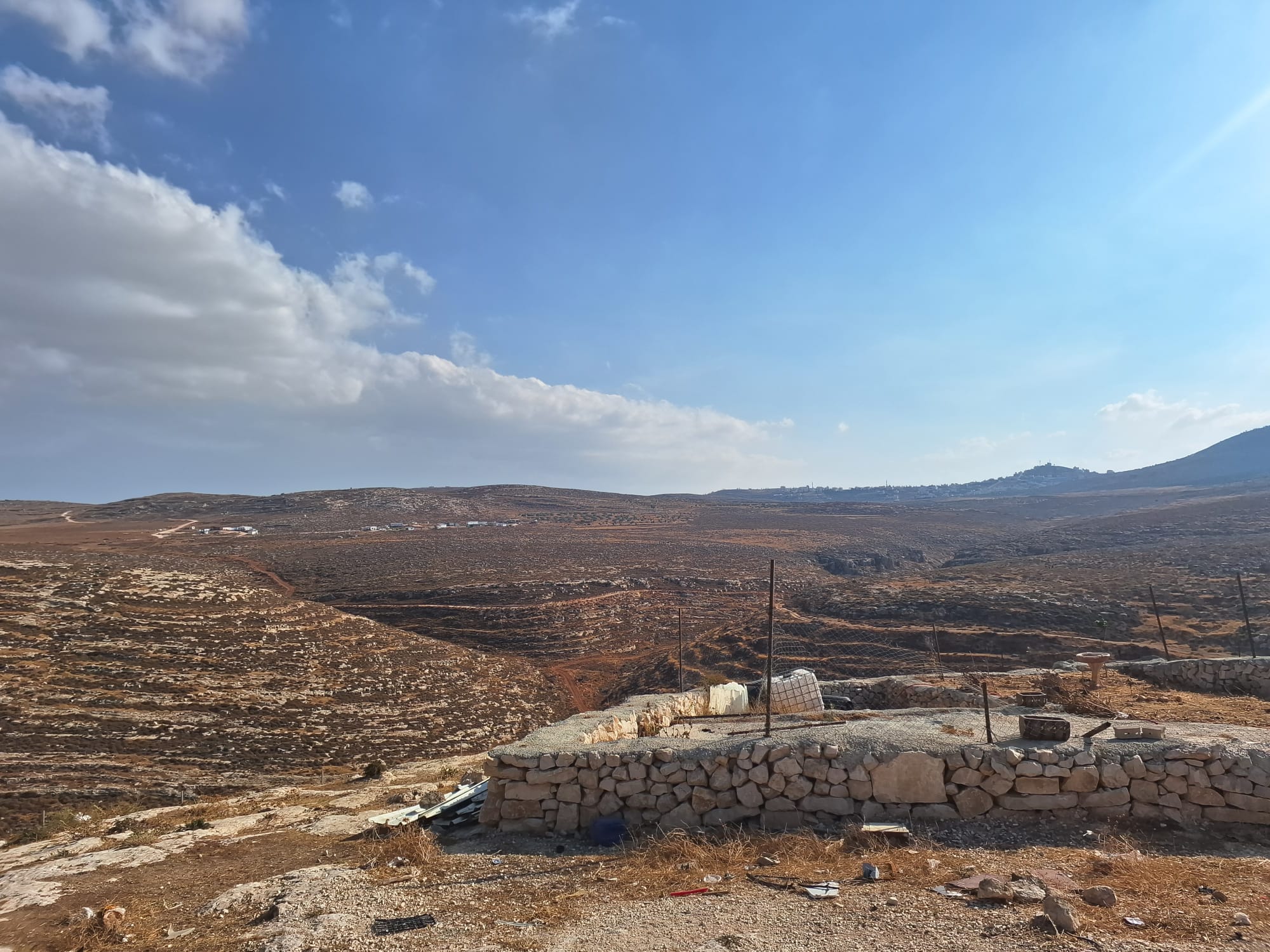
Settlers arrive from Mal’achei HaShalom settlement and the new settlement Gal Yosef, raised after October 7, 2023. It is entered via Mal’achei HaShalom. From the yard we photographed Al-Mughayyir and the settlements.
At the junction with the road descending into the Jordan Valley are flags of the Religious Zionist Party alongside Israel flags. Here as well as later, we see signs saying “Come to see the settlement uprising with your own eyes, travel the settlements during the Sukkoth holidays”. There are also signs saying “Yes, Smutrich” and “B – Jewish Power” and portraits of Ben Gvir and Tali Gottlieb. There are signs inviting one for the Northern West Bank march that will take place on Sukkoth holiday and pass through Ganim and Kadim, Jewish settlements that were evacuated during the Disengagement period and lately renewed.
Location Description
Jurish
See all reports for this place-
Jurish
An ancient village, of which 62% of the lands were defined after the 1995 agreements as Area B, while the remaining 38% Area C. Israel confiscated 17 dunams of the village's land for the construction of the Israeli Migdalim settlement, in addition to expropriating land for Road 505. In mid-2016, a road was blocked by the IDF (partly paved by the Palestinian Authority) that connected Jurish to Road 505. This is the shortest way to get to Jurish from the main road, without bypassing another 6.5 km through Qusra.
From 2014 to mid-2016, volunteers from the Watch checkpoint in the village held English, yoga and Hebrew classes for girls.
-
Khursa / Al Marajem
See all reports for this place-
Khursa / Al Marajam
Khursa is a small village of about 2,500 inhabitants in Area A, on a hill on the way to Negohot settlement. At the end of September 2017, a pillbox watchtower was set up in the heart of the village, adjacent to the village's diwan, which is a sort of community center for celebrations such as weddings, or used as mourning tent. The army declared the place a closed military zone. In 2018, we saw another aggravation: a barrier of about 50 m, which divides the road into two, and a prohibition on passing vehicles, and then also a prohibition on pedestrians, who have to walk around on a dirt road - during winter on a mud road. Since the checkpoint was established, the army has required special permits to hold an event in Diwan and the permits must be requested at least two days in advance. Of course, the dying are not always cooperative ...together with the villagers we wondered what the meaning of this strange barrier in Area A, which is supposed to be under full control of the Palestinian Authority. Conclusion: It seems that in order to secure the way to the Negohot, the residents are forced to live with a closed military zone and a watchtower in the village center, and suffer many restrictions. (From Watch Checkpoint reports).
Recently, the Israeli authorities began, in the middle of the night, to pave a new bypass road from the nearby village Fuqeiqis to Negohot, Trying to establish facts and aiming to enlarge the settlement.
Updated in April 2021 by Anat T.
 Timna OrevSep-24-2026Replacing flags on Highway 6
-
Qusra
See all reports for this place-
Qusra
This village is located in the Nablus district, about 28 kilometers south-east of the city. Its population numbers 4,310 as of 2007 (according to the Palestinian census). After the Oslo Accords, 50% - most of the village’s built-up area – was categorized Area B, and about 70 homes as well as the rest of its land are inside Area C.
In 1983, 177 dunams of the village lands were confiscated by Israel to build a ‘Nahal’ stronghold, turned civilian in 1985 and named Migdalim settler-colony, east of the village itself. To the north-east is a gas station and a leather plant, as well as a studio producing wood ware, all of which are a branch of the settler-colony. Dozens of additional farmland were confiscated from Qussra and Jaloud in order to erect the settler-colonies Esh Qodesh and Ahiya.
“The villagers point to the settler-colonists of Esh Qodesh as the source of their problem. Qussra villagers were forbidden to tend their lands located a kilometer away from the Esh Qodesh fence, and about 20 meters from the area declared military zone. What about the ‘legitimate’ plots? Their crops are regularly destroyed by the settler-colonists. Fires break out in wheat fields, olive trees are cut down, wells are destroyed – these have all become routine events. In spite of all of this, the head of the local council sees the Israeli army as the main source. He says that the settler-colonists could not have harassed the villagers without the army backing them up…”
(From a MW report, August 3, 2015)
In 2001, the Israeli army evacuated its intelligence base “Kida”. In 2003, the settler outpost Kida was established, a quick attempt was made to evict the newcomers, but they were eventually allowed to remain.
For further information: http://vprofile.arij.org/nablus/pdfs/vprofile/Qusra_vp_en.pdf
-
