
Rahwa - They sowed winter crops, in order to harvest in the summer - before they had time, settlers came with a combine, harvested the grain and stole it.
Not far from Meitar Checkpoint: we drive north (not turning right to Road 60), beyond the improvised car park on the Palestinian side of the checkpoint. These are Palestinian cars who got permits to reach Israeli hospitals etc., for there are no workers going to Israel at present. Later, the turn left blocked by a yellow metal gate, is the road to Tene Omarim colony, that in the past was used to reach Ramadin as well as the southern entrance to Dhahariya. Now, only people going to the colony are allowed to enter as well as the trucks driving to the quarry. Later, we turn right – it is a hardly drivable dirt track, for the colonist pile up soil all along to suffocate Rahwa. We also see the water pumps bearing water to pipes that go only to the colony. We drive downhill, under the colony which is on the hill top to our north.
Most of the families of this community have already left for Dhahariya because of colonist harassment. We see their ruined houses. The only family left is Majdi Ethel. He teaches at Dhahariya and in order to get to work he must go around by way of Road 60 for an hour and a half (!). Even bringing food home one must somehow sneak one’s vehicle through. He has four daughters, one of whom bursts out crying when she sees me, thinking I am a colonist. Generations of Palestinian children are traumatized by their constant meeting with Jewish Israelis – soldiers or colonists. Majdi’s brother, Jihad, is a shepherd. The mother/grandmother takes part in the conversation. Here is what they tell me, moderately, watching their dignity, while I nearly explode and have a hard time writing. I shall add that the photos they took as they were being raided, taken from a distance, as close photography is dangerous.
They sowed winter cereal in order to harvest in the summer – and before they could do so, colonists arrived with their machinery and harvested it.
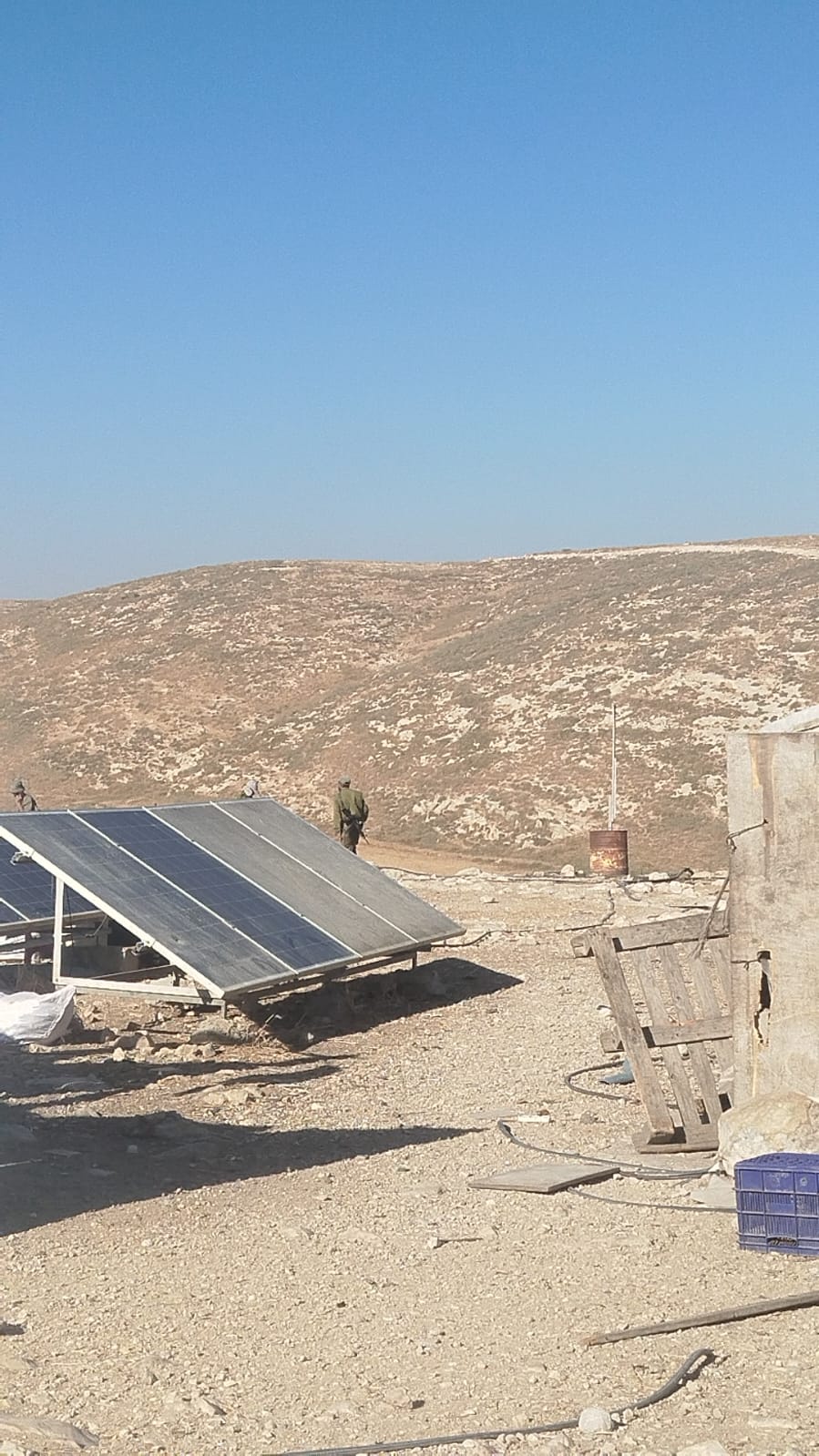
Elyashiv in army garb and another three people walked around the houses (photo no. 1), as well as the family’s cousins who live west of the hill, where he told a soldier to shackle them. Three persons were shackled and released after 2-3 hours. Then they went.
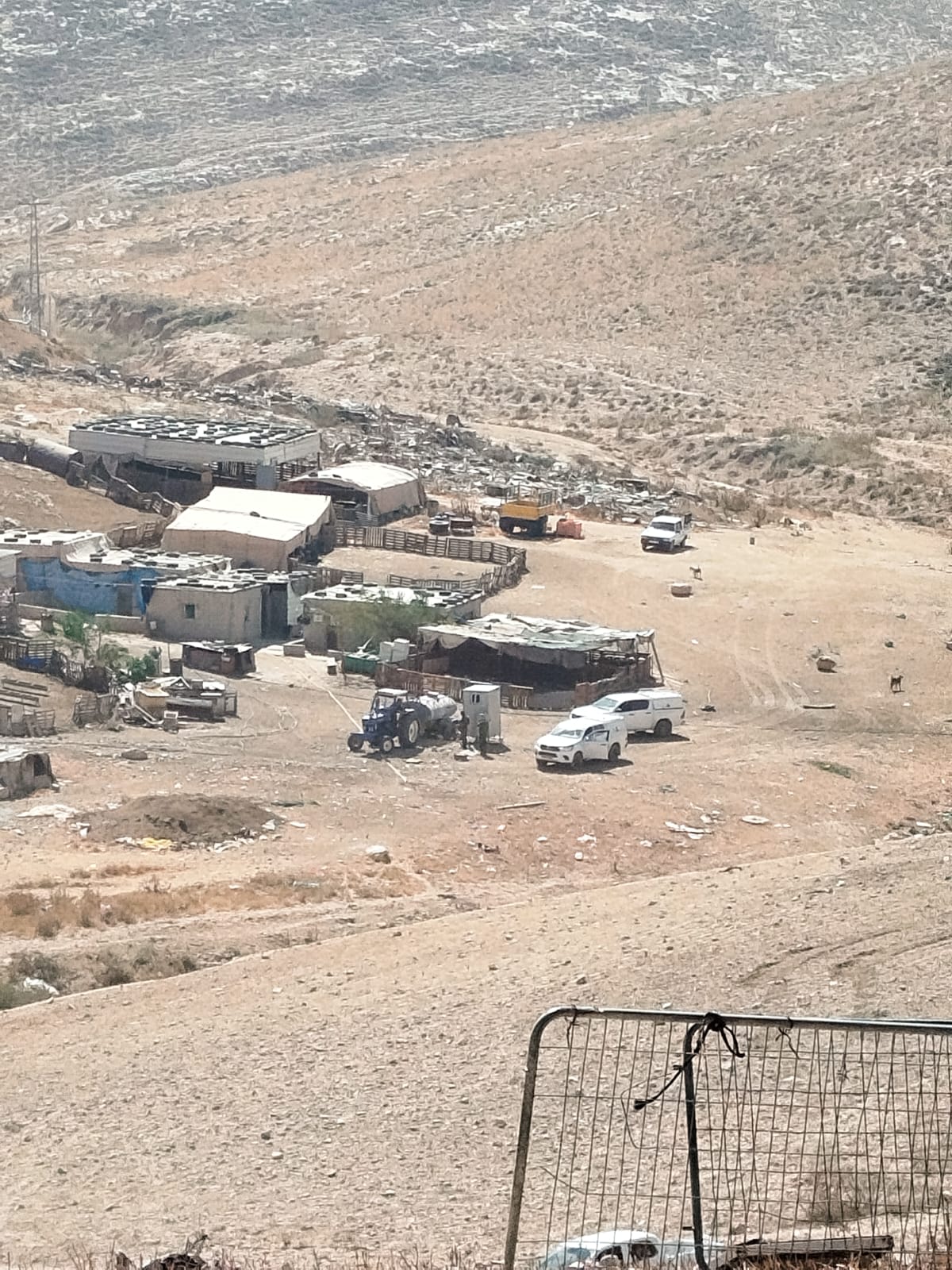
Later Elyashiv came back with two pickup trucks, checked whether their tractor was illegal, and discovered it was legally registered with a Palestinian license plate (photo
No. 2). Meaning the colonist is traffic police as well as army…
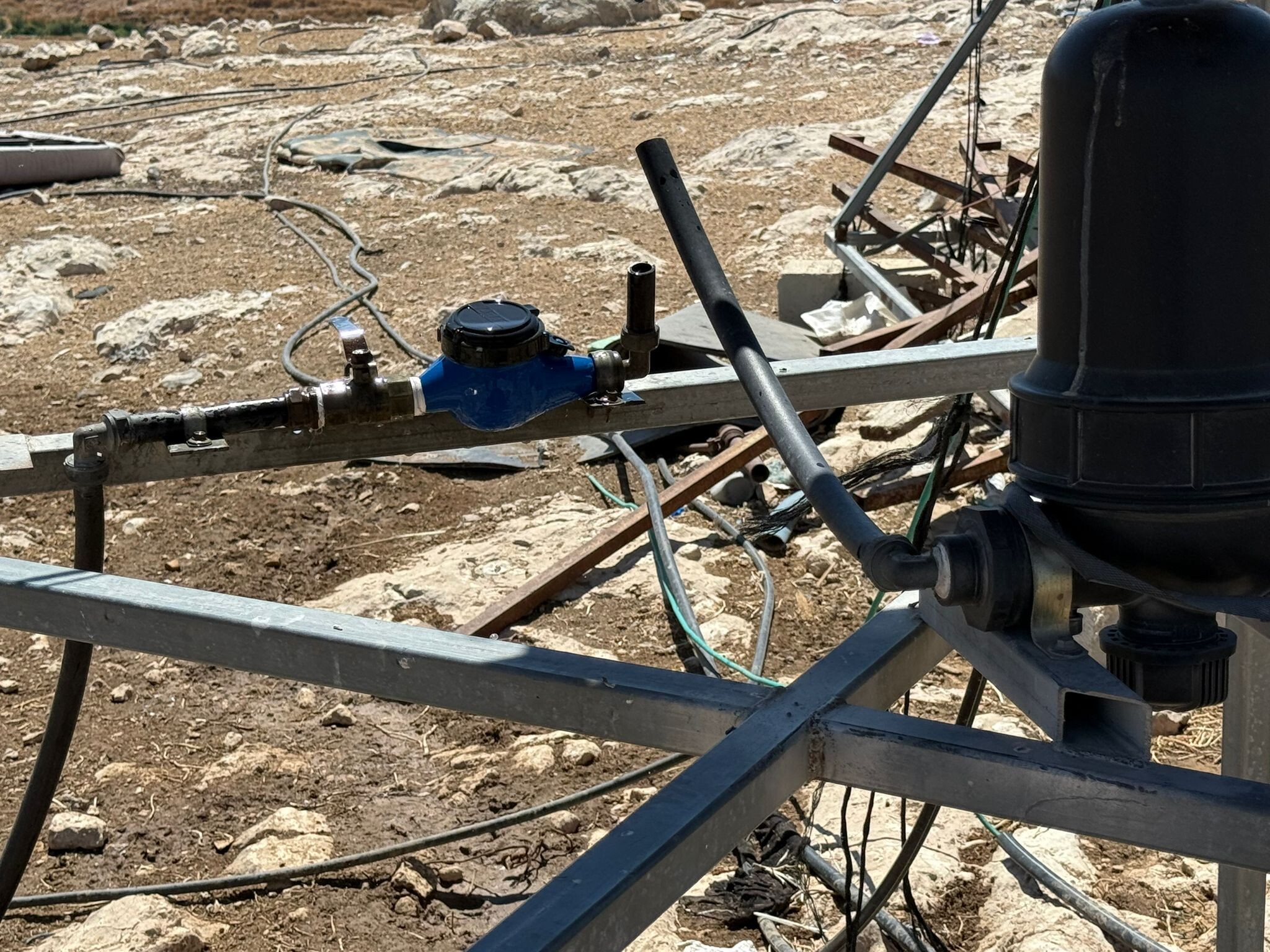
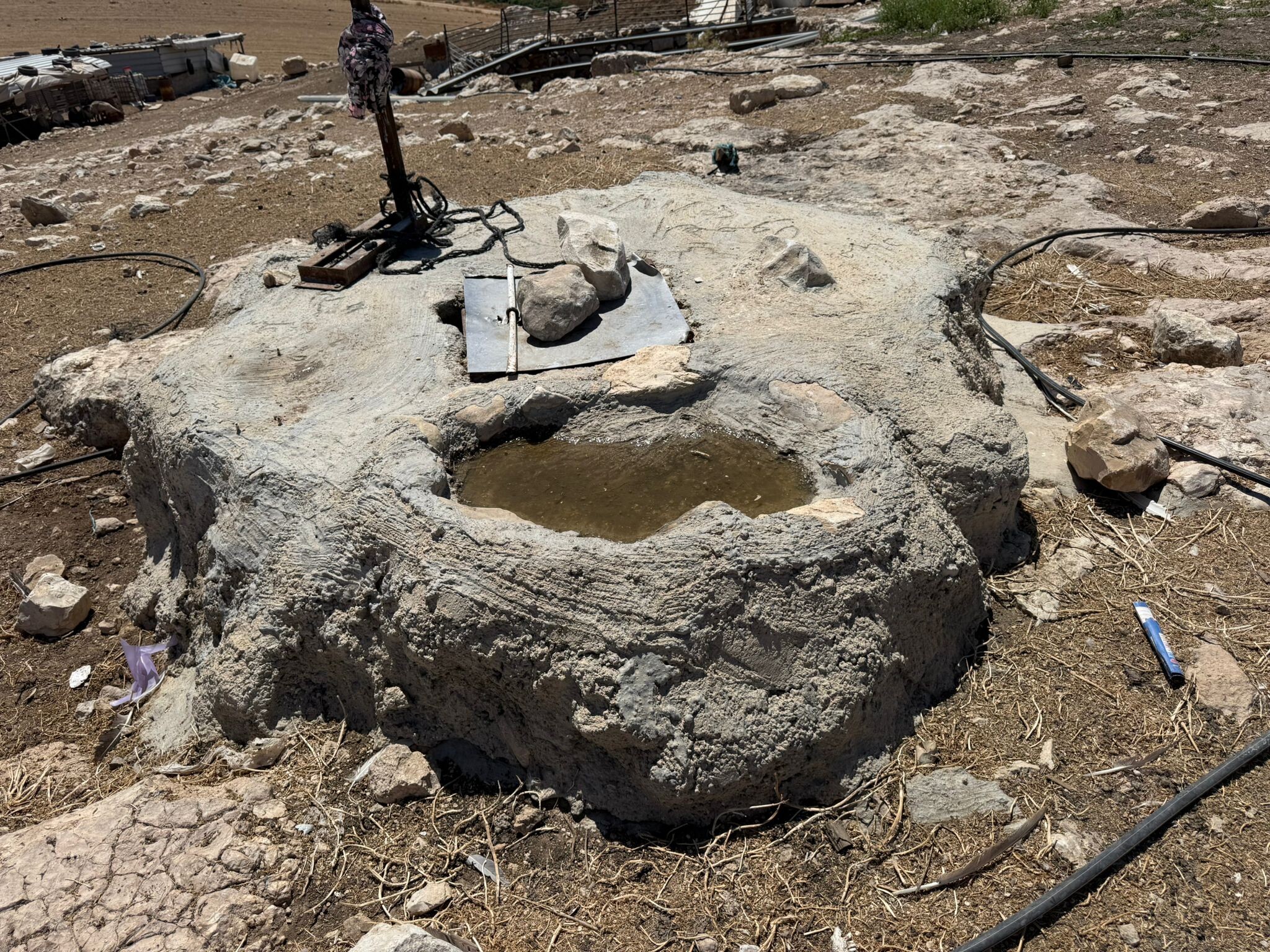
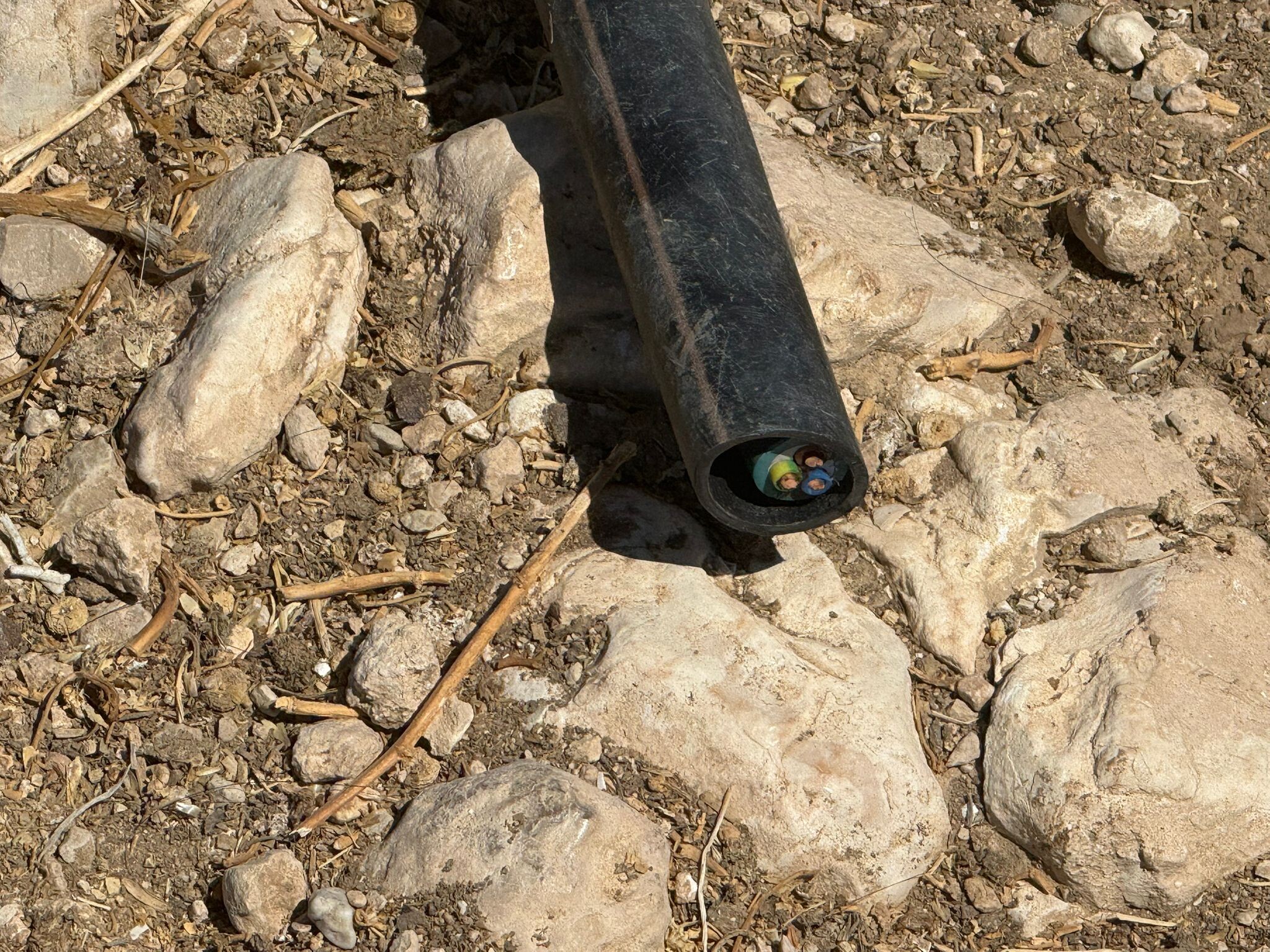
The colonists turned the soil everywhere claiming the Palestinians were stealing water and the colonists must expose their illegal pipes, which is of course a lie. Then Elyashiv mounted the tractor and started it with a key he brought. The tractor was punctured so Elyashiv brought a compressor to blow up the wheels and stole the tractor with the water tank – not before getting rid of all the water in the tank, breaking the faucet in the kitchen, cutting the water pipes leading from their own water hole (photo no. 3), stealing the pipes from that hole (photo no. 4) and cut the electric cables leading from the solar panels to the house (photo no. 5). Majd has another tractor and water tank in Dhahariya which he is afraid to bring.
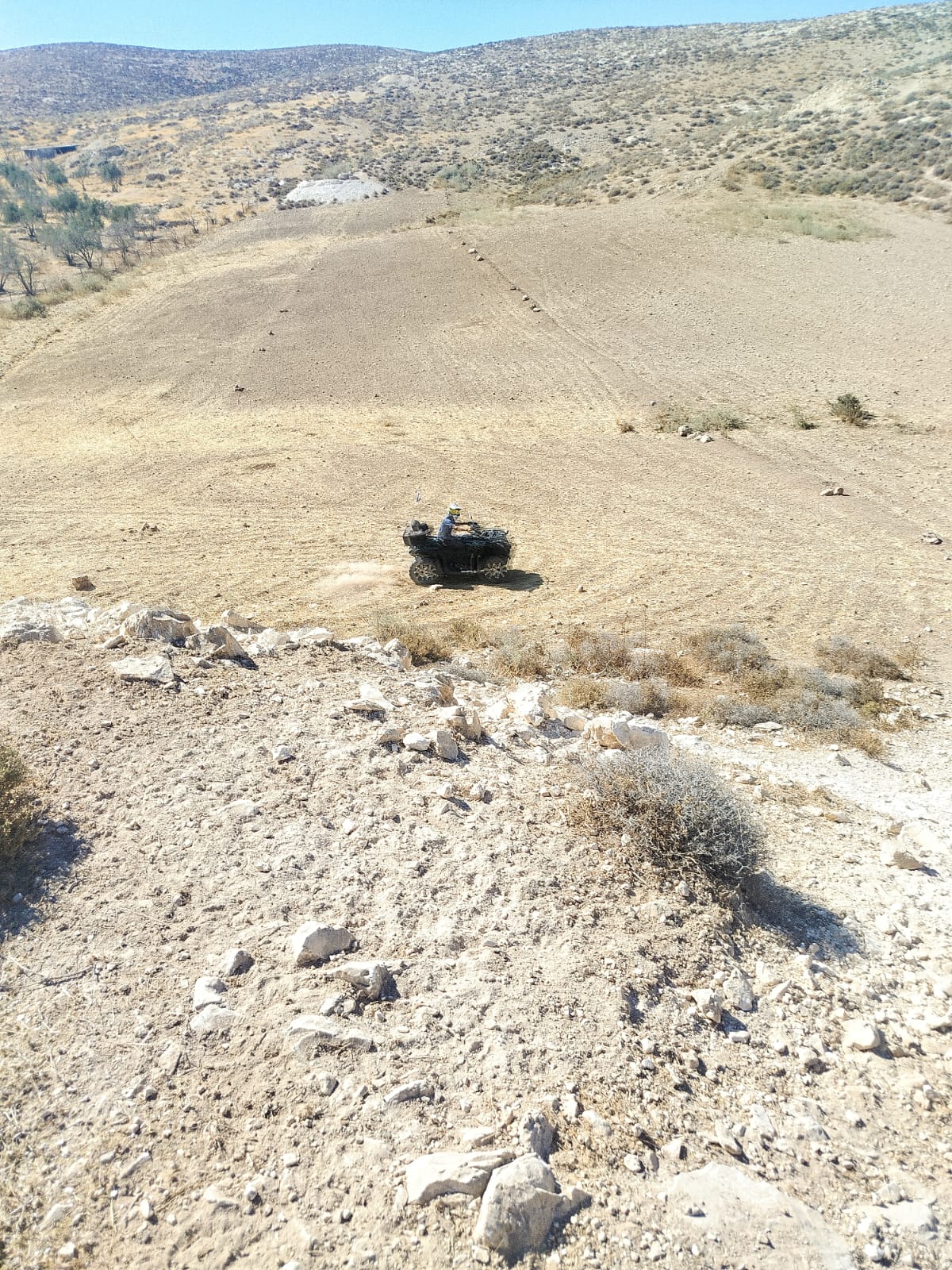
Then someone came on an ATV (photo no. 6), road around the houses in the uncle’s compound, tore the tires of his Toyota pickup truck, and came back to take a picture of the water tank on the roof, and realizing it had not been completely emptied – completed the “mission”.
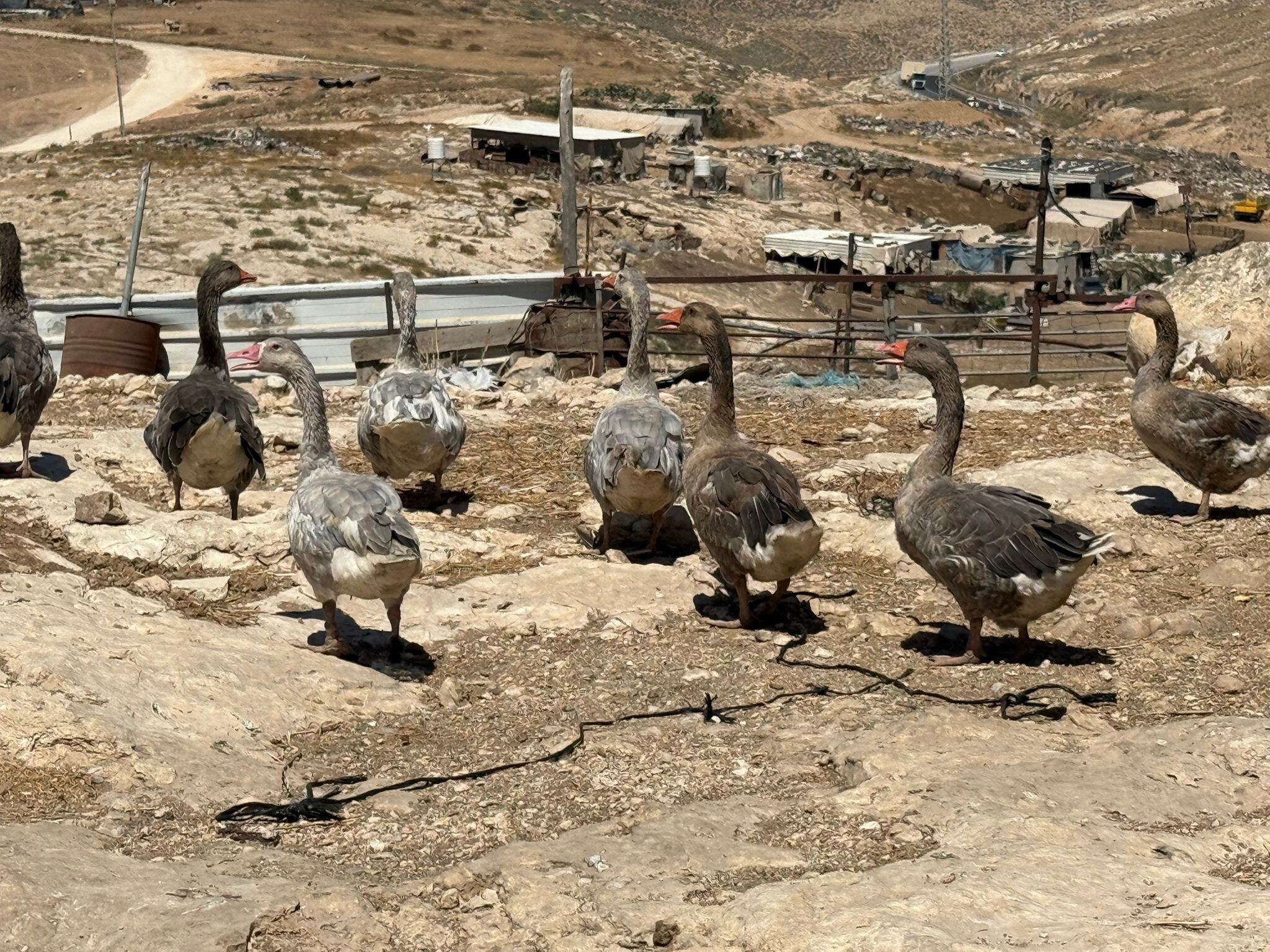
On the way out, a pastoral photo (no. 7) – a group of geese. Mohammad explains they are the watchdogs, screaming as strangers approach.
Location Description
South Hebron Hills
See all reports for this place-
South Hebron Hills
South Hebron Hills is a large area in the West Bank's southern part.
Yatta is a major city in this area: right in the border zone between the fertile region of Hebron and its surroundings and the desert of the Hebron Hills. Yatta has about 64,000 inhabitants.
The surrounding villages are called Masafer Yatta (Yatta's daughter villages). Their inhabitants subsist on livestock and agriculture. Agriculture is possible only in small plots, especially near streams. Most of the area consists of rocky terraces.Since the beginning of the 1980s, many settlements have been established on the agricultural land cultivated by the Palestinians in the South Hebron Hills region: Carmel, Maon, Susia, Masadot Yehuda, Othniel, and more. Since the settlements were established and Palestinians cultivation areas have been reduced; the residents of the South Hebron Hills have been suffering from harassment by the settlers. Attempts to evict and demolish houses have continued, along with withholding water and electricity. The military and police usually refrain from intervening in violent incidents between settlers and Palestinians do not enforce the law when it comes to the investigation of extensive violent Jewish settlers. The harassment in the South Hebron Hills includes attacking and attempting to burn residential tents, harassing dogs, harming herds, and preventing access to pastures.
There are several checkpoints in the South Hebron Hills, on Routes 317 and 60. In most of them, no military presence is apparent, but rather an array of pillboxes monitor the villages. Roadblocks are frequently set up according to the settlers and the army's needs. These are located at the Zif Junction, the Dura-al Fawwar crossing, and the Sheep Junction at the southern entrance to Hebron.
Updated April 2022
 Timna OrevSep-24-2026Replacing flags on Highway 6
-
