
Sha'ab al-Butum - The settlers, half-masked, sprayed fuel in the yard and towards the volunteers and lit a fire
Meitar Checkpoint is deserted, as it has been since the beginning of the October war. Since then, Palestinian workers have not been allowed to enter Israel for work.
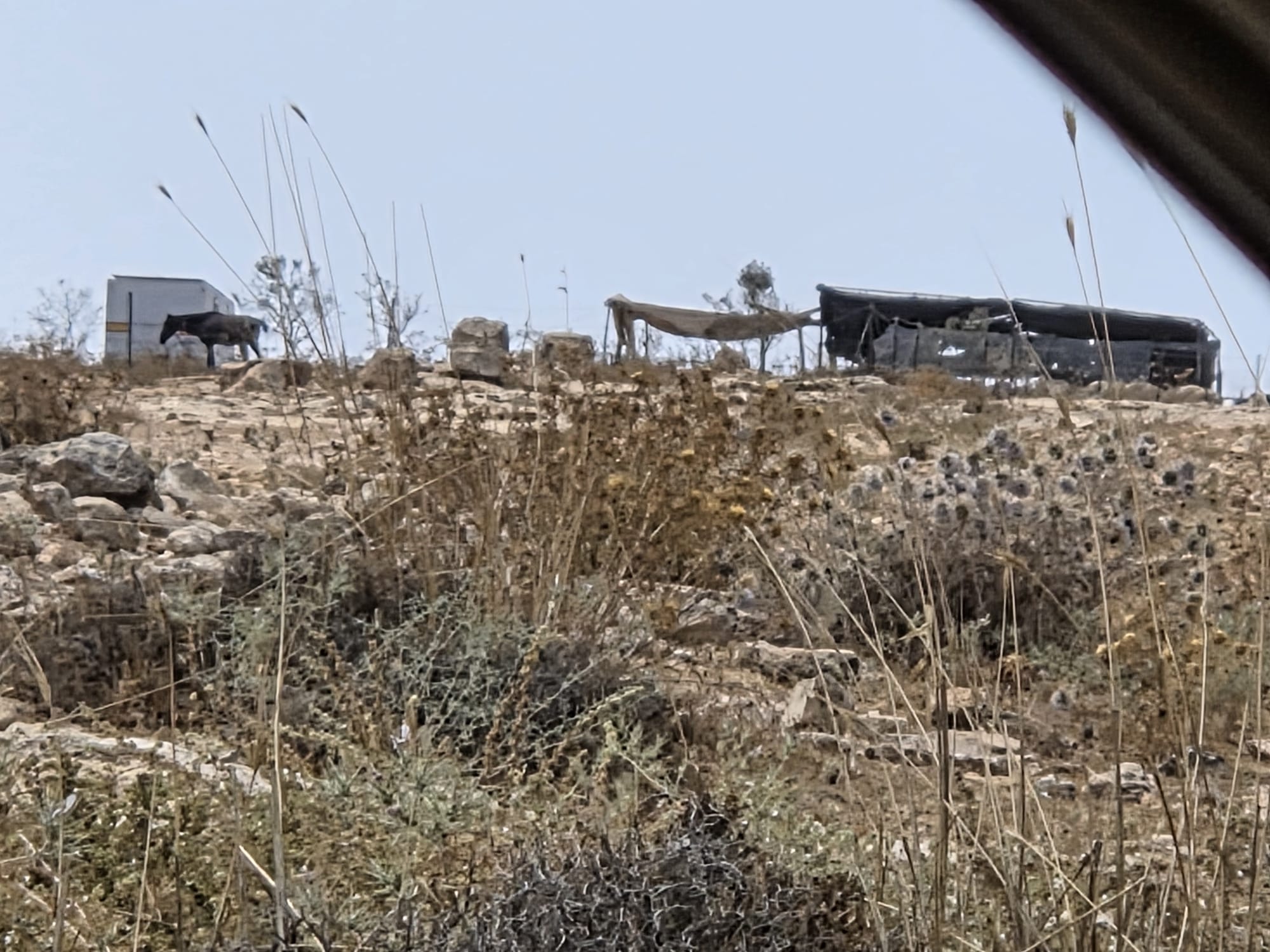
We drove along Route 317 near the village of Maktal-Umm-Salem. Near the cave whose residents were expelled several years ago, there is a new outpost (see photo).
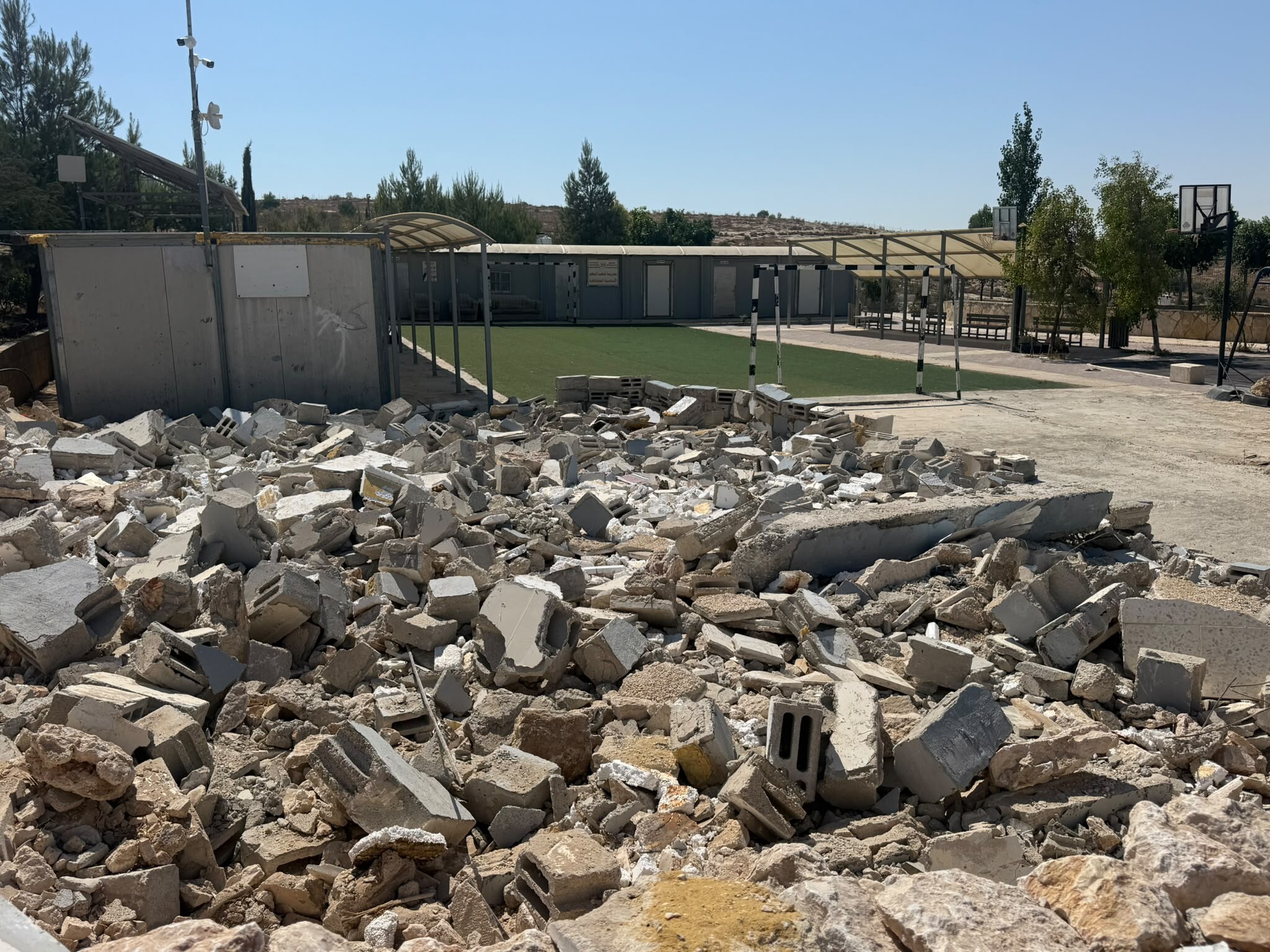
We continued to Sha’ab al-Butum, passing by the school where one of the structures had been demolished (see photo), and drove to the home of Layla and Muhammad.
During the night, the volunteers were awakened by barking dogs. They looked outside and saw the settlers, half-masked, spraying fuel in the yard and toward them and setting it on fire.
One of the sons, who was sleeping outside, was also awakened at 2:30 a.m. by the noise of three settlers who had come to the house. They poured gasoline over the seats that were outside, and also some into the volunteers’ room, whose window was slightly open, and set the gasoline on fire.
The son began shouting, woke the entire family, and the settlers fled. The family put out the fire.
They were extremely lucky to have woken up at the beginning of the incident, because there were 18 people in the house, including babies and two Protective-Presence volunteers (from Canada and Spain).
A major disaster was narrowly averted!!!
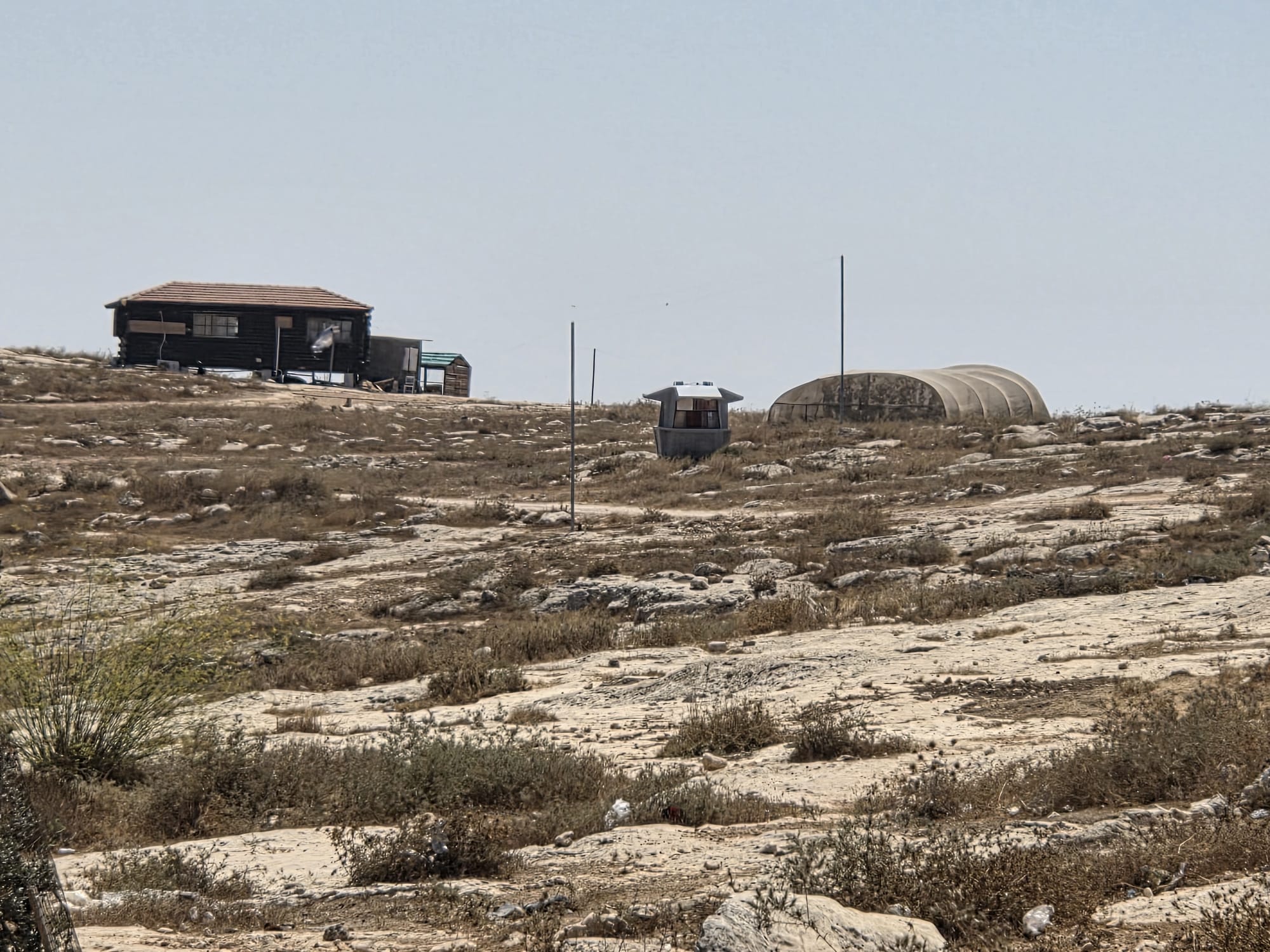
The distance from the house to the outpost is about 250 meters, and there is a continuous line of structures there, including a greenhouse that was stolen from the family! (See photo.) The settlers are not afraid to confront the volunteers either. In one of the videos, Tzur, 16, can be seen pushing a volunteer with a stick.
A week ago, he also opened the chicken coop and released the chickens and the rabbits….
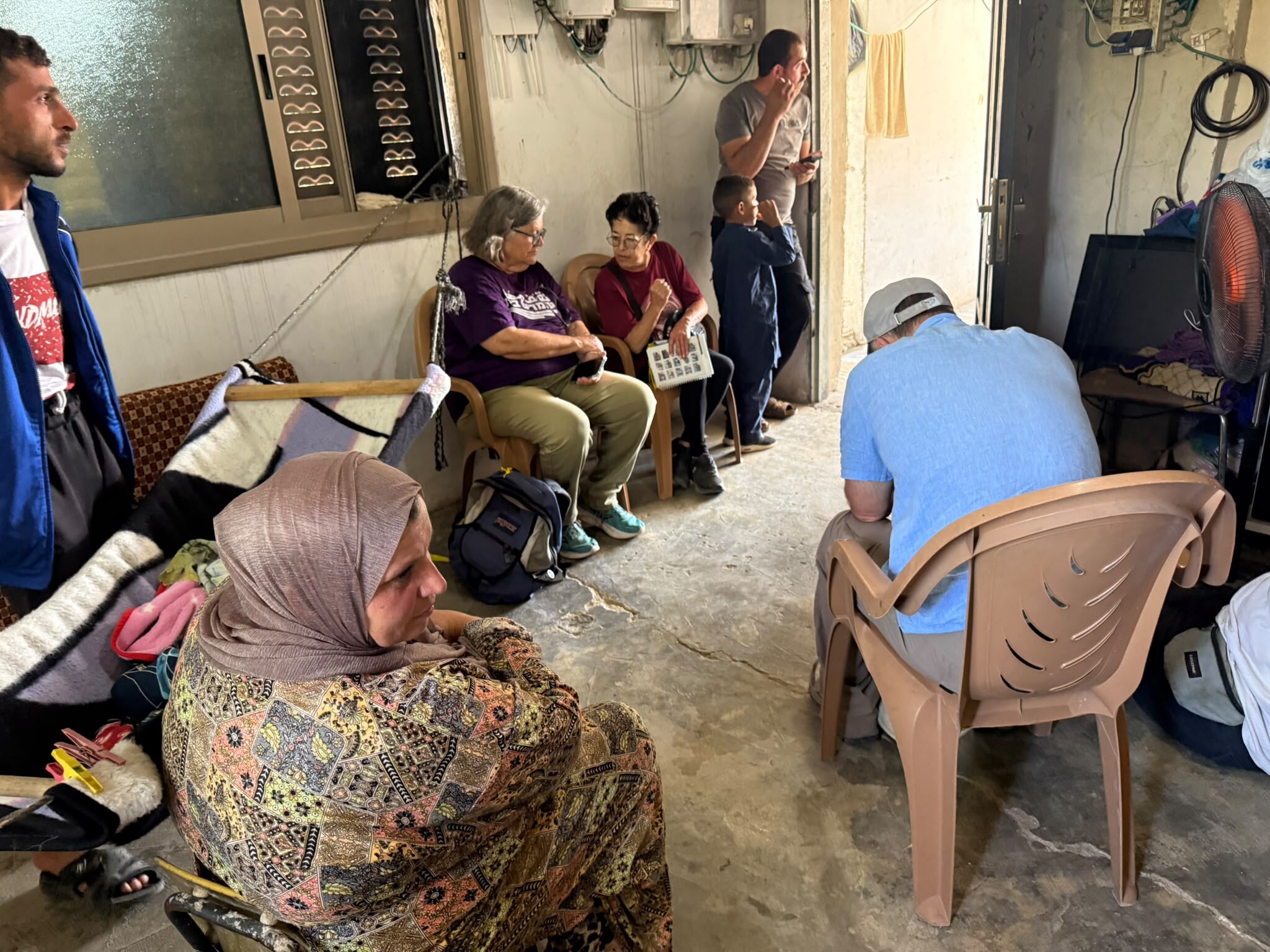
We brought the family clothes and food supplies.
While we were there, the police arrived to investigate the fire. They photographed the site from every angle and viewed the footage from the cameras that record what happens there.
On our way out, we met Wadha from the village. She told us that several weeks ago (the incident was already extensively reported), the settlers beat her because she resisted them, and she went to the hospital with blunt-force injuries for treatment.
When we met her now, she had just returned from a meeting of village residents who want to organize themselves in response to the settlers. They have a WhatsApp group, but people are afraid to leave their homes to help one another, because the empty house might be broken into and could also be vandalized and set on fire….
On the way back, opposite Asa’el, on the hill, there are David’s Tabernacle and Gideon’s Cave. We could see a kind of a tent and equipment there, suggesting that another outpost is being planned.
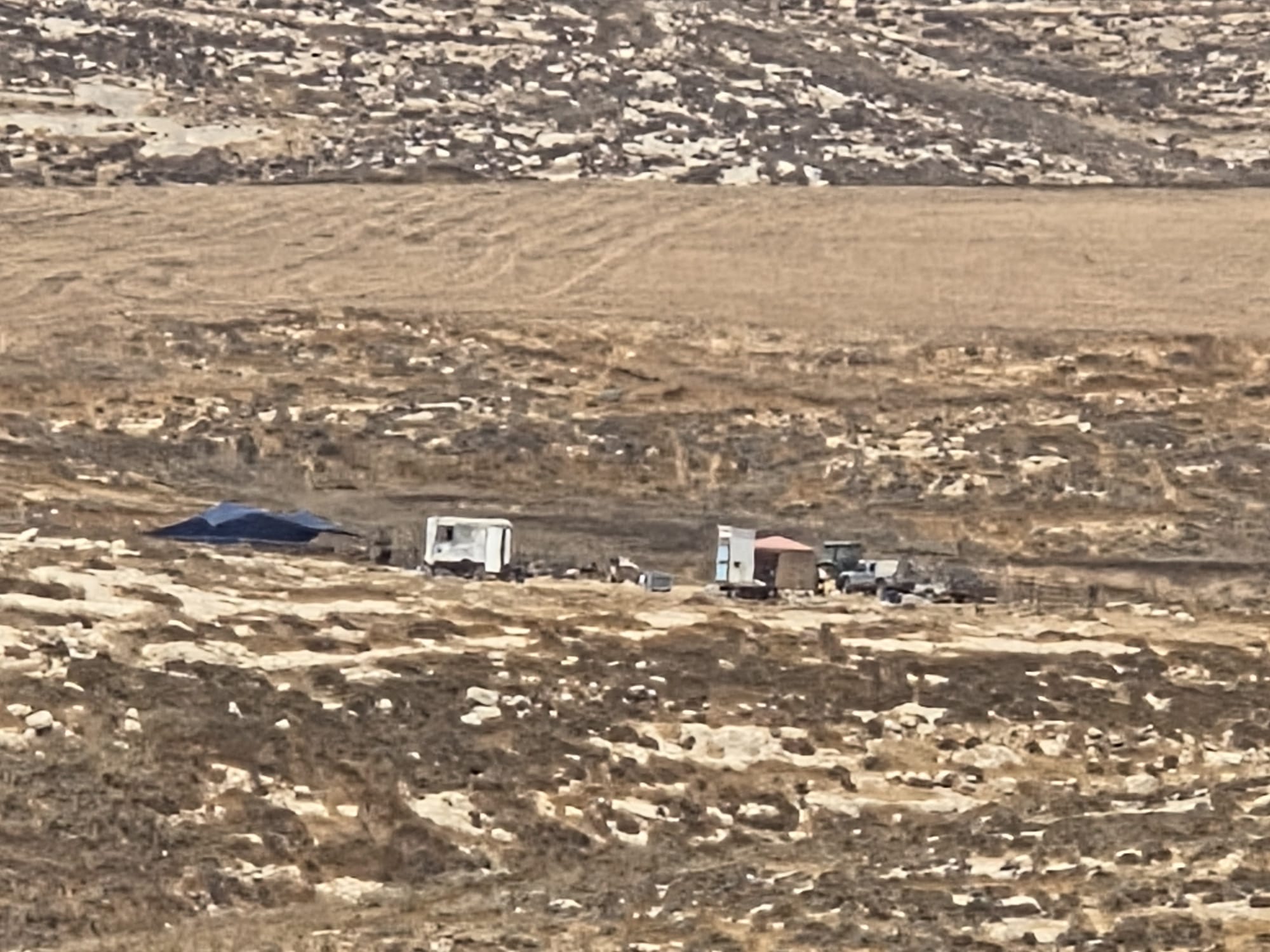
Further on, on the next hill, there is a tent and two caravans….. another outpost…
Another shift in the abandoned villages and the outposts that keep multiplying.
Location Description
Meitar checkpoint / Sansana
See all reports for this place-
Meitar Checkpoint / Sansana The checkpoint is located on the Green Line and serves as a border crossing between Israel and the West Bank. It is managed by the Border Crossing Authority of the Defense Ministry. It is comprised of sections for the transfer of goods as well as a vehicle checkpoint (intended for holders of blue identity cards, foreign nationals or diplomats and international organizations). Passing of Palestinians is prohibited, except for those with entry permits to Israel. Palestinians are permitted to cross on foot only. The crossing has a DCO / DCL / DCL / DCL (District Coordination Office), a customs unit, supervision, and a police unit. In the last year, a breach has been opened in the fence, not far from the crossing. This breach is known to all, including the army. There does not appear to be any interest in blocking it, probably as it permits needed Palestinian workers without the bureaucratic permits to get to work in Israel. Food stalls and a parking area economy have been created, but incidents of violent abuse by border police have also been recorded. Updated April 2022
-
Sha'ab al-Butum
See all reports for this place-
This is one of the small Palestinian communities in Masafer Yatta in the southern Hebron Hills, near the settlement of Mitzpe Avigail.
Since the outbreak of the October 7, 2023 war, settler violence against residents has escalated greatly, as in the entire Palestinian community. This violent conduct receives full backing from the state and full cooperation from the IDF. The goal is to make the lives of the Palestinian residents miserable and make them abandon and leave.
The population consists of mostly shepherds who peacefully seek to cultivate the land and graze their sheep, whom the settlers treat as a dangerous enemy. They prohibit them from any movement related to herding sheep and cultivating the land and harm everything: trampling crops, breaking olive trees, smuggling herds, scaring shepherds, conducting wild searches of houses, shouting, cursing and threatening - at all hours of the day. "We are Besieged, but will not move from our land," says Lila G. New settlements are springing up around them. At first it's a bus or a truck that turns into residential buildings, on top of which every week more residential buildings and animal sheds are added. With the open encouragement of the current government, Jewish terrorism is raising its head, with authority and permission. The settlers have received army uniforms and weapons, and no one is stopping them. The police, who are supposed to protect the Palestinians from the settlers' riots, sometimes respond to calls for help, but in practice they don't do much more than provide them with a report, and they are required to go and file a complaint in Kiryat Arba Settlemnt police station . Though the settlers' identities are known, they are !never arrested.
-
South Hebron Hills
See all reports for this place-
South Hebron Hills
South Hebron Hills is a large area in the West Bank's southern part.
Yatta is a major city in this area: right in the border zone between the fertile region of Hebron and its surroundings and the desert of the Hebron Hills. Yatta has about 64,000 inhabitants.
The surrounding villages are called Masafer Yatta (Yatta's daughter villages). Their inhabitants subsist on livestock and agriculture. Agriculture is possible only in small plots, especially near streams. Most of the area consists of rocky terraces.Since the beginning of the 1980s, many settlements have been established on the agricultural land cultivated by the Palestinians in the South Hebron Hills region: Carmel, Maon, Susia, Masadot Yehuda, Othniel, and more. Since the settlements were established and Palestinians cultivation areas have been reduced; the residents of the South Hebron Hills have been suffering from harassment by the settlers. Attempts to evict and demolish houses have continued, along with withholding water and electricity. The military and police usually refrain from intervening in violent incidents between settlers and Palestinians do not enforce the law when it comes to the investigation of extensive violent Jewish settlers. The harassment in the South Hebron Hills includes attacking and attempting to burn residential tents, harassing dogs, harming herds, and preventing access to pastures.
There are several checkpoints in the South Hebron Hills, on Routes 317 and 60. In most of them, no military presence is apparent, but rather an array of pillboxes monitor the villages. Roadblocks are frequently set up according to the settlers and the army's needs. These are located at the Zif Junction, the Dura-al Fawwar crossing, and the Sheep Junction at the southern entrance to Hebron.
Updated April 2022
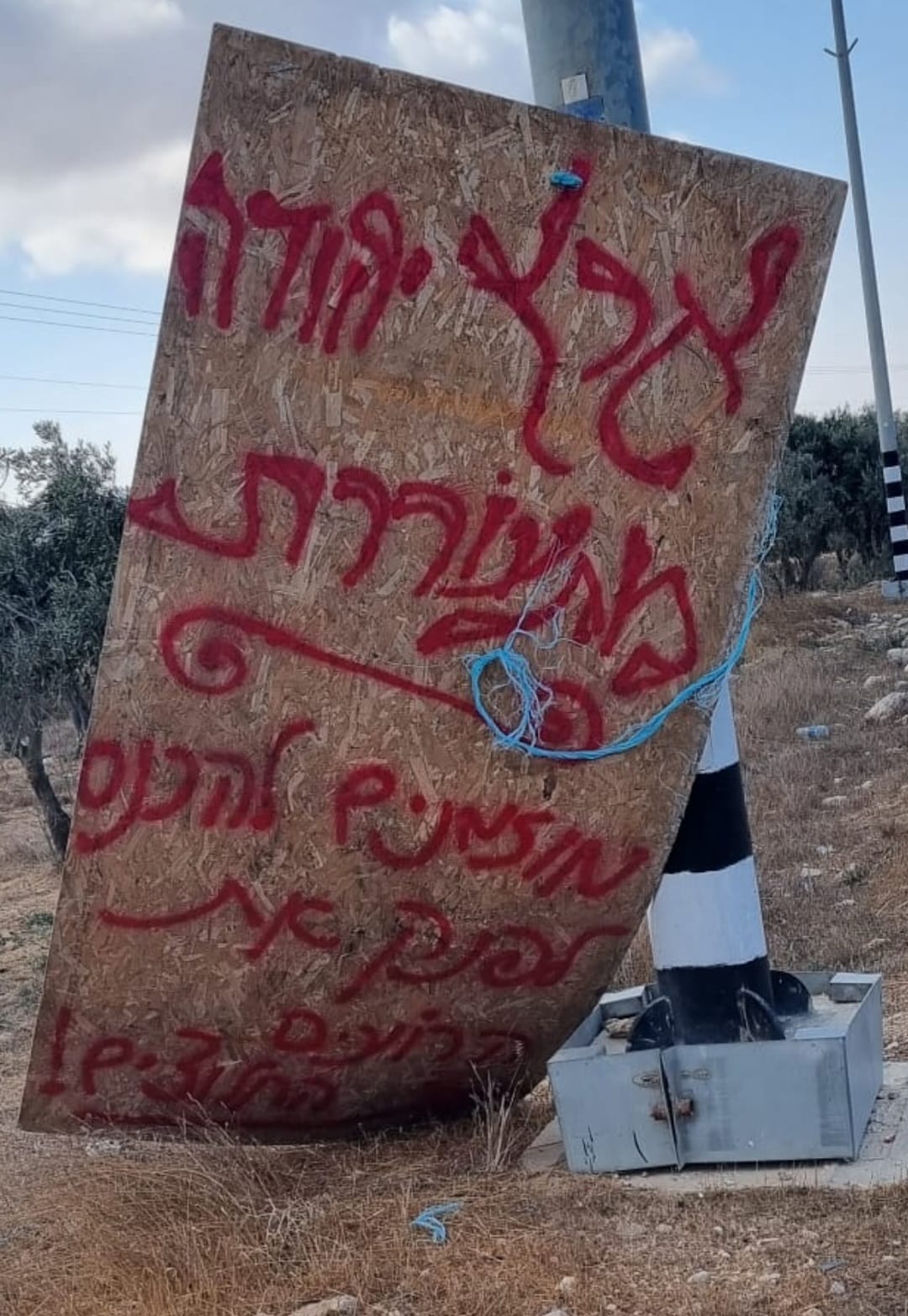 Smadar BeckerOct-17-2026A sign placed by those who call themselves the Pioneer Shepherds, at the outpost adjacent to Qawawis
-
