
A Journey from Jerusalem along Route 60 North — Land of Blocked Villages and Encroaching Outposts
We decided to visit the Atara Checkpoint / Atara Bridge, which controls the northern entrance to Ramallah. We had not been there for quite some time and had received complaints about long traffic jams. We drove north on Route 60, where expansion work is proceeding at full speed. The existing road is mountainous, with curves and steep gradients. Turning it into a multi-lane highway with two lanes in each direction requires cutting into the slope, widening the roadbed, removing enormous quantities of rock and earth, constructing retaining walls, and creating bridges and crossings—and only then can paving begin.
The road does not pass through an “empty space.” It runs through an area where Palestinian communities, predominantly Palestinian agricultural land, settlements, and outposts exist side by side. The transportation significance is clear, but so is the annexationist context: the road is the main transportation artery in the area, and it is being built with one clear purpose—to facilitate settlers’ travel to Jerusalem and central Israel—and thereby make the West Bank an integral part of Israel. De facto annexation through roads—need we say it again? The seizure of Palestinian agricultural land and the damage to Palestinians’ ability to make a living are also a crucial part of this violent process. Palestinians will be given miserable, narrow “Fabric of life” roads, another layer in the pile of actions all serving one purpose—to drive them out of here permanently—ethnic cleansing.
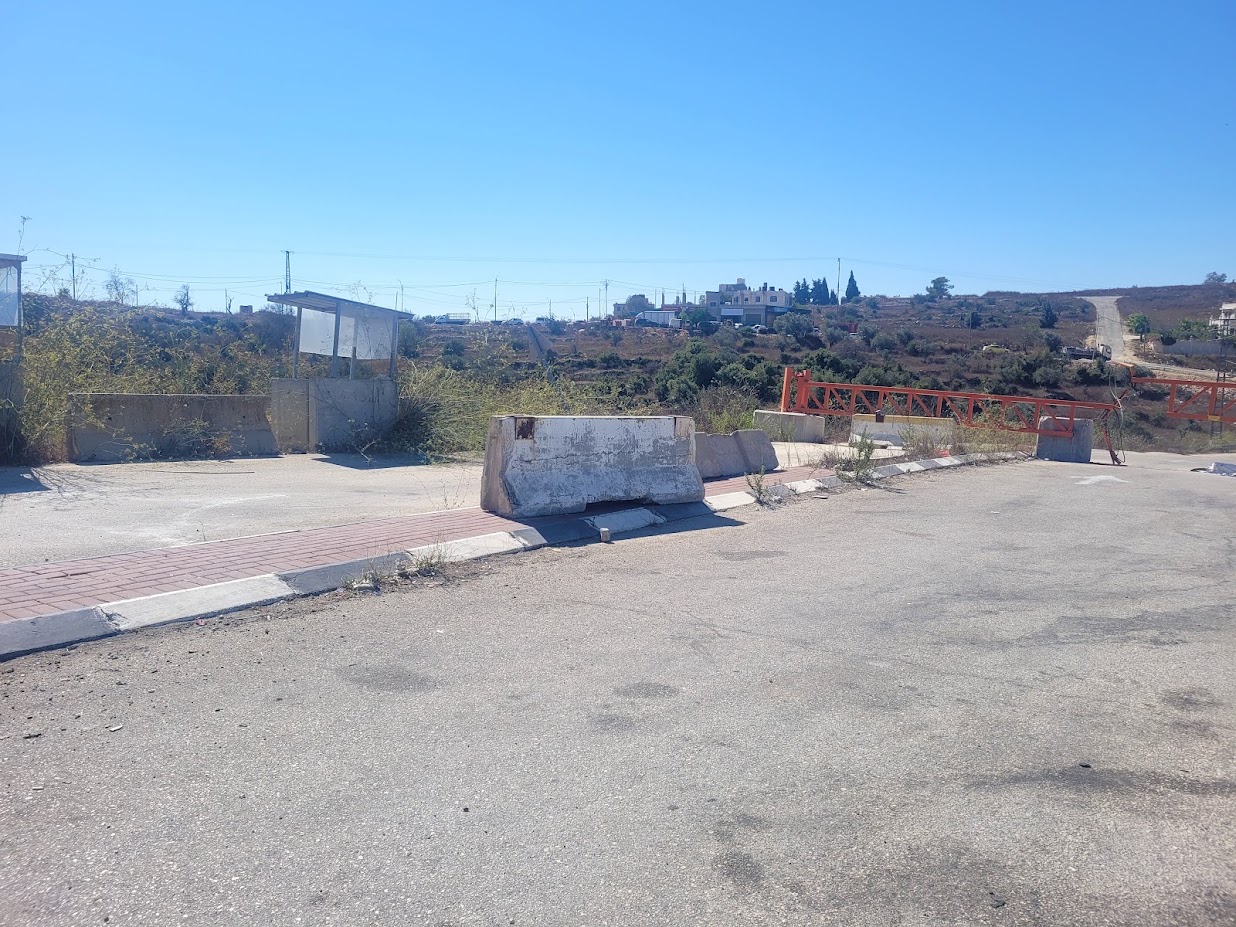
Remember the days of the Intifada, when people denied passage at Qalandia were repeatedly told to “go to Surda”? The reference was to the Atara checkpoint. The checkpoint is not continuously staffed, but the pillbox and concrete barriers remain. Inspections are carried out mainly in the morning between seven and nine and in the afternoon between two and four-thirty—peak traffic hours. In August 2025, the Givat Tarfon outpost was established on the eastern outskirts of the checkpoint, in Area B. Since its establishment, there has been a dramatic increase in violence in the area. Settlers led by settler Tal Yinon Dardik “occupied” two houses in Atara, and one of the settlers even celebrated his son’s circumcision in the Palestinian house, after first installing a mezuzah on the front door. In August this year, settlers, apparently from Givat Tarfon, attacked Palestinian journalists covering the demolition of Palestinian homes in the area, causing an international outcry. According to an OCHA report, more than 70 incidents of attack were documented in the area; 12 herding families and 69 people were displaced from the area.
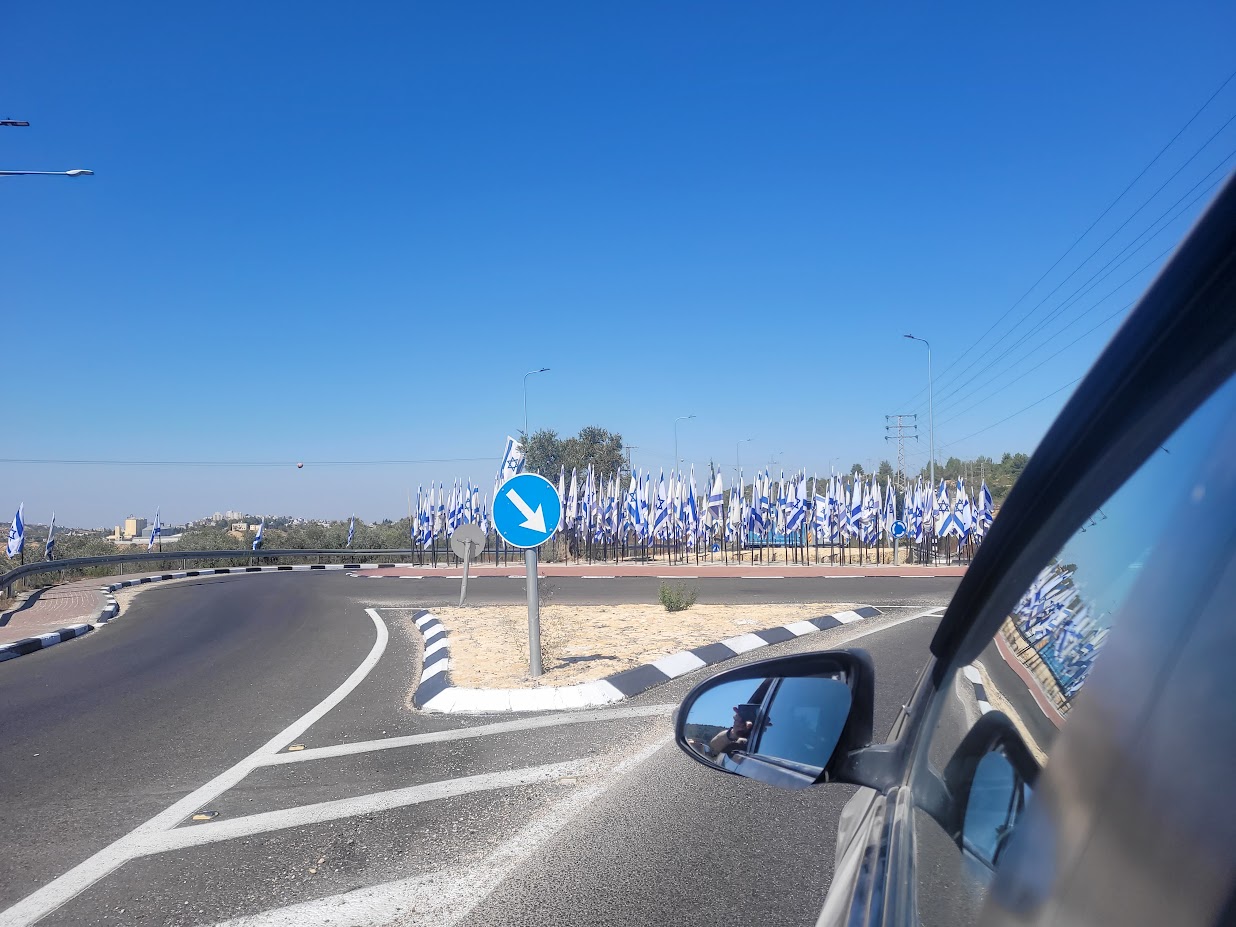
Since we were within touching distance of the modern Palestinian city of Rawabi, about 3.5 km from the Atara checkpoint, we decided to drive there. The turnoff to the access road is preceded by a roundabout awash with Israeli flags, in a provocative display. The city was built as a private initiative by businessman Bashar al-Masri, and construction began in 2010—all of it in Area A. The aim was to create a planned city with infrastructure, parks, sewage and water systems, commerce, public institutions, and transportation: to enable a modern Palestinian urban economy that would be less dependent on the movement of workers and goods through Israel and the checkpoints. The emphasis was on high-tech, communications, medicine, and similar fields. At the time, the projected population was around 30,000, a dream that is far from being realized. The planning error was that, instead of creating jobs and building a city around them, a city was built without a significant employment base.
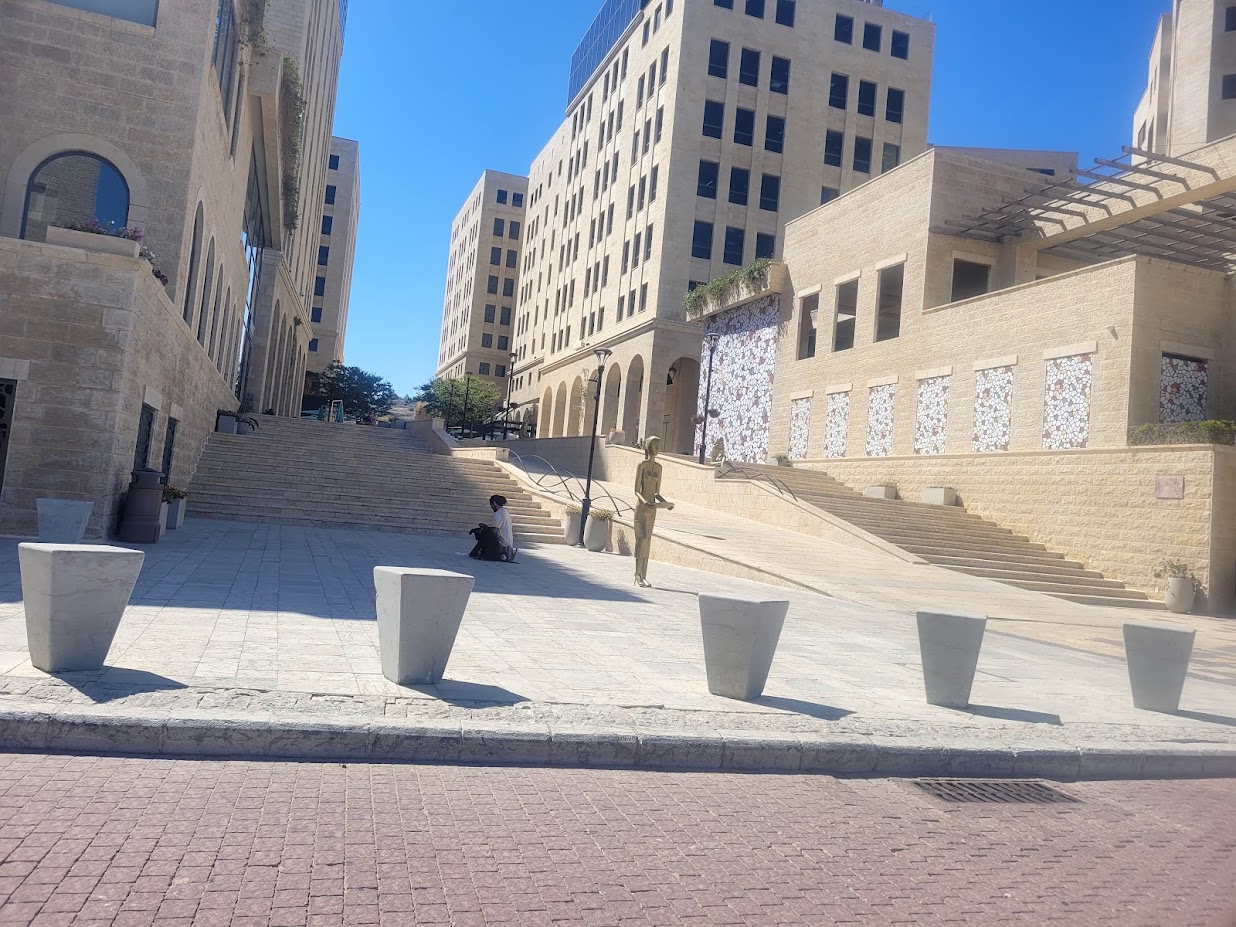
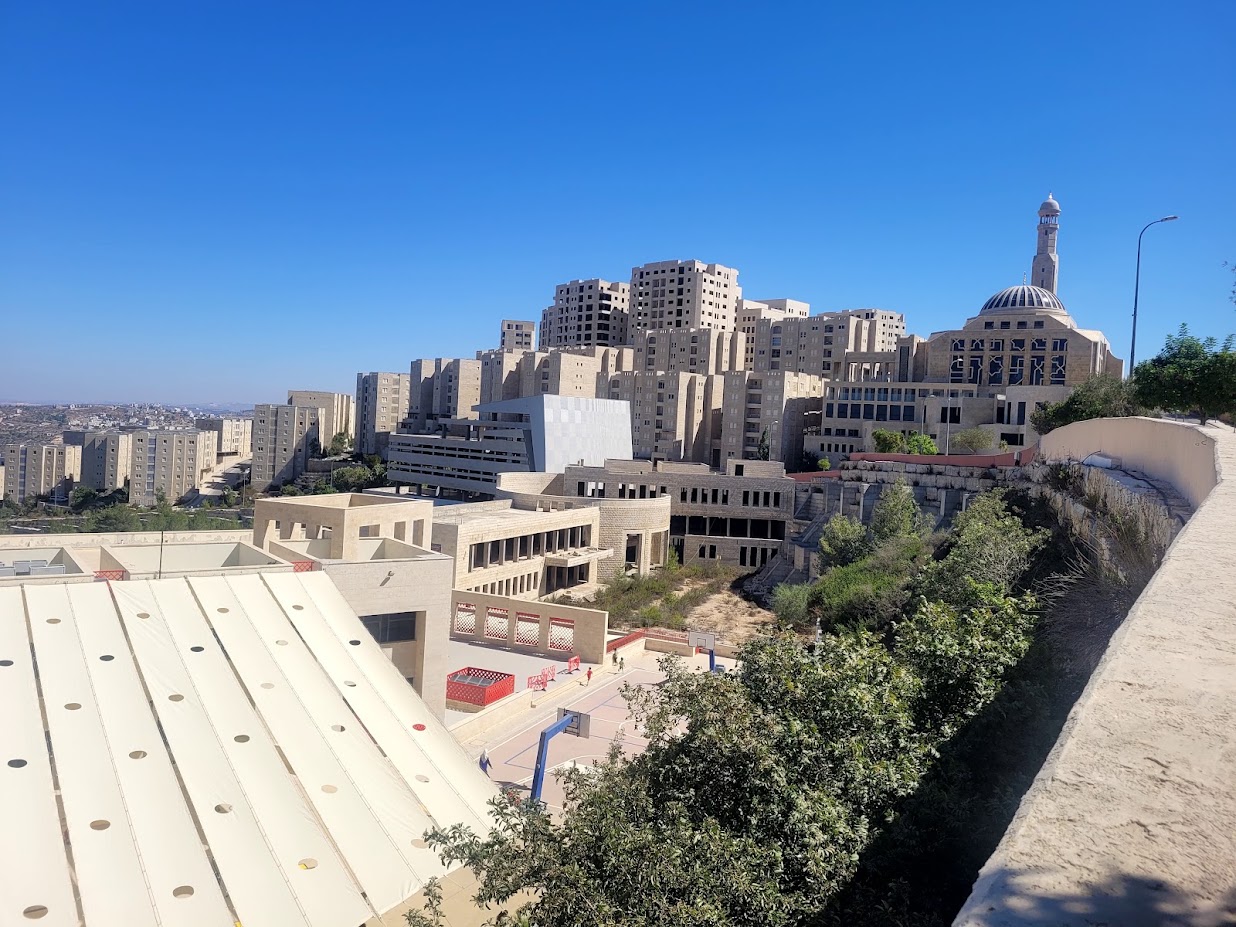
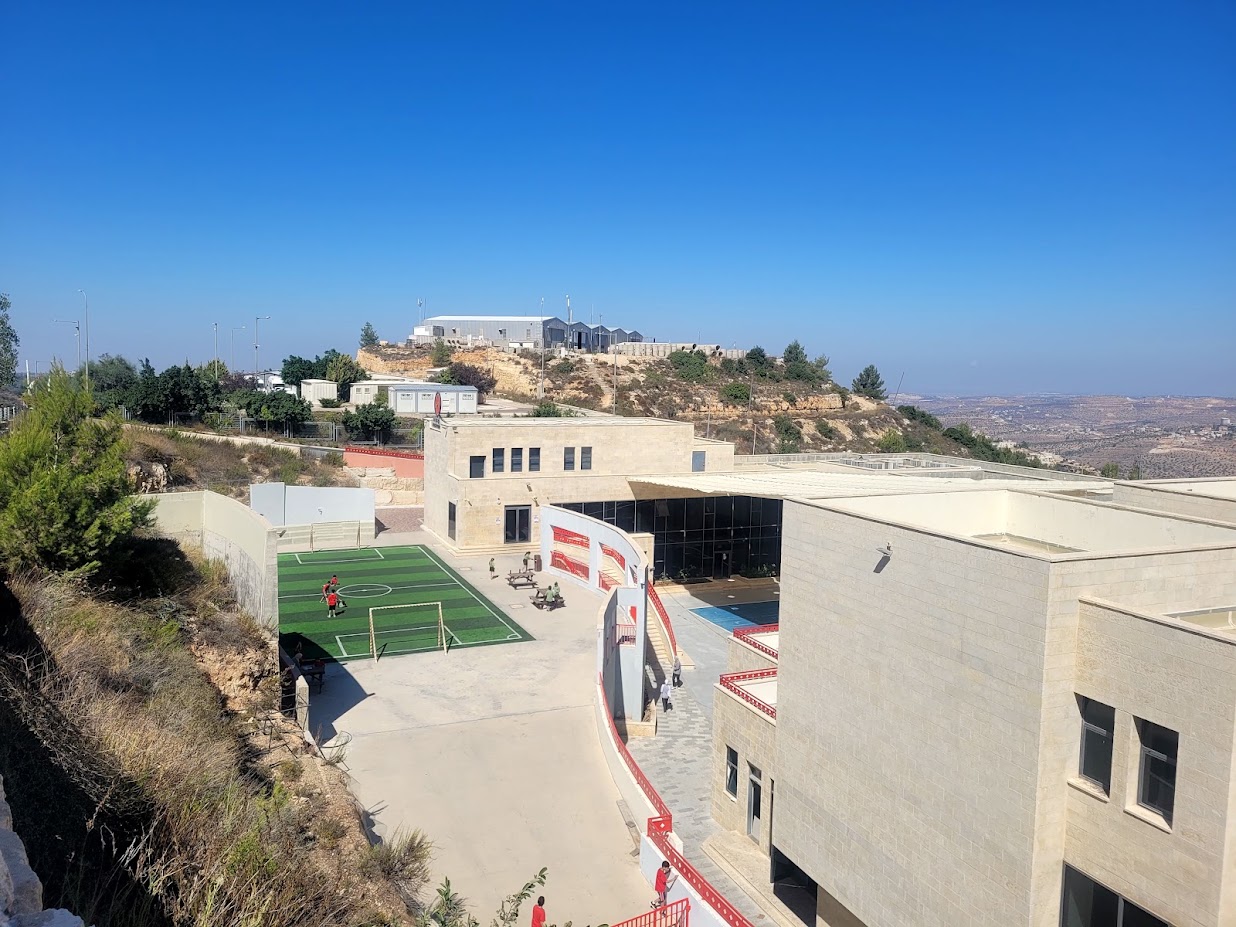
At the entrance to the city stands a large, beautiful mosque, with a church beside it. Most of the shutters on the residential buildings are closed, the streets are well maintained, and the school has a swimming pool. The shopping center is spacious, with upscale shops, cafés, and restaurants. We chose a place to have coffee. The choice was not difficult because the place was almost completely empty. The price of coffee and cake was like that in central Tel Aviv. The upscale shops, too, are not intended for residents of the nearby villages. On the positive side, it is important to note that there is no parking problem!
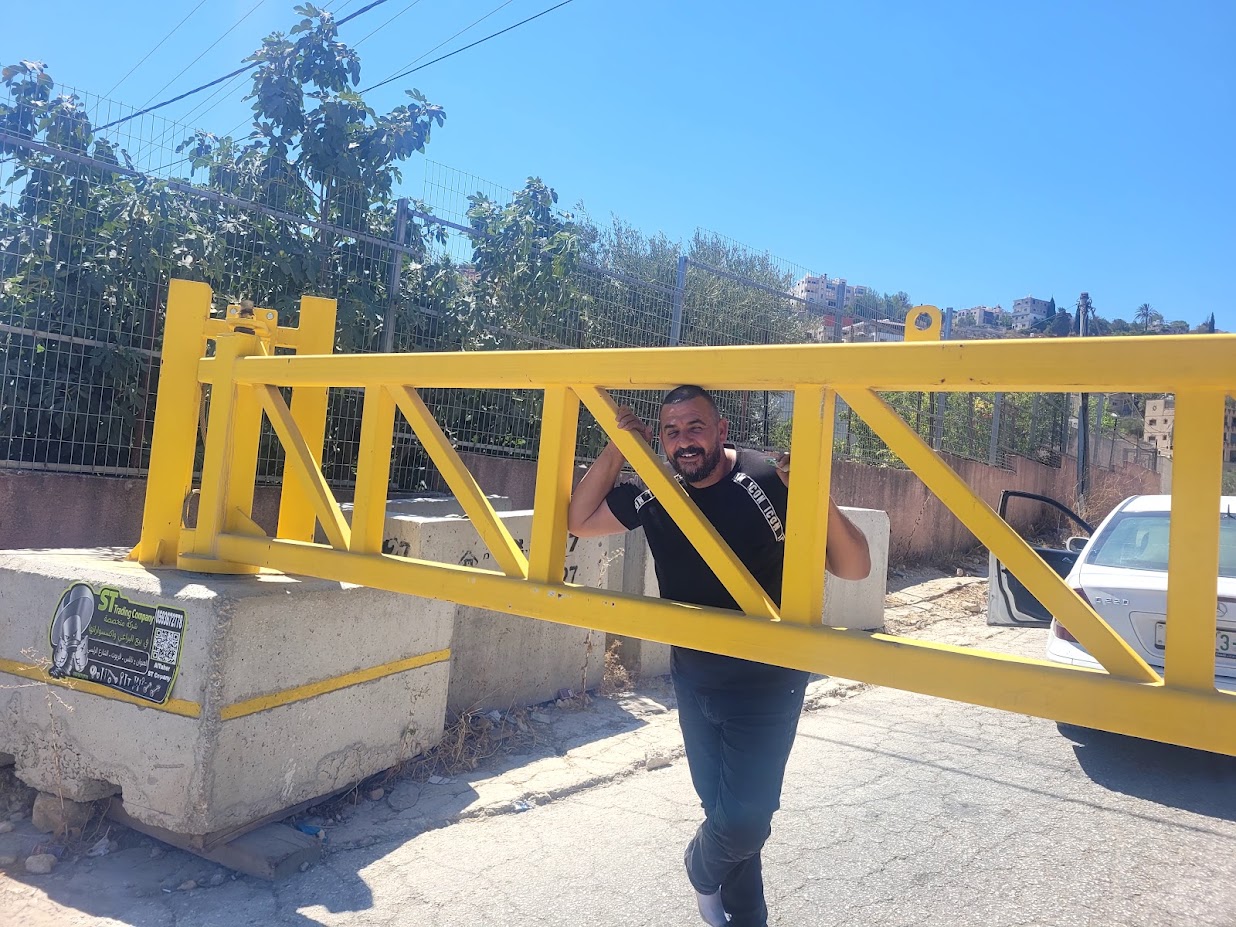
We continued north on Route 60 as far as the Tapuach / Za’tara Junction. All the entrances to the villages bordering the road are blocked by gates. By contrast, there is no shortage of Israeli flags and “Messiah” concrete barriers—the road is littered with them, lest we forget who is in charge here!!
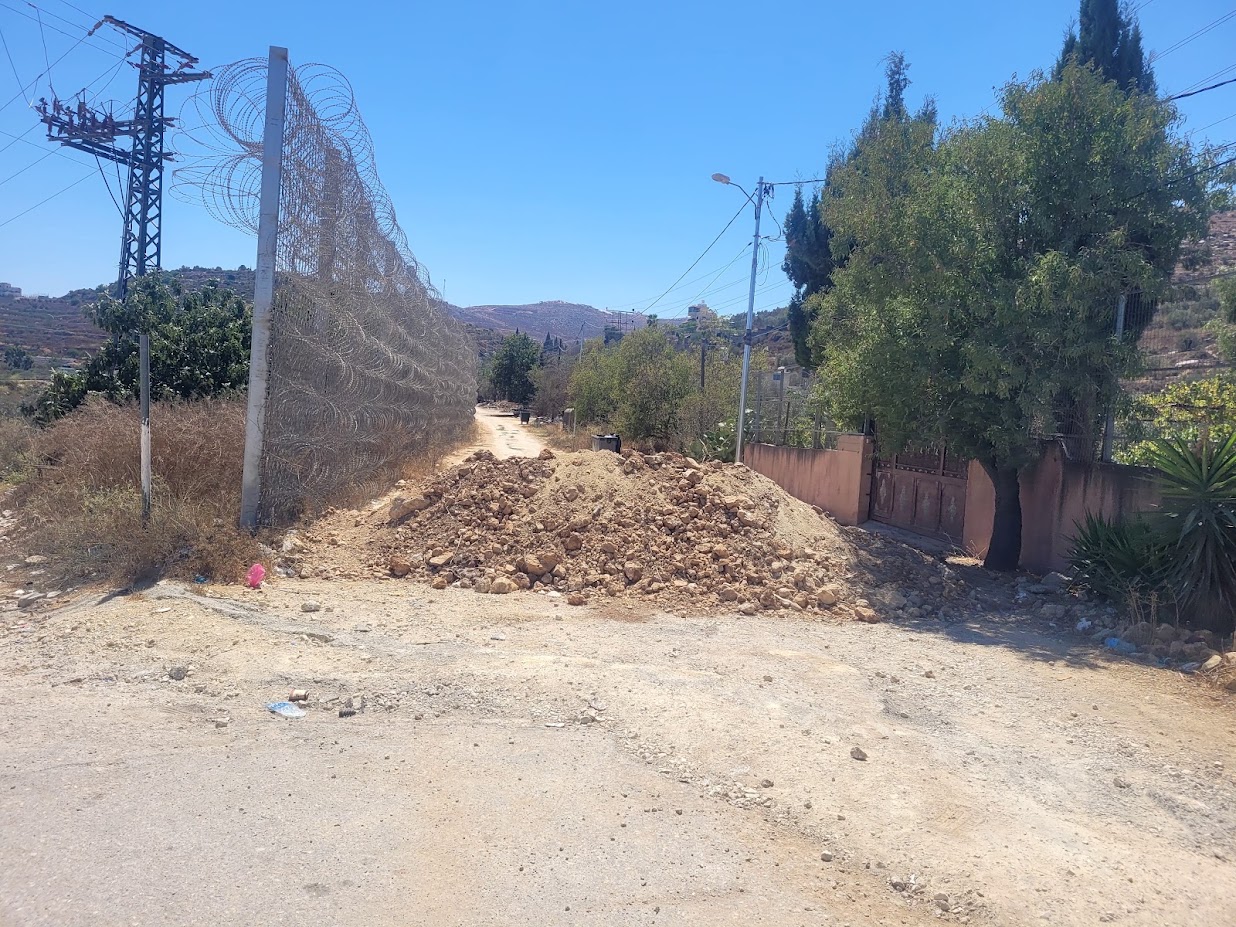
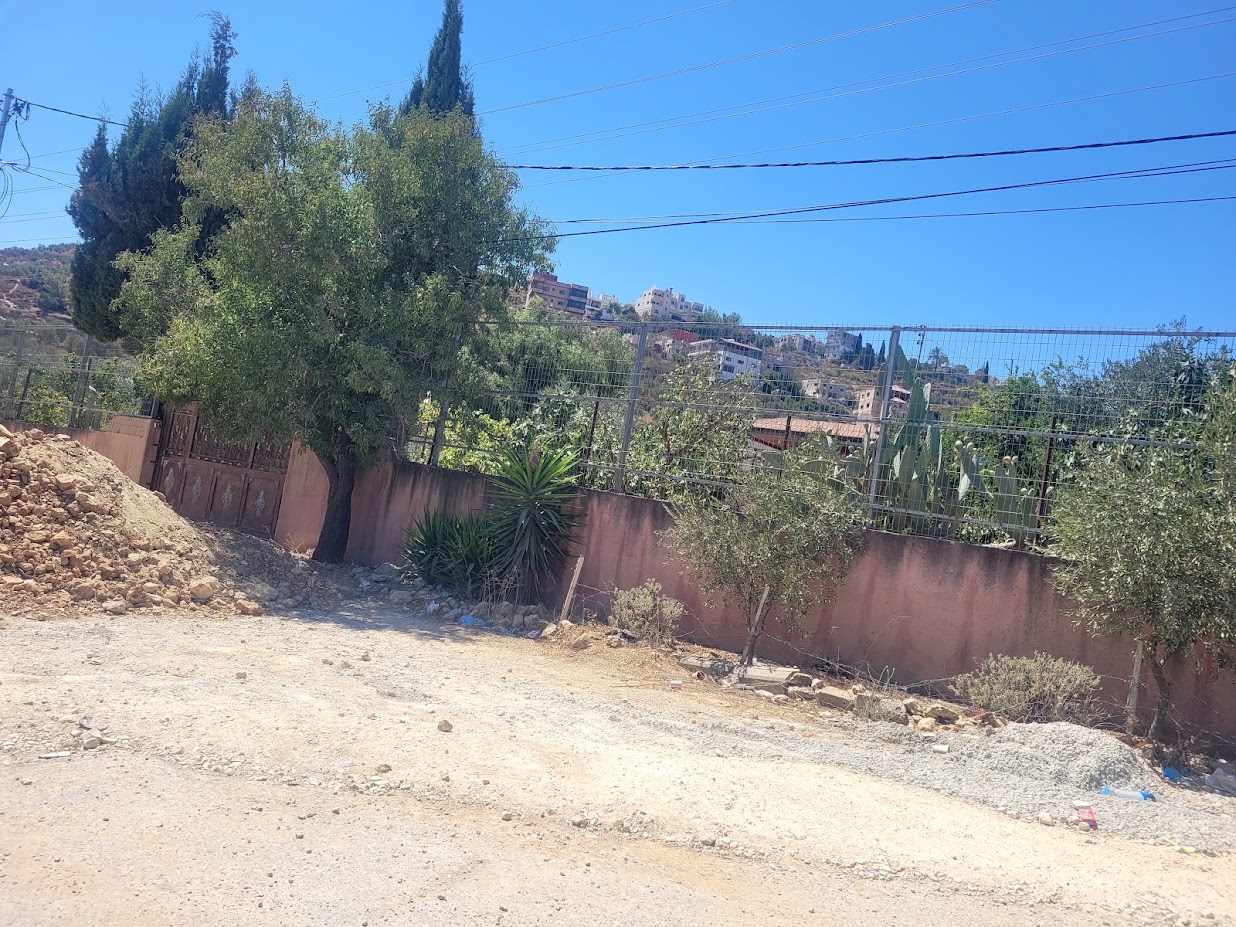
Sinjil was one of the objectives of the tour in memory of the late Irit Saguli, and in honor of Nurit Popper, Riki Shaked, and Tzvia Shapira. In their Makams report Sinjil featured prominently. Now it is surrounded by a formidable four-meter-high metal fence separating the town from a very large portion of the farmers’ agricultural land on the other side of Route 60. Of the four entrances the town once had, only one controlled entrance remains—a prison without a roof.
This is the central story of Sinjil: not a single violent incident, but a process of radical transformation. A town that is gradually being enclosed within a ring of fences, roads, settlements, and outposts—a process of the “slow disappearance” of a large village before the eyes of its residents. At one of the locked gates, we met two people passing goods through the gaps in the locked gate. With cynical humor, one of them “explained” to us that “the situation is absolutely wonderful.” We agreed that when peace comes, we will be his guests for coffee.
At the Tapuach Junction, we turned toward the Jordan Valley on Route 505. In just this short stretch are the long-established outposts of Evyatar, Migdalim, and Gitit. Evyatar attracted considerable public attention at the time, and we reported on it repeatedly. The first attempt to establish the outpost was in 2021, as an attempt to seize Jabal Sabih, the mountain between Beita, Yatma, and Qabalan. The significant development of this violent site began after a yeshiva student from Yitzhar was killed there. A large group of settlers came to the site, and within a month about 50 families were already living there. Of course, there were already water and electricity—after all, we are in the Occupied Territories, not the Negev!
The people of Beita, who understood that this was a blatant attempt to take control of a strategic point and create a barrier between them and the surrounding villages and agricultural lands, held demonstrations for months. The army used enormous force against the demonstrations, and during the events seven Palestinians from Beita were killed and many others wounded.
Then the unbelievable happened: in June 2021, the army issued an order declaring the area a closed zone and ordering the outpost evacuated. But this is where the thing happened that made Evyatar a special case: instead of demolishing the structures, the government reached a compromise agreement with the settlers, and then, in June 2024, turned the outpost into a recognized settlement! The wonders of this government of horrors.
At the Migdalim Junction, we turned onto the Alon Road. We should note the agricultural outposts, farms, and settlements we saw along the way: Kochav HaShahar, Mitzpe Kramim, Rimonim, Sde Yonatan, Ma’ale Michmash, Mitzpe Dani, Malachei HaShalom, and Neve Erez. At times, all that can be seen is a few caravans, an antenna, and a graded dirt road, or large pieces of heavy machinery. It is important to emphasize: in recent years, a growing continuous chain of small farms and outposts has emerged along the Alon axis, which do not appear as settlement names in published materials. People speak of “no fewer than 30 farms and hilltop outposts.” All of these make life unbearable for Palestinians in the area—those who have not yet fled for their lives. If this is not an overt policy of transfer, what is?
We returned home desperate and frustrated. Let us hope that next year will bring change, even if only the slightest.
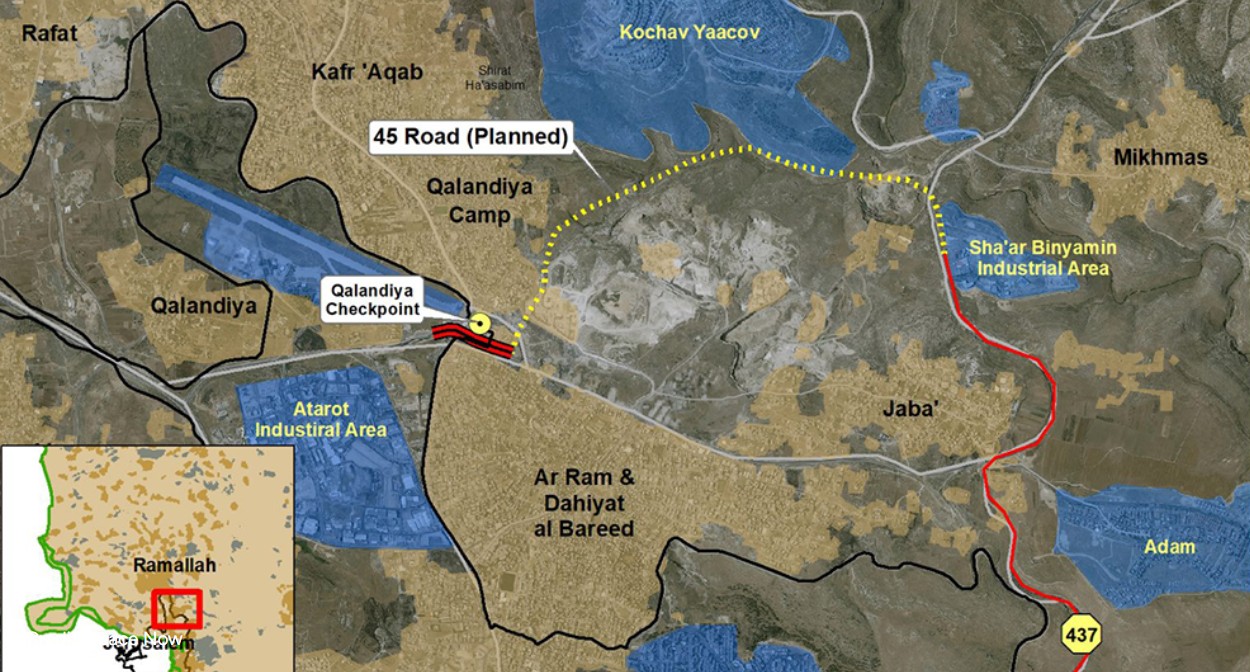
When we rejoined Route 60, we noticed construction work near the settlement of Kochav Ya’akov on Route 45, intended to allow Israelis alone to bypass the severe congestion in the area of the Qalandia checkpoint and connect without delay to Route 443 toward Jerusalem and central Israel.
Location Description
'Atara
See all reports for this place-
'Atara Checkpoint
Situated at the northern entrance to Ramallah from Route 465, called also Bir Zeit Checkpoint. Nowadays only remains of what used to be a busy checkpoint remain, a pillbox and concrete blocks.
-
Sinjil
See all reports for this place-
Singil
A town with a Maqam
The origin of the town's name is Raymond IV of Saint-Gilles, nicknamed the Count of Toulouse who established a Crusader fortress there in 1198. There is evidence of a settlement in the place as early as the Early Bronze Age.
On the mountain across from the town of Singil, east of Ramallah, the agricultural lands of its ten thousand residents spread out – The beautiful built-up terraces were renovated during the quiet period of the Corona pandemic. Each person and his fields on the way to the hilltop, location of the holy site, Maqam Abu Al ‘Uf, one the prophet Mohammad’s companions. Singil lands amount to 18 thousand dunams. Of these, 9,500 dunams are area C - where the Civil Administration forbids digging a water hole, laying pipes or building a shed to protect against the heat of the day or rain.
Maqam Abu Al ‘Uf stands in the heart of Singil's agricultural lands, on a hill from which the entire town is overlooked. It is an ancient and beautiful place that contains all the elements of Palestinian life in the past, which they embrace with longing. But they are afraid to repair and clean the site with a double fear of the settlers and the civil administration, since the site is in area C, the settlers are trying to appropriate the Muslim site to the Jewish narrative and transfer it to their control. They come and litter site with ship excrement or set up tables for a parties there.
Everything is beautiful, but there is a thorn in it: the Israeli occupation! In January 1978, a group of settlers settled near the village lands, under the guise of an archaeological dig camp in the nearby Tel Shiloh. Today Singil and its lands are surrounded by the huge settlements: Shiloh, Eli, Ma'ale Levona and their outposts: Giv’at Har’el, Giv’at Ha-Ro’eh (which the government approved to become a settlements) that more and more of the lands of Singil are annexed by one trick or another to the settlements. Another addition is the violent outpost called "Nahal Shiloh" from which a settler to attacks the Palestinian farmers, attempts to destroy terraces and send his herds to the Palestinian fields. Adjacent to the outpost is an Israeli army.
Of the 10,000 residents who live in the town, 400 people work in Israel and depend on work permits. They leave at three in the morning through four exits manned by soldiers from the nearby army camp who are held up by ID checks. 12,000 residents left over the years to other countries, mainly to the United States.
As part of the Israeli-Palestinian conflict, over the years there have been dozens of incidents of mutual violence between the residents of the village and Jewish residents of the area and the IDF forces. Including a settlers’ pogrom in May 2023.
Immediately after the horrific massacre carried out by the Hamas organization in the Gaza Strip on October 7, 2023, all the village entrances were blocked with stones and piles of dirt. There is no going out and no coming except for one checkpoint in the direction of Ramallah where a military guard allows one out of ten applicants to leave.
Updated October 2023
-
