
Abu Dis, Container (Wadi Nar), Sheikh Saed, Mon 31.12.07, Afternoon
.
From 2:00 till 6:00 PM
We had an appointment with Gabriel a journalist from Uruguay and his photographer who were meeting with two people from Sheikh Saed a woman with a blue ID and a man with a green ID and had been told yesterday that they would be allowed to enter but not to exit. The Border Policeman in charge told us that he first had to call before he could let us in. It took a while, Adi is on leave, and M. arrived with a jeep and allowed us all up through both turnstiles.
The intricacies of the problems facing those inhabitants who have no permits were explained in great detail. The woman who teaches in Jebel Mukaber explained that it takes her about an hour and a half to get to work in the morning, because every permit is scrupulously checked. Thus she and the school children have to leave their homes at 06:30 and wait in line (rain and shine) before being able to exit and board their school bus. This includes some children with special needs and on crutches. The white scooter bike parked at the bottom serves as the local ambulance. It belongs to one of the inhabitants in possession of a blue ID who helps with the transportation of those unable to walk until they reach the ambulance, which is not allowed to enter. One man died after a heart attack while being resuscitated at the CP.
Very few people passed, mostly women, it was the middle of the day and we were eager to continue because of our guests. The two foreigners begged us to ask for permission for them to stay and visit their hosts in their homes and permission was granted.
We drove up from Silwan towards Dung Gate and continued past the Mount of Olives to Abu Dis, drove up to the hotel and saw the closed gate. A girl soldier thinking we were settlers politely offered her help and then realized who we were and disappeared. At the Pish-Pash we weresent off, it being " closed Military Zone" no one was crossing, we left via A-Tur to the Israeli side of the Olive Crossing, just to show the difference of the other side, before proceeding all the way around via M. Adumim, Al Ezariya and Abu Dis to the Palestinian neglected side which was not signposted.
There were very few people passing. We gazed at the clear signs of the DCL.
We continued via the route of the transits past the El Kuds University with its hundreds of students on the road along the wall and encountered a line of at least a hundred cars when we approached the Container CP. We were initially not allowed to turn left to park near the grocery store, but instructed to turn around, but then the Commander agreed. Checking by the Border Police with helmets and flak-jackets was done rather randomly, but obviously too slowly for the line took more than twenty minutes
We were told in no uncertain terms that we should move away and take cover "I know what I am talking about, you are under my responsibility as long as you are near the CP and there are alerts." There was no way we could find out regarding the three men who had not been allowed back into their transit, but were not placed in the lock-up. The queue of the pedestrians (workers returning home) proceeded rather slowly too alongside the turnstiles and the magnometers which were probably out of order. Again we were told to move away and take cover behind our car and when we decided to leave we were allowed to return via Qedar, because he would not 'dare' send us back the way we had come
Abu Dis / Lazarus gate (formerly The Wicket)
See all reports for this place-
Abu Dis / Lazarus Checkpoint/Gate (east of the former “wicket”)
Construction of the wall in the Abu Dis area blocked all the gaps that allowed people to cross from al-Ezariya to the neighbourhoods of Abu Dis and Ras al 'Amud that are located within Jerusalem’s municipal boundary. The Lazarus checkpoint is a gate in the wall adjacent to the Lazarus Monastery. Until 2011 it had a door for pilgrims to al-Ezariya and for the monastery’s kindergarten pupils from al-Ezariya. The crossing is currently closed, but the site has infrastructure for conducting inspections.
-
Container (Wadi Nar)
See all reports for this place-
Wadi Nar Checkpoint ("Container", "The Kiosk") - a barrier for vehicles in Area B that is regularly manned - east of Abu Dis between Sawahra A Sharqiya and Bethlehem and its daughters. Controls Palestinian movement between the north and south West-Bank. Includes driving routes, access roads, spikes, traffic lights and signs. There is no pedestrian crossing. Open 24 hours a day with random checks enhanced on security alerts. The checkpoint is in Palestinian territory, allowing for separation between the north and the south Palestinian areas when necessary.
In 2015, the leading road from Azaria to Bethlehem was renovated, as well as the steep and narrow ascent to the Wadi Nar checkpoint, which was dangerously travelled in both directions! The temporary checkpoint was renovated and expanded, and pedestrian traffic was banned. From 2016, traffic travelling from the south bank to Azaria was directed to a one-way road near the Southern Keydar Jewish settlement.
Machsomwatch shifts visit this far-fetched checkpoint only occasionally.
(updated to July 2019)
-
Sheikh Sa'ed
See all reports for this place-
A checkpoint limited to pedestrians, located on Jerusalem’s municipal boundary.
The checkpoint sits on the separation fence at the entrance to Sheikh Sa’ad, dividing it from its neighbourhood of Jabel Mukkabar. It’s manned by Border Police soldiers and private security companies and operates 24 hours a day. Palestinians are forbidden to go through, other than residents of Jabel Mukkabar or Sheikh Sa'ad who have permits. Both groups are permitted through only on foot. Residents of East Jerusalem who don’t live in Jabel Mukkabar are also allowed to cross to Sheikh Sa’ad, but not in the opposite direction; they must return through the Sawahira ash Sharqiya checkpoint.
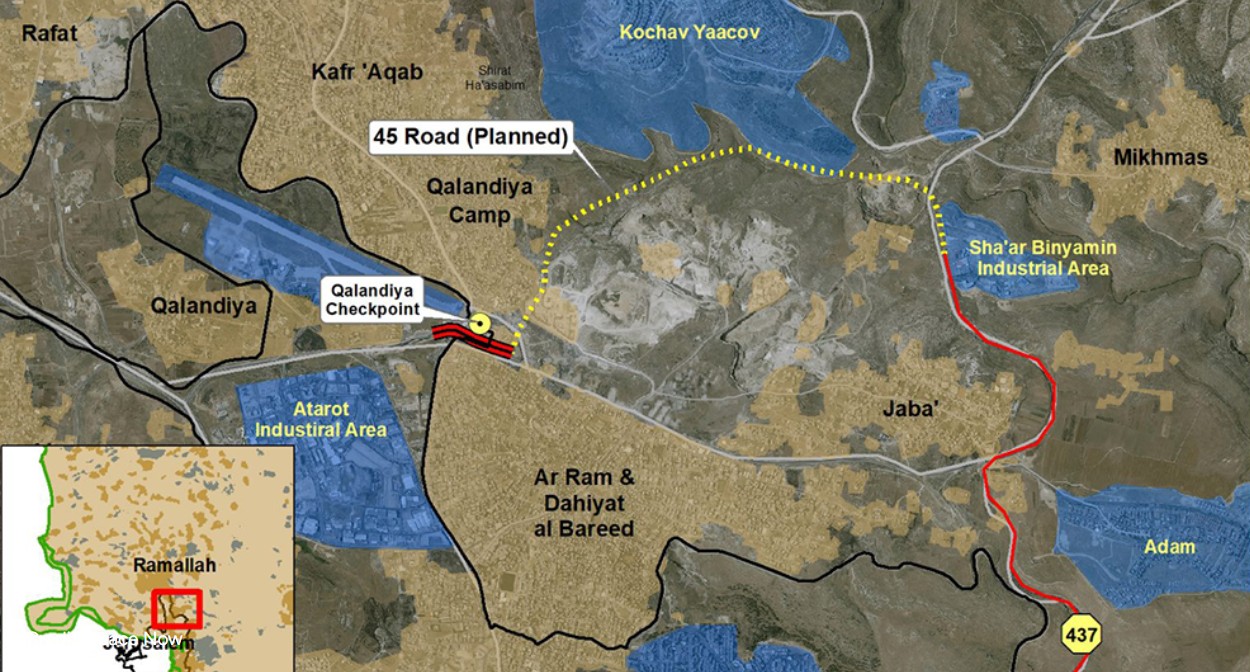 Anat TuegSep-9-2026Road 45. For Israelis only, from Road 60 near Kochav Ya'akov to the Qalandiya underpass
-
