
Abu Dis, Ras Abu Sbitan (Olive Terminal), Sheikh Saed, Silwan, Wed 13.10.10, Morning

Otherwise, crossing is quick, but we must not forget all the restrictions imposed on residents of the neighbourhood who carry blue ID's (to say nothing of green ID's whose owners can go nowhere for any purpose without the most precise official permits), restrictions such as on travel by car to Jerusalem, the impossibility of reaching Sawahara, no crossing at the checkpoint for visitors from other neighbourhoods including Jabel Mukhabar. In all these cases they are required to drive via the distant Zeitim Crossing — 40 minutes over mostly bad roads.

Near the City of David, in addition to the security guard, there is a policeman and a border policeman, as well as two private guards (of the municipality). They are in charge of turning back vehicles wishing to enter the neighbourhood. This included, while we were there, an enormous security vehicle belonging to the settlers (at our expense!) which was turned back, to enter from another street to the west. Judging by the intensity of the arguments with the guards, and the responses of the private guards, it was only the presence of the assertive policeman that prevented free passage.

Abu Dis / Lazarus gate (formerly The Wicket)
See all reports for this place-
Abu Dis / Lazarus Checkpoint/Gate (east of the former “wicket”)
Construction of the wall in the Abu Dis area blocked all the gaps that allowed people to cross from al-Ezariya to the neighbourhoods of Abu Dis and Ras al 'Amud that are located within Jerusalem’s municipal boundary. The Lazarus checkpoint is a gate in the wall adjacent to the Lazarus Monastery. Until 2011 it had a door for pilgrims to al-Ezariya and for the monastery’s kindergarten pupils from al-Ezariya. The crossing is currently closed, but the site has infrastructure for conducting inspections.
-
Ras Abu Sbitan (Olive Terminal)
See all reports for this place-
A large checkpoint/crossing to the area of a-Tur, Abu Dis and the Old City; only for pedestrians. Located on Jerusalem’s municipal boundary.
One of the major crossings in Jerusalem’s central sector. It is located on the separation fence between the northern portion of the al-Ezariya neighborhood and the neighborhood of a-Tur and the rest of East Jerusalem. It is manned by Border Police soldiers and private security companies and operates 24 hours a day. Palestinians are forbidden to go through, other than permanent residents of East Jerusalem (holders of blue ID cards) and holders of work and commercial permits who are allowed through only on foot.
-
Sheikh Sa'ed
See all reports for this place-
A checkpoint limited to pedestrians, located on Jerusalem’s municipal boundary.
The checkpoint sits on the separation fence at the entrance to Sheikh Sa’ad, dividing it from its neighbourhood of Jabel Mukkabar. It’s manned by Border Police soldiers and private security companies and operates 24 hours a day. Palestinians are forbidden to go through, other than residents of Jabel Mukkabar or Sheikh Sa'ad who have permits. Both groups are permitted through only on foot. Residents of East Jerusalem who don’t live in Jabel Mukkabar are also allowed to cross to Sheikh Sa’ad, but not in the opposite direction; they must return through the Sawahira ash Sharqiya checkpoint.
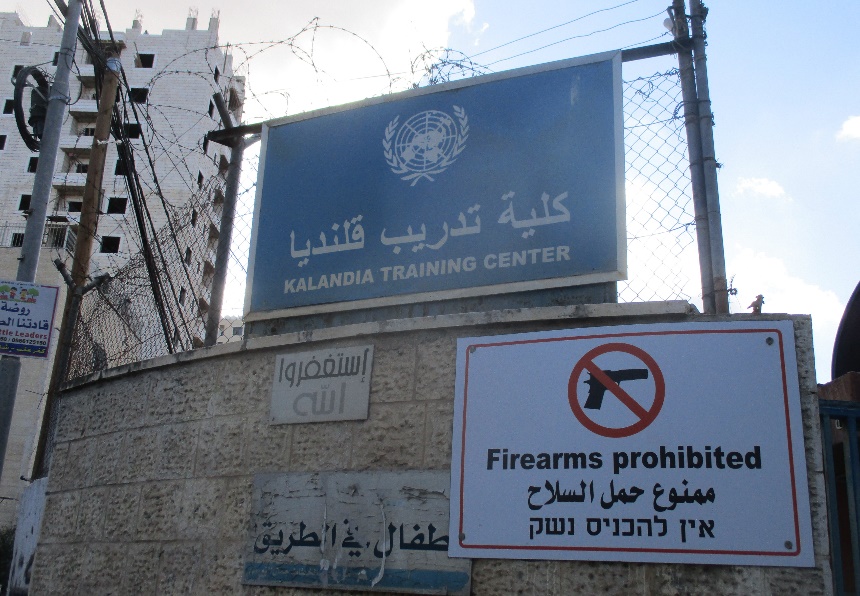 Tamar FleishmanAug-31-2026Kfar Aqab (Jerusalem). Signs on the fence at the UNRWA compound
-
Silwan
See all reports for this place-
Silwan is south of the Old City of Jerusalem and has become one of the main confrontation areas with settlers.
-
