
Al Aroub, Beit Ummar, DCL Etzion, El Khadr South, CP 300 and Nuaman
Bethlehem. Tuesday, 7-3-06 PM Observers: Ruth O., Tamar A. and Ilana D. (reporting) From 2:00 till 6:00 PMAlong Road 60 there was not much army presence, except a jeep at the exit from Hussan. At the site of last week’s stabbing concrete slabs have been placed between the hitchhikers’ stop and the road. Traffic was at a halt near Al Aroub and we noted a few Israeli ambulances on the way to Jerusalem. A few jeeps and many soldiers crowded at the entrance to the refugee camp. All pedestrians were held back, not allowed to come close to the road. By the time we passed, traffic already proceeded alternately from the South and the North. Abu Nassim with a smile told us that ‘accidents are from Allah’ and they don’t worry him. We saw some more jeeps parked along the road. But when we returned everything had already returned to normal and a tow-truck just arrived to take the damaged car away. We stopped for a moment and a soldier asked whether we needed help.One lonely man was waiting behind the still closed DCL. He is from Hebron, but studies in Germany. Upon his arrival here he had been told to come for an interview with Captain Neamer at the DCL on the 23rd, but by then he already wants to leave. Therefore he wondered whether there was a way to change the appointment. We asked Maher to act as an interpreter over the phone and he made an appointment with the man for Sunday. The soldier told us that the renovations are completed and only the equipment has to be installed. He guessed the place would re-open in three weeks. A tanker was waiting at El Khadr South to unload gasoline back-to-back. Some people crossed the earth mounds.The army has blocked almost the entire entrance road to El Khadr last week with concrete slabs (probably after the stabbings at the Etzion roundabout). Only one car can pass at the time with difficulty. The hooting was therefore even worse than before. It is clear that the aim is to get all vehicles away from Road 60. A cab driver told us that a week ago (at 4:30 in the morning) a policeman called Ofer had taken his driver’s licence away. The man has beeen looking for him ever since without success. We promised to involve Haya. The documents of three men were inspected under Tantur, but while we waited in the car they were returned. We drove down to the entrance of Rachel’s tomb and saw two reinforced busses exiting. At the new terminal we again saw a Palestinian (this time a woman) vigorously cleaning the shining floors. Whenever we come to the terminal there seems to be someone mopping the spotless floor. People passed in a hurry. Apparently the queues had been very bad again this morning. A very large group of Nigerian pilgrims passed without having their documents checked. After our failed attempt last week to find the path through the rubble to Nuaman we now had Tamar A. with us as expert guide. She had already been to Nuaman in the morning, but never had come in the afternoon. As we walked through the garbage we noticed red anemones peeking out underneath the rubbish. Suddenly there were many volleys of shooting. A man from Nuaman who works in Jerusalem on his way back with his wife said that this is the Military Police training, they do this every day, even in the dark. The shooting continued on and off for almost two hours. A large number of workers passed us on their way to Al Khas. After having passed the garbage the walk became very beautiful in its pastoral landscape, despite the many earth mounds and obstacles. The village is lovely, some of the almond trees are still in bloom, we saw animals and a young boy on a bicycle. He doesn’t have to fear traffic. Some women strolled with their little children along the road. At the end of the village we met all the workers who had passed us on their way home. They were waiting for the jeep down on the security road to leave, so that they could continue on their way home and cross the valley to Al Khas, where major road construction and earth moving is being undertaken. As we approached, four more army vehicles appeared and lots of soldiers were being briefed. We approached while the Palestinians moved back. The soldiers shouted at us to be careful, “There are Arabs around!” But then maybe thought that the people behind us belonged to our group and most left, leaving only the one jeep behind. The workers were still waiting, telling us that sometimes they have to wait till 9:00 PM before they can cross. On the other side we spotted also people waiting under the trees. One told us that he leaves in the morning at 3:00 AM to get to work in Har Homa – a thirty-minute walk. It was getting dark and we walked back to the car, which was parked near the last house of Um Tuba. A man on a donkey passed us and told us that the jeep had finally left. Some more workers (one conveniently with a torch) came up through the rubble. At least they would not have to wait for the jeep to leave.
Hebron
See all reports for this place-
According to Wye Plantation Accords (1997), Hebron is divided in two: H1 is under Palestinian Authority control, H2 is under Israeli control. In Hebron there are 170,000 Palestinian citizens, 60,000 of them in H2. Between the two areas are permanent checkpoints, manned at all hours, preventing Palestinian movement between them and controlling passage of permit holders such as teachers and schoolchildren. Some 800 Jews live in Avraham Avinu Quarter and Tel Rumeida, on Givat HaAvot and in the wholesale market.
Checkpoints observed in H2:
- Bet Hameriva CP- manned with a pillbox
- Kapisha quarter CP (the northern side of Zion axis) - manned with a pillbox
- The 160 turn CP (the southern side of Zion axis) - manned with a pillbox
- Avraham Avinu quarter - watch station
- The pharmacy CP - checking inside a caravan with a magnometer
- Tarpat (1929) CP - checking inside a caravan with a magnometer
- Tel Rumeida CP - guarding station
- Beit Hadassah CP - guarding station
Three checkpoints around the Tomb of the Patriarchs
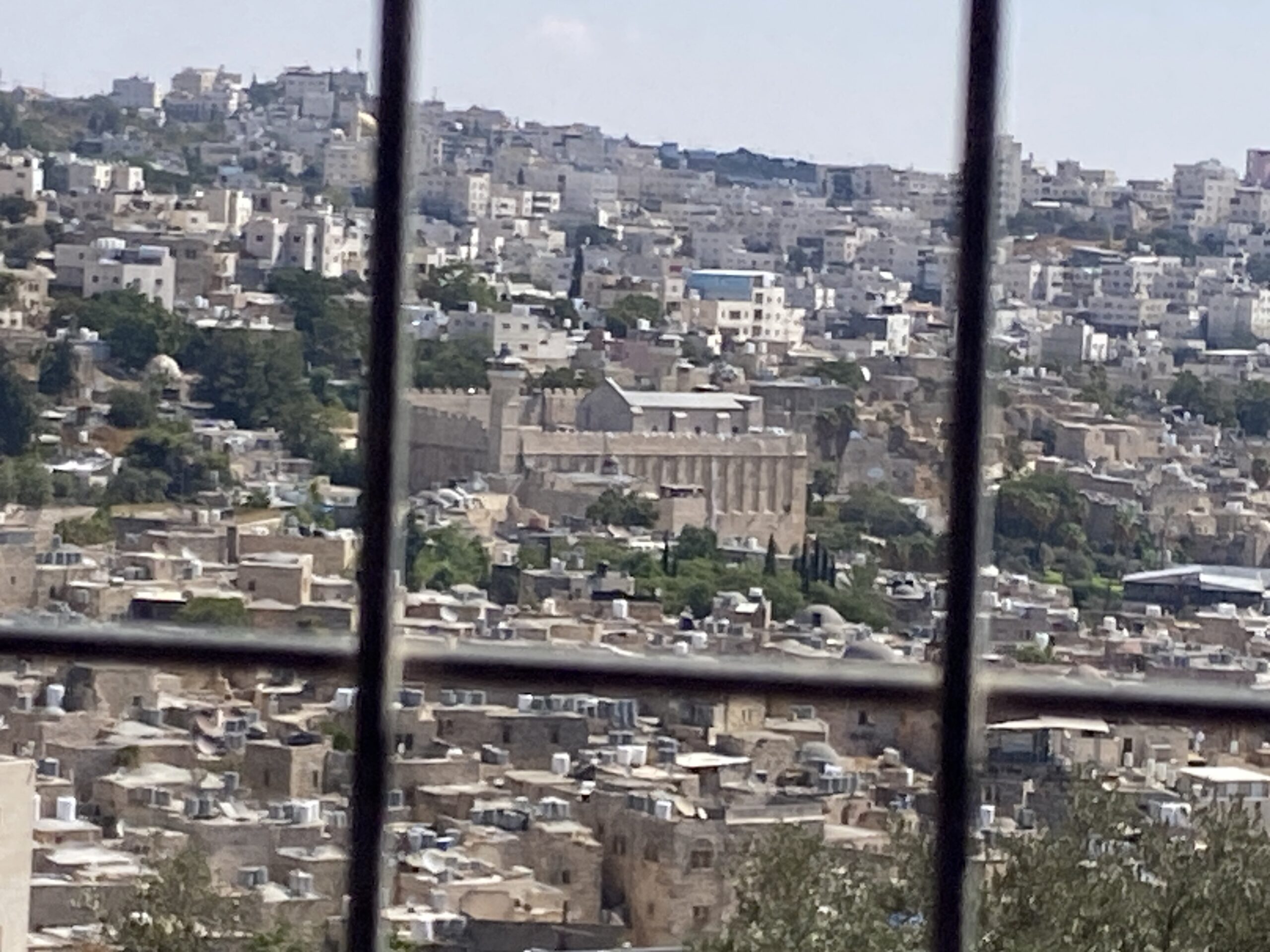 Yael ZoranSep-24-2026Hebron and the Cave of the Patriarchs from Beit Hashalom
-
Jerusalem
See all reports for this place-
The places in East Jerusalem which are visited routinely by MachsomWatch women are Silwan and Sheikh Jarrah. During the month of Ramadan, also the Old City and its environs are monitored.
-
