
Al Farisiya: morning shift in the community
Morning shift in Al Farisiya community
About two weeks ago, the herd returned from a stay of several months in a pasture area, close to Jordan, and upon its return, the owner of the herd, A, was not allowed (by the army) to rebuild the barn. His tractor and cart were confiscated by the army. Thus, the herd is left without a barn, and the shepherd is without essential equipment for work. He was told that if he built the barn, the tractor and cart would not be returned to him. Despite this, he built the shed from old nylon and poles that he purchased. The matter is under legal treatment.

The sheep went out to pasture with the family’s older son and two of our companions, and we stayed with the women and children. A quiet, active and pleasant morning. (Thursdays, the schools are closed, some learn via zoom and some don’t).

Sarah, who was with me, a speech therapist, spent time with one of the children who she found had difficulty with pronunciation, and it was amazing to see how he devoted himself entirely to the treatment, which included reading one of the well-known “Pinuki” books and “A Tale of Five Balloons”. I was overwhelmed. In addition, we stamped with finger paint, mini max and modelling clay. The children had light and joy.
We walked outside and hoped that the police or army would not come to realize their plan.
Just as we were about to leave, a military jeep arrived with 3 men in civilian clothes inside. Smiling. I asked them questions, they answered with smiles, and continued towards the new barn. They probably took pictures and surrounded the encampment further. It appears to be monitoring the operations in place.
On a morning walk that I took with two little ones: a 3-year-old and a 1.5-year-old, the three-year-old pointed towards the east and said “Didi Didi”, that’s the bad guy who comes there from the outpost to harass them and make them leave the place. The rest of the day and night passed quietly.

There is something about the stay of a group of Israelis taking turns in Al Farisiya, 24 hours a day, that affects the residents, and it is interesting to be inside. The children and some of the adults master Hebrew, maintain close relationships with the volunteers, learn each other. It is difficult to assess the effect during this unplanned trial. Something new is growing there.
In another community we visited, one of the shepherds told me that the settlers from the nearby outpost bully them every day. Sometime at night and sometime during the day. Driving around with their ATV. Among the sheep and in the living area. Everyone, everywhere is asking when it will end. As we do.

Location Description
Al-Farisiya / 'Ein a-sakut
See all reports for this place-
Al-Farisiya / 'Ein a-sakutA community of shepherds in the Jordan Valley opposite the settlement of "Rotem". Making a living from grazing sheep, the residents are exposed to harassment, abuse and theft from settlers who come to them from outposts and settlements in the area, and their grazing area is shrinking due to settler takeovers, fire zones and declared nature reserves.Machsom Watch companies participate in shepherd escort activities and provide a 24/7 protective presence, and there is continuous and warm contact with the community.
-
Jordan Valley
See all reports for this place-
Jordan Valley The Jordan Valley is the eastern strip of the West Bank. Its area consists of almost a third of the West Bank area. About 10,000 settlers live there, about 65,000 Palestinian residents in the villages and towns. In addition, about 15,000 are scattered in small shepherd communities. These communities are living in severe distress because of two types of harassment: the military declaring some of their living areas, as fire zones, evicting them for long hours from their residence to the scorching heat of the summer and the bitter cold of the winter. The other type is abuse by rioters who cling to the grazing areas of the shepherd communities, and the declared fire areas (without being deported). The many groundwaters in the Jordan Valley belong to Mekorot and are not available to Palestinians living in the Jordan Valley. The Palestinians bring water to their needs in high-cost followers.
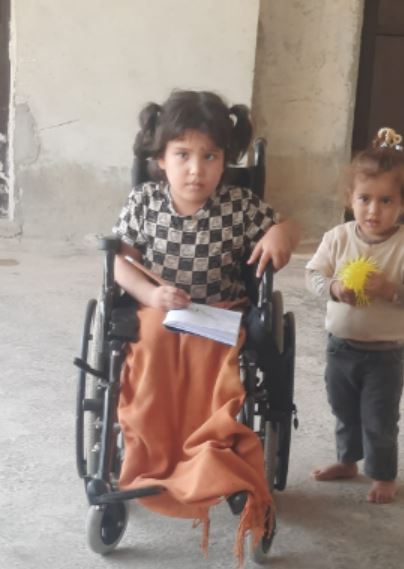 Daphne BanaiOct-21-2026Aisha - They didn't let her go for a checkup at a hospital in Jerusalem
-
