
‘Anabta, Ar-Ras, Thu 30.10.08, Morning
Anabta
09:00 – We came close to the checkpoint and there we see, hanging conspicuously on the shed, a pink sign with the writing "We thank the women of MachsomWatch at the checkpoint for supporting us in our struggle", signed, "Terror Activists". When we try to take a picture, the soldiers come to stand in front of it, hiding it from us. They keep moving about next to it, don't let cars pass and accuse us of disturbing their work, demanding that we leave the checkpoint area.
Some time later they resume their work (leaving one of them on duty near the sign). We leave.
Jubara
09:30 – The checkpoint commander and his soldiers arrived at the checkpoint only yesterday. They don't know anything about us or that they have to open the gate for us. They try to find out on the spot but get no answer and then they send a message asking for clarifications but it is unknown when the answer will come. We leave shamefaced.
'Anabta CP
See all reports for this place-
'Anabta CP
The checkpoint is located south of the village of 'Anabta, at the intersection of Road 60 (leading to Nablus at the entrance to Area A), with Road (57, 557, 5576) facing west towards the Einav settlement and the checkpoint at the exit from the West Bank - Figs checkpoint. Until 2010 we used to watch the intersection and report the long columns created due to a slow inspection of the vehicles in both directions.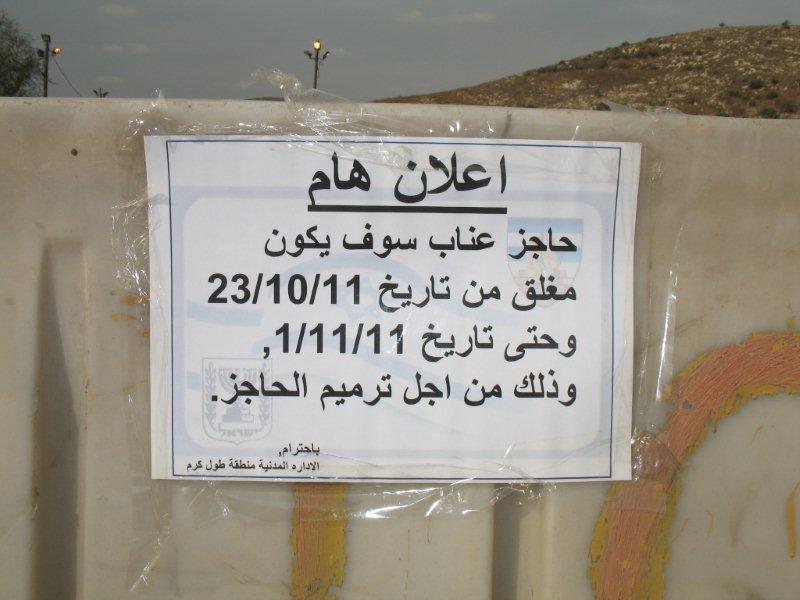 Oct-28-2011Anabta checkpoint 24.10.11
-
A-Ras (The Children Checkpoint)
See all reports for this place-
A-Ras (The Children Checkpoint)
On Tulkarm-Qalqiliya road (574), east of Hirbet Jubara. tia checkpoint is dedicated to residents traveling to and from Tulkarm, so they should not cross apartheid road 557 (only permissible for settlers).
-
