
‘Anata-Shu’afat, Silwan
See our recommendation at the end of this report.
6:50 Shuafat refugee camp
Due to repeated warnings about "Jerusalem burning", we feared violence at the entrance to the camp but nevertheless decided to reach it. The morning was tranquil, although the square next to the checkpoint looks like a battle-field: stones, ash, broken objects. Children fill the parking lots, buses arrive and leave the camp by a special route. 4000 children are on their way to school in greater Jerusalem today (some buses, ironically, have a poster saying "Taglit"). We hear of confrontations which happen mostly in the evenings — due to the fact that municipal services to the camp (under Israeli jurisdiction) such as garbage collection, electricity, water, Magen David ambulances, etc., no longer operate. Neither does the police force visit. Once in a while border police turn up for show, then disappear. We also hear that children have nowhere to play — no parks and no worthwhile activities in the community centre. It appears that for the time being the residents are co-operating with the people of Pisgat Zeev and French Hill in a demand to discontinue the separation of the camp by a wall. Both sides claim that the levels of crime (partly due to the recent arrival of problematic newcomers) and the danger of shooting by terrorist cells (no longer controlled by the army or police) are both far more grave than previously in a neighbourhood which in any case has been badly neglected (infested with drug-dealing gangs and tribal rivalries). We also hear of tensions on the verge of explosion caused by fear of changes in the status quo on the Temple Mount. The prevalent opinion here is that this anxiety is the cause of all the recent violence. One killing, or one mistake on the site of the Temple Mount could ignite a vast explosion.
7:20 Shuafat Road (the route of the Light Train)
We decided to be brave and drove to Pisgat Zeev, and joined the route of the train from the first stop near Pisgat Zeev to Shuafat. One benefit: there are almost no traffic jams — people don't drive through Shuafat. The train is full. Groups of border policemen can be found roughly every 200 metres, as well as other security forces to prevent stone-throwing (but later we heard that stones had been thrown in the afternoon). A large portrait of Mohammed Abu Khdeir (burned by Jewish terrorists) indicates the turn leading to his home. At this hour all the shops are closed, and we cannot judge whether a commercial strike is in force.
The entrance to Issawiya is open to traffic, but several vehicles with security forces on the hill are invigilating. It looks like preparation for action.
8:00 Silwan
On the way we saw the white balloons floating over the Mount of Olives and Jabel Mukhaber. Traffic on the road going to Dung Gate is very sparse, we did not enter the neighbourhood but continued towards Mount Zion for observation. There were no security forces to be seen, and no checkpoint. The El-Ad building projects in City of David narrow the road (now partly dug up) considerably, but this part will no doubt be widened when the projects are ready to welcome tourists to this biblical entertainment centre.
We conclude with a recommendation:
On the day after our visit we heard of the start of the municipal policy of collective punishment. These measures include parking tickets issued in spots where residents have been parking freely for years; at the entrance to Ras al Amud, Issawiya, Beit Hanina and Shuafat, tax-officials and other officers authorised to enforce any and every mode of municipal punishment are on the rampage. (Imagine such activity occurring anywhere in West Jerusalem!)
We ask our Jerusalem shifts to try and reach the entrance to these problematic neighbourhoods to try and report this infuriating collective punishment, in pictures, videos and words. There is no security risk at present because of the presence of policemen and soldiers.
Checkpoint Shu'afat camp / Anata-Shu'afat (Jerusalem)
See all reports for this place-
The Shu’afat checkpoint is located in the northern part of East Jerusalem at the exit from the village of Anata and the Shu’afat refugee camp, which are located in the area annexed to Jerusalem in 1967. The refugee camp borders the Shu’afat neighborhood to the west, Pisgat Ze’ev to the north, the French Hill neighborhood to the south and the planned expansion of Ma’aleh Adumim to E-1 in the east. It was established in 1966 for 1948 refugees from the West Bank and was populated after the Six Day War by persons who had been expelled from the Jewish Quarter. Today its population comprises some 25,000 people holding blue ID cards and some 15,000 people with Palestinian ID cards. The camp lacks adequate infrastructure and services, and suffers from poverty, neglect and overcrowding. All its buildings are connected to the public electricity and water infrastructure, but not all are connected to the sewer system. The camp’s services are provided by UNRWA, except for those such as health clinics and transportation of pupils to schools in Jerusalem. In 2005, the Israeli High Court of Justice rejected a suit by the residents requesting that the route of the separation fence be drawn such that the camp would remain on the Israeli side, but conditioned its approval of the route on the establishment of a convenient and rapid crossing facility for the inhabitants of the neighborhood, most of whom are residents of Jerusalem.
A temporary checkpoint operated there until December, 2011. It was extremely congested during rush hours, and dangerous for pedestrians (especially children) because of inadequate safety provisions. The new checkpoint was inaugurated south of the old one, for public and private transportation and for pedestrians, intended solely for the residents of the camp – holders of blue ID cards, and those with Palestinian ID cards who possess appropriate permits. There are five vehicle inspection stations at the checkpoint, and two for pedestrians (one of which is currently closed) where scanners have been installed but are not yet operating. According to the army, representatives of government agencies will also be present to provide services to residents of the neighbourhood. The pedestrian lanes are very long, located far from the small parking lots, and accessible through only a single revolving gate.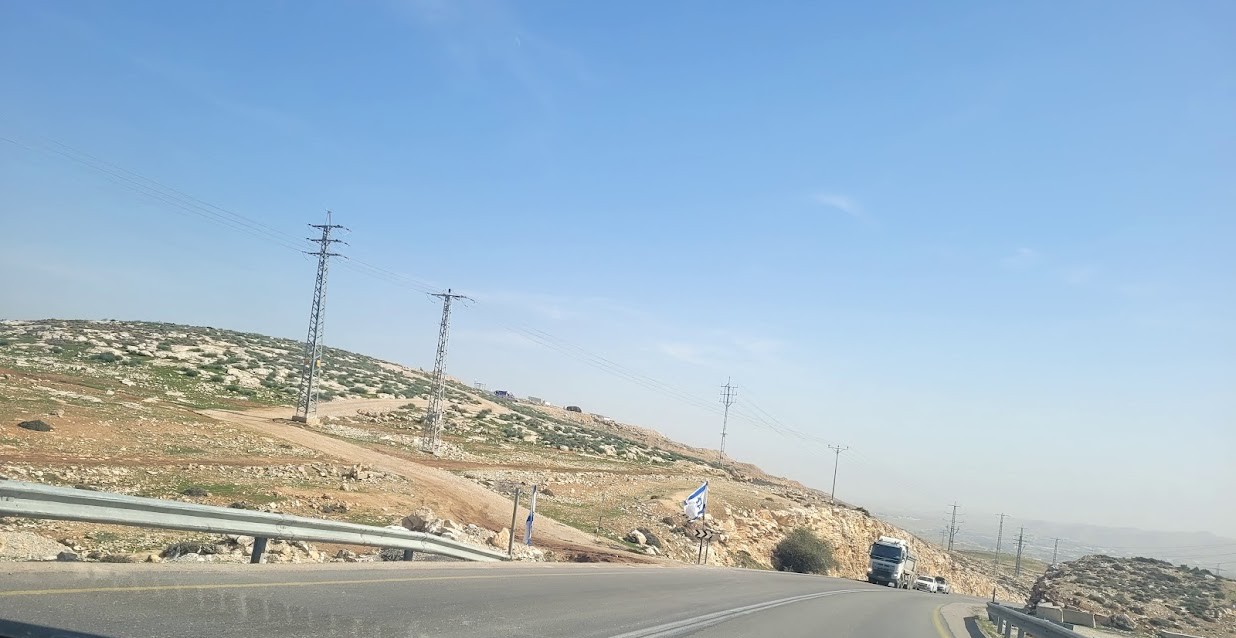 Anat TuegJan-25-2026Anata: A new outpost has been built south of the junction
-
Silwan
See all reports for this place-
Silwan is south of the Old City of Jerusalem and has become one of the main confrontation areas with settlers.
-
