
Ar-Ras, Eliyahu Crossing, Jubara (Kafriat), Qalqiliya, Mon 3.10.11, Morning
Eliyahu gate10.10 – We park the car in the parking lot and walk toward the new installations on the other side of the road and the new parking lot. On the way, we see how people who have a permit to move about on their own lands and nurseries within Israeli terriitory are processed. We saw how they emptied everything out of their cars and taxis into shopping carts and in addition their dog was inspected. Ran, the checkpoint commander, hurries over to us and informs us they we are allowed to stand and observe them only from the area of the bus stop, about 500 m. away. What could one see from there? We try to have a conversation with him. We received an explanation of how the inspections are carried out, also for people going through the checkpoint. We were pleased to hear that he reads our reports
The seven villages of the "Baladia" of Zibad 11:00 – we travel by way of Jayyus, amazed at the new roads and the impressive signs in three languages. We continue to the village of Jamal and hear there, from several youths, that everyone in the village received a permit to harvest their olives. We looked for the village head in the "municipality" building, but he wasn't there. We looked in the sewing workshop of N., who found her father, who told us that everything was going well: in another week, all of the olive grove owners would received permission to go to the harvest from 07:00 until 15:00. After drinking some cold and very good water, we were told that there was no water shortage and that their village has a partnership in a well which also provides water to the nearby settlement of Sla'it.
12:00 – we continue on the new road to the impressive "Baladia" building of Zibad. This is a kind of local council which represents 7 villages: Jubara, a-Ris, Kfar Tzur, Kfar Jamal, Zibad, Kfar 'Abush, Kur. The mayor was not available, but he had a substitute. Also R., from a-Ris was there, and the same relaxed atmosphere as N's father was reflected in Kfar Jamal. It turns out that the IDF's programs which they had told us about during our first visit in Zibad in March are already in operation. The people of a-Ris will get their lands, which had been closed off within the territory of the fence of Jubara, and the residents of Jubara can get to their lands, which are in the territroy of a-Ris, with a daily permit. Of course, not everyone is happy with this news: the people of Jubara had figured out how to benefit from their position within Israeli territory, and the residents of Kfar Tzur are in fact worried that they might lose part of their property which is within a-Ris. In any case, there was a feeling of satisfaction which we never had in previous visits in other villages in the nearby area. Perhaps because of the special relations which the residents of Sla'it managed to create with their Palestinian neighbors? The people of this settlement actually come during the olive harvest to help out the nearby villages. Maybe the new roads reflect another contribution which they are receiving from the European Union? And perhaps the promise of a Palestinian State and the intervention of the UN arouse optimism? From the usual cliches about the state and about peace in the future it is impossible to understand their actual thoughts.
Qalqilya 14:00 – Everyone is passing through in both directions. No soldiers, no checkpoint.
.
A-Ras (The Children Checkpoint)
See all reports for this place-
A-Ras (The Children Checkpoint)
On Tulkarm-Qalqiliya road (574), east of Hirbet Jubara. tia checkpoint is dedicated to residents traveling to and from Tulkarm, so they should not cross apartheid road 557 (only permissible for settlers).
-
Eliyahu CP (109) / Crossing
See all reports for this place-
Eliyahu CP (109) / Crossing This checkpoint, also known as the Fruit Crossing, is one of the main checkpoints between Israel and the West Bank. It is located on Route 55 between Alfei Menashe and the turn to Qalqilya and Zufin, more than 4 km east of the Green Line, in the separation fence, which separates Qalqilya from its lands to the south, thus leaving Alfei Menashe West of the fence - the Seam Zone. This checkpoint, a few kilometers across the Green Line, is intended for "Israeli settlement in the West Bank and the population of the Seam Zone." It is managed by a civil company. Palestinians with a special permit for their lands in the seam area are also allowed to pass through it, on foot, and sometimes by car.
-
Jubara (Kafriat)
See all reports for this place-
The Jabra checkpoint was on Road 557, south of Tulkarm, on the side of the Figs Pass, which is located within the Palestinian Authority (a few kilometers east of the Green Line), and serves as an entry barrier from the territories to Israel. The checkpoint to the village of Jubara, which until 2013 was in the seam area, blocked and surrounded by a fence, was intended for the passage of the family members of the house next to the checkpoint, and also for the MachsomWatch volunteers (with special permission only), on their way to checkpoint 753. on the other side of the village. The soldiers supervising the "fig crossing" also supervised the crossing at this checkpoint, in our shifts we often waited a long time until the key was found and the gate opened. The checkpoint was abolished and became part of the separation fence that was moved west following the High Court.
-
Qalqiliya checkpoint
See all reports for this place-
Qalqilya is surrounded on all sides by the separation barrier. The only exit from the city is in the east of the city on the road that leaves the city in an easterly direction. This is where the checkpoint was located. When the checkpoint was active until 2009 our shifts watched long queues of cars being inspected at the only exit from the city to the West Bank. The checkpoint was canceled, but there is a military presence at the entrance to the city.
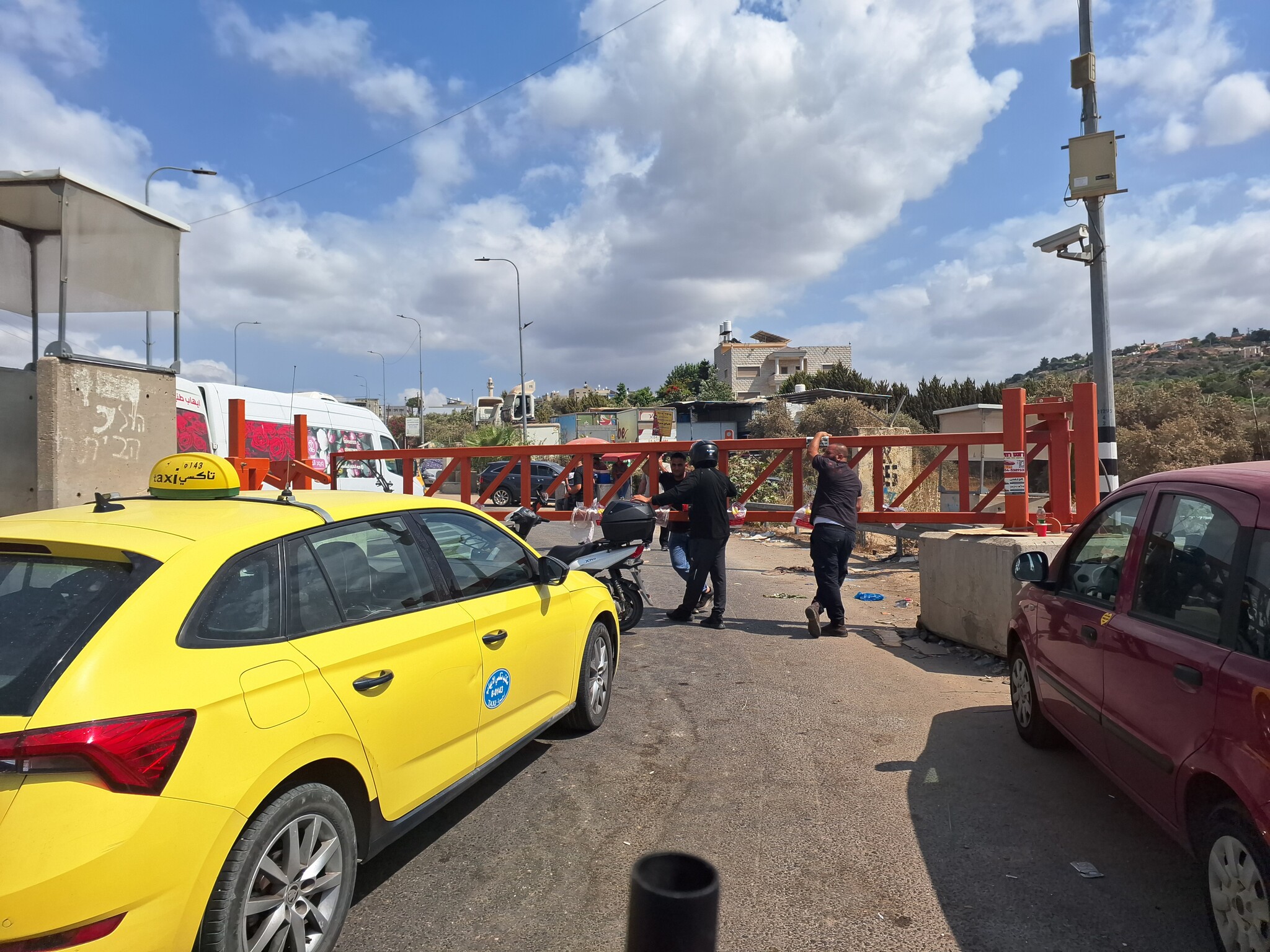 Ronit Dahan-RamatiAug-31-2026Nabi Elias. The gate is closed
-
