
Atara, Beit Furik, Huwwara, Sat 26.7.08, Morning
Translator: Charles K.
We left Jerusalem at 6:15, 15 minutes late because the ride we arranged didn't arrive.
Atara:
We reached the checkpoint at 7:00, and it was deserted. We found reservists, one of whom was from some settlement. They were amazed to meet us; they'd never heard of us, and the settler took it upon himself to explain that he's there in order to defend Petach Tikva. We were glad to hear that we were in such "good hands," and can now sleep soundly.
As we prepared to leave at 7:20, a border police jeep appeared, the shift changed and at the same time many cars appeared and a line formed. Until that moment we didn't get the impression that the reservists were particularly interested in what was going on there. When the border police arrived the work began "in earnest," and now they checked cars, though not all of them.
The drivers said that the checks were carried out quickly because of our presence, and that usually it could take an hour or more. It appears that it would be worth coming here from time to time.
Huwwara:
Many pedestrians and a long line of cars leaving Nablus. It takes about 20 minutes to pass through the "humanitarian" line, and an hour or more for the other lines. The "Oketz unit" (the dogs unit) is resting – which is good. Checking the cars was done very slowly, and a long rest was necessary from one car to the next. The photographer who was with us, authorized by the Government Press Office the IDF spokesman's office, annoyed the 2nd lieutenant who was apparently the checkpoint commander, and he fell upon us angrily and threatened to summon the police.
We remained indifferent to the threat, but the impression left on the guests by the rude behavior won't be to the IDF's credit.
The female MP's are as crude as always. We've complained numerous times but nothing seems to have any effect on the behavior of those female soldiers. The Golani soldiers who are new to the site were apparently briefed about us by their predecessors, and while we weren't present at the briefing it isn't hard to guess what they were told.
Beit Furik.
It may be that the checkpoint is empty because it's late (10:00 AM). No line of cars, and everyone looks bored. But this checkpoint commander also gets annoyed at the photographer and comes over rudely threatening to call the police. This time the photographer also "blew his top," and complained to the IDF spokesman in terms that left no doubt in the minds of those who heard them. And in fact, a call to the checkpoint put an end to the threats, but the photographer's ire didn't diminish, and there will apparently be a continuation of the harsh discussion. The taxi drivers say that the shift change this week causes problems – but in their experience things return to normal in a few days. It was hard to listen to this comment – the "normal" here is something they're looking forward to?
Huwwara:
Nothing has changed, except that the taxi drivers' patience seems to have worn down because we witnessed many arguments and conflicts in the parking lot. Some of them looked like they would soon become very violent, and only the intervention of older men prevented this. Given the economic circumstances of these drivers, and the fact that they have little work, it isn't hard to understand their edginess and impatience.
We returned to Jerusalem at 12:30.
עזבנו את ירושלים בשעה 06:15, באחור של רבע שעה כי ההסעה המוזמנת לא הגיעה.
עטרה:
הגענו למחסום בשעה 07:00 והמקום היה שומם. במקום מצאנו חיילי מילואים, שאחד מביניהם היה מהתנחלות כלשהיא. הם נדהמו לפגוש אותנו, מעולם לא שמעו עלינו והמתנחל מצא לנכון להאיר את עינינו ולהסביר לנו כי הוא נמצא במקום על מנת להגן על פתח-תקוה. שמחנו לשמוע שאנו "בידיים טובות" כל כך, ושנוכל להבא לישון בשקט.
כאשר עמדנו לעזוב, בשעה 07:20, הופיע ג'יפ של מג"ב, המשמרת הוחלפה ויחד עם זה הופיעו במהירות מכוניות רבות והתפתח תור. עד לאותו רגע לא התרשמנו כי למילואמניקים היה עניין כלשהוא בנעשה במקום. עם בואם של חיילי מג"ב התחילה "העבודה הרצינית" ועכשיו נבדקו מכוניות, אם כי לא כולן. הנהגים טענו כי הקצב המהיר שבו נערכה הבדיקה היא הודות לנוכחותינו במקום וכי בימים רגילים הבדיקה יכולה לארוך כשעה ויותר. נראה כי כדאי לצפות במקום מעת לעת.
חווארה:
תנועה ערה של הולכי רגל ותור ארוך של מכוניות ביציאה משכם. בתור "ההומניטרי" המעבר דרש כ-20 דקות, בשאר התורים שעה ויותר. "העוקץ" (הכלב) נח ממלאכתו – וטוב שכך. בדיקת המכוניות היתה איטית ביותר, ונדרשה "מנוחה" ארוכה בין מכונית למכונית.
הצלם שהיה אתנו, צלם מורשה ע"י לשכת העתונות ודובר צה"ל, עורר את זעמו של סג"מ שהיה כנראה מפקד המחסום, והלה התנפל עלינו בשצף קצף ואיים להזמין את המשטרה הכחולה. נשארנו אדישים לאיום, אך הרושם שההתנהלות הבוטה השאירה על האורחים לא ירשם בספר השבחים לצה"ל. חיילות המשטרה הצבאית גסות כתמיד. תלונות שהגשנו על כך פעמים אין ספור כנראה אינן מצליחות לגרום לכך שמשהו ישתנה בהתנהלות החיילות הללו. חיילי גולני החדשים במקום, כנראה תודרכו ע"י קודמיהם לגבינו, ולמרות שלא היינו נוכחים בתדרוך לא קשה לנחש מה נאמר שם.
בית פוריכ:
יתכן והשעה המאוחרת (10:00) היא הסיבה לריקנות של המחסום. אין תור של מכוניות, והכל נראה משועמם.
הצלם שוב עורר את זעם מפקד המחסום, שמיד בא בגסות ואיים להזמין משטרה. הפעם "עלה הדם" גם לראשו של הצלם, שהתלונן אצל דובר צה"ל במילים שלא השאירו שום ספק אצל השומעים. ואכן, טלפון למחסום הפסיק את האיומים, אך "החום" של הצלם לא ירד וכנראה שיבוא המשך לשיחה הקשה.
נהגי המוניות טענו כי החלפת החיילים השבוע גורמת קשיים – אך מניסיונם אחרי ימים אחדים המצב חוזר לקדמותו. קשה היה לשמוע את ההערה הזו – חזרת המצב לקדמותו זה דבר שמייחלים לו?
חווארה:
שום דבר לא השתנה, רק סבלנותם של נהגי המוניות כנראה "השתפשפה" מאד כי נוכחנו בהרבה ויכוחים וריבים במגרש החניה. חלקם נראו כאילו הם יהפכו מהר לאלימים ביותר, ורק התערבות של מבוגרים יותר מנעה זאת. לאור מצבם הכלכלי של הנהגים הללו ומיעוט העבודה לא קשה להבין את העצבנות וחוסר הסבלנות שלהם.
חזרנו לירושלים בשעה 12:30.
'Atara
See all reports for this place-
'Atara Checkpoint
Situated at the northern entrance to Ramallah from Route 465, called also Bir Zeit Checkpoint. Nowadays only remains of what used to be a busy checkpoint remain, a pillbox and concrete blocks.
-
Beit Furik checkpoint
See all reports for this place-
One of the three internal checkpoints that closed on the city of Nablus - Beit Furik to the east, Hawara to the south, Beit Iba to the west. The checkpoint is located at the junction of Roads 557 (an apartheid road that was forbidden for Palestinians), leading to the Itamar and Alon Morea settlements and Road 5487. The checkpoint was established in 2001 for pedestrians and vehicles; The opening hours were short and the transition was slow and very problematic.Allegedly, the checkpoint is intended to monitor the movement to and from Nablus of the residents of Beit Furik and Beit Dajan, being the only opening outside their villages. Since May 2009 the checkpoint is open 24 hours a day, the military presence is limited, vehicles can pass through it without inspections, except for random inspections. (Updated April 2010)
-
Huwwara
See all reports for this place-
The Huwwara checkpoint is an internal checkpoint south of the city of Nablus, at the intersection of Roads 60 and 5077 (between the settlements of Bracha and Itamar). This checkpoint was one of the four permanent checkpoints that closed on Nablus (Beit Furik and Awarta checkpoints to the east and the Beit Iba checkpoint to the west). It was a pedestrian-only barrier. As MachsomWatch volunteers, we watched therre since 2001 two shifts a day - morning and noon, the thousands of Palestinians leaving Nablus and waiting for hours in queues to reach anywhere else in the West Bank, from the other side of the checkpoint the destination could only be reached by public transport. In early June 2009, as part of the easing of Palestinian traffic in the West Bank, the checkpoint was opened to vehicular traffic. The passage was free, with occasional military presence in the guard tower. Also, there were vehicle inspections from time to time. Since the massacre on 7.10.2023, the checkpoint has been closed to Palestinians.
On February 26, 2023, about 400 settlers attacked the town's residents for 5 hours and set fire to property, such as houses and cars. Disturbances occurred in response to a shooting of two Jewish residents of Har Bracha by a Palestinian Terrorist. The soldiers stationed in the town did not prevent the arson and rescued Palestinian families from their homes only after they were set on fire. No one was punished and Finance Minister Smotrich stated that "the State of Israel should wipe out Hawara." Left and center organizations organized solidarity demonstrations and support actions for the residents of Hawara.Hawara continued to be in the headlines in all the months that followed: more pogroms by the settlers, attacks by Palestinians and a massive presence of the army in the town. It amounted to a de facto curfew of commerce and life in the center of the city. On October 5, 2023, MK Zvi established a Sukkah in the center of Hawara and hundreds of settlers backed the army blocked the main road and held prayers in the heart of the town all night and the next day. On Saturday, October 7, 23 The "Swords of Iron" war began with an attack by Hamas on settlements surrounding Gaza in the face of a poor presence of the IDF. Much criticism has been made of the withdrawal of military forces from the area surrounding Gaza and their placement in the West Bank, and in the Hawara and Samaria region in particular, as a shield for the settlers who were taking over and rioting.
On November 12, 2023, the first section of the Hawara bypass road intended for Israeli traffic only was opened. In this way, the settlers can bypass the road that goes through the center of Hawara, which is the main artery for traffic from the Nablus area to Ramallah and the south of the West Bank. For the construction of the road, the Civil Administration expropriated 406 dunams of private land belonging to Palestinians from the nearby villages. The settlers are not satisfied with this at the moment, and demand to also travel through Hawara itself in order to demonstrate presence and control.(updated November 2023)
.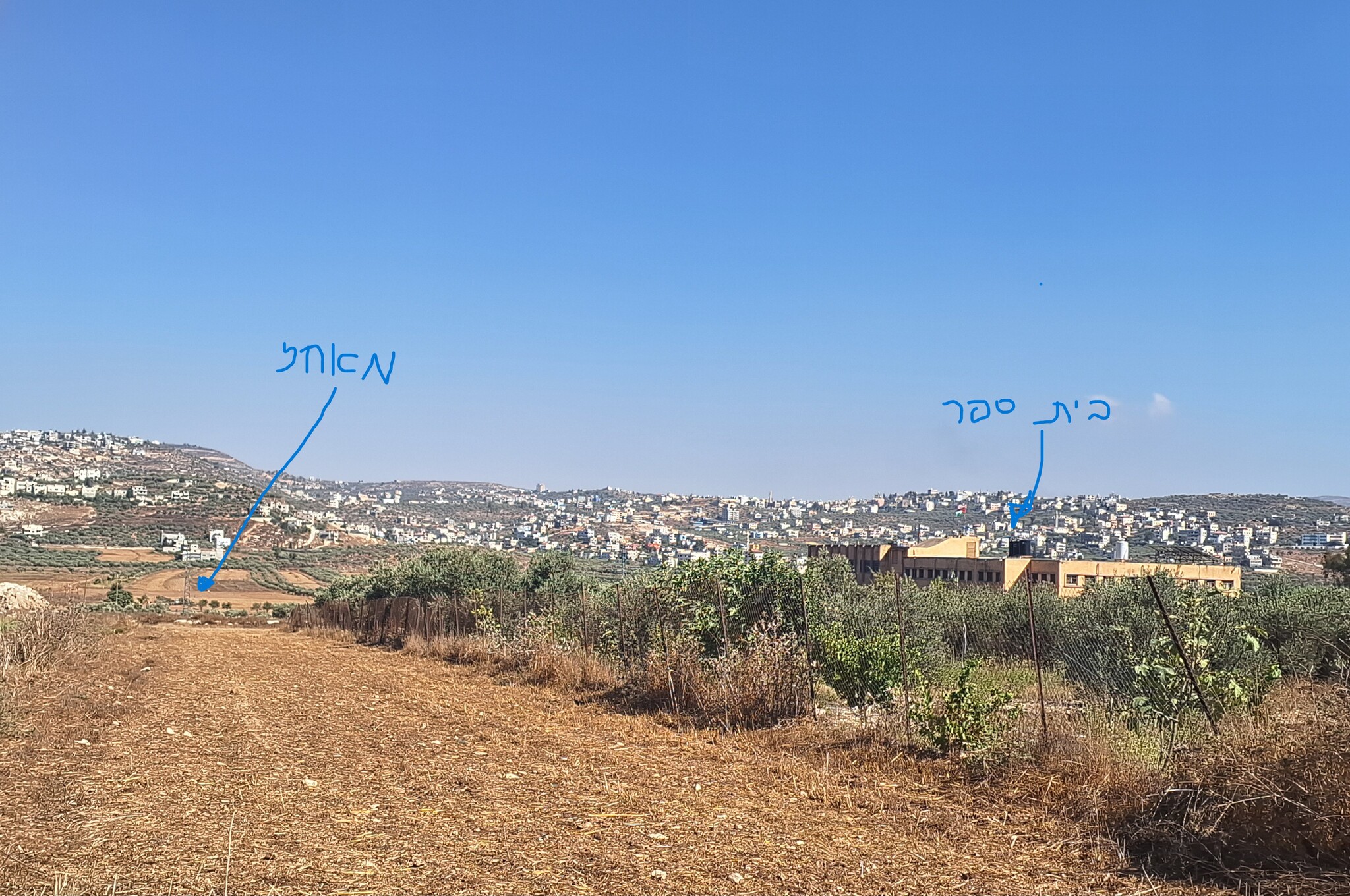 Ronit Dahan-RamatiAug-24-2026Huwara: The school on the outskirts of town and an outpost hidden among the trees
-
