
‘Awarta, Beit Furik, Burin (Yitzhar), Huwwara, Za’tara (Tapuah), Thu 4.6.09, Morning
Translation: Hanna K.
07:00 At the east side of the Samaria gate there is a police barrier.
The entrance to Marda is open, the obstruction at Zeita still stands.
07:15 Za'tara/Tapuah junction:
There are no queues. The soldiers wave to the cars to pass. From time to time they stop a taxi at the side to check the papers. Another soldiers joins and now four lanes are active: for Israelis, for important persons and two for ordinary Palestinians.
Two surveyors prepare for work. The enlargement of the Samaria dividing road approaches the junction.
A border police jeep watches opposite the entrance to Beita.
Two jeeps patrol back and forth at the Huwwara village, driving so slowly that a line of cars forms in
their wake.
BurinYitzhar: an active CP, a few cars are detained for checking.
07:30 Awarta: there is no queue.
07:50 Beit Furik:
An enormous truck blocks the exit lane and waits for the crane that piles up the dismantled concrete platforms from the CP. The Soldiers wave to us, as per routines, to enter town. When we approach they realize their mistake. We turn around and go back and thus confuse all the cars which are in a hurry to enter Nablus.
07:55 Awarta: two three cars in the queue.
08:00 Huwwara:
There is almost no queue in the car checking area. There is a girl dog trainer and the x-ray car still stands next to the pedestrians' lane. The DCO and the commander come to chat for a few minutes, but quickly make us go beyond "our" border line.
Outgoing cars are checked in two lanes and as mentioned there hardly is a queue. The car that is being checked by the dog trainer stands to the side and does not disturb the passage of the others.
At the pedestrian CP too there is no queue. The humanitarian queue is absolutely empty. Is it possible the studies at the schools and the universities have terminated?
There is no pressure on the turnstile at the entrance to town. The taxi drivers keep a reasonable distance so as not do annoy the soldiers.
At the parking lot one can enjoy beigels, coffee and tea.
Following a somewhat tense conversation with the CP commander who threatens to summon the blue police, we leave earlier.
08:20 BurinYitzhar: a bus is detained at the CP.
08:30 Za'tara: The traffic flows without checking.
Zeita and Marda: no change.
07:00 בשער שומרון מזרחה מחסום משטרתי.
הכניסה למרדא פתוחה, החסימה בזיתא עומדת.
07:15 צומת זעתרה/תפוח:
אין תורים. החיילים מנפנפים למכוניות לעבור. מדי פעם עוצרים מונית בצד לבדיקת תעודות. חייל נוסף מצטרף ועכשיו פועלים ארבעה מסלולים: לישראלים, לחשובים ושניים לפלסטינים מן השורה.
זוג מודדים מתארגן לעבודה. כנראה הרחבת חוצה שומרון מתקרבת לצומת.
ג'יפ מג"ב צופה מול הכניסה לביתא.
שני ג'יפים מפטרלים הלוך ושוב בכפר חווארה, בנסיעה כל כך איטית שנוצר בעקבותיהם טור של מכוניות.
בורין /יצהר: מחסום פעיל, מספר מכוניות מעוכבות לבדיקה.
07:30 עורטא: אין תור.
07:50 בית פוריכ:
משאית עצומה חוסמת את מסלול היציאה וממתינה למנוף העורם את משטחי הבטון המפורקים מהמחסום. החיילים מנפנפים לנו, מעשה שגרה, להכנס לעיר. כשאנחנו מתקרבות הם עומדים על טעותם. אנחנו מסתובבות וחוזרות ובכך מבלבלות את כל המכוניות הממהרות להכנס לשכם.
07:55 עורטא: שתיים שלוש מכוניות בתור.08:00 חווארה:
כמעט ואין תור באזור בדיקת המכוניות. יש כלבנית ומכונית השיקוף עדיין עומדת סמוך למסלול הולכי הרגל. המת"ק והמפקד באים לשוחח למספר דקות ועד מהרה מחזירים אותנו אל מעבר לקו הגבול "שלנו".
בודקים מכוניות יוצאות בשני מסלולים וכאמור כמעט אין תור. המכונית הנבדקת על ידי הכלבנית עומדת בצד ולא מפריעה למעבר האחרות.
גם במחסום הולכי הרגל אין תור. המסלול ההומניטארי ריק לחלוטין. האם יתכן שהסתיימו הלימודים בבתי הספר ובאוניברסיטאות?
אין לחץ על הקרוסלה בכניסה לעיר. נהגי המוניות שומרים על מרחק סביר מהקרוסלה כדי לא לעצבן את החיילים.במגרש החנייה אפשר ליהנות מביגלך, קפה ותה .
בעקבות שיחה קצת לחוצה עם מפקד המחסום, המאיים בהזמנת המשטרה הכחולה, אנחנו מקדימות לעזוב.
08:20 בורין/יצהר: אוטובוס מעוכב במחסום.
08:30 זעתרה: התנועה זורמת ללא בידוק.
זיתא ומרדא: ללא שינוי.
'Awarta
See all reports for this place-
Awarta, an internal checkpoint in the heart of the West Bank, is located east of the Hawara checkpoint, at the junction of Roads 555 (which was forbidden for Palestinian traffic in this area) and the entrance road to Nablus. It was one of the four checkpoints that surrounded Nablus until 2009. We used to watch it at Huwwara shifts because it was the only one where goods could be transferred to and from Nablus, using the back-to-back method. It was operated by the army, from 06:00 to 20:00. Until 2009.
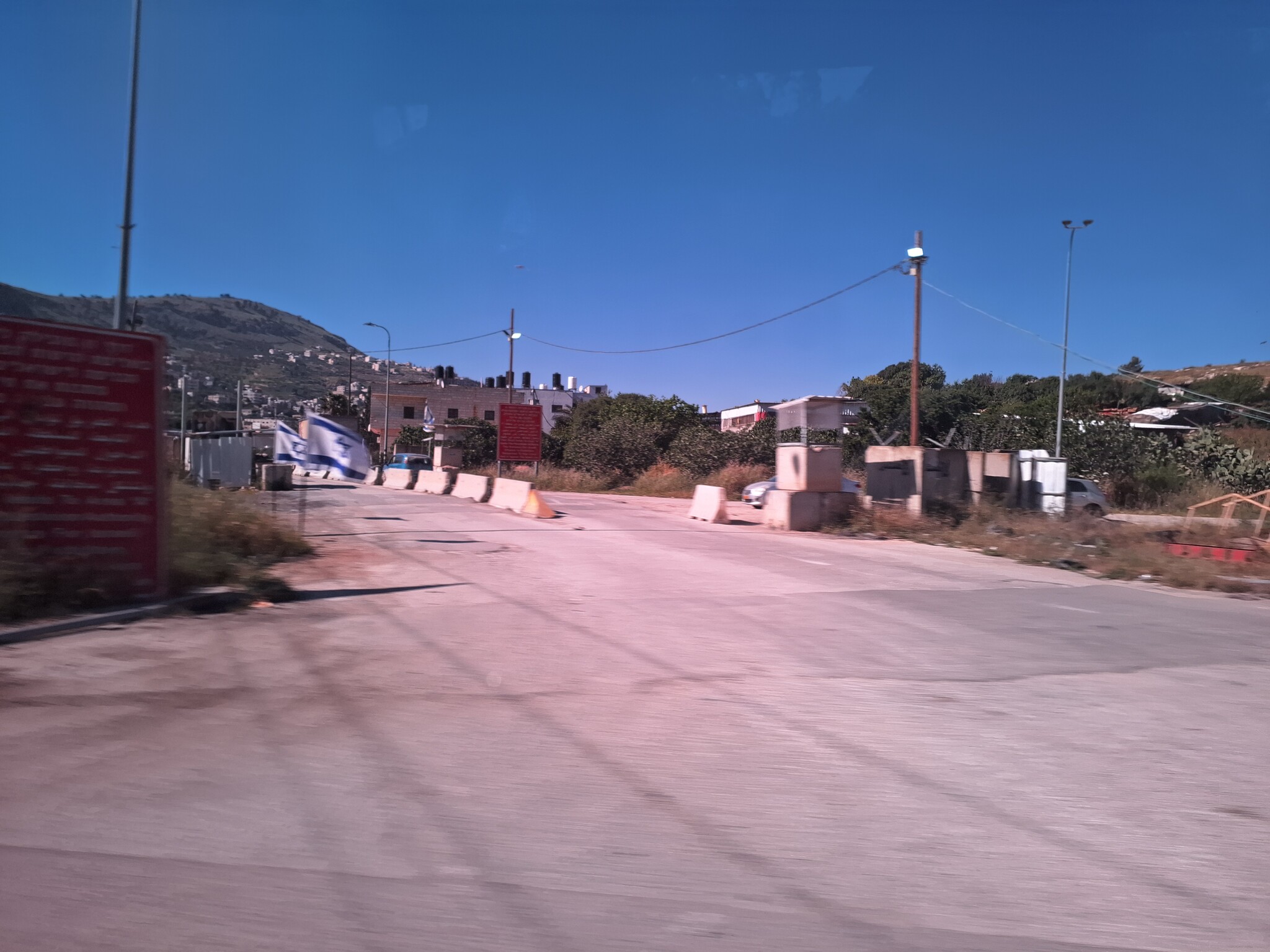 Ronit Dahan-RamatiApr-23-2026Awarta Checkpoint is empty
-
Beit Furik checkpoint
See all reports for this place-
One of the three internal checkpoints that closed on the city of Nablus - Beit Furik to the east, Hawara to the south, Beit Iba to the west. The checkpoint is located at the junction of Roads 557 (an apartheid road that was forbidden for Palestinians), leading to the Itamar and Alon Morea settlements and Road 5487. The checkpoint was established in 2001 for pedestrians and vehicles; The opening hours were short and the transition was slow and very problematic.Allegedly, the checkpoint is intended to monitor the movement to and from Nablus of the residents of Beit Furik and Beit Dajan, being the only opening outside their villages. Since May 2009 the checkpoint is open 24 hours a day, the military presence is limited, vehicles can pass through it without inspections, except for random inspections. (Updated April 2010)
-
Burin (Yitzhar)
See all reports for this place-
Burin (Yitzhar)
This is a Palestinian village in the Nablus governorate, a little south of Nablus, on the main road passing through the West Bank. The settlements: Yitzhar and Har Bracha, settled in locations that surrounded the village, placed fences so it is cut off the main road.
There are around 4000 inhabitants. Most of them are engaged in agriculture and pasture, although many graduates of the two secondary schools continue to study at the university. Academic positions are hardly available, they find work as builderd, or leave for the Gulf countries.
The village lands were appropriated several times for the establishment of Israeli settlements and military bases, and as a result, Burin's land and water resources dwindled. lSince 1982, more than 2,000 dunams of village land have been declared "state land" and then transferred to Har Bracha settlement.
Over the past few years and more so since 2017, the villagers have been terrorized by the residents of Yitzhar and Har Bracha, the Givat Ronen outpost and others. Despite the close proximity of soldiers to an IDF base close to one of the village's schools, residents are suffering from numerous stone-throwing events, vehicle and fire arson, also reported in the press.
In 2023, the prevention of the olive harvest in the village plot was more violent than ever. Soldiers and settlers walked with drawn weapons between the houses of the village and demanded that people stop harvesting in the village itself and in the private plots outside the village. The settlers from Yitzhar and Giv'at Roned raided the olive groves and stole crops. 300 olive trees belonging to the residents of Burin, near Yitzhar, were uprooted. The loss of livelihood from the olives causes long-term economic damage to the farmers' families, bringing them to the point of starvation.
(updated for November 2023)
-
Huwwara
See all reports for this place-
The Huwwara checkpoint is an internal checkpoint south of the city of Nablus, at the intersection of Roads 60 and 5077 (between the settlements of Bracha and Itamar). This checkpoint was one of the four permanent checkpoints that closed on Nablus (Beit Furik and Awarta checkpoints to the east and the Beit Iba checkpoint to the west). It was a pedestrian-only barrier. As MachsomWatch volunteers, we watched therre since 2001 two shifts a day - morning and noon, the thousands of Palestinians leaving Nablus and waiting for hours in queues to reach anywhere else in the West Bank, from the other side of the checkpoint the destination could only be reached by public transport. In early June 2009, as part of the easing of Palestinian traffic in the West Bank, the checkpoint was opened to vehicular traffic. The passage was free, with occasional military presence in the guard tower. Also, there were vehicle inspections from time to time. Since the massacre on 7.10.2023, the checkpoint has been closed to Palestinians.
On February 26, 2023, about 400 settlers attacked the town's residents for 5 hours and set fire to property, such as houses and cars. Disturbances occurred in response to a shooting of two Jewish residents of Har Bracha by a Palestinian Terrorist. The soldiers stationed in the town did not prevent the arson and rescued Palestinian families from their homes only after they were set on fire. No one was punished and Finance Minister Smotrich stated that "the State of Israel should wipe out Hawara." Left and center organizations organized solidarity demonstrations and support actions for the residents of Hawara.Hawara continued to be in the headlines in all the months that followed: more pogroms by the settlers, attacks by Palestinians and a massive presence of the army in the town. It amounted to a de facto curfew of commerce and life in the center of the city. On October 5, 2023, MK Zvi established a Sukkah in the center of Hawara and hundreds of settlers backed the army blocked the main road and held prayers in the heart of the town all night and the next day. On Saturday, October 7, 23 The "Swords of Iron" war began with an attack by Hamas on settlements surrounding Gaza in the face of a poor presence of the IDF. Much criticism has been made of the withdrawal of military forces from the area surrounding Gaza and their placement in the West Bank, and in the Hawara and Samaria region in particular, as a shield for the settlers who were taking over and rioting.
On November 12, 2023, the first section of the Hawara bypass road intended for Israeli traffic only was opened. In this way, the settlers can bypass the road that goes through the center of Hawara, which is the main artery for traffic from the Nablus area to Ramallah and the south of the West Bank. For the construction of the road, the Civil Administration expropriated 406 dunams of private land belonging to Palestinians from the nearby villages. The settlers are not satisfied with this at the moment, and demand to also travel through Hawara itself in order to demonstrate presence and control.(updated November 2023)
.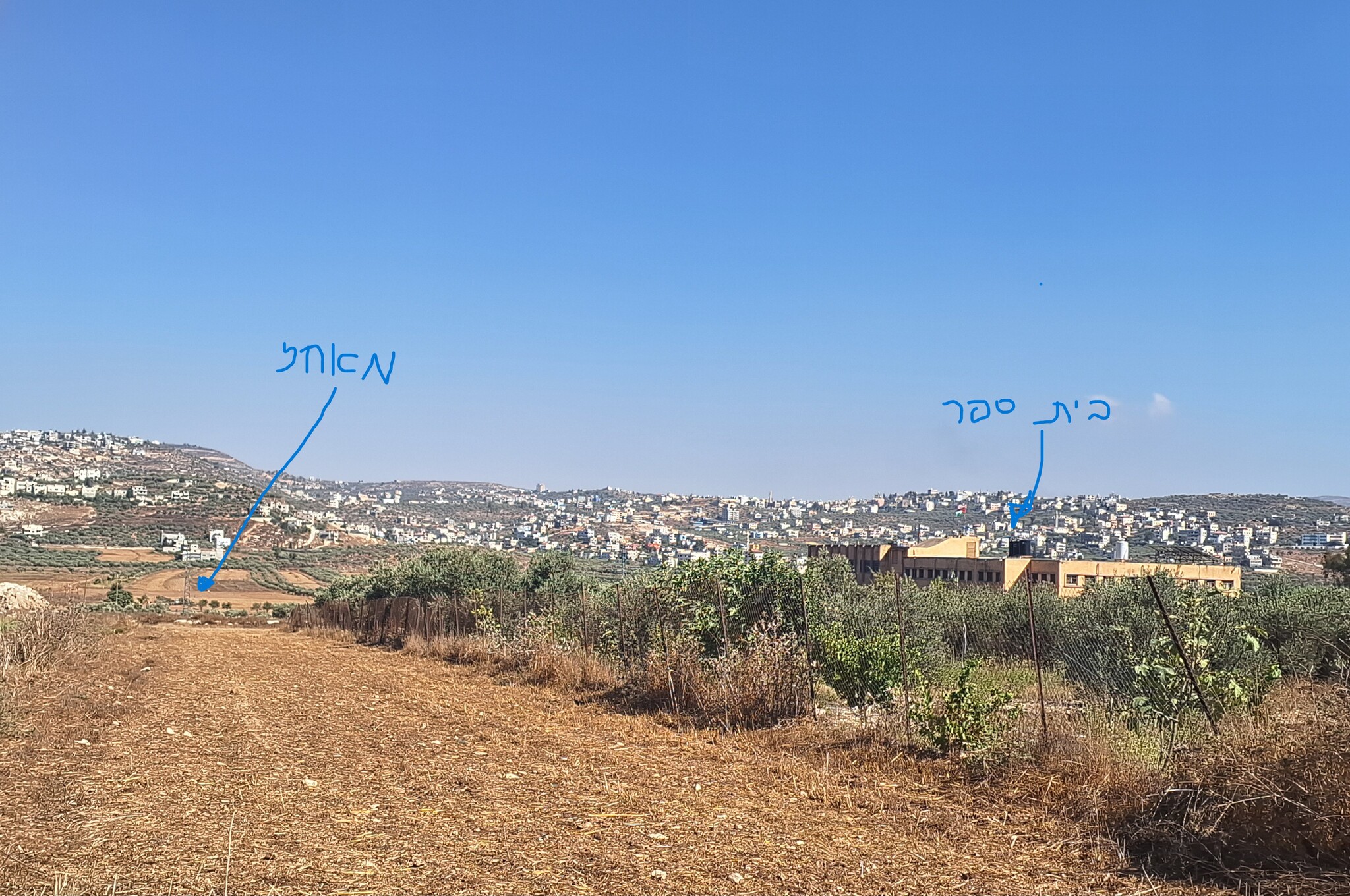 Ronit Dahan-RamatiAug-24-2026Huwara: The school on the outskirts of town and an outpost hidden among the trees
-
Za'tara (Tapuah)
See all reports for this place-
Za'tara (Tapuah) Za'tara is an internal checkpoint in the heart of the West Bank, at the intersection of Road 60 and Road 505 (Trans-Samaria), east of the Tapuah settlement. This checkpoint is the "border" marked by the IDF between the north and south of the West Bank, in accordance with the policy of separation between the two parts of the West Bank that has been in place since December 2005. At the Za'tara checkpoint, there are separate routes for Israelis and Palestinians. In the route for Israelis, there are no inspections and the route for Palestinians inspects. The queue lengthens and shortens suits. The checkpoint is open 24 hours a day. The checkpoint is partially staffed and the people who pass through it are checked at random.
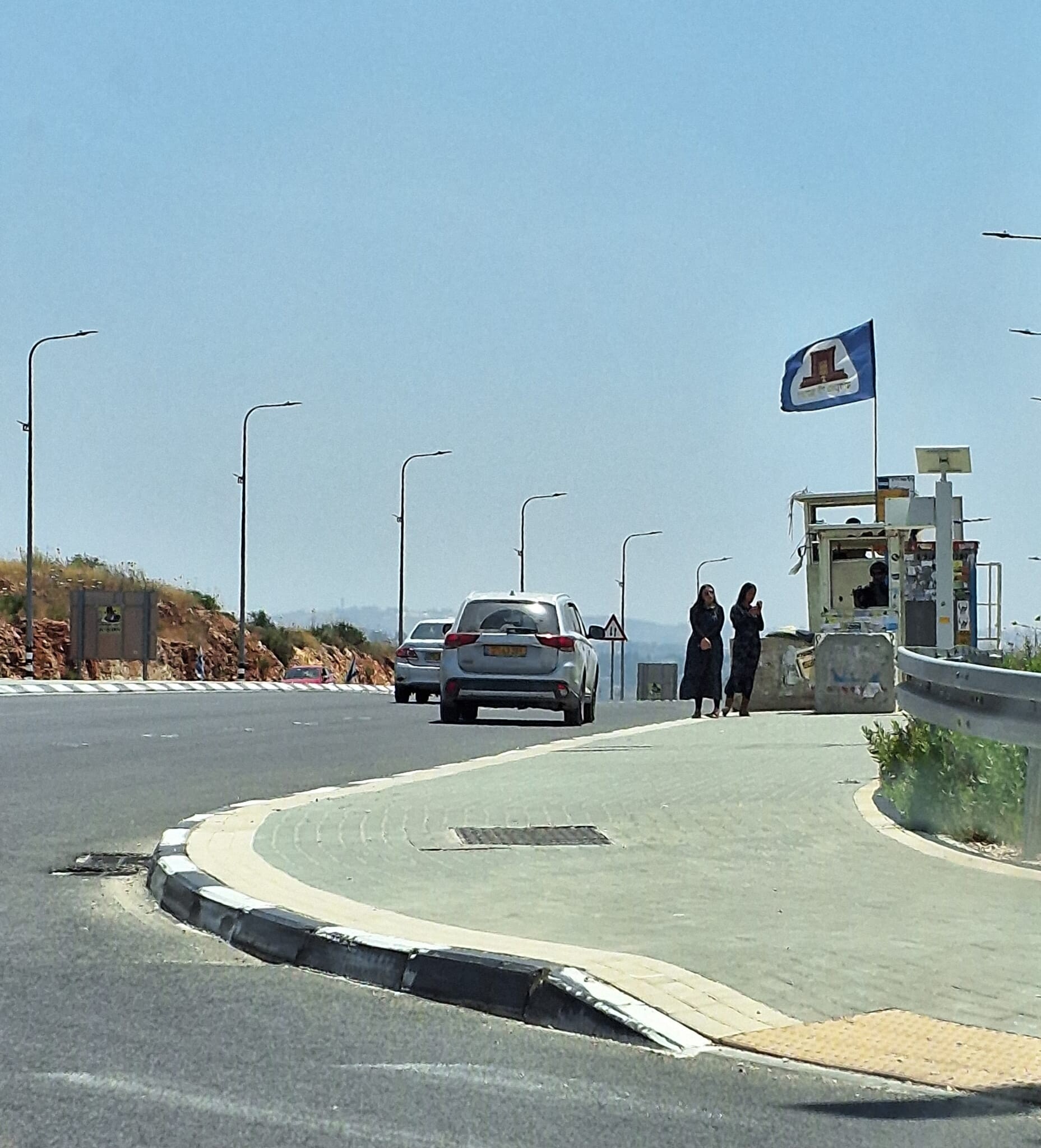 Ronit Dahan-RamatiJun-9-2026Za'atara (Tapuach Junction). The Temple Flag Above a Station
-
