
‘Awarta, Huwwara, Thu 19.2.09, Morning
Translator: Charles K.
7:00 On Route 5 we passed the border that's been erased, that's invisible. The road east is empty. A few minutes past the Kfar Qassem junction, signs in Hebrew and English point the way to the adjacent settlements: Elkana, Aley Zahav, Pedu'el, Etz Efrayim… the villages of Maskha, Zawiyya, Kafar a-Dik are also very near. They don't have a sign.
There are no guards at the entrance known as the "Shomron Gate". People drive through freely. Cars with yellow license plates coming from the opposite direction drive west into Israel for another work day. We pass the Barkan industrial area. The road is empty.
Ariel junction. The development continues of the impressive plaza opposite the entrance to the settlement. Soon they'll plant flowers. It's hard to imagine that the Palestinian village of Salfit is stuck between the fences and gates of the large settlement of Ariel. It's very well hidden. It appears again only near the Za'tara-Tapuach junction. A red sign warns not to enter the village, and alerts drivers to the danger involved in entering Area A. A little farther on are signs to the two villages of Marda and Zeita.
A few people are waiting at the junction for rides eastward, toward Jerusalem. To their daily routine.
The Za'tara-Tapuach junction is almost empty. About 10 cars being inspected coming from Nablus. A group of settlers, young women and men and Border Policemen at the hitchhiking station waiting for rides toward Nablus and the many settlements in the area.
7:40 Huwwara checkpoint. There are not stalls in the parking lot. Few cars. We ask why, and where they stalls have "disappeared" to. The answer: "Because!" There aren't many people at the checkpoint itself. They go through almost without any difficulty. I'm continually asked to stop taking photographs. It's a military area, etc. They "showed" me the white line ["You can only stand here!"]. farther south. I photograph the remains of the old checkpoint, the traces left when the checkpoints stones were uprooted and piled by the side of the road leading to the quarry like a memorial to a former world. The new, improved checkpoint is a few meters to the east, farther from sight. A network of fences does a good job of blurring the image of the human figures passing between them. Only the vehicle lane remains as it was before, and the dogs alongside it.
The "Oketz" unit hasn't moved from its place.
It's very difficult to observe and document because of the distance, the complex of fences, the determination of the soldiers to prevent all documentation. The new checkpoint does an excellent job of concealing, braking, preventing access. Even a short conversation with people going through the checkpoint is conducted hurriedly, partly because they're in a hurry but mainly because there's almost nowhere to stand and talk, to ask questions. Nowhere. Barely in the parking lot. As it is said: The more electronics, the more improvements, paved roads, well-designed plazas [with colorful garbage bins decorated with sayings of the sages], so is there more brutality, alienation and control. That way, there's less to report.
We simply can't see anything. What can we report on? That traffic at Huwwara is flowing? That there aren't many people? Yes, everything "flowed." Yes, at 8 in the morning there weren't many people. A number of teachers and students got out of a taxi and ran toward the entrance to Nablus. We were told that many restrictions have been eased. Also at Huwwara. Great! They've eased restrictions. People enter and leave without difficulty. Inspections are sporadic.
But we – we were guarded very carefully. Don't come near, don't take photographs, not even of what can barely be seen. Get back, this is a military area. "I'm telling you to move away or I'll arrest you!", and other similar statements. What's even left to photograph? Distant forms moving among a mass of fences. Woe to anyone who remembers the movement of people between "Huwwara South" and "Huwwara North." What then looked harsh was nothing compared to what's happening now. Then, at least, we brushed up against people, held conversations, talked; they, even under those difficult conditions, were happy to meet, talked, shared experiences. Who today has time to meet and talk among the turnstiles, the fences and the electronics? Even the soldiers don't have much to do anymore. They have a lot of time for us, to prevent in any way they can our documentation. Our annoying presence. We're there to protest, to document and to report. Who remembers?? But we must not forget!
Awarta. Back-to-back transfer of merchandise between trucks has been eliminated; the trucks now go through "freely." No inspection. That's what the soldiers on duty told us. On Saturday, Israeli trucks may also enter Nablus. Across the road, on the way to the DCO located in the area of the firing range [where settlers from Yitamar are also training; I saw them with my own eyes], the erection of earthen berms is proceeding apace, to serve as "walls" preventing bullets from going astray.
The Nablus DCO. People wait in the parking lot to enter. A 22-year-old man from Issawiyya was in Na'alin on Saturday, a soldier stopped him and asked for his ID, asked what he was doing in Na'alin? Just visiting, he answered. The soldier, unconvinced, confiscated the ID. A Palestinian needs a very good reason and a clear explanation if he wants to visit a neighboring village. Like a taxi driver standing nearby tried to explain – maybe we didn't understand, "…But he was in Palestine, why did they take his ID?" An excellent question. Now he's without an ID. He arrived at the Nablus DCO after having first been sent to Beit El, it's already Thursday and he's waiting. Maybe today he'll get the ID.
But the father of a six month old infant with a birth defect, who has all the necessary authorizations to be examined and treated at Ichilov Hospital [in Tel Aviv], is waiting only for a fax that's supposed to come to the DCO – for final approval. He fears he'll lose his place. He waits.
An iron bar blocks the entrance to the DCO. That's new. We go into the DCO – it's empty. On the other side of the checkpoint's window a female soldier is immersed in her reading [Ram Oren]. Past the turnstiles, in the dark waiting room, three people are waiting to be taken care of. To be called. We try to get the soldier's attention, to ask a question. She finally notices us, a voice comes from the other side of the window, I give details and mainly ask with whom we can speak to find out what's going on with the people waiting outside. Who's dealing with them, how long will they have to stand there? The female soldier [Ethiopian] – "Someone will be here soon, wait!" We wait. Time passes. Again we nag – "Nu?" "Who'll come?" "Rami, be patient!" Finally the door opens, Major Rami emerges, says that Faras, the DCO head, will be here immediately. He arrives and says that we shouldn't have shown up without making an appointment, and that we're not allowed to be in the DCO area, and in the course of the conversation shows us all the changes that were made, the new floor, the renovations, how nice it is. Just so it will be more comfortable and pleasant for the Palestinians to wait. The dogs can be heard barking in the pen outside. Those are the dogs working with the DCO. Faras says that many restrictions have been eased: Everyone from the Nablus sector who's under 50 goes through Khava 5 [which we know as Huwwara] without inspection. No inspections in the Ganot sector [Shave Shomron] also. No inspections at Awarta. No inspections at Beit Furik.??? The end of days has come. How come?, we asked, how come you're so nice all of a sudden? Said Faras: "A mother raising a son wants to see him grow up the way she wants him to – she does A., sees that things are good, does B. That's how we are also. We ease up a little and see what happens. If the response is positive, we ease up a little more; if the response is negative, we clamp down." And what if there's an attack? "Then everything starts again from the beginning!" If they behave well, they'll get; if they don't behave well, they won't get. Finally they understand – that's why restrictions have been eased.
Since Faras has arrived, though, there's been a significant innovation. The DCO telephone number is posted on almost every concrete barrier block in the area:
02-970 3160.
A question: If a Palestinian wants to find something out, to simply ask a question – can he call the DCO directly?
'Awarta
See all reports for this place-
Awarta, an internal checkpoint in the heart of the West Bank, is located east of the Hawara checkpoint, at the junction of Roads 555 (which was forbidden for Palestinian traffic in this area) and the entrance road to Nablus. It was one of the four checkpoints that surrounded Nablus until 2009. We used to watch it at Huwwara shifts because it was the only one where goods could be transferred to and from Nablus, using the back-to-back method. It was operated by the army, from 06:00 to 20:00. Until 2009.
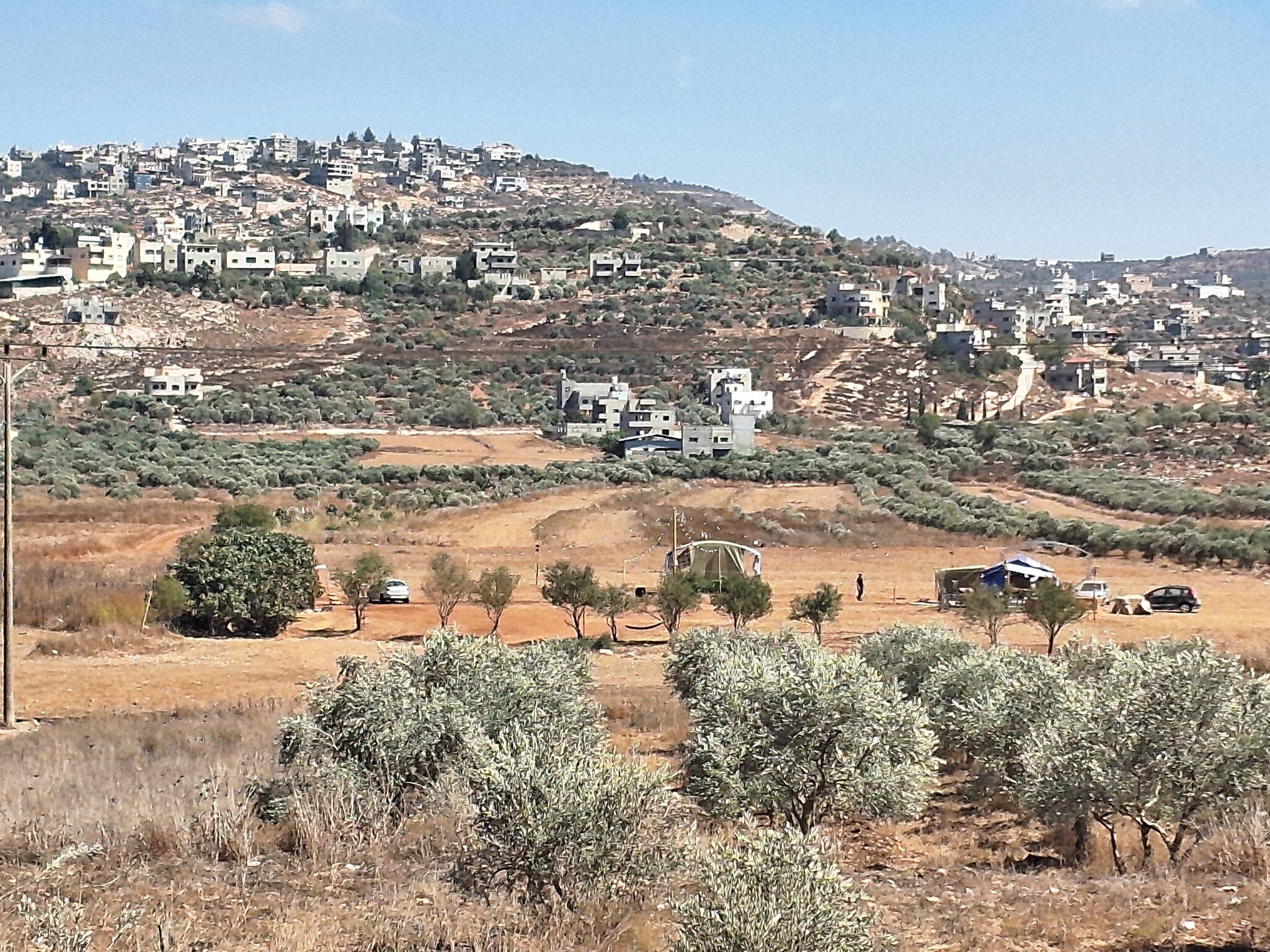 Ronit Dahan-RamatiSep-10-2026Awarta. Outpost below the town
-
Huwwara
See all reports for this place-
The Huwwara checkpoint is an internal checkpoint south of the city of Nablus, at the intersection of Roads 60 and 5077 (between the settlements of Bracha and Itamar). This checkpoint was one of the four permanent checkpoints that closed on Nablus (Beit Furik and Awarta checkpoints to the east and the Beit Iba checkpoint to the west). It was a pedestrian-only barrier. As MachsomWatch volunteers, we watched therre since 2001 two shifts a day - morning and noon, the thousands of Palestinians leaving Nablus and waiting for hours in queues to reach anywhere else in the West Bank, from the other side of the checkpoint the destination could only be reached by public transport. In early June 2009, as part of the easing of Palestinian traffic in the West Bank, the checkpoint was opened to vehicular traffic. The passage was free, with occasional military presence in the guard tower. Also, there were vehicle inspections from time to time. Since the massacre on 7.10.2023, the checkpoint has been closed to Palestinians.
On February 26, 2023, about 400 settlers attacked the town's residents for 5 hours and set fire to property, such as houses and cars. Disturbances occurred in response to a shooting of two Jewish residents of Har Bracha by a Palestinian Terrorist. The soldiers stationed in the town did not prevent the arson and rescued Palestinian families from their homes only after they were set on fire. No one was punished and Finance Minister Smotrich stated that "the State of Israel should wipe out Hawara." Left and center organizations organized solidarity demonstrations and support actions for the residents of Hawara.Hawara continued to be in the headlines in all the months that followed: more pogroms by the settlers, attacks by Palestinians and a massive presence of the army in the town. It amounted to a de facto curfew of commerce and life in the center of the city. On October 5, 2023, MK Zvi established a Sukkah in the center of Hawara and hundreds of settlers backed the army blocked the main road and held prayers in the heart of the town all night and the next day. On Saturday, October 7, 23 The "Swords of Iron" war began with an attack by Hamas on settlements surrounding Gaza in the face of a poor presence of the IDF. Much criticism has been made of the withdrawal of military forces from the area surrounding Gaza and their placement in the West Bank, and in the Hawara and Samaria region in particular, as a shield for the settlers who were taking over and rioting.
On November 12, 2023, the first section of the Hawara bypass road intended for Israeli traffic only was opened. In this way, the settlers can bypass the road that goes through the center of Hawara, which is the main artery for traffic from the Nablus area to Ramallah and the south of the West Bank. For the construction of the road, the Civil Administration expropriated 406 dunams of private land belonging to Palestinians from the nearby villages. The settlers are not satisfied with this at the moment, and demand to also travel through Hawara itself in order to demonstrate presence and control.(updated November 2023)
.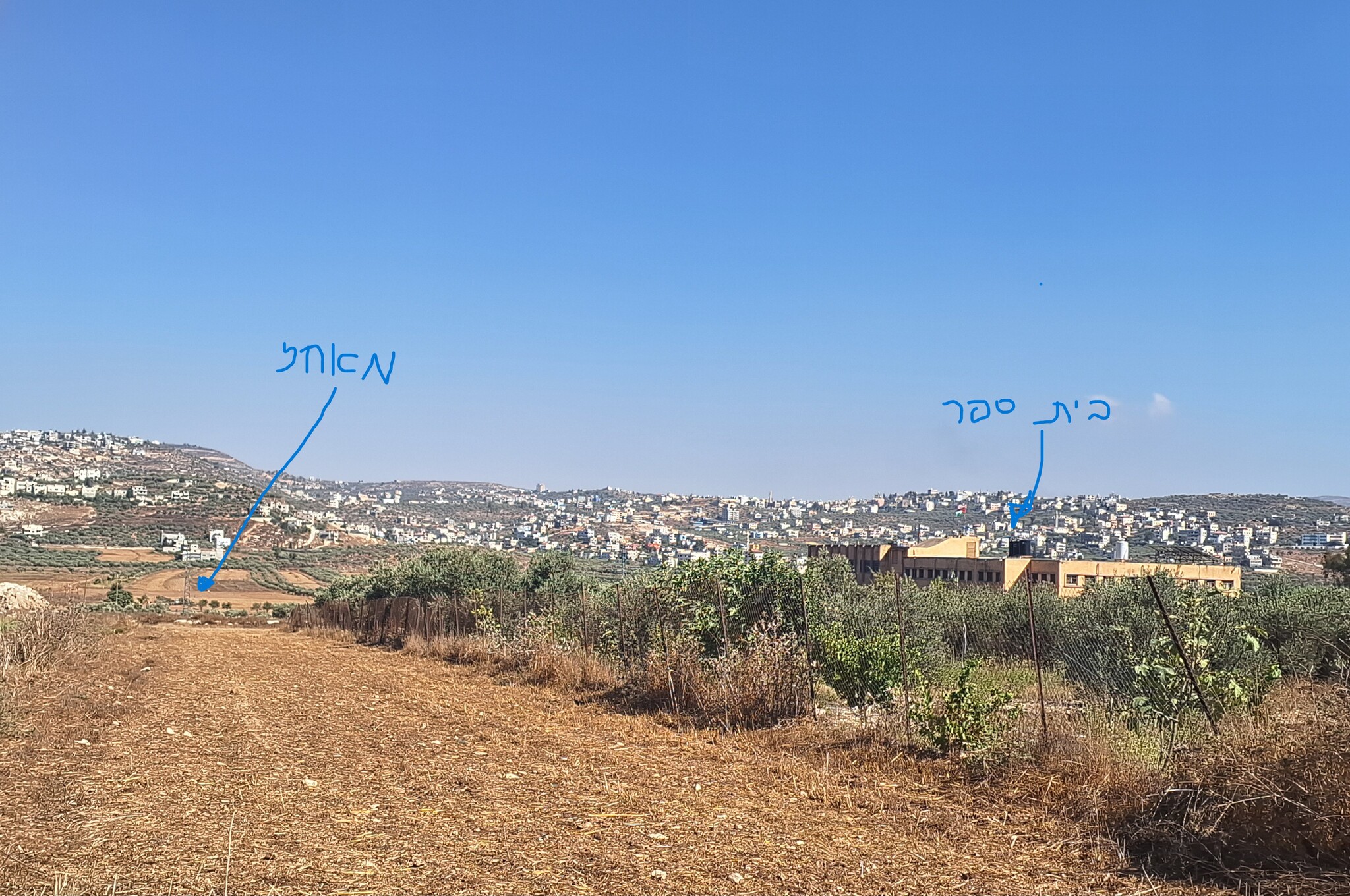 Ronit Dahan-RamatiAug-24-2026Huwara: The school on the outskirts of town and an outpost hidden among the trees
-
