
Awarta, Huwwara, Za’tara (Tapuah), Thu 3.4.08, Afternoon
Translation: Natanya g.
Marda is open. The entrance to Zeita- Jamma'in is still blocked with cement blocks and the gate locked and people can only leave the villages on foot.
14.20 Za'atra. When we got there, there were 6 cars only from the direction of Nablus. The passage was swift. Two checking areas. About 15 minutes later a checking position was opened for cars going to Nablus (and there is also now a permanent checking position for this) and therefore the checking post in the direction of Nablus has been taken down and a long line begins to form. We spoke to the commander and pointed this out and he immediately opened another lane. But by then the line was so long that it was difficult to shorten it.
A young settlers from Elon Moreh came to preach to us saying that this was our land and that the Palestinians have no right here and why are we for the Palestinians and do not protect her rights, etc. A conversation of the deaf ensued but it was not impassioned and when I asked her to move off so as not to bother us she did so.
14.50 A van was sent to the parking area after the IDs of the passengers had been taken. But after 3 minutes the IDs were returned and the passengers did not have to leave the car. 2 other vans, one full of joyous children passed without delays. The soldiers, military police and border police , reservists it seems by their age.
At the crossroads of Burin stood a Hummer next to the Bedouin's shop but there was no checkpoint. At Huwwara there were no lines of cars and the passage was swift. From Nablus all the passengers alight from the car and stand at the side until the soldier completes the check.
3 checking positions (later only 2) and there is no overcrowding and the passage is swift with no delays. The commander, Paz. The atmosphere is fairly calm with no shouts and hardly any pressure. One military policeman, Ori even speaks to the Palestinians saying please and thank you! The humanitarian line outside the shed is in the sun. Now and again the pressure builds up and then large crowds of people are allowed to pass without being checked. A welder works on the kiosk near the road taking down the plastic windows. It is not clear what is to come in their place.
When the soldier who is checking the cars comes to relieve one of the soldiers in the pedestrian lane she brings with her all the IDs of people in a car. The soldier who has been relieved goes and returns them. Another small harassment, another small delay.
15.55 The soldier begins to push the people back with cries of "Back Back" two meters from the turnstiles and afterwards she checks each woman in the humanitarian line with the metal detector. A line begins to form. 2 veiled women are taken to the isolation and a woman soldier stands outside the door and argues with them. Two minutes later they come out and go on their way. We cannot be sure but think that the argument was as to whether they should raise their veils.
On the road is a man who used the Madison road. He is from Dhahiriya and did not know it was forbidden and says it is written nowhere. Which is true. He was kept from 13.30 – 15.40 and missed out on a day of work because of this.
16.00 There is more pressure and a third checking area is opened. Now Thursday is the day of the students because they do not learn on Fridays or Saturdays.
16,40 Awarta. No lines and two vans doing a back to back passage. At Beit Furik the electricity is on though the day is clear. The turnstiles are not working and people go through on the road. There are no lines of cars and the pedestrians pass quickly. A pair of small people laden with parcels come from the direction of Beit Furik with great difficulty. The dark skinned and thin woman soldier runs towards them and takes some bags so as to help them get to the other side of the checkpoint. It is so difficult to see from where we stand next to the second turnstile that in the beginning I wrote down that it was a male soldier and Yehudit said that by the body language it was a woman. We were only certain when one of the Palestinians told us it was a woman.
A father comes to the checkpoint. His 15 year old daughter came with her older sister and husband from Nablus and she was not allowed to pass because she was not with her parents and so he had had to come from his village to fetch her.
17.30 A new green Mercedes passes from Nablus and stops behind the checkpoint. The driver is angry and shows us that the backrest of the car has been torn away. This is what a soldier has just done. Some time ago they tore his 4 tyres with spikes and he shows us a note from the soldiers affirming this. He is angry, shouts and curses until the commander comes up, checks the damage and refuses to give him a written conformation and chases him away. I phoned Aiman of the DCO but the man was too angry to speak to him. Yehudit took his details.
18.00 Huwwara. A young woman is detained in the isolation for over an hour. Two soldiers and the commander guard her. The mother and daughter are shouting and the commander sends the father away but the mother refuses to go. About 15 minutes later the woman soldier goes to the father and says that if he does not take her away she will do so by force and so the mother is removed. We spoke to the woman who was at first very hostile and refused to take our card ("I do not believe in you.)" A proud and fighting Palestinian. With my bad Arabic we had a political argument. One of the more interesting which I have had lately. An amazing woman. Her son and son-in-law who is the husband of the detained woman are in an Israeli jail. The son-in-law had been imprisoned a month and a half after the marriage. The commander told the couple that their daughter was wanted by the Secret Service who were on their way to take her away and to arrest her. He had handcuffs with him to show what was waiting for her. Yehudit phoned the humanitarian centre who said that she would be freed in a few hours. At 18.30 she was freed!!!! All the family hurried to a van to take them home but went we went to our car the mother opened a window and waves to us warmly until they disappeared.
19.40 Za'tara. No queues.
'Awarta
See all reports for this place-
Awarta, an internal checkpoint in the heart of the West Bank, is located east of the Hawara checkpoint, at the junction of Roads 555 (which was forbidden for Palestinian traffic in this area) and the entrance road to Nablus. It was one of the four checkpoints that surrounded Nablus until 2009. We used to watch it at Huwwara shifts because it was the only one where goods could be transferred to and from Nablus, using the back-to-back method. It was operated by the army, from 06:00 to 20:00. Until 2009.
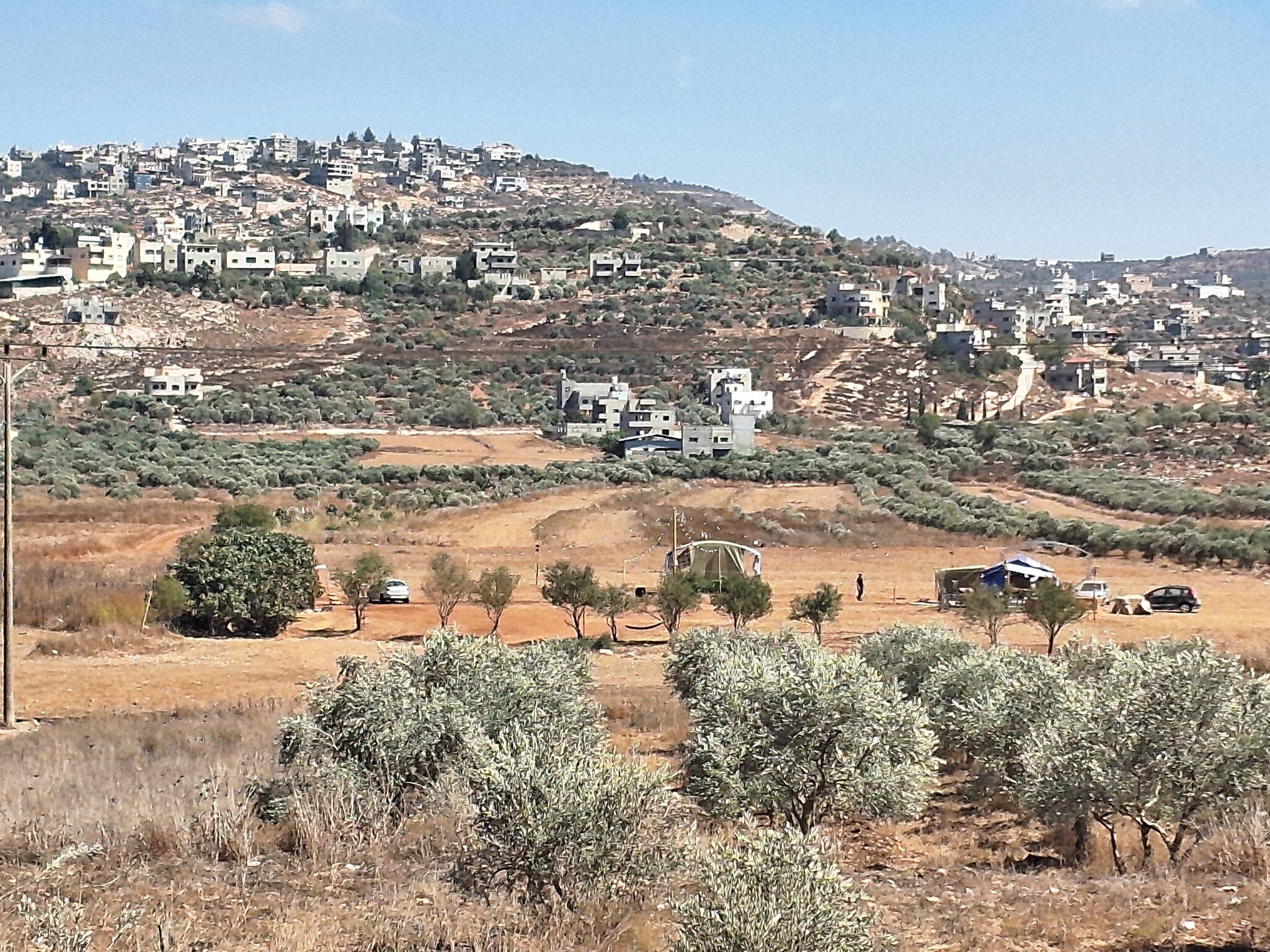 Ronit Dahan-RamatiSep-10-2026Awarta. Outpost below the town
-
Huwwara
See all reports for this place-
The Huwwara checkpoint is an internal checkpoint south of the city of Nablus, at the intersection of Roads 60 and 5077 (between the settlements of Bracha and Itamar). This checkpoint was one of the four permanent checkpoints that closed on Nablus (Beit Furik and Awarta checkpoints to the east and the Beit Iba checkpoint to the west). It was a pedestrian-only barrier. As MachsomWatch volunteers, we watched therre since 2001 two shifts a day - morning and noon, the thousands of Palestinians leaving Nablus and waiting for hours in queues to reach anywhere else in the West Bank, from the other side of the checkpoint the destination could only be reached by public transport. In early June 2009, as part of the easing of Palestinian traffic in the West Bank, the checkpoint was opened to vehicular traffic. The passage was free, with occasional military presence in the guard tower. Also, there were vehicle inspections from time to time. Since the massacre on 7.10.2023, the checkpoint has been closed to Palestinians.
On February 26, 2023, about 400 settlers attacked the town's residents for 5 hours and set fire to property, such as houses and cars. Disturbances occurred in response to a shooting of two Jewish residents of Har Bracha by a Palestinian Terrorist. The soldiers stationed in the town did not prevent the arson and rescued Palestinian families from their homes only after they were set on fire. No one was punished and Finance Minister Smotrich stated that "the State of Israel should wipe out Hawara." Left and center organizations organized solidarity demonstrations and support actions for the residents of Hawara.Hawara continued to be in the headlines in all the months that followed: more pogroms by the settlers, attacks by Palestinians and a massive presence of the army in the town. It amounted to a de facto curfew of commerce and life in the center of the city. On October 5, 2023, MK Zvi established a Sukkah in the center of Hawara and hundreds of settlers backed the army blocked the main road and held prayers in the heart of the town all night and the next day. On Saturday, October 7, 23 The "Swords of Iron" war began with an attack by Hamas on settlements surrounding Gaza in the face of a poor presence of the IDF. Much criticism has been made of the withdrawal of military forces from the area surrounding Gaza and their placement in the West Bank, and in the Hawara and Samaria region in particular, as a shield for the settlers who were taking over and rioting.
On November 12, 2023, the first section of the Hawara bypass road intended for Israeli traffic only was opened. In this way, the settlers can bypass the road that goes through the center of Hawara, which is the main artery for traffic from the Nablus area to Ramallah and the south of the West Bank. For the construction of the road, the Civil Administration expropriated 406 dunams of private land belonging to Palestinians from the nearby villages. The settlers are not satisfied with this at the moment, and demand to also travel through Hawara itself in order to demonstrate presence and control.(updated November 2023)
.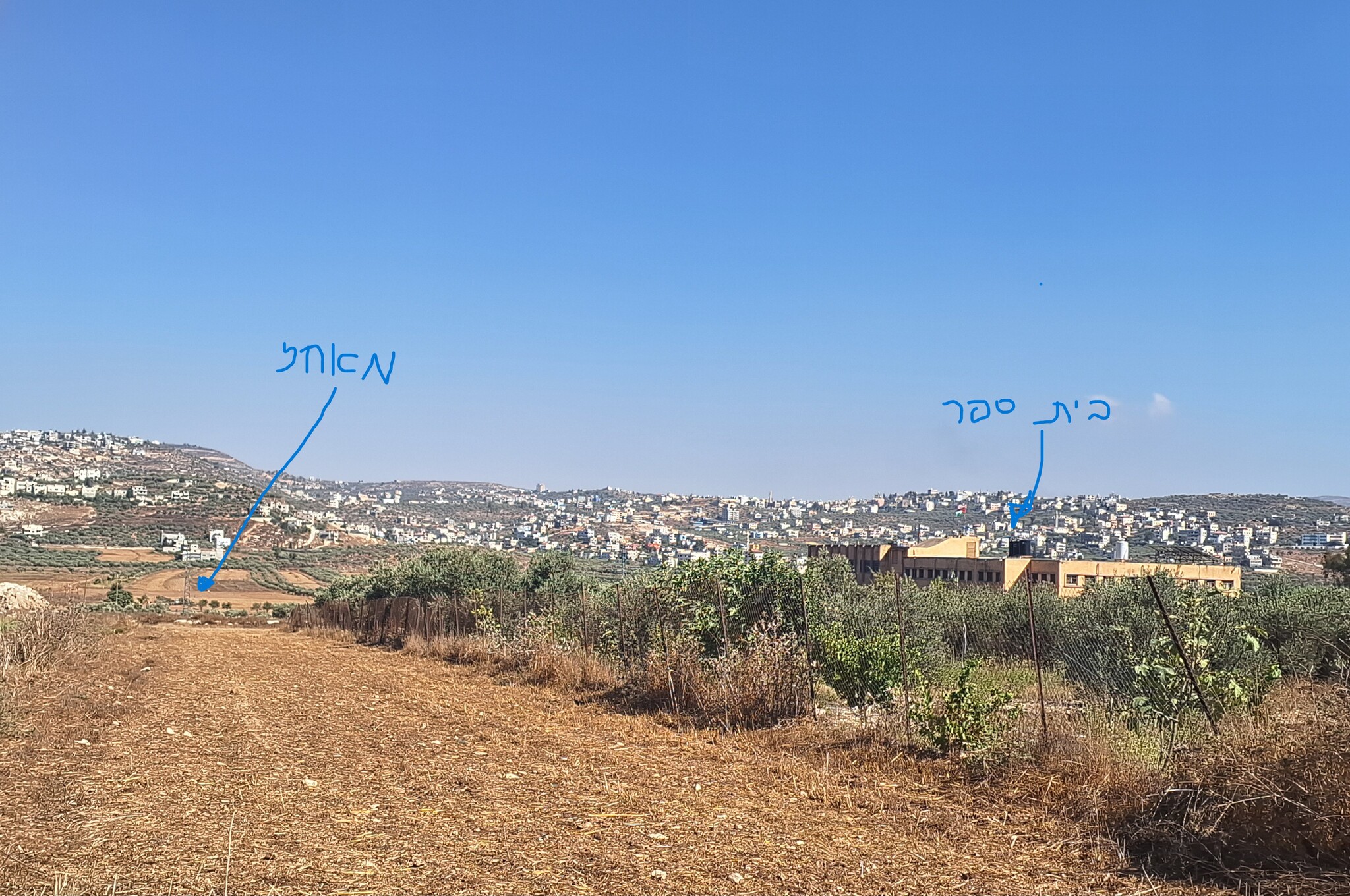 Ronit Dahan-RamatiAug-24-2026Huwara: The school on the outskirts of town and an outpost hidden among the trees
-
Za'tara (Tapuah)
See all reports for this place-
Za'tara (Tapuah) Za'tara is an internal checkpoint in the heart of the West Bank, at the intersection of Road 60 and Road 505 (Trans-Samaria), east of the Tapuah settlement. This checkpoint is the "border" marked by the IDF between the north and south of the West Bank, in accordance with the policy of separation between the two parts of the West Bank that has been in place since December 2005. At the Za'tara checkpoint, there are separate routes for Israelis and Palestinians. In the route for Israelis, there are no inspections and the route for Palestinians inspects. The queue lengthens and shortens suits. The checkpoint is open 24 hours a day. The checkpoint is partially staffed and the people who pass through it are checked at random.
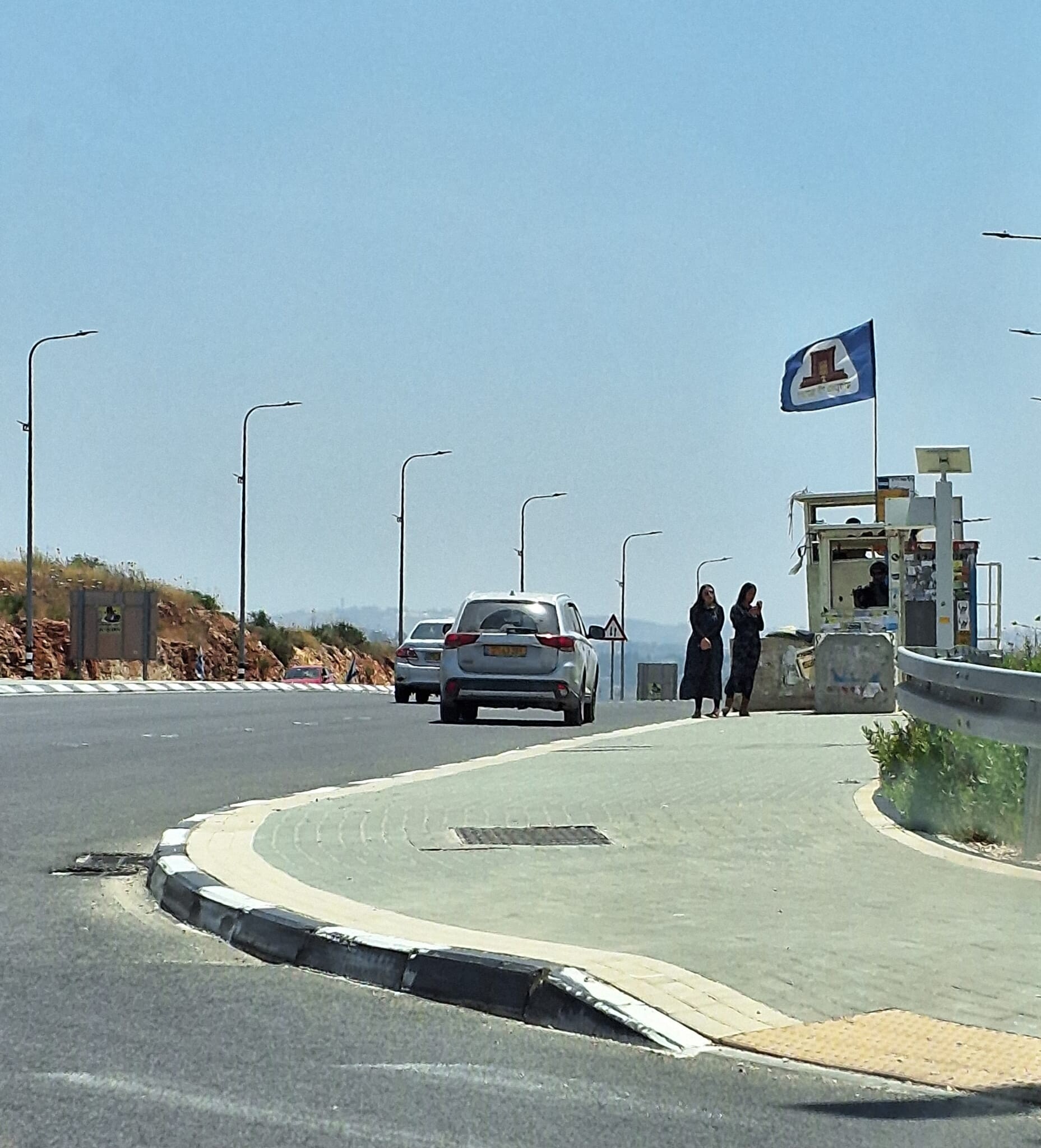 Ronit Dahan-RamatiJun-9-2026Za'atara (Tapuach Junction). The Temple Flag Above a Station
-
