
Beit Furik, Huwwara, Za’tara (Tapuah), Wed 24.9.08, Afternoon

Translator: Charles K.
14:10 Marda: The checkpoint is open, and there's no military traffic in the area.
14:20 Za'tara 11 vehicles on line from the north.
14:30 Huwwara checkpoint:
The checkpoint is full, crowded and tense.
3 lanes open. The "humanitarian" lane is long and crowded – it takes two hours to go through! Shouts of "Nu, yallah," "ta'al," instead of the usual yelling. People complain about the crowding and how long it takes to go through the humanitarian lane.
Suddenly a thunderous shout is heard from one of the soldiers toward the humanitarian lane packed with women: "Get back…:" "Yallah, get back…" You can hear the hubbub of the angry women.
At 15:00 a bus with right-wing settlers arrives; some are photographed with the soldiers. They're carrying orange flags, with the slogan "The land of Israel for the people of Israel," and begin singing "Am Yisrael Chai…," and shout encouragement to the soldiers, promising them that the people of Israel support them.
One madwoman with a megaphone calls out to us: "MachsomWatch women, go to Saudi Arabia…"; a female settler with a huge camera approaches us behind the fence and takes our picture. And more insults directed against the women in the humanitarian lane. After a while they return to the bus and disappear from the area.
15:10 A loud explosion is heard. A stun grenade was thrown in the checkpoint and all the men were moved back amid terrible shouting by them and by the soldiers, who immediately cocked their weapons. There's chaos at the checkpoint. After a short time it looks as if the humanitarian line is moving very quickly. The women stream out en masse. Some of them appear shocked, some are exhausted and their faces pained.
An elderly man carrying a boy goes through yelling that they waited 4 hours and curses – the soldiers? The state? All of us? You know what he means.
Then it seems someone tried to sneak through the lane to Nablus, and the soldiers walk in his direction with guns drawn.
Racheli talks to Z. from the DCO, who says there's an officer at the checkpoint who doesn't follow the DCO's orders, and now orders have come down from above…So that officer was so good as to release the women and the humanitarian lane opened up.
15:22 Many women and elderly men continue to flow out from the humanitarian lane.
15:30 A colonel arrives, Racheli asks him why a stun grenade was thrown, the officer said that a crowd had formed…Racheli yelled at him that it wasn't a demonstration, but that they, the army, were the ones who created that "crowd," and then they throw a stun grenade at women and children, and then everyone is released and that makes it all right?…
I saw the officer turn away from her indifferently and ask the checkpoint commanders who we are and why we're standing there…Another guy who thinks he can tell us all what to do.
With the release of the humanitarian lane, the checkpoint crowding was slightly reduced.
15:40 About 10 vehicles waiting to enter Nablus. A bus leaving Nablus waits a long time for the inspection to be completed, the passengers already waiting next to the bus, they finally get back on and the bus continues on its way.
15:45 A man arrives and tells us that earlier the line stretched to the crossroads and everyone stood in the sun, while the soldiers dropped everything and went to pal around with the settlers.
He also said that there's no water in the faucets. An elderly woman, ill, held up by another woman, obviously suffering and in difficulty, crying. The soldier said she arrived at the checkpoint on foot and wants to go to the hospital in Nablus. A vehicle that was stopped to be checked gave her a ride.
16:00 We split up: Sharon and Tom ride with Hamdan to Beit Furik and Racheli stays at Huwwara, because Z. from the DCO said that senior officers from the Civil Administration and from the Liason Office are supposed to show up, and they want to find out what happened today at the checkpoint and hear what we have to say.
16:10 Beit Furik checkpoint
More than 5 vehicles waiting to leave Nablus, and relatively brisk pedestrian traffic. The line of cars from Nablus is still waiting, and one vehicle waits at the entrance to Nablus. A man goes by and says that about 50 vehicles are waiting to leave Nablus. They're being let through very slowly. When I ask the checkpoint commander why the line is moving so slowly he says that there's not enough manpower to move them through faster, "I have no desire to move them through slowly…," he says, something that we've heard at checkpoints in one version or another very frequently, but he can't move people through any faster because two soldiers are checking, and two MP's, and he's covering all of them… And he also added that there are alerts that he can't tell me about…
A man passing through the checkpoint complains loudly that he's tired of the checkpoint, and a soldier replies that he's also tired of it, and he's been here two years…
People leave their vehicles, come together and complain, and suddenly the checkpoint commander also begins inspecting vehicles and another soldier is found to stand next to him. So the vehicle line moves more quickly, but at the expense of the pedestrians. I called the soldier's attention to the people who were waiting and he, of course, grumbled, but let them through.
At 17:00 we left Beit Furik, hoping the two lanes would move more quickly, and a military vehicle showed up. We all hope that they'll add manpower and everyone will go through quickly.
We made our way to Racheli at the Huwwara checkpoint.
17:10 Huwwar
Racheli tells us that at 16:40 there was a lot of yelling and a small boy stood with his hands up and 8 soldiers faced him with guns pointing at him. He held a knife, and later told the DCO representative that he wanted to stab a soldier. Then his brother showed up and said that the child is mentally disturbed, causes problems and is beaten by his father, and seems to have looked for "salvation" from the soldiers. Everything came to a standstill for ten minutes. When Tom and I returned to the Huwwara checkpoint we ran into three soldiers who weren't from the checkpoint who came to get the boy and showed us the knife – a kitchen knife. They said he'd tried to stab them, and one of them asked me, "Have you ever seen a knife like this in Israel?…" "No, of course not! A kitchen knife, in Israel, that's full of chefs?! Isn't that one of the tools men use in Israel to murder their wives??? And how do youths get stabbed in Israeli nightclubs??? The soldiers apparently think that there's no violence in Israel…
The DCO officers examine the humanitarian lane; the waiting time is 40 minutes. The DCO representative tried to reduce the crowding but the soldiers brushed him off, according to Z.. He says the soldiers don't follow the DCO representatives instructions.
The checkpoint is very tense even though traffic flows and four lanes are operating. We hear someone say, "You can't believe how irritable people are after they go through the checkpoint." There are now more soldiers than usual, and one of them turns to the Palestinians standing near us and asks in a rude, harsh voice: "What are you all doing, get outta here…"
At 17:30 we left a jumpy checkpoint, as stressful as it had been earlier.
18:00 Za'tara junction: about 10 vehicles at the exit from Nablus, and about five from the direction of Route 5.
Beit Furik checkpoint
See all reports for this place-
One of the three internal checkpoints that closed on the city of Nablus - Beit Furik to the east, Hawara to the south, Beit Iba to the west. The checkpoint is located at the junction of Roads 557 (an apartheid road that was forbidden for Palestinians), leading to the Itamar and Alon Morea settlements and Road 5487. The checkpoint was established in 2001 for pedestrians and vehicles; The opening hours were short and the transition was slow and very problematic.Allegedly, the checkpoint is intended to monitor the movement to and from Nablus of the residents of Beit Furik and Beit Dajan, being the only opening outside their villages. Since May 2009 the checkpoint is open 24 hours a day, the military presence is limited, vehicles can pass through it without inspections, except for random inspections. (Updated April 2010)
-
Huwwara
See all reports for this place-
The Huwwara checkpoint is an internal checkpoint south of the city of Nablus, at the intersection of Roads 60 and 5077 (between the settlements of Bracha and Itamar). This checkpoint was one of the four permanent checkpoints that closed on Nablus (Beit Furik and Awarta checkpoints to the east and the Beit Iba checkpoint to the west). It was a pedestrian-only barrier. As MachsomWatch volunteers, we watched therre since 2001 two shifts a day - morning and noon, the thousands of Palestinians leaving Nablus and waiting for hours in queues to reach anywhere else in the West Bank, from the other side of the checkpoint the destination could only be reached by public transport. In early June 2009, as part of the easing of Palestinian traffic in the West Bank, the checkpoint was opened to vehicular traffic. The passage was free, with occasional military presence in the guard tower. Also, there were vehicle inspections from time to time. Since the massacre on 7.10.2023, the checkpoint has been closed to Palestinians.
On February 26, 2023, about 400 settlers attacked the town's residents for 5 hours and set fire to property, such as houses and cars. Disturbances occurred in response to a shooting of two Jewish residents of Har Bracha by a Palestinian Terrorist. The soldiers stationed in the town did not prevent the arson and rescued Palestinian families from their homes only after they were set on fire. No one was punished and Finance Minister Smotrich stated that "the State of Israel should wipe out Hawara." Left and center organizations organized solidarity demonstrations and support actions for the residents of Hawara.Hawara continued to be in the headlines in all the months that followed: more pogroms by the settlers, attacks by Palestinians and a massive presence of the army in the town. It amounted to a de facto curfew of commerce and life in the center of the city. On October 5, 2023, MK Zvi established a Sukkah in the center of Hawara and hundreds of settlers backed the army blocked the main road and held prayers in the heart of the town all night and the next day. On Saturday, October 7, 23 The "Swords of Iron" war began with an attack by Hamas on settlements surrounding Gaza in the face of a poor presence of the IDF. Much criticism has been made of the withdrawal of military forces from the area surrounding Gaza and their placement in the West Bank, and in the Hawara and Samaria region in particular, as a shield for the settlers who were taking over and rioting.
On November 12, 2023, the first section of the Hawara bypass road intended for Israeli traffic only was opened. In this way, the settlers can bypass the road that goes through the center of Hawara, which is the main artery for traffic from the Nablus area to Ramallah and the south of the West Bank. For the construction of the road, the Civil Administration expropriated 406 dunams of private land belonging to Palestinians from the nearby villages. The settlers are not satisfied with this at the moment, and demand to also travel through Hawara itself in order to demonstrate presence and control.(updated November 2023)
.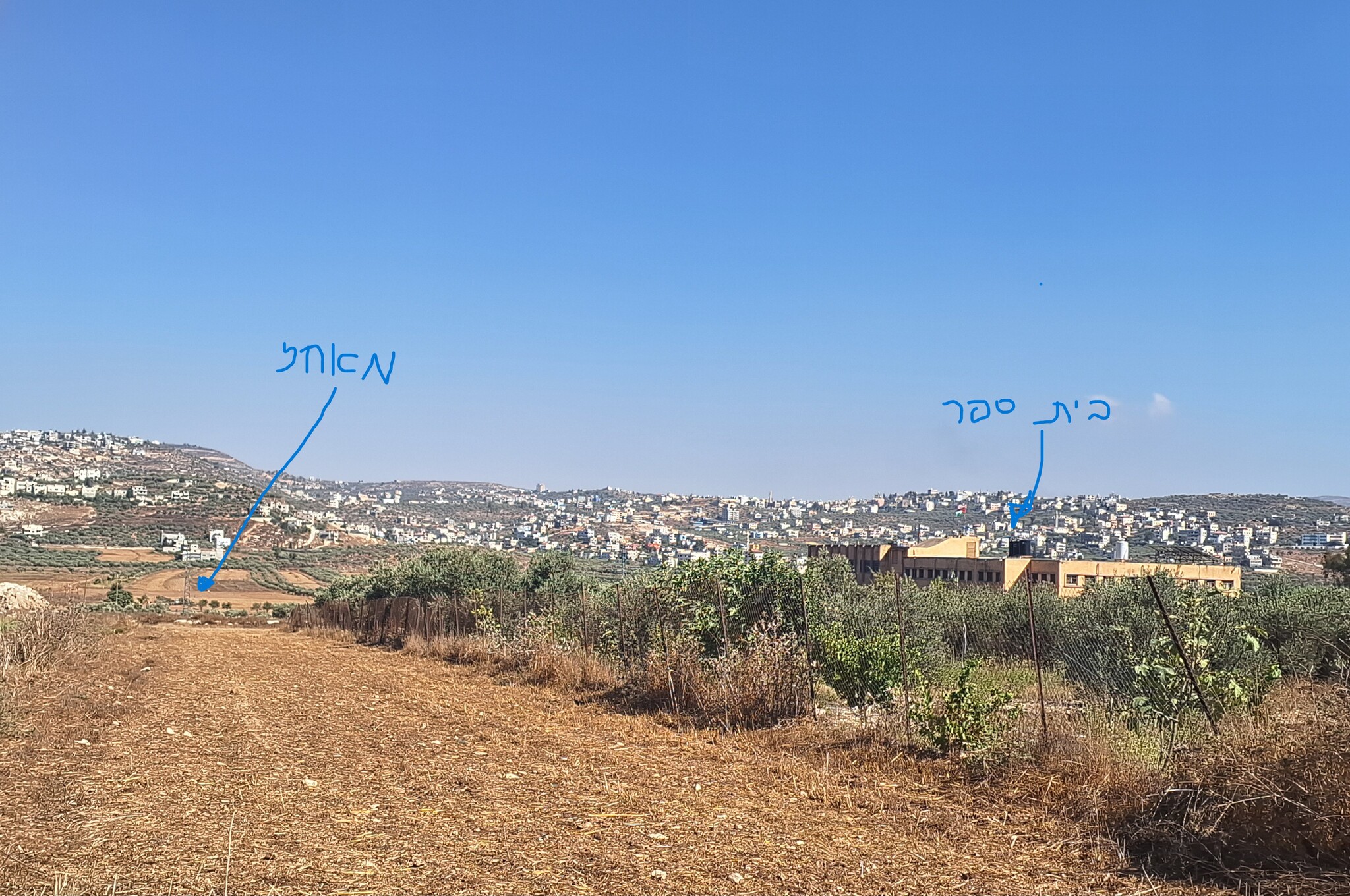 Ronit Dahan-RamatiAug-24-2026Huwara: The school on the outskirts of town and an outpost hidden among the trees
-
Za'tara (Tapuah)
See all reports for this place-
Za'tara (Tapuah) Za'tara is an internal checkpoint in the heart of the West Bank, at the intersection of Road 60 and Road 505 (Trans-Samaria), east of the Tapuah settlement. This checkpoint is the "border" marked by the IDF between the north and south of the West Bank, in accordance with the policy of separation between the two parts of the West Bank that has been in place since December 2005. At the Za'tara checkpoint, there are separate routes for Israelis and Palestinians. In the route for Israelis, there are no inspections and the route for Palestinians inspects. The queue lengthens and shortens suits. The checkpoint is open 24 hours a day. The checkpoint is partially staffed and the people who pass through it are checked at random.
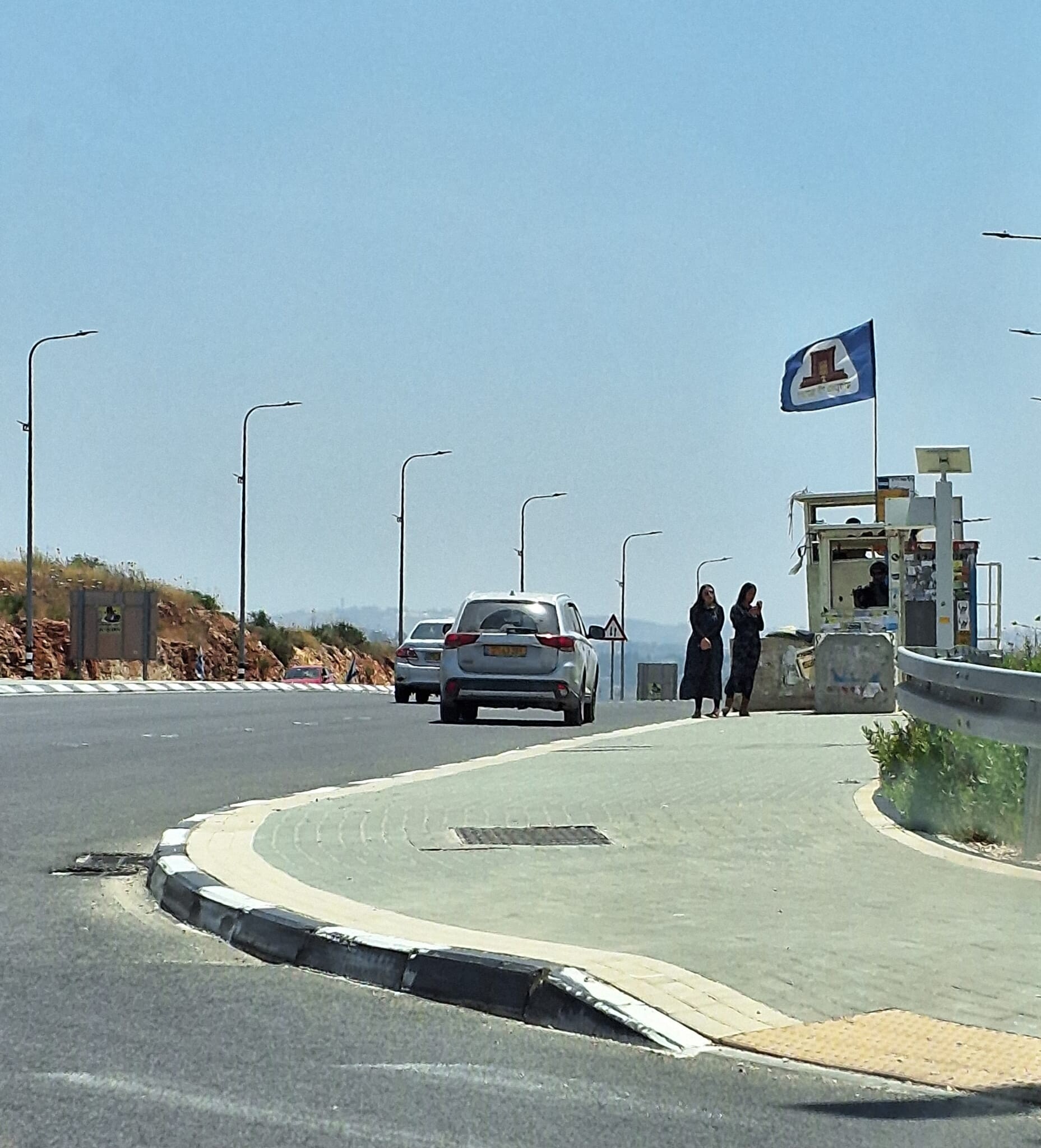 Ronit Dahan-RamatiJun-9-2026Za'atara (Tapuach Junction). The Temple Flag Above a Station
-
