
Beit Furiq
Beit Furiq Checkpoint, Sunday 15.4.07 PMObservers: Noa P., Tal H., Naomi L (reporting)Guests: David and Keren. Translation: Tal H.On the Eve of Israel’s Official Holocaust Memorial Day15:30 – upon our arrival at the checkpoint we saw a soldier ordering the drivers of five trucks and an ambulance to park in a line at the side of the ‘forbidden’ road just before the checkpoint, get out of their vehicles and hand him their IDs – eight in all. “They”, said the cp commander, “were driving on a Jews-only road.” Coming out of Awarta, they had turned right towards the Huwwara CP turnabout instead of proceeding straight ahead on the longer, pot-holed road assigned them. Caught after about a minute and a half of travel on the ‘forbidden’ road (“Don’t say apartheid!” Brigade deputy commander Yaron said on the phone, ‘We speak a Jewish language”), they will be detained for six hours – battalion commander’s orders. “I take orders only from my commander”, the CP commander announced. The drivers were on their way home after a day’s work, some of them from Awarta and Beita, others from Aqraba and Hebron. “Why don’t they put up a sign forbidding us to use this road?” they asked, and so did we. We explained to sealed military ears present that no matter how long they will be detained, other checkpoints and barriers on their way will be closed and some of them will not make it home by morning. The ambulance was released immediately, when the soldiers realized that ambulances are permitted to travel “Madison road”, as it is called in the Jewish (army) language.Brigade commander Amir B. threw the responsibility over to his deputy Yaron F., who in turn passed it on to the battalion commander who – obviously – is the local legislator, judge and executor. He ruled six hours, then relaxed that into four hours and his superiors will certainly not bend his decision. He is the one to decide. We spoke with the head of the DCO who promised to look into the matter but only later, after he attends the Holocaust commemoration event that is about to start. We also turned to Meretz party’s people in the Knesset, who joined our phoning efforts.In the meantime we listened to Mohhammad who told us about his 8 children at home, and the truck in which he was carrying feed for the sheep that are waiting for it at home since morning, and what will happen now if he is denied his entry permit to Nablus, how is he going to feed his own children? And the driver from Hebron listed all the checkpoints (some closed) still waiting to be crossed on his long way home.All the while, residents of the villages Beit Furiq and Beit Dajan came crossing the pedestrian CP, a loudly creaking turnstile operated by the soldiers pressing a button, people getting stuck inside, sometimes a mother, at others her children; all personal effects undergo thorough inspection (rummaging), men are ordered to lift up their shirts and push down their pants a bit, in full public view. The occupied know what is expected of them, the occupiers know their job, whoever is not permitted to cross the checkpoint (the rest of the entire Palestinian people, anyone not registered as residing in the two villages mentioned above) has not been coming here for a long time, and everything done in quiet, polite submission. Some smile, others fume. “This is the worst checkpoint” says one.Nor are the residents of Jiftliq (in the Jordan Valley) allowed here any longer. Lately we have been asked to help people living in Beit Furiq who own land in the Jiftliq and are therefore registered as Jordan Valley residents. “Change your address on your ID” say the soldiers. And that is precisely the point: as soon as they do, they will no longer be allowed access to their land which they have been cultivating for generations, and which is their livelihood. Make up your mind, the State of Israel tells them: give up either your residence and family, or your land and livelihood.20:15 – no progress on the release of the hostages. The authorities are all off to the commemoration ceremonies and there is no one to talk to. The brigade commander had promised that the battalion commander would assure their passage at Huwara CP as well, once they are released. Of the rest of the checkpoints on the way to Hebron, he made no mention. We exchanged phone numbers with the held-up drivers and left.At 21:30 -they informed us they were being released and crossing Huwara as promised. We have no idea when they got to Hebron, but our experience tells us they had no chance of getting there before morning.Thus the residents of Beit Furiq ghetto went home, as they do every evening, and we, and our young guests on their first visit to an Israeli checkpoint deep in the heart of the West Bank – felt the chill of these circumstances in time and place, a chill that does not go away when we get out of the cold wind outside and into our warm van taking us home.
Hebron
See all reports for this place-
According to Wye Plantation Accords (1997), Hebron is divided in two: H1 is under Palestinian Authority control, H2 is under Israeli control. In Hebron there are 170,000 Palestinian citizens, 60,000 of them in H2. Between the two areas are permanent checkpoints, manned at all hours, preventing Palestinian movement between them and controlling passage of permit holders such as teachers and schoolchildren. Some 800 Jews live in Avraham Avinu Quarter and Tel Rumeida, on Givat HaAvot and in the wholesale market.
Checkpoints observed in H2:
- Bet Hameriva CP- manned with a pillbox
- Kapisha quarter CP (the northern side of Zion axis) - manned with a pillbox
- The 160 turn CP (the southern side of Zion axis) - manned with a pillbox
- Avraham Avinu quarter - watch station
- The pharmacy CP - checking inside a caravan with a magnometer
- Tarpat (1929) CP - checking inside a caravan with a magnometer
- Tel Rumeida CP - guarding station
- Beit Hadassah CP - guarding station
Three checkpoints around the Tomb of the Patriarchs
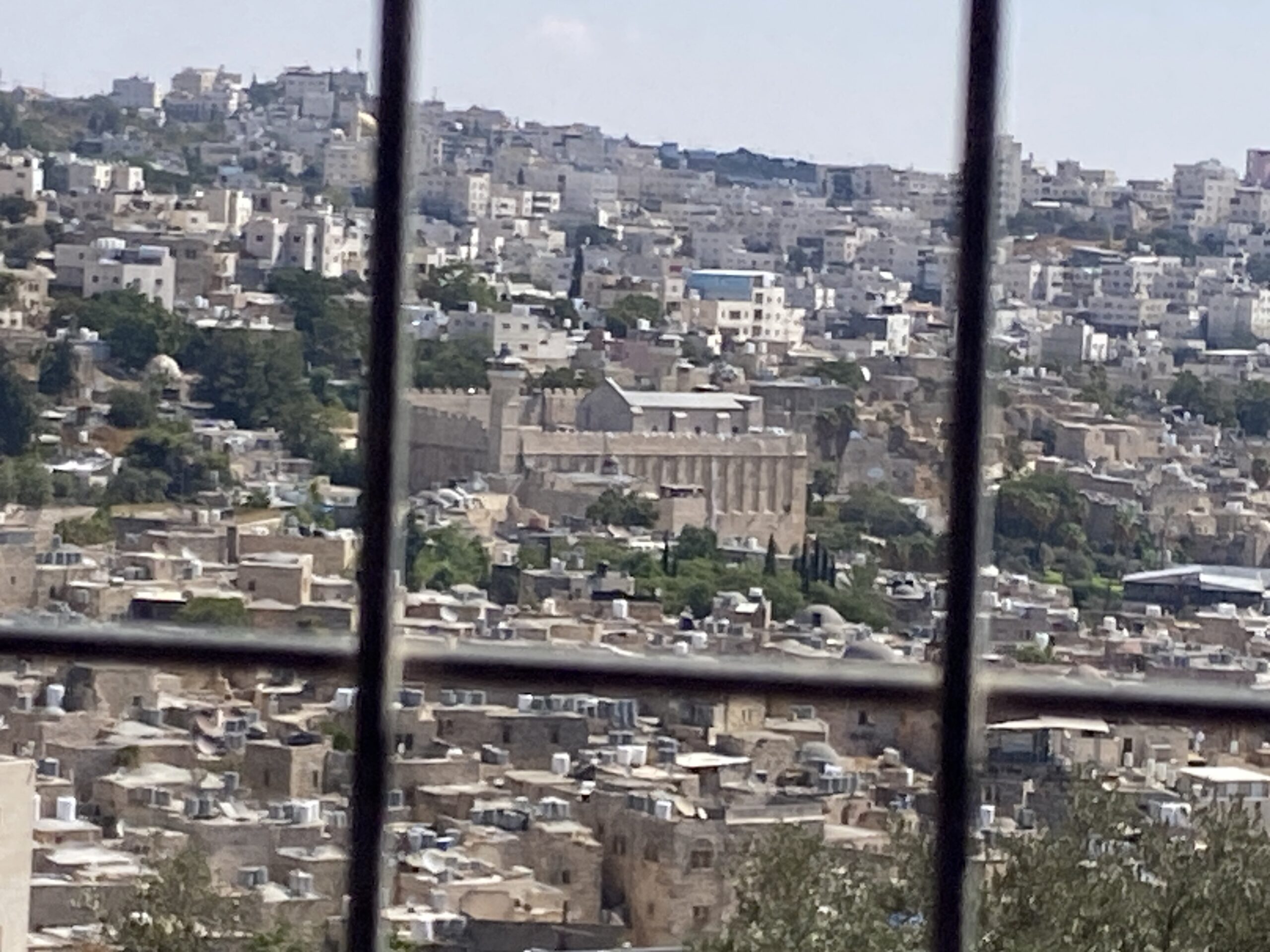 Yael ZoranSep-24-2026Hebron and the Cave of the Patriarchs from Beit Hashalom
-
Huwwara
See all reports for this place-
The Huwwara checkpoint is an internal checkpoint south of the city of Nablus, at the intersection of Roads 60 and 5077 (between the settlements of Bracha and Itamar). This checkpoint was one of the four permanent checkpoints that closed on Nablus (Beit Furik and Awarta checkpoints to the east and the Beit Iba checkpoint to the west). It was a pedestrian-only barrier. As MachsomWatch volunteers, we watched therre since 2001 two shifts a day - morning and noon, the thousands of Palestinians leaving Nablus and waiting for hours in queues to reach anywhere else in the West Bank, from the other side of the checkpoint the destination could only be reached by public transport. In early June 2009, as part of the easing of Palestinian traffic in the West Bank, the checkpoint was opened to vehicular traffic. The passage was free, with occasional military presence in the guard tower. Also, there were vehicle inspections from time to time. Since the massacre on 7.10.2023, the checkpoint has been closed to Palestinians.
On February 26, 2023, about 400 settlers attacked the town's residents for 5 hours and set fire to property, such as houses and cars. Disturbances occurred in response to a shooting of two Jewish residents of Har Bracha by a Palestinian Terrorist. The soldiers stationed in the town did not prevent the arson and rescued Palestinian families from their homes only after they were set on fire. No one was punished and Finance Minister Smotrich stated that "the State of Israel should wipe out Hawara." Left and center organizations organized solidarity demonstrations and support actions for the residents of Hawara.Hawara continued to be in the headlines in all the months that followed: more pogroms by the settlers, attacks by Palestinians and a massive presence of the army in the town. It amounted to a de facto curfew of commerce and life in the center of the city. On October 5, 2023, MK Zvi established a Sukkah in the center of Hawara and hundreds of settlers backed the army blocked the main road and held prayers in the heart of the town all night and the next day. On Saturday, October 7, 23 The "Swords of Iron" war began with an attack by Hamas on settlements surrounding Gaza in the face of a poor presence of the IDF. Much criticism has been made of the withdrawal of military forces from the area surrounding Gaza and their placement in the West Bank, and in the Hawara and Samaria region in particular, as a shield for the settlers who were taking over and rioting.
On November 12, 2023, the first section of the Hawara bypass road intended for Israeli traffic only was opened. In this way, the settlers can bypass the road that goes through the center of Hawara, which is the main artery for traffic from the Nablus area to Ramallah and the south of the West Bank. For the construction of the road, the Civil Administration expropriated 406 dunams of private land belonging to Palestinians from the nearby villages. The settlers are not satisfied with this at the moment, and demand to also travel through Hawara itself in order to demonstrate presence and control.(updated November 2023)
.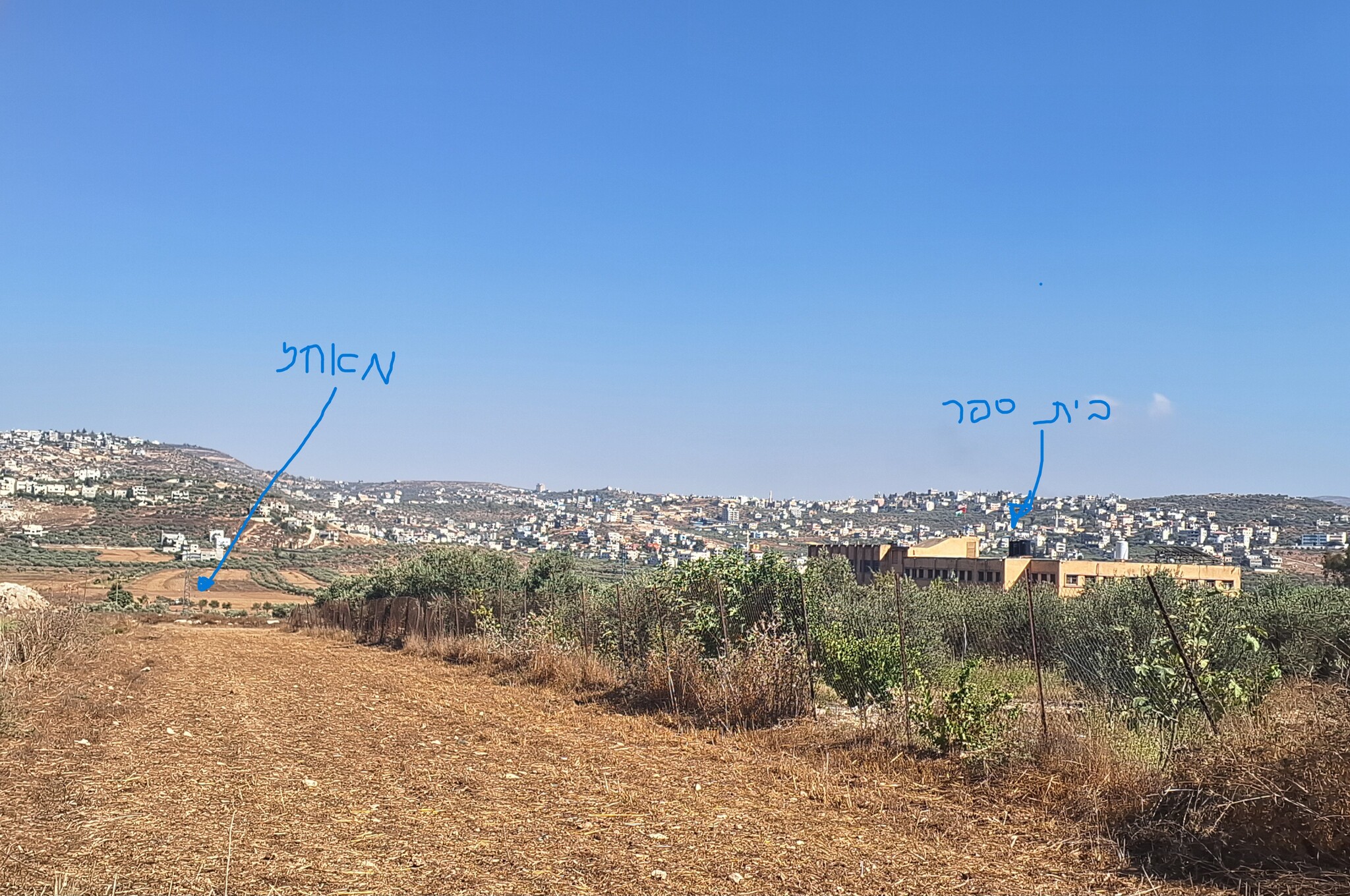 Ronit Dahan-RamatiAug-24-2026Huwara: The school on the outskirts of town and an outpost hidden among the trees
-
