
Beit Iba
Beit Iba, Thursday, 31.8.06 AMObservers: Nora R, Chana P (reporting) Beit Iba 09:40 – at the kiosk two taxi drivers from Tamun in the Jordan Valley are drinking coffee. The distance from Nablus is ten minutes, but because they closed a checkpoint on this road, the legal route takes two hours, so they shorten the route across the fields: if they get caught, their windows are sometimes smashed or they are beaten up. The restrictions: males between18-25 cannot exit. Nablus, the surrounding villages (e.g., Salem, Rafidia, Balata) are under encirclement. There are no lines to enter. At the exit a long line of people and vehicles. A man with a feverish child in his arms asks to pass through quickly, and they let him. 10:15 – the women in “blue and white” bring the soldiers juice and snacks, and begin to attack us. They claim that we are paid by the European Union, they call us whores, leftists, dirt, Nazis, etc. One of them hands us a paper according to which we are forbidden to speak to soldiers. The circular is from 2004, signed by Padalon. 11:00 – on the way back, there is an improvised checkpoint next to Beit Lid.
Beit Iba
See all reports for this place-
A perimeter checkpoint west of the city of Nablus. Operated from 2001 to 2009 as one of the four permanent checkpoints closing on Nablus: Beit Furik and Awarta to the east and Hawara to the south. A pedestrian-only checkpoint, where MachsomWatch volunteers were present daily for several hours in the morning and afternoon to document the thousands of Palestinians waiting for hours in long queues with no shelter in the heat or rain, to leave the district city for anywhere else in the West Bank. From March 2009, as part of the easing of the Palestinian movement in the West Bank, it was abolished, without a trace, and without any adverse change in the security situation.
 Jun-4-2014Beit-Iba checkpoint 22.04.04
-
Jordan Valley
See all reports for this place-
Jordan Valley The Jordan Valley is the eastern strip of the West Bank. Its area consists of almost a third of the West Bank area. About 10,000 settlers live there, about 65,000 Palestinian residents in the villages and towns. In addition, about 15,000 are scattered in small shepherd communities. These communities are living in severe distress because of two types of harassment: the military declaring some of their living areas, as fire zones, evicting them for long hours from their residence to the scorching heat of the summer and the bitter cold of the winter. The other type is abuse by rioters who cling to the grazing areas of the shepherd communities, and the declared fire areas (without being deported). The many groundwaters in the Jordan Valley belong to Mekorot and are not available to Palestinians living in the Jordan Valley. The Palestinians bring water to their needs in high-cost followers.
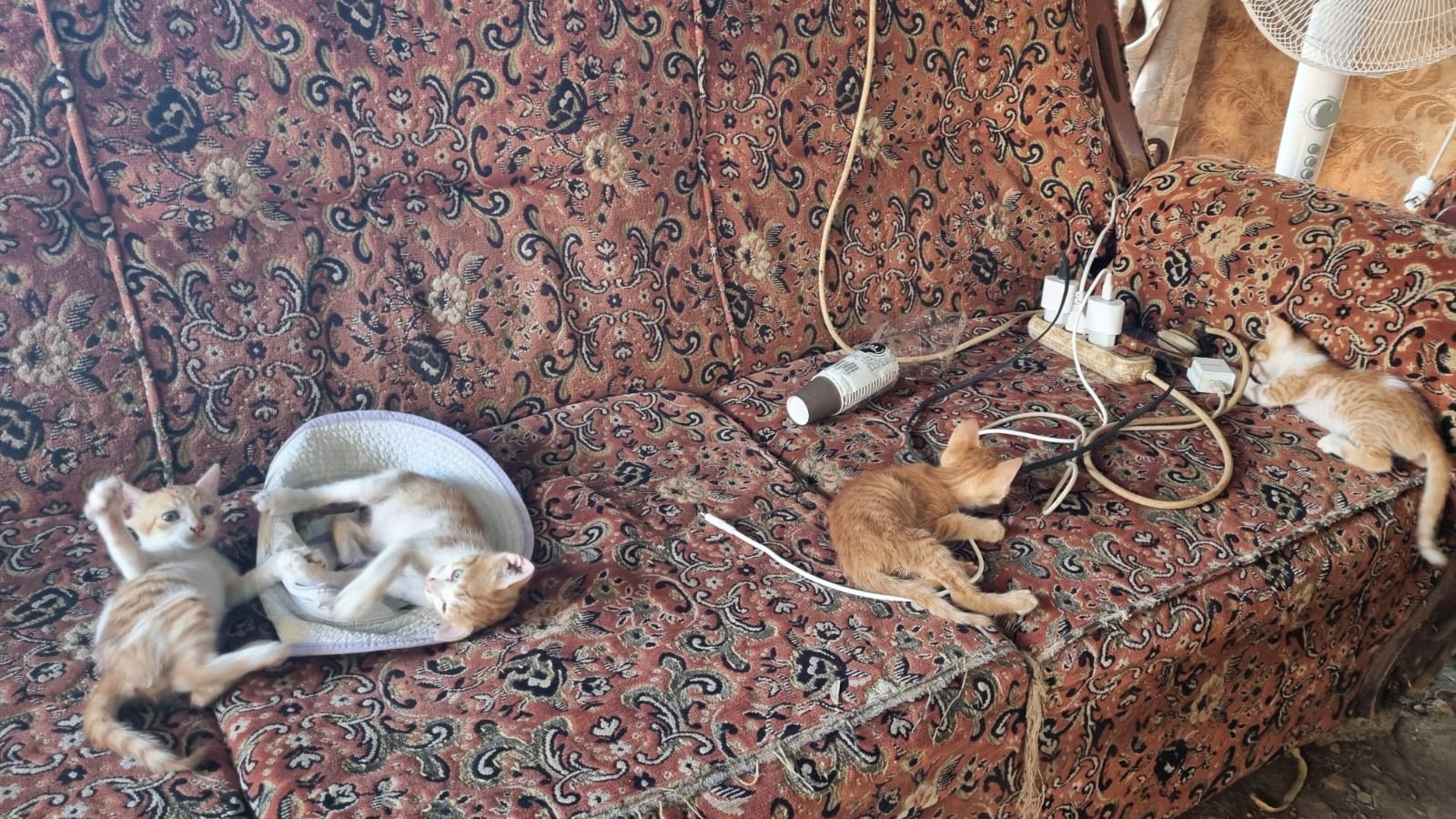 Bosmat HetzroniJul-9-2026Samra. Cats and electronics
-