
Burin (Yitzhar), Huwwara, Za’tara (Tapuah), Mon 16.2.09, Morning
Translator: Charles K.
Summary:
The problem at the Huwwara checkpoint is the long line of cars and the slow inspections of people leaving Nablus. Although things are easier for those who don't live in Nablus or the surrounding area, the infrastructure and the number of soldiers are insufficient to inspect the increased traffic.
The entrance to Marda is open. Concrete cubes block the entrance to Zeita.
Za'tara junction, 7:05 – 19 cars coming from Nablus, and two inspection lanes.
Beita junction – There's recently been a flying CP there. Today there were no soldiers at the entrance.
Burin junction – no soldiers.
Awarta junction, 7:25-7:45 –
We don't know how many trucks are on line from Nablus because the road curves. We counted 9, and don't know how many more were there. Nor can the soldiers know how many trucks are on line.
The checkpoint is for trucks. In addition, cars with VIP permits also go through. They're also permitted to drive on the Madison route toward the Huwwara checkpoint. Two lines form – for trucks and for VIP's. Soldiers give priority to the VIP's, but usually check both lines at the same time. Time is wasted on arguments with drivers of the private cars, apparently about the kind of permit they have. We saw two private cars turned back to Nablus.
Entry to Nablus is unrestricted, like at Huwwara.
The checkpoint commander came over to move us back a meter and a half, behind the stop sign. We didn't see any point in arguing, just as there wasn't any point to his request.
We counted 9 trucks when we left (hopefully, that was in fact the end of the line), and 5 cars.
Huwwara, 7:45-10:00.
We got on the road to the Bracha settlement to count how many cars are waiting in line from Nablus – 26 cars. There are only two inspection lanes provided for cars coming from Nablus. The third lane is for cars entering. A fourth lane isn't used (why?). An ambulance waited 5 minutes, because there's no separate line for it.
We met A. R., the DCO crossings officer. He painted signs at the checkpoint with the phone number of the Nablus DCO (02-970-3160) in Arabic and Hebrew.
He said that there have been a number of restrictions lifted recently:
- Israeli Arabs are permitted to go through on Saturday.
- Physicians and men older than 50 are permitted to leave Nablus by car, with their families, without a permit. The other residents of Nablus and the surrounding villages need a special permit.
The vehicle inspection is very slow. Each car stops a few meters in front of the inspection point, all passengers get out, the driver advances, gets out, and then the car is thoroughly inspected, the trunk, the seats, the ID, and only then are the passengers permitted to return and drive on.
It took 20 minutes to inspect 15 vehicles in two lanes, so there's about a 35 minute wait on line. Sometimes one of the inspection booths stops working, so there's only one.
S., the DCO representative, says that it's because of a manpower shortage, so one of the booths sometimes isn't manned. Also, the soldiers aren't very experienced in conducting the inspections, unlike the MP's.
The x-ray vehicle is closed. It opens after 9:00. There's no dog.
Trucks are detoured to Awarta.
The soldier in the pillbox counted 16 cars on line at 8:35.
9:30 – More than 20 cars. Only one lane open. We telephoned A. R., but then the second lane opened. It doesn't seem that any more can be done, because there's no room for another lane. The problems began when some of the restrictions on cars were lifted. Before that there was almost no traffic. On the other hand, the checkpoint wasn't prepared for the increase.
We saw S., the DCO representative, return an ID to a driver. He told us that the driver passed them driving wildly, and almost hit them. They took pity on him and didn't call the police; they just detained him at the checkpoint for two hours.
The pedestrian checkpoint
Most of the traffic in the morning is to Nablus.
At 8:00 we counted 118 people entering during 20 minutes.
At 9:00, 115 during 5 minutes.
Few people leaving. At 8:00 7 people left during 10 minutes.
There were never more than 15 people on all the lines.
At the old checkpoint (two months ago), many more pedestrians waited to exit at this hour. One explanation might be that more people now go through in cars, despite the wait. It may also be that the inspection is faster at the new checkpoint.
Inspections are conducted in two lanes, besides the humanitarian lane.
At 9:30, 25 men were inspected during 20 minutes. There's about a 10 minute wait. We can't see the inspection booth for the humanitarian lane from where we have to stand.
The inspection is carried out quietly; people go through the repetitive motions like robots, like an assembly line: through the turnstile (which rotates when the female MP in the booth pushes a button), empty pockets, remove jacket, through the magnemometer, and if it beeps start removing belt, shoes, take out ID, go to the window, give ID, back to the counter, start dressing, take the ID through the lower slot, continue dressing. Lift packages or bags onto a higher shelf, remove contents so the female MP behind the window can see, and then exit through another turnstile.
Someone didn't follow procedures (we didn't understand where he erred), and was immediately punished by the female MP. He was ordered to "ruh ‘l'aw'rah" (go back), immediately obeyed, returned to the turnstile and awaited new instructions. Woe to him who doesn't obey exactly as expected by the voice from within the concrete cube.
The parking lot. A few stands selling snacks and drinks, all on carts that can be removed if necessary. It turns out they're still being harassed, but without violence.
We spoke to Muhammad, the youth selling candy for one shekel. He say's he's 15, but looks like he's 12. His father had a vegetable stand in the parking lot, and is now unemployed. Muhammad is the family's only wage earner. He sells about NIS 30 each day.
Za'tara – 17 cars from Nablus, two inspection lanes open. No cars from the west.
Kif'l Hars – Sometimes there's a flying CP next to the pillbox at the entrance to the village, but there's none today.
Burin (Yitzhar)
See all reports for this place-
Burin (Yitzhar)
This is a Palestinian village in the Nablus governorate, a little south of Nablus, on the main road passing through the West Bank. The settlements: Yitzhar and Har Bracha, settled in locations that surrounded the village, placed fences so it is cut off the main road.
There are around 4000 inhabitants. Most of them are engaged in agriculture and pasture, although many graduates of the two secondary schools continue to study at the university. Academic positions are hardly available, they find work as builderd, or leave for the Gulf countries.
The village lands were appropriated several times for the establishment of Israeli settlements and military bases, and as a result, Burin's land and water resources dwindled. lSince 1982, more than 2,000 dunams of village land have been declared "state land" and then transferred to Har Bracha settlement.
Over the past few years and more so since 2017, the villagers have been terrorized by the residents of Yitzhar and Har Bracha, the Givat Ronen outpost and others. Despite the close proximity of soldiers to an IDF base close to one of the village's schools, residents are suffering from numerous stone-throwing events, vehicle and fire arson, also reported in the press.
In 2023, the prevention of the olive harvest in the village plot was more violent than ever. Soldiers and settlers walked with drawn weapons between the houses of the village and demanded that people stop harvesting in the village itself and in the private plots outside the village. The settlers from Yitzhar and Giv'at Roned raided the olive groves and stole crops. 300 olive trees belonging to the residents of Burin, near Yitzhar, were uprooted. The loss of livelihood from the olives causes long-term economic damage to the farmers' families, bringing them to the point of starvation.
(updated for November 2023)
-
Huwwara
See all reports for this place-
The Huwwara checkpoint is an internal checkpoint south of the city of Nablus, at the intersection of Roads 60 and 5077 (between the settlements of Bracha and Itamar). This checkpoint was one of the four permanent checkpoints that closed on Nablus (Beit Furik and Awarta checkpoints to the east and the Beit Iba checkpoint to the west). It was a pedestrian-only barrier. As MachsomWatch volunteers, we watched therre since 2001 two shifts a day - morning and noon, the thousands of Palestinians leaving Nablus and waiting for hours in queues to reach anywhere else in the West Bank, from the other side of the checkpoint the destination could only be reached by public transport. In early June 2009, as part of the easing of Palestinian traffic in the West Bank, the checkpoint was opened to vehicular traffic. The passage was free, with occasional military presence in the guard tower. Also, there were vehicle inspections from time to time. Since the massacre on 7.10.2023, the checkpoint has been closed to Palestinians.
On February 26, 2023, about 400 settlers attacked the town's residents for 5 hours and set fire to property, such as houses and cars. Disturbances occurred in response to a shooting of two Jewish residents of Har Bracha by a Palestinian Terrorist. The soldiers stationed in the town did not prevent the arson and rescued Palestinian families from their homes only after they were set on fire. No one was punished and Finance Minister Smotrich stated that "the State of Israel should wipe out Hawara." Left and center organizations organized solidarity demonstrations and support actions for the residents of Hawara.Hawara continued to be in the headlines in all the months that followed: more pogroms by the settlers, attacks by Palestinians and a massive presence of the army in the town. It amounted to a de facto curfew of commerce and life in the center of the city. On October 5, 2023, MK Zvi established a Sukkah in the center of Hawara and hundreds of settlers backed the army blocked the main road and held prayers in the heart of the town all night and the next day. On Saturday, October 7, 23 The "Swords of Iron" war began with an attack by Hamas on settlements surrounding Gaza in the face of a poor presence of the IDF. Much criticism has been made of the withdrawal of military forces from the area surrounding Gaza and their placement in the West Bank, and in the Hawara and Samaria region in particular, as a shield for the settlers who were taking over and rioting.
On November 12, 2023, the first section of the Hawara bypass road intended for Israeli traffic only was opened. In this way, the settlers can bypass the road that goes through the center of Hawara, which is the main artery for traffic from the Nablus area to Ramallah and the south of the West Bank. For the construction of the road, the Civil Administration expropriated 406 dunams of private land belonging to Palestinians from the nearby villages. The settlers are not satisfied with this at the moment, and demand to also travel through Hawara itself in order to demonstrate presence and control.(updated November 2023)
.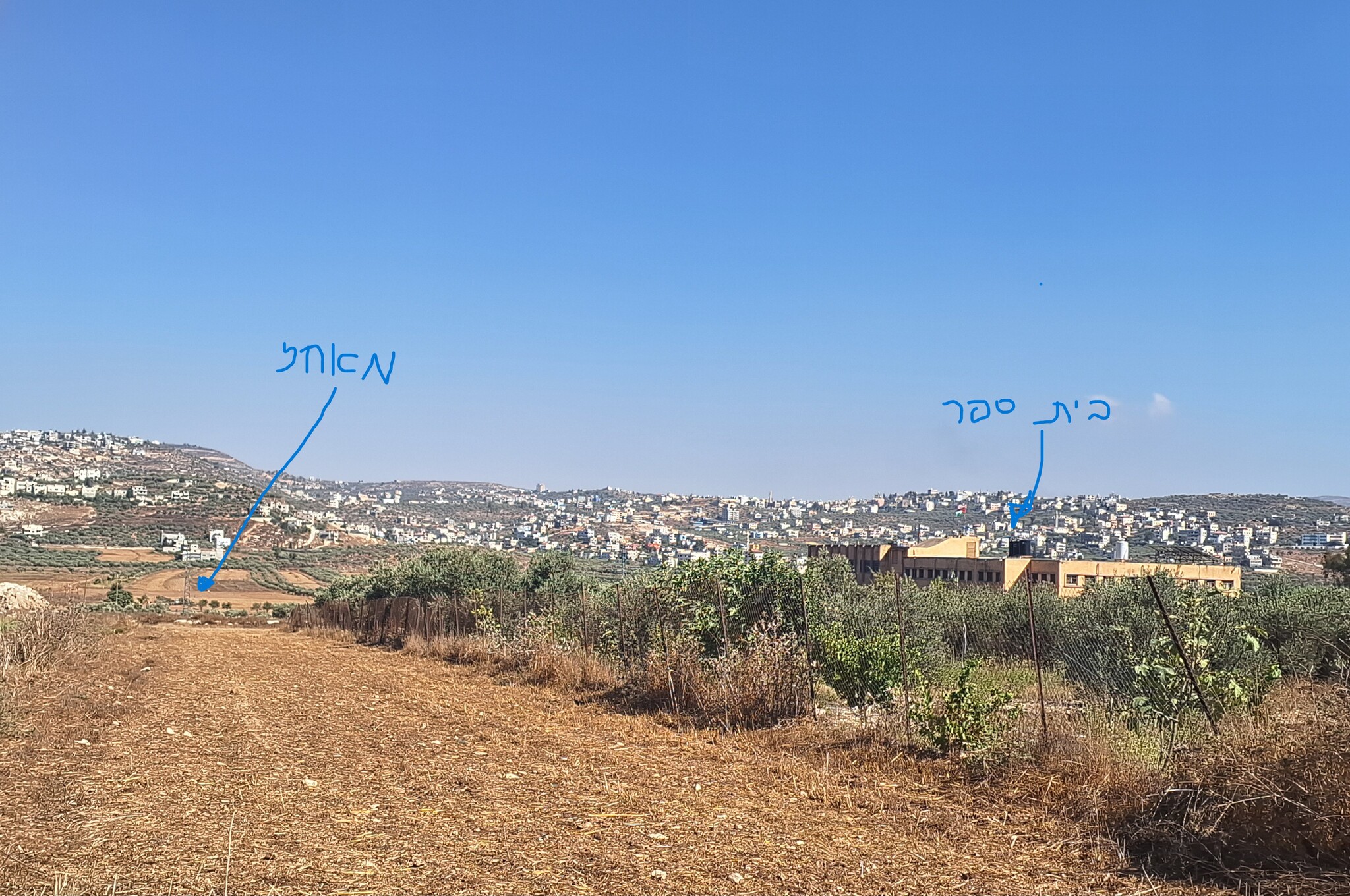 Ronit Dahan-RamatiAug-24-2026Huwara: The school on the outskirts of town and an outpost hidden among the trees
-
Za'tara (Tapuah)
See all reports for this place-
Za'tara (Tapuah) Za'tara is an internal checkpoint in the heart of the West Bank, at the intersection of Road 60 and Road 505 (Trans-Samaria), east of the Tapuah settlement. This checkpoint is the "border" marked by the IDF between the north and south of the West Bank, in accordance with the policy of separation between the two parts of the West Bank that has been in place since December 2005. At the Za'tara checkpoint, there are separate routes for Israelis and Palestinians. In the route for Israelis, there are no inspections and the route for Palestinians inspects. The queue lengthens and shortens suits. The checkpoint is open 24 hours a day. The checkpoint is partially staffed and the people who pass through it are checked at random.
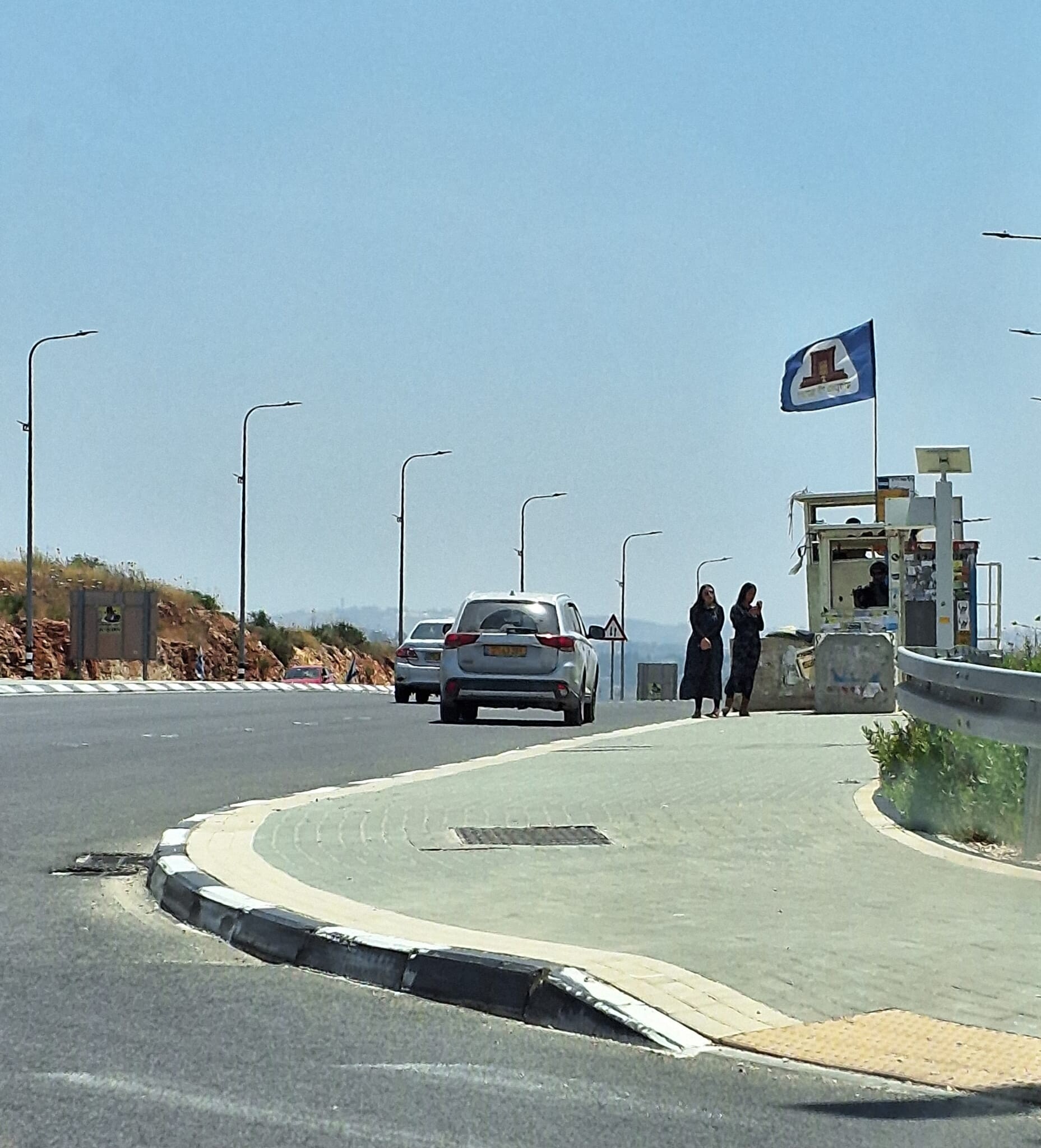 Ronit Dahan-RamatiJun-9-2026Za'atara (Tapuach Junction). The Temple Flag Above a Station
-
