
Central West Bank: Palestinian residents face settler violence; volunteers prohibited from entry by the military.
We took off for the West Bank by way of Road 5. We could notice even on our way how much reality on the ground has been changing: The road connecting Mas’ha and Al Zawiya under Road 4 is blocked with dirt piles and vehicles must now turn around and go back. Opposite Ariel and villages along the way (Kifl Harith, Marda, Zeita, Jama’in) we saw massive cutting down of olive trees on both sides of the road. Near the roundabout at Ariel entrance, we saw two bulldozers near a military watchtower, probably doing razing “work”.
We stopped and photographed the cut down trees near the Marda entrance, as well as along road 505 and the access road to Marda.
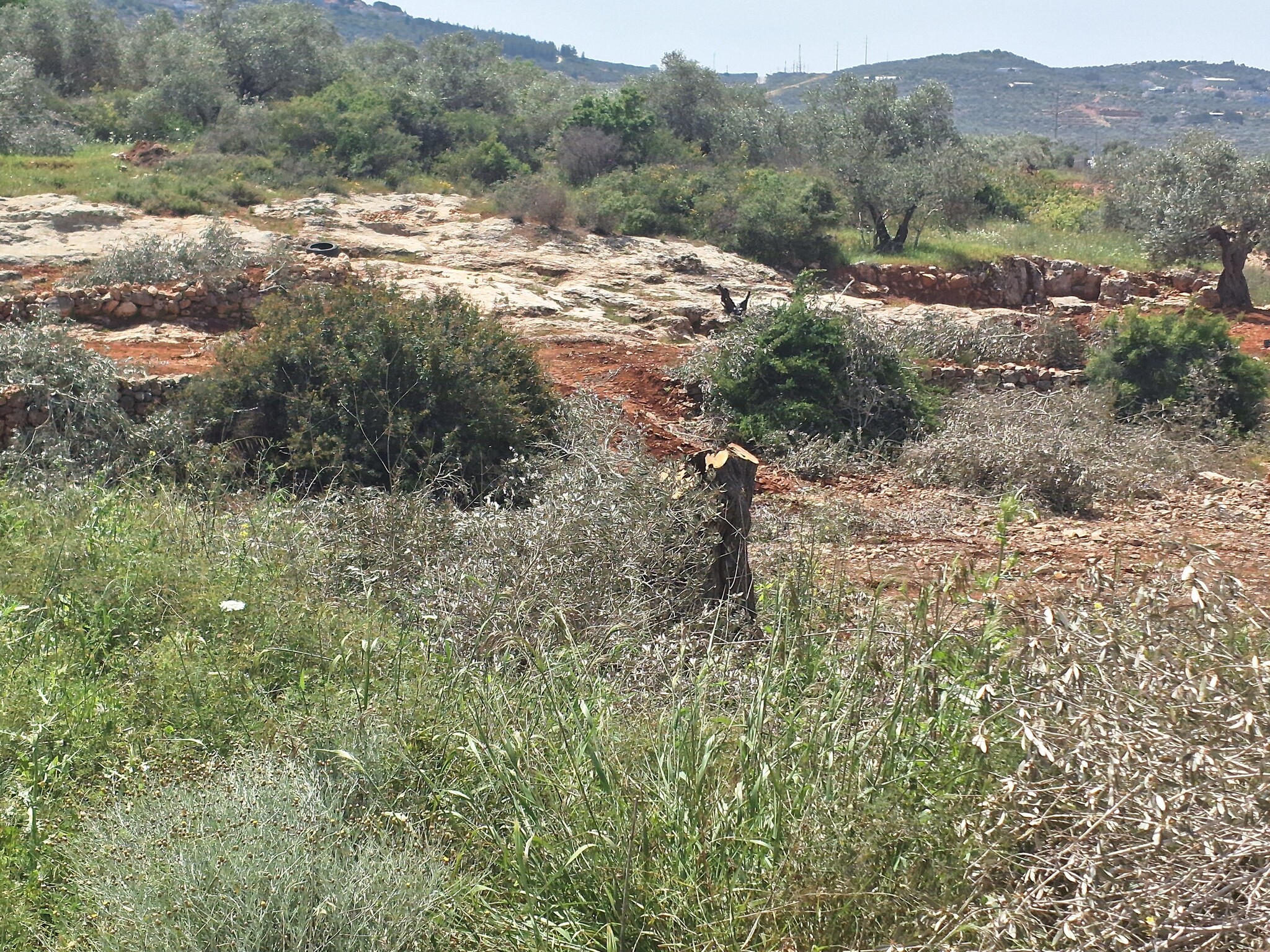
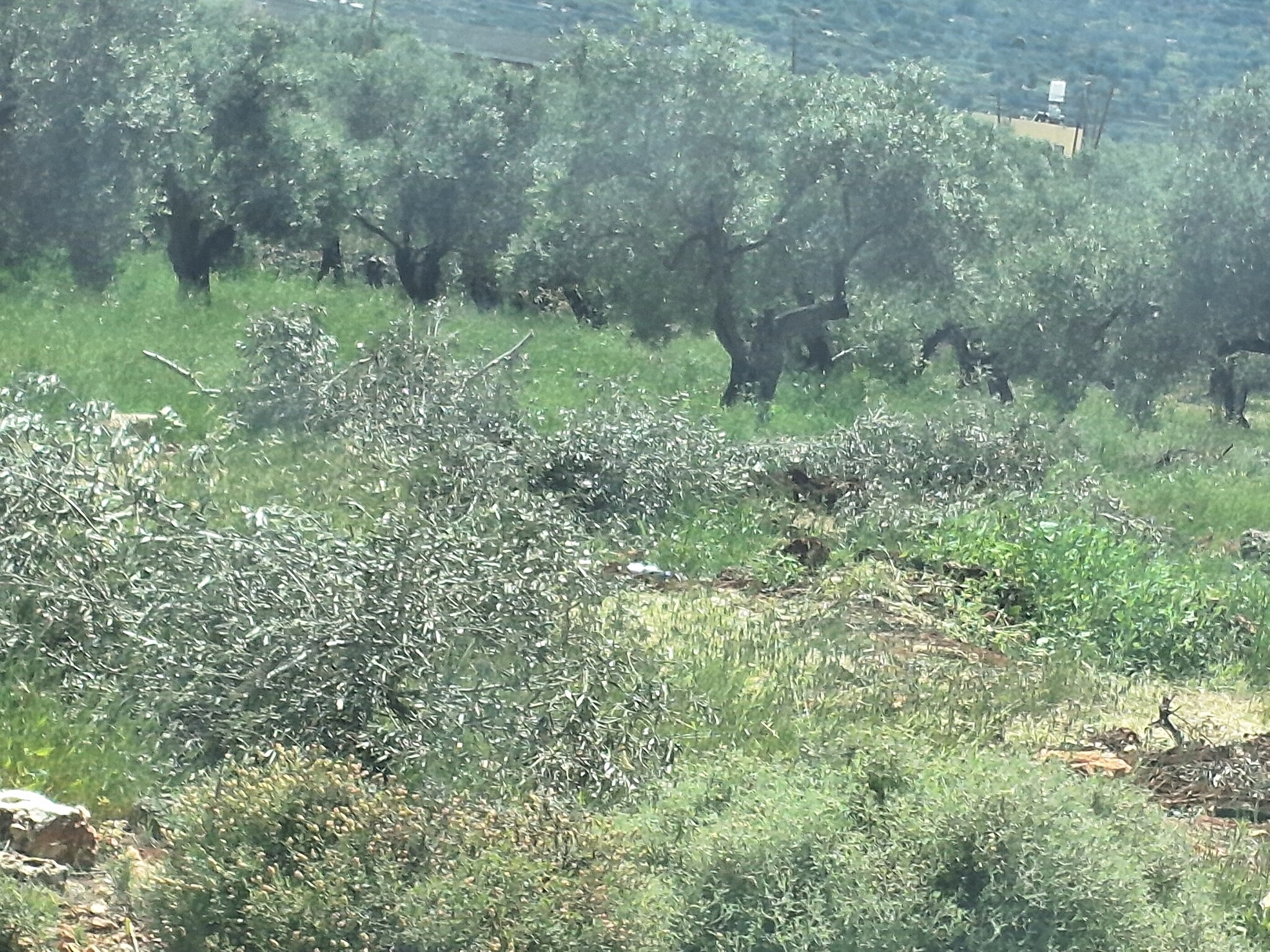
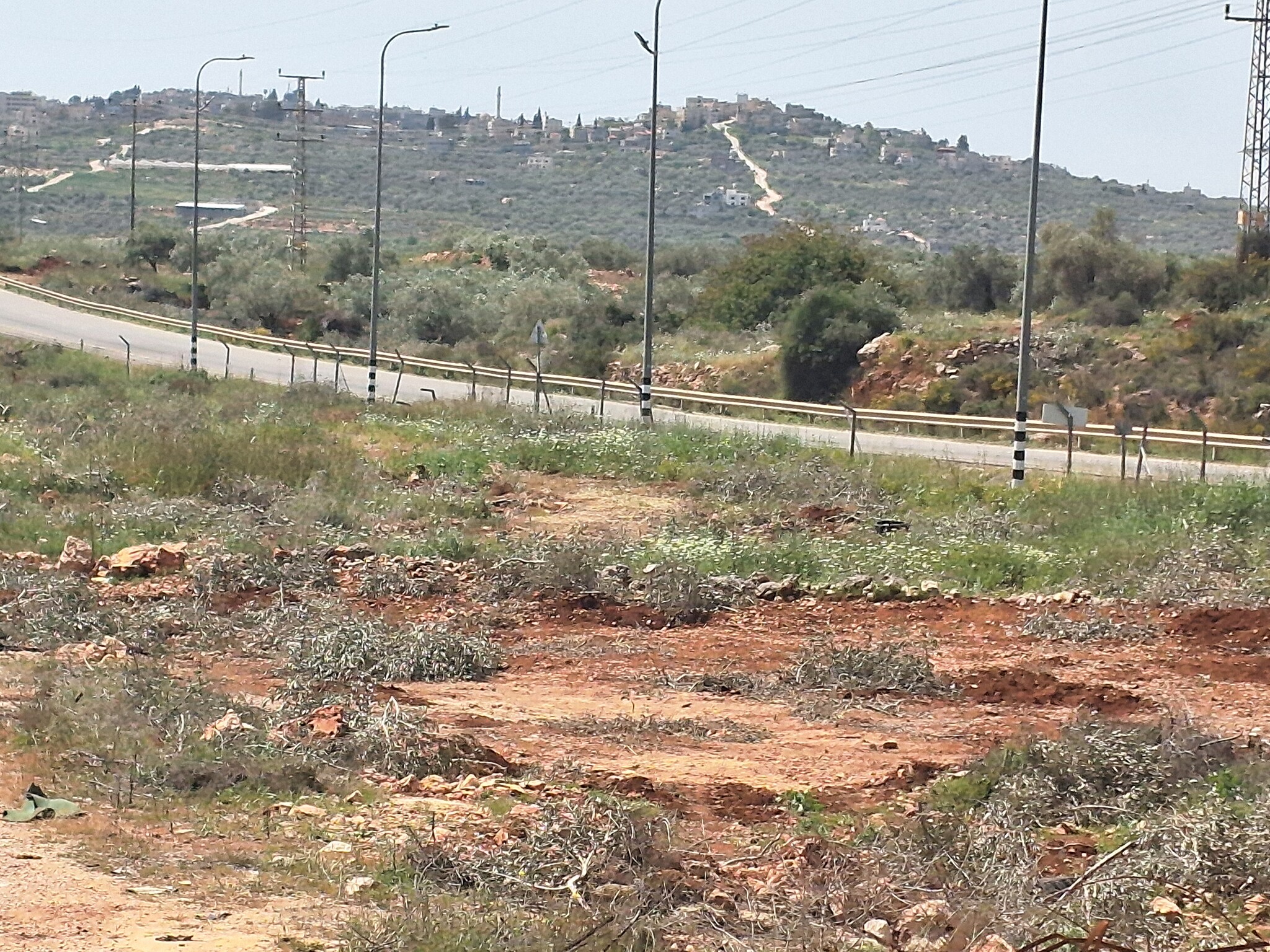
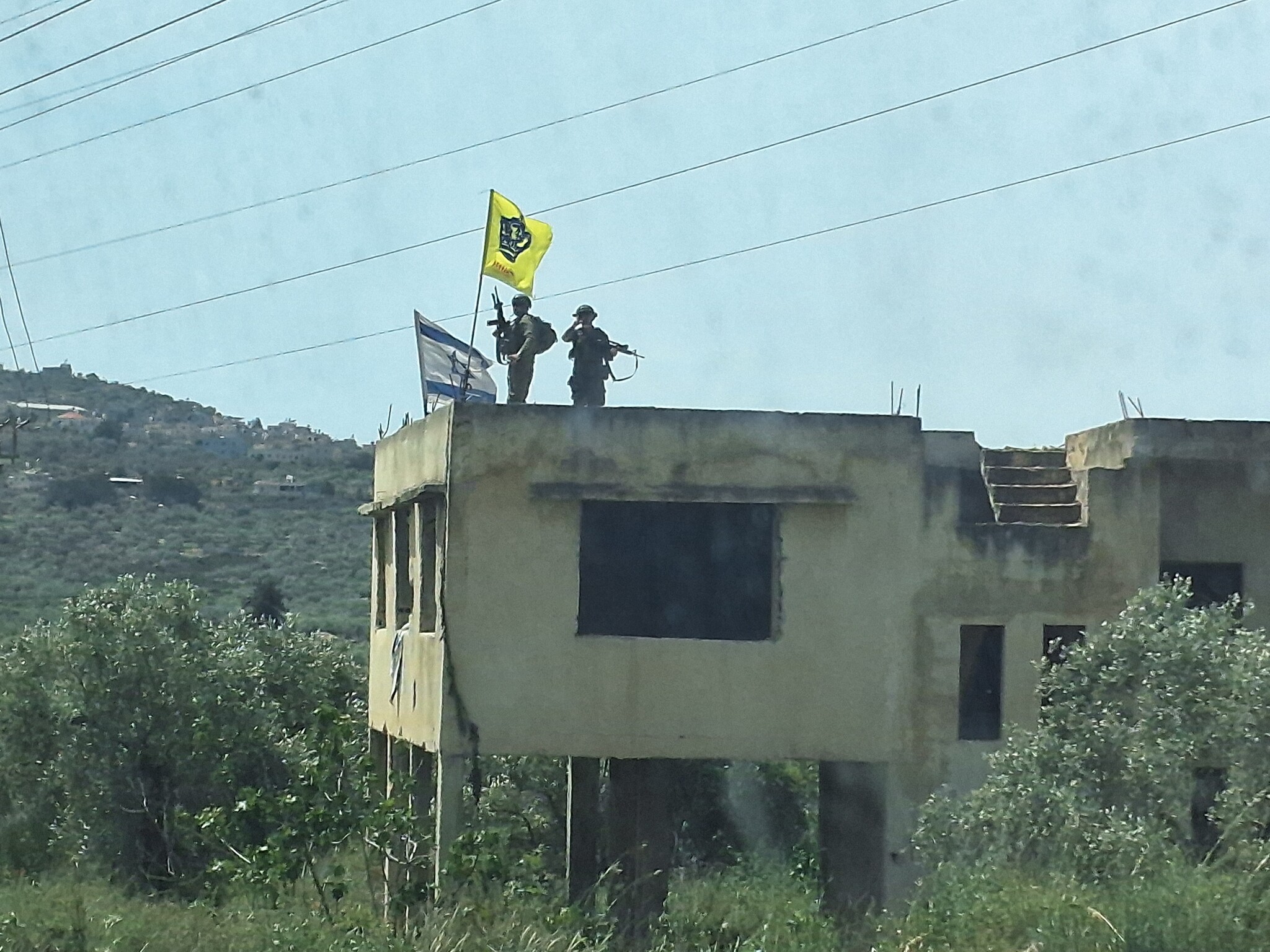
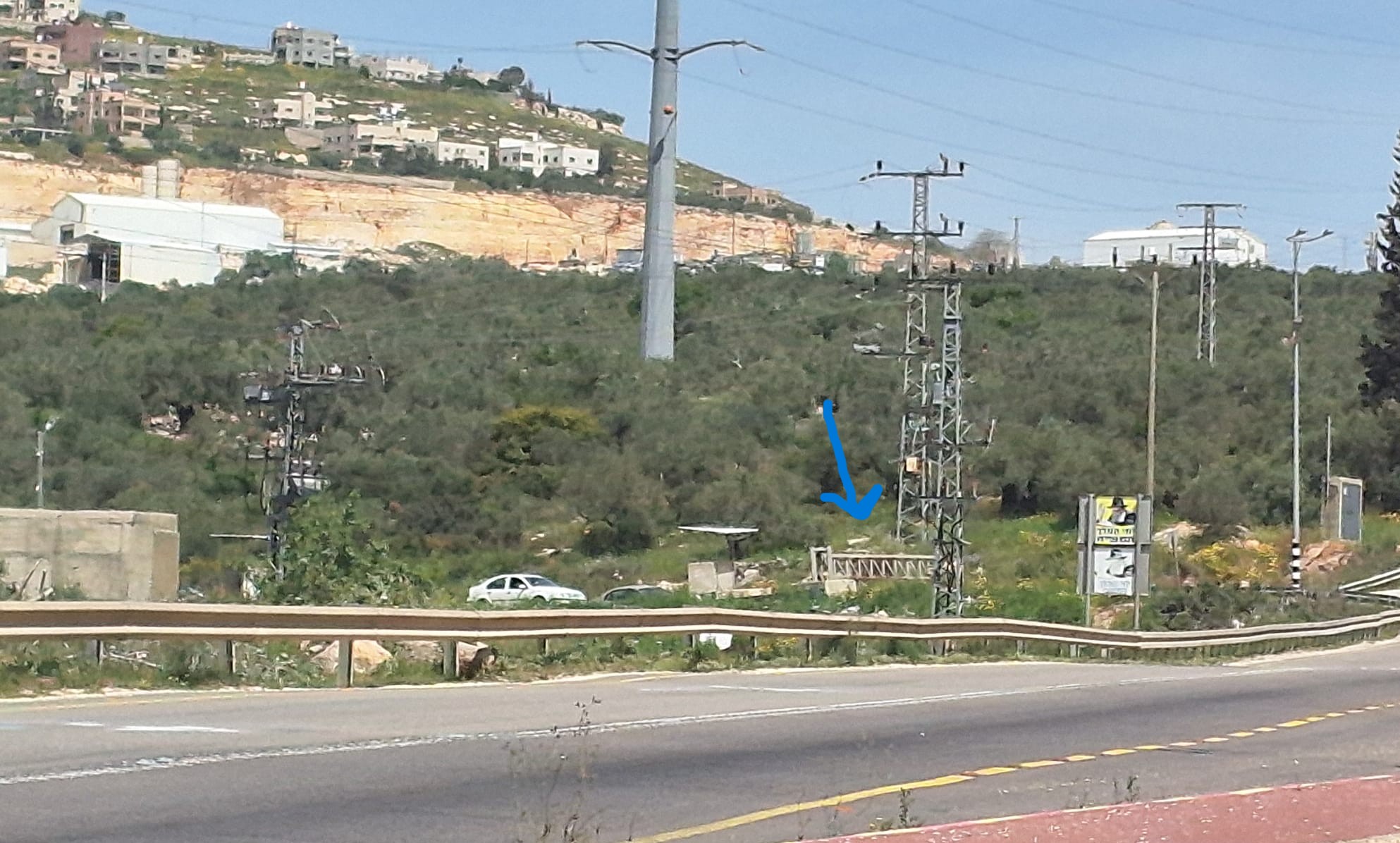
Messiah flags at the Ariel roundabout and the Messiah inscription symbol on concrete slabs all along the way are already a common sight, unfortunately. Topping it all off on the roadside of road 505, shortly before we got to Marda, we saw an Israeli army post on the roof top of an unfinished Palestinian house. Two soldiers were standing on that roof top with their weapons at the ready, observing the road. Both the Israeli and the Messiah flags were there too. Is this an IDF post or a post of the ‘Army of God’???
Marda’s entrance was opened, while entrance to Zeita Jama’in has been locked behind a gate for a long time now.
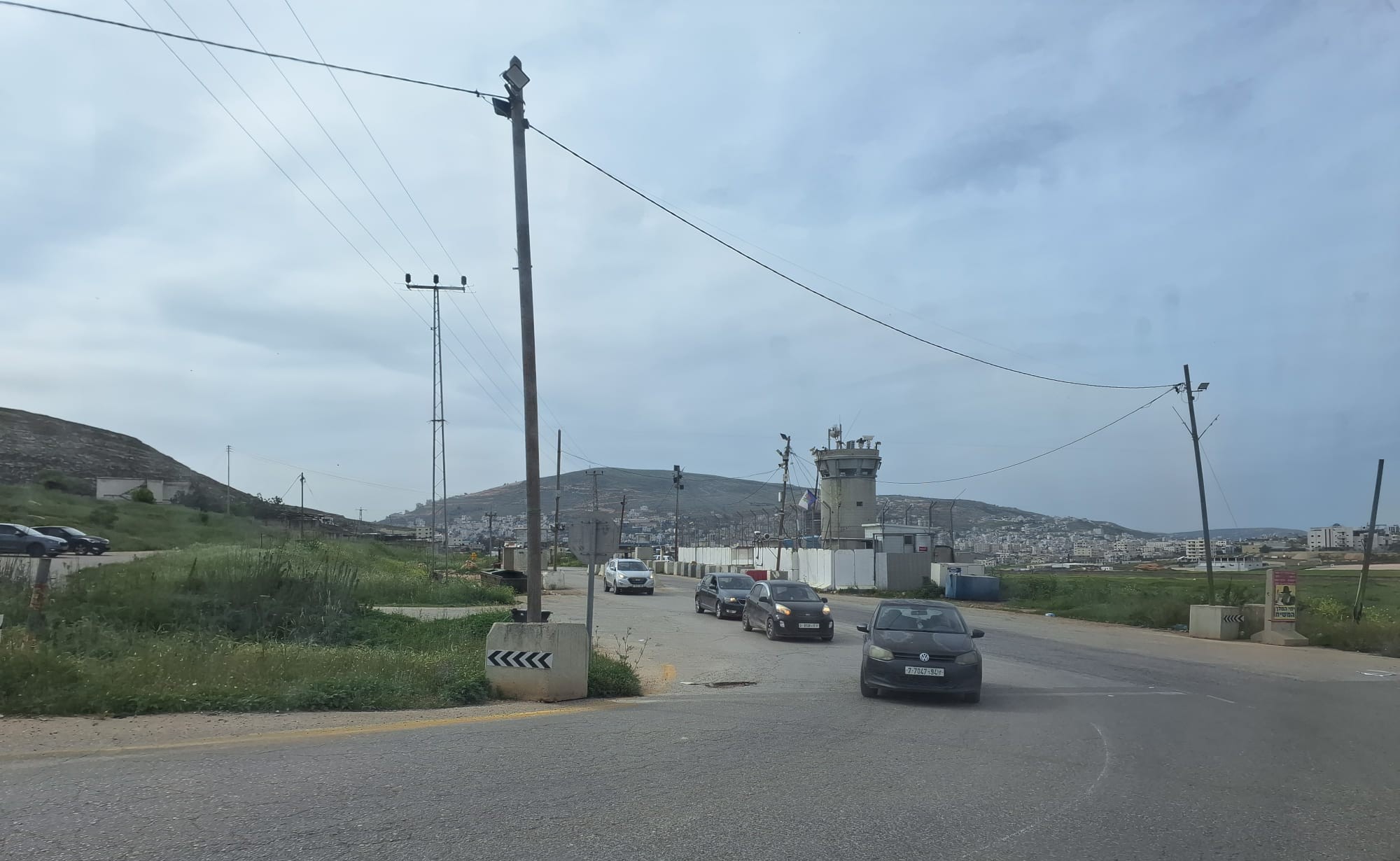
A black police vehicle stood at the entrance to the Jurish access road, by it stood an armed Border Policeman (on our way back that vehicle was no longer there). The large Palestine flag waving in Aqraba and seen well from the road was not there this time.
We continued to Duma and met Bedouin families that have been displaced time and again – from Umm al Rashrash, then from Shqara on the outskirts that has been declared a closed military zone. Anat and Hadara are there from time to time on Protective Presence shifts. Since the official declaration, activists are not allowed entry. The sedttlers, on the other hand, have entered and chased out the Bedouins who now have to rent homes inside Duma, under harsh conditions: they live in a house whose construction has not been completed as it is under a cessation of work order. It has no floors, improvised infrastructure, no toilet nor shower. There is temporary electricity and one mobile toilet booth serving three families.
We sat with them, drank coffee and listened. The volunteers help as much as they can (with blankets and basic equipment), but needs are great. Even in their new homes, they are harassed and attacked by colonists. Some of the families have applied to the DCO legal advisor – via a lawyer hired by Arik Asherman of Rabbis for Human Rights – requesting permission for activists to stay with them for Protective Presence.
They also told us that the road connecting Khirbet al Marajam and Duma has been blocked by settlers and water pipes cut. We met L., a resident of Al Marajam whose home has lately been destroyed by the army, at the instruction and under the supervision of a settler from the nearby outpost. We handed them things, and then heard about N., whose home has been demolished two weeks ago and who could not manage to rescue his property. We brought clothes and blankets for him and his eight children.
On our way back we passed through Huwara and stopped to have falafel. We saw that the entrance to Beita was open. There were more shops open in Huwara than in the past. We drove along road 505 and saw that the checkpoints on the ways from Awarta and from Beit Furiq to Nablus were open. There were no soldiers in the posts, only manning the watchtowers. Consequently, vehicular traffic flowed and there were no traffic jams.
We visited our friend D. in Burin. We heard from her about the daily harassments of settlers walking about the village. In an incident on April 12th, a Yitzhar settler threatened shooting a family seated in its own yard, as he instructed it to go indoors.
On another occasion, D.’s neighbor son, a 13-year-old boy, stood by his home entrance. settlers approached him and pepper-sprayed him in the eyes. When his mother joined him, they pepper-sprayed her too. The woman was hurt in the face and the child has been suffering eye pain ever since.
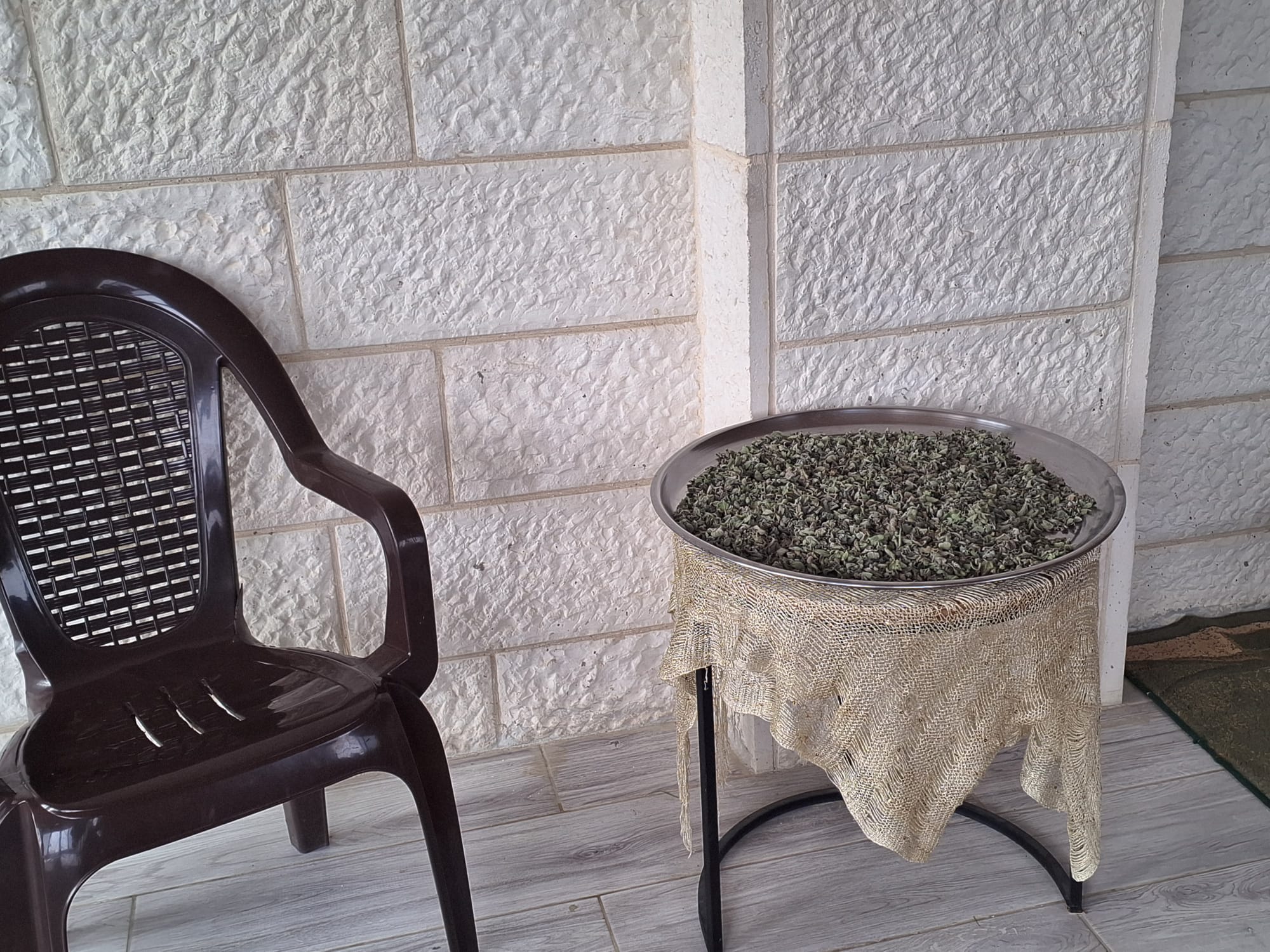
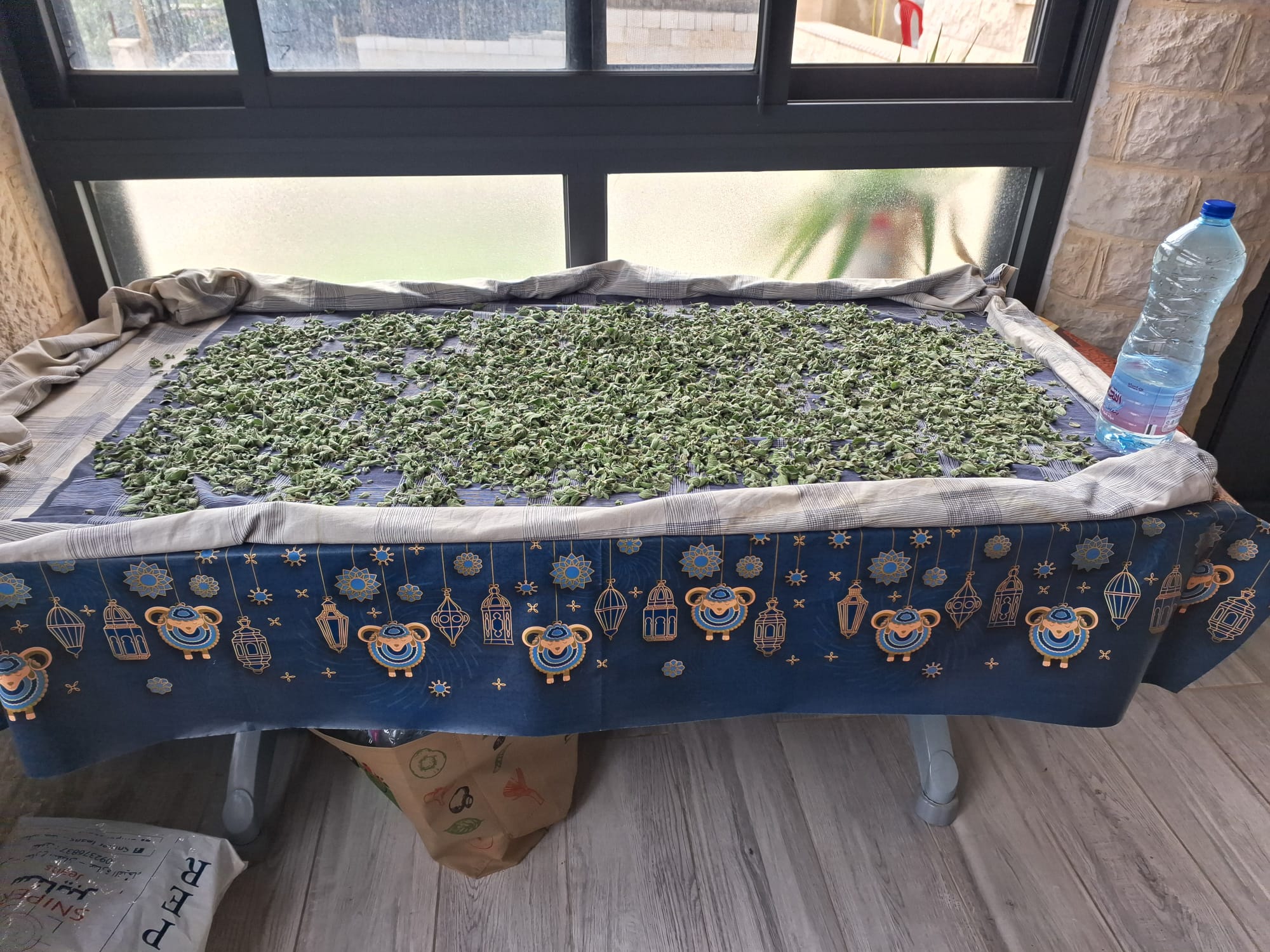
From D. we bought olive oil and olives and received olive oil soap. In this season she has been drying out thyme leaves.
On our way we noticed signs saying “Sanur (another settlement), we just want to thank you on behalf of the Shomron settlers”. (We didn’t manage to photograph them).
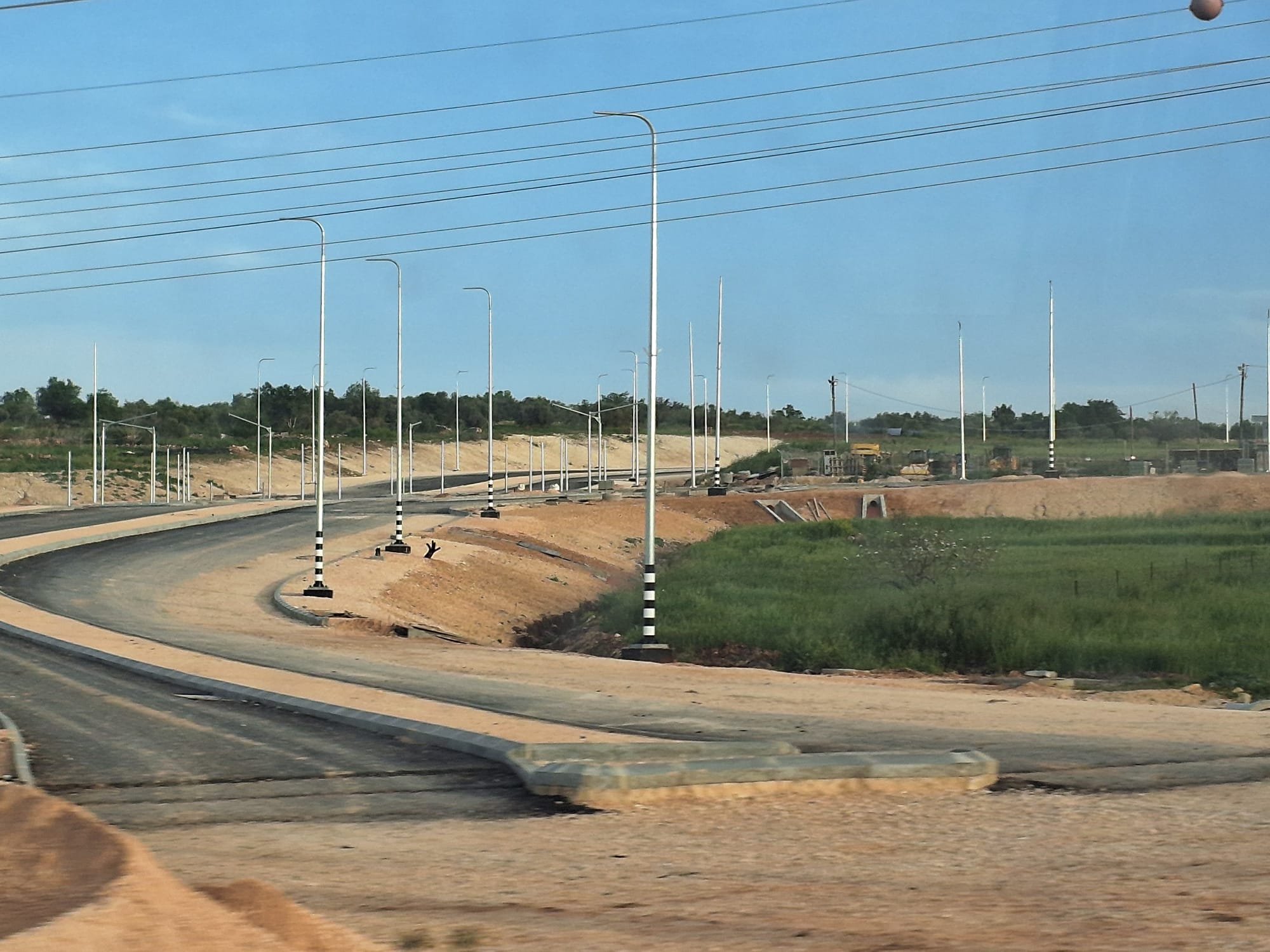
On our way back on road 55, we noticed considerable progress of work on the road bypassing Al-Funduk (if you have wondered where your tax money is headed…).
Location Description
Beit Furik checkpoint
See all reports for this place-
One of the three internal checkpoints that closed on the city of Nablus - Beit Furik to the east, Hawara to the south, Beit Iba to the west. The checkpoint is located at the junction of Roads 557 (an apartheid road that was forbidden for Palestinians), leading to the Itamar and Alon Morea settlements and Road 5487. The checkpoint was established in 2001 for pedestrians and vehicles; The opening hours were short and the transition was slow and very problematic.Allegedly, the checkpoint is intended to monitor the movement to and from Nablus of the residents of Beit Furik and Beit Dajan, being the only opening outside their villages. Since May 2009 the checkpoint is open 24 hours a day, the military presence is limited, vehicles can pass through it without inspections, except for random inspections. (Updated April 2010)
-
Burin (Yitzhar)
See all reports for this place-
Burin (Yitzhar)
This is a Palestinian village in the Nablus governorate, a little south of Nablus, on the main road passing through the West Bank. The settlements: Yitzhar and Har Bracha, settled in locations that surrounded the village, placed fences so it is cut off the main road.
There are around 4000 inhabitants. Most of them are engaged in agriculture and pasture, although many graduates of the two secondary schools continue to study at the university. Academic positions are hardly available, they find work as builderd, or leave for the Gulf countries.
The village lands were appropriated several times for the establishment of Israeli settlements and military bases, and as a result, Burin's land and water resources dwindled. lSince 1982, more than 2,000 dunams of village land have been declared "state land" and then transferred to Har Bracha settlement.
Over the past few years and more so since 2017, the villagers have been terrorized by the residents of Yitzhar and Har Bracha, the Givat Ronen outpost and others. Despite the close proximity of soldiers to an IDF base close to one of the village's schools, residents are suffering from numerous stone-throwing events, vehicle and fire arson, also reported in the press.
In 2023, the prevention of the olive harvest in the village plot was more violent than ever. Soldiers and settlers walked with drawn weapons between the houses of the village and demanded that people stop harvesting in the village itself and in the private plots outside the village. The settlers from Yitzhar and Giv'at Roned raided the olive groves and stole crops. 300 olive trees belonging to the residents of Burin, near Yitzhar, were uprooted. The loss of livelihood from the olives causes long-term economic damage to the farmers' families, bringing them to the point of starvation.
(updated for November 2023)
-
Duma
See all reports for this place-
Duma
A village in the Nablus governorate, with 3,000 residents. They owned some 18,000 dunams, 500 dunams of which the village itself was built. However, after the settlement of Migdaleim annexed a large part of their land, their area was reduced to only 2,000 dunams.On July 31, 2015, two houses in the town were torched with petrol bombs. Sa'ad and Riham Dawabsha, and their infant, Ali Sa'ad Dawabsha, were burned to death. Another son was seriously injured. "Revenge" and "King Messiah" were spray painted on the walls of the house. The trial of the arsonist, the settler Amiram Ben Uliel, is still underway (2019), and a plea bargain was signed in May 2018 with the minor who participated in the planning of the arson.
The closure imposed by the army, the poor roads that they are forced use due to the lack of paving permits from the Civil Administration, along with the lack of public transportation, all these difficulties cut off the village from nearby Nablus and Ramallah.
-
Marda
See all reports for this place-
Marda
There are about 2500 inhabitants in the village. A large part of their lands was confiscated for the benefit of the settlement of Ariel, some of whose buildings are adjacent to the village.
They often feel under siege. At both entrances to the village from the main road (505) there are checkpoints and the army does close the yellow arms from time to time. The inhabitants of Marda own olive groves behind a fence. Rarely are they allowed to cultivate their agricultural plotsRonit Dahan-RamatiApr-14-2026Marda. IDF post on the roof of a Palestinian home with the Messiah flag
-
