
Deir Sharaf, Habla, Irtah (Sha’ar Efrayim), Ras ‘Atiya, Wed 18.11.09, Afternoon
12:00 Habla Agricultural Gate, Gate 1392
The soldiers take no
notice of the large group of women and men, the latter, for once, in
the same numbers as the women! A number of carts, drawn by horses, the
"cowboy" minus his summer hat with a horse – typical day at this gate
crossing, enlivened by Omar at his nursery who is articulate in
explaining, in Hebrew, with our translation, the situation in Qalqiliya
and the destruction/reduction of this large and prosperous agricultural
center, from 60,000 to 45,000 people, and problems with takeover of
lands along the Seam Line.
Near settlement of Alfe Menashe
The new Separation Wall being built, work ongoing at new road and, presumably, new Seam Line checkpoint – soldiers on guard.
Ras Atiya: Seam Line checkpoint at Seam Line village (west of Separation Barrier).
School
kids returning from school west of the checkpoint, go across the
checkpoint, no IDs needed. The soldier in the lookout position shouts
that no film or photos allowed. One detainee, hidden by camouflage
netting, visible only on being escorted to the Porta-toilet. An
altercation follows with the soldiers when we ask why he's detained. A
military policewoman comes out of the concrete checking house to berate
us as we attempt to find out from the young man what's going on. The
commander insists that we leave the middle of the checkpoint, promises
to come and explain to us if we do. Surprise, surprise, he doesn't.
Qalqiliya – no checkpoint today.
On Route 55
Nabi Elias – lunch, much appreciated and enjoyed by the visitors
Azzun – no earth mound today
Qedumim – Settlement where new building continues, nobody visible at the cave outpost
Deir Sharaf –
Soldiers who do nothing to stop vehicles. Pit stop for "knafeh" and
visit with Jabal Moussa and his father, Abu Hussein, at their mini
market.
Anabta – the newly enlarged vehicle checkpoint has no line of waiting vehicles.
Jubara – Young boys pester, quite aggressively, for shekels as we wait in the long line trying to get through.
16:30 -17:45 Shaare Efraim/Irtah
-As we stand by the security fence, just across from Irtah, two
plainclothes men approach us, flashing ID cards, indicating they're
security (no longer dressed in black). They insist that photos and
filming are not allowed. One of the visitors stands by the huge
concrete wall that surrounds one part of the "terminal," trying to
gauge the height of the security wall — and have it captured on film.
We move our cars into the parking lot and go to observe what's going on.
At
this late afternoon hour, many returning Palestinians emerge from
minibuses and contractors' cars. The line leading to the terminal is
endless, there is pushing and shoving, there are women and children,
and only two, it seems, windows at work inside the building. We are
just about to make phone calls when, all of a sudden, more windows are,
magically, at work. We have been seen! The line begins to move, the
crowding and shoving cease. Some of the members of the visitor's group
find a couple of English speaking Palestinians waiting in line, and
they explain, on film, that windows are opened when MachsomWatch women
appear, but are closed as soon as they leave. They go on and talk about
their daily experiences, the wait this morning, as most mornings,
waiting from one to three hours to get through the terminal and
complain, rightly so, about the disgraceful situation here.
Just
then the two security guards appear, and the larger one begins to
jostle and manhandle one of the Americans, demands his film, tries to
smash the camera and shouts that he is to stop, etc. Since neither of
the two visitors will hand over the camera, and tell the guard, in no
uncertain terms to lay off, the two security guards now say they will
close the gate of the compound, meaning, we can't leave with our two
parked cars, and that Palestinians can't get in, or contractors' cars
out. "This is a closed military area" (with Palestinians inside)!! They
carry out their threat; and we start to make phone calls. One of the
visitors stands at the now closed gate, the security guard "in charge"
there asks him why, and he indicates to "observe." Gradually the gate
is opened to let a trickle of Palestinians in, and they immediately
proceed to run towards the terminal, fearing yet more delays.
As
we make phone calls to our lawyers, to Tami, etc., two army jeeps
suddenly appear and zoom into the compound, pulling up sharply more or
less at our feet. Out emerge a total of eight soldiers, guns at the
ready! The larger of the two security guards from the private company
running this place hovers as an officer, a major, begins to talk, in
not bad English, to the visitors. He insists that he see what they've
been filming. He is satisfied with what he sees (no need to explain
what has happened to the offending film). But the security guard,
hovering over the army officer, now insists that there is more film,
and that this must be viewed too. The major asks where it is, asks if
we all want to spend the night here (he's talking to six American
citizens), and suddenly, it seems something clicks in his brain: "You
were all just about to leave, right? So, why don't you just go?" We do,
and leave a reality that is clearly more than a little suggestive of an
autocratic state.
12:00 Habla Agricultural Gate, Gate 1392
The soldiers take no
notice of the large group of women and men, the latter, for once, in
the same numbers as the women! A number of carts, drawn by horses, the
"cowboy" minus his summer hat with a horse – typical day at this gate
crossing, enlivened by Omar at his nursery who is articulate in
explaining, in Hebrew, with our translation, the situation in Qalqiliya
and the destruction/reduction of this large and prosperous agricultural
center, from 60,000 to 45,000 people, and problems with takeover of
lands along the Seam Line.
Near settlement of Alfe Menashe
The new Separation Wall being built, work ongoing at new road and, presumably, new Seam Line checkpoint – soldiers on guard.
Ras Atiya: Seam Line checkpoint at Seam Line village (west of Separation Barrier).
School
kids returning from school west of the checkpoint, go across the
checkpoint, no IDs needed. The soldier in the lookout position shouts
that no film or photos allowed. One detainee, hidden by camouflage
netting, visible only on being escorted to the Porta-toilet. An
altercation follows with the soldiers when we ask why he's detained. A
military policewoman comes out of the concrete checking house to berate
us as we attempt to find out from the young man what's going on. The
commander insists that we leave the middle of the checkpoint, promises
to come and explain to us if we do. Surprise, surprise, he doesn't.
Qalqiliya – no checkpoint today.
On Route 55
Nabi Elias – lunch, much appreciated and enjoyed by the visitors
Azzun – no earth mound today
Qedumim – Settlement where new building continues, nobody visible at the cave outpost
Deir Sharaf –
Soldiers who do nothing to stop vehicles. Pit stop for "knafeh" and
visit with Jabal Moussa and his father, Abu Hussein, at their mini
market.
Anabta – the newly enlarged vehicle checkpoint has no line of waiting vehicles.
Jubara – Young boys pester, quite aggressively, for shekels as we wait in the long line trying to get through.
16:30 -17:45 Shaare Efraim/Irtah
-As we stand by the security fence, just across from Irtah, two
plainclothes men approach us, flashing ID cards, indicating they're
security (no longer dressed in black). They insist that photos and
filming are not allowed. One of the visitors stands by the huge
concrete wall that surrounds one part of the "terminal," trying to
gauge the height of the security wall — and have it captured on film.
We move our cars into the parking lot and go to observe what's going on.
At
this late afternoon hour, many returning Palestinians emerge from
minibuses and contractors' cars. The line leading to the terminal is
endless, there is pushing and shoving, there are women and children,
and only two, it seems, windows at work inside the building. We are
just about to make phone calls when, all of a sudden, more windows are,
magically, at work. We have been seen! The line begins to move, the
crowding and shoving cease. Some of the members of the visitor's group
find a couple of English speaking Palestinians waiting in line, and
they explain, on film, that windows are opened when MachsomWatch women
appear, but are closed as soon as they leave. They go on and talk about
their daily experiences, the wait this morning, as most mornings,
waiting from one to three hours to get through the terminal and
complain, rightly so, about the disgraceful situation here.
Just
then the two security guards appear, and the larger one begins to
jostle and manhandle one of the Americans, demands his film, tries to
smash the camera and shouts that he is to stop, etc. Since neither of
the two visitors will hand over the camera, and tell the guard, in no
uncertain terms to lay off, the two security guards now say they will
close the gate of the compound, meaning, we can't leave with our two
parked cars, and that Palestinians can't get in, or contractors' cars
out. "This is a closed military area" (with Palestinians inside)!! They
carry out their threat; and we start to make phone calls. One of the
visitors stands at the now closed gate, the security guard "in charge"
there asks him why, and he indicates to "observe." Gradually the gate
is opened to let a trickle of Palestinians in, and they immediately
proceed to run towards the terminal, fearing yet more delays.
As
we make phone calls to our lawyers, to Tami, etc., two army jeeps
suddenly appear and zoom into the compound, pulling up sharply more or
less at our feet. Out emerge a total of eight soldiers, guns at the
ready! The larger of the two security guards from the private company
running this place hovers as an officer, a major, begins to talk, in
not bad English, to the visitors. He insists that he see what they've
been filming. He is satisfied with what he sees (no need to explain
what has happened to the offending film). But the security guard,
hovering over the army officer, now insists that there is more film,
and that this must be viewed too. The major asks where it is, asks if
we all want to spend the night here (he's talking to six American
citizens), and suddenly, it seems something clicks in his brain: "You
were all just about to leave, right? So, why don't you just go?" We do,
and leave a reality that is clearly more than a little suggestive of an
autocratic state.
12:00 Habla Agricultural Gate, Gate 1392
The soldiers take no
notice of the large group of women and men, the latter, for once, in
the same numbers as the women! A number of carts, drawn by horses, the
"cowboy" minus his summer hat with a horse – typical day at this gate
crossing, enlivened by Omar at his nursery who is articulate in
explaining, in Hebrew, with our translation, the situation in Qalqiliya
and the destruction/reduction of this large and prosperous agricultural
center, from 60,000 to 45,000 people, and problems with takeover of
lands along the Seam Line.
Near settlement of Alfe Menashe
The new Separation Wall being built, work ongoing at new road and, presumably, new Seam Line checkpoint – soldiers on guard.
Ras Atiya: Seam Line checkpoint at Seam Line village (west of Separation Barrier).
School
kids returning from school west of the checkpoint, go across the
checkpoint, no IDs needed. The soldier in the lookout position shouts
that no film or photos allowed. One detainee, hidden by camouflage
netting, visible only on being escorted to the Porta-toilet. An
altercation follows with the soldiers when we ask why he's detained. A
military policewoman comes out of the concrete checking house to berate
us as we attempt to find out from the young man what's going on. The
commander insists that we leave the middle of the checkpoint, promises
to come and explain to us if we do. Surprise, surprise, he doesn't.
Qalqiliya – no checkpoint today.
On Route 55
Nabi Elias – lunch, much appreciated and enjoyed by the visitors
Azzun – no earth mound today
Qedumim – Settlement where new building continues, nobody visible at the cave outpost
Deir Sharaf –
Soldiers who do nothing to stop vehicles. Pit stop for "knafeh" and
visit with Jabal Moussa and his father, Abu Hussein, at their mini
market.
Anabta – the newly enlarged vehicle checkpoint has no line of waiting vehicles.
Jubara – Young boys pester, quite aggressively, for shekels as we wait in the long line trying to get through.
16:30 -17:45 Shaare Efraim/Irtah
-As we stand by the security fence, just across from Irtah, two
plainclothes men approach us, flashing ID cards, indicating they're
security (no longer dressed in black). They insist that photos and
filming are not allowed. One of the visitors stands by the huge
concrete wall that surrounds one part of the "terminal," trying to
gauge the height of the security wall — and have it captured on film.
We move our cars into the parking lot and go to observe what's going on.
At
this late afternoon hour, many returning Palestinians emerge from
minibuses and contractors' cars. The line leading to the terminal is
endless, there is pushing and shoving, there are women and children,
and only two, it seems, windows at work inside the building. We are
just about to make phone calls when, all of a sudden, more windows are,
magically, at work. We have been seen! The line begins to move, the
crowding and shoving cease. Some of the members of the visitor's group
find a couple of English speaking Palestinians waiting in line, and
they explain, on film, that windows are opened when MachsomWatch women
appear, but are closed as soon as they leave. They go on and talk about
their daily experiences, the wait this morning, as most mornings,
waiting from one to three hours to get through the terminal and
complain, rightly so, about the disgraceful situation here.
Just
then the two security guards appear, and the larger one begins to
jostle and manhandle one of the Americans, demands his film, tries to
smash the camera and shouts that he is to stop, etc. Since neither of
the two visitors will hand over the camera, and tell the guard, in no
uncertain terms to lay off, the two security guards now say they will
close the gate of the compound, meaning, we can't leave with our two
parked cars, and that Palestinians can't get in, or contractors' cars
out. "This is a closed military area" (with Palestinians inside)!! They
carry out their threat; and we start to make phone calls. One of the
visitors stands at the now closed gate, the security guard "in charge"
there asks him why, and he indicates to "observe." Gradually the gate
is opened to let a trickle of Palestinians in, and they immediately
proceed to run towards the terminal, fearing yet more delays.
As
we make phone calls to our lawyers, to Tami, etc., two army jeeps
suddenly appear and zoom into the compound, pulling up sharply more or
less at our feet. Out emerge a total of eight soldiers, guns at the
ready! The larger of the two security guards from the private company
running this place hovers as an officer, a major, begins to talk, in
not bad English, to the visitors. He insists that he see what they've
been filming. He is satisfied with what he sees (no need to explain
what has happened to the offending film). But the security guard,
hovering over the army officer, now insists that there is more film,
and that this must be viewed too. The major asks where it is, asks if
we all want to spend the night here (he's talking to six American
citizens), and suddenly, it seems something clicks in his brain: "You
were all just about to leave, right? So, why don't you just go?" We do,
and leave a reality that is clearly more than a little suggestive of an
autocratic state.
Deir Sharaf checkpoint
See all reports for this place-
Deir Sharaf checkpoint is located west of Nablus and south of the settlement of Shavei Shomron, at the entrance to the village of Deir Sharaf on the road leading to Nablus. The checkpoint was activated in early March 2009 after the Beit Iba checkpoint was closed. Palestinians are allowed through the checkpoint , but not for Israelis. Unlike the checkpoints leading to Qalqilya and Tulkarm, crossing of Israeli Palestinians is only allowed on Saturdays.
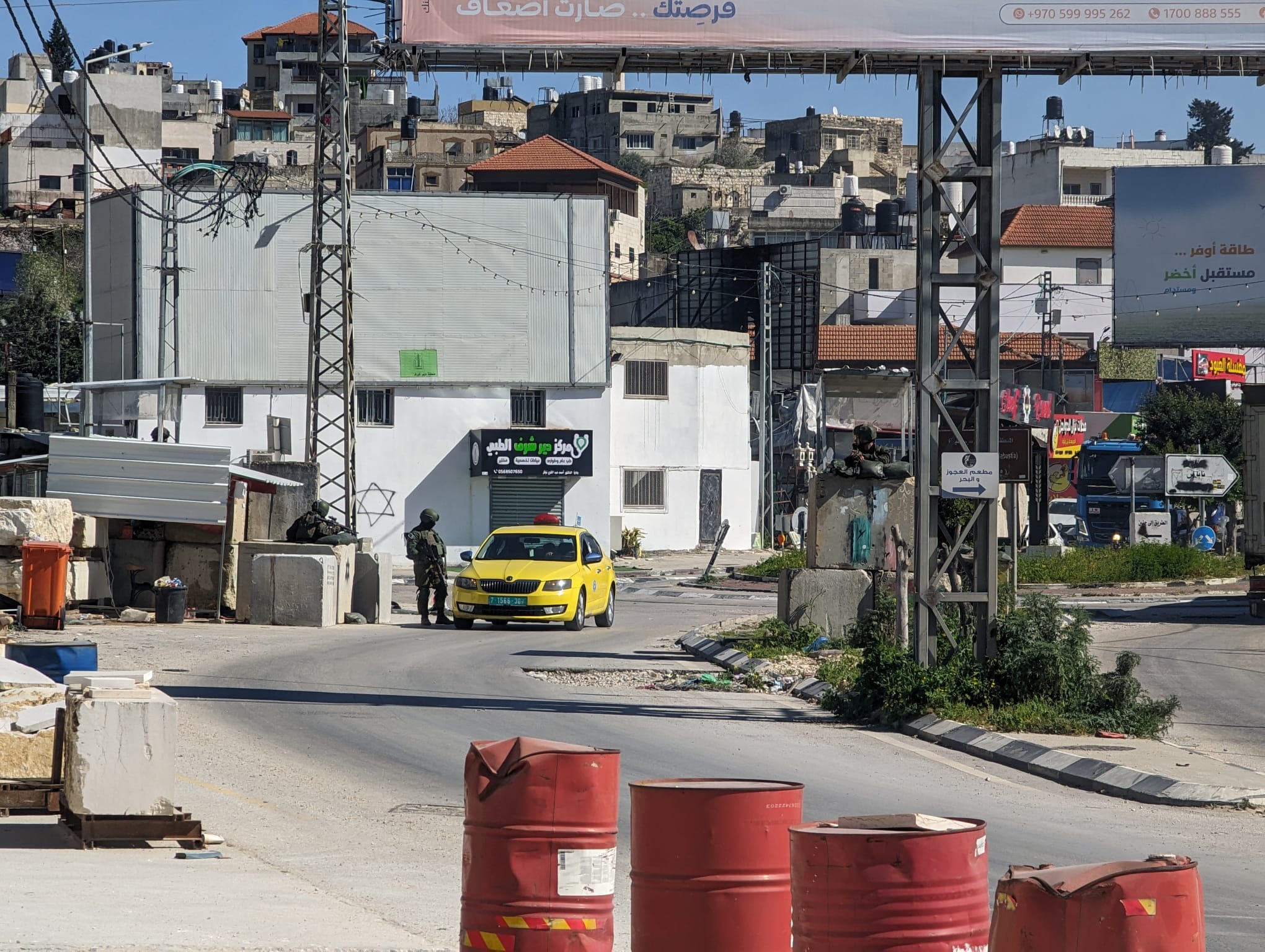 Nina SebaFeb-28-2024Deir Sharaf - the entrance to the village
-
Habla
See all reports for this place-
Habla CP (1393)
The Habla checkpoint (1393) was established on the lands of the residents of Qalqilya, on the short road that
connected it for centuries to the nearby town of Habla. The separation barrier intersects this road twice and cut off the residents of Qalqilya from their lands in the seam zone.(between the fence and the green line).
There is a passage under Road 55 that connects Qalqilya to the sabotage This agricultural barrier is used by the farmers and nursery owners established along Road 55 from the Green Line and on both sides of the kurkar road leading to the checkpoint.
This agricultural checkpoint serves the residents of Arab a-Ramadin al-Janoubi (detached from the West Bank), who pass through it to the West Bank and back to their homes. The opening hours (3 times a day) of this agricultural checkpoint are longer than usual, about an hour (recently shortened to 45 minutes), and are coordinated with the transportation hours of a-Ramadin children studying in the occupied in the West Bank.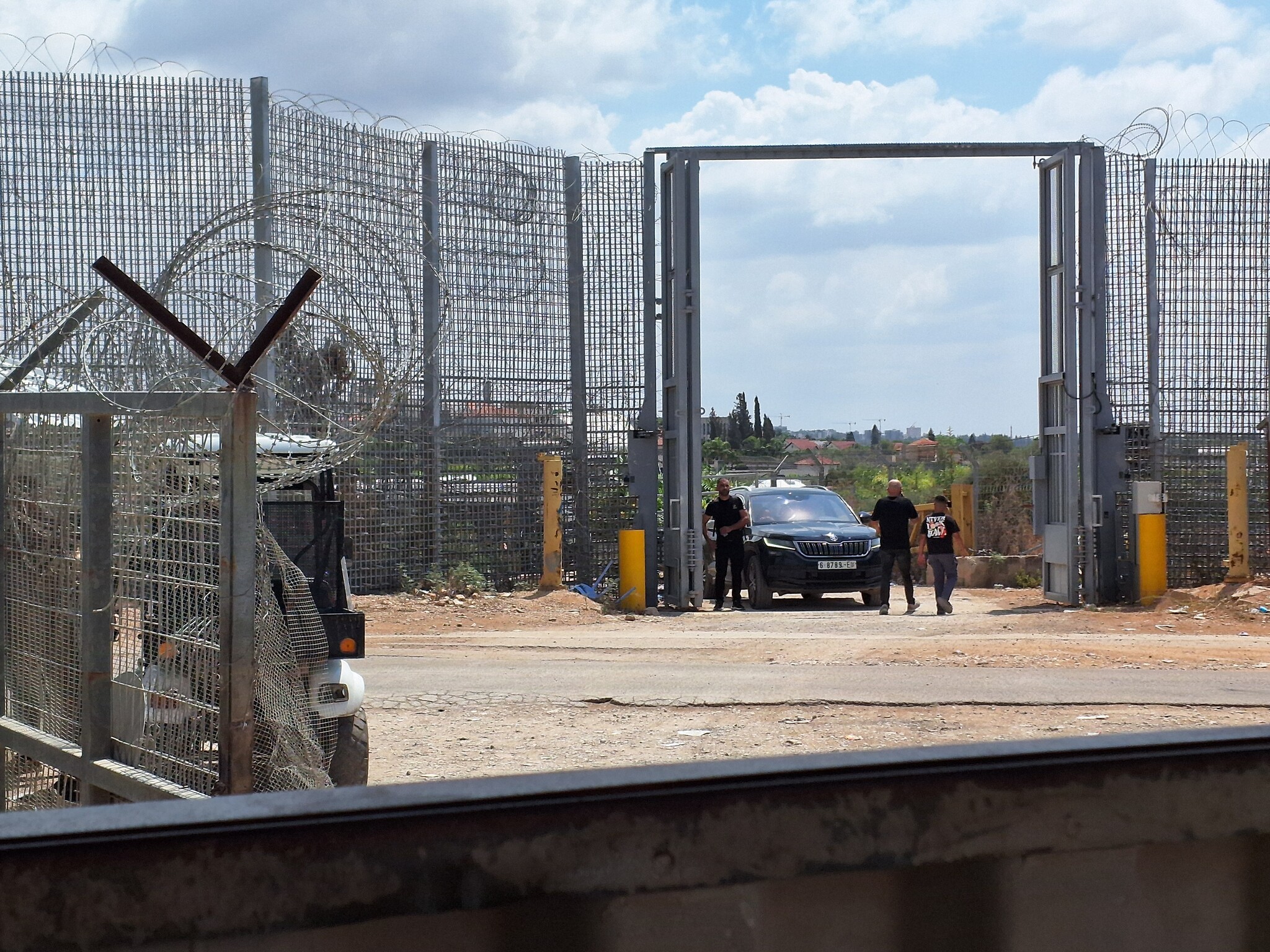 Ronit Dahan-RamatiAug-31-2026Habla. The gate is open
-
Irtah (Sha'ar Efrayim)
See all reports for this place-
The checkpoint is for Palestinians only. It is the main barrier to the passage of workers from the northern West Bank to Israel. Workers with a permit to work in Israel and also for trade (with appropriate permissions), medicine, and visiting prisoners. One can cross the checkpoint only on foot. The checkpoint is located north of Road 557 and south of Tulkarm. Operated by a civil security company, opening hours: between 4:00 and 19:00 on weekdays. As members of Machsom Watch, we began our shifts to this location in 2007. We arrived before it opened at 4 in the morning and report since, on the harsh conditions and the long and crowded queues of workers. The workers who pass by continue their journey by transportation to work throughout Israel. In the first period of its activity, about 3,000 and then 5,000 people passed through this checkpoint every day. Due to the small number of checking points and arbitrary delays for long periods of time in the "rooms", workers feared losing their transportation. Hence workers leave their homes at 2:30 at night to be among the first. Today, 15,000 pass and the transition is faster. Workers are still leaving their homes very early to get past the checkpoint at 7 p.m. In an adjacent compound, there is a terminal for the transfer of goods on a commercial scale, using the back-to-back method.
-
Ras 'Atiya
See all reports for this place-
The checkpoint is presently on the Separation Barrier roadway, manned and open 12 hours a day, from 6:30 to 18:30. West of it is the large Seam Line village whose school is attended by children from the nearby villages east of the Barrier and many of whose inhabitants have permits to work in Israel. How long this checkpoint will remain in place is unknown, since construction of the Separation Wall, just by the settlement of Alfe Menashe, east of the present Separation Barrier, is endless, as is the creation of a new road and, obviously, a new checkpoint.
-
