
First actual shift at the southern checkpoints since the outbreak of the Corona-virus crisis


First actual shift at the southern checkpoints since the outbreak of the Corona-virus crisis
Meitar Checkpoint
We arrived at 13:00 but because of the Ramadan fast Palestinian workers had gone home earlier. Since Israel has been on its way out of its Corona closures, the Palestinian Authority agreed for the workers to return to the West Bank. Some of them have not been home for three weeks or more. In Israel they stay overnight at their workplaces under outrageous conditions, but putting food on the table for the family at home is most important for them. They got into Israel through the opening in the Fence that the army had opened because the checkpoints themselves were closed to Palestinian workers this whole time. Right now restrictions are lighter both on the Palestinian and the Israeli sides. This is why these workers have decided to return home, assuming that on Sunday they would be able to return to their work in Israel as usual.
Negohot Checkpoint
Negohot is an apartheid checkpoint – only Jewish Israeli citizens are allowed through. Palestinian citizens of Israel are required to use the Tarqumiyah or Meitar checkpoints. This is what friendly soldiers of the 9th Armored Battalion explained to us. Negohot is a settler-colony situated on three hills of privately-owned Palestinian land. About 150 families live there, and its access road connects road 358 to road 60. This road passes through the Palestinian village of Hursa, and that is why a pillbox post (watchtower) was placed there and its soldiers make village life impossible.
Tarqumiyah checkpoint
This checkpoint was nearly deserted, almost no one passed. The truck waiting in line were few in number, the DCO office was opened only two days a week and only from 4 a.m. until noon.
Today too, few workers use it. A Palestinian there tells us that during the holiday most of the restrictions were down and instructions regarding the pandemic are similar to those in Israel. School will be opened only after the Ramadan month. From Sunday on the DCO offices will return to “normal” activity, including masks and 6 ft. social distancing.
They were so glad to see us that we almost hugged…
South Hebron Hills
See all reports for this place-
South Hebron Hills
South Hebron Hills is a large area in the West Bank's southern part.
Yatta is a major city in this area: right in the border zone between the fertile region of Hebron and its surroundings and the desert of the Hebron Hills. Yatta has about 64,000 inhabitants.
The surrounding villages are called Masafer Yatta (Yatta's daughter villages). Their inhabitants subsist on livestock and agriculture. Agriculture is possible only in small plots, especially near streams. Most of the area consists of rocky terraces.Since the beginning of the 1980s, many settlements have been established on the agricultural land cultivated by the Palestinians in the South Hebron Hills region: Carmel, Maon, Susia, Masadot Yehuda, Othniel, and more. Since the settlements were established and Palestinians cultivation areas have been reduced; the residents of the South Hebron Hills have been suffering from harassment by the settlers. Attempts to evict and demolish houses have continued, along with withholding water and electricity. The military and police usually refrain from intervening in violent incidents between settlers and Palestinians do not enforce the law when it comes to the investigation of extensive violent Jewish settlers. The harassment in the South Hebron Hills includes attacking and attempting to burn residential tents, harassing dogs, harming herds, and preventing access to pastures.
There are several checkpoints in the South Hebron Hills, on Routes 317 and 60. In most of them, no military presence is apparent, but rather an array of pillboxes monitor the villages. Roadblocks are frequently set up according to the settlers and the army's needs. These are located at the Zif Junction, the Dura-al Fawwar crossing, and the Sheep Junction at the southern entrance to Hebron.
Updated April 2022
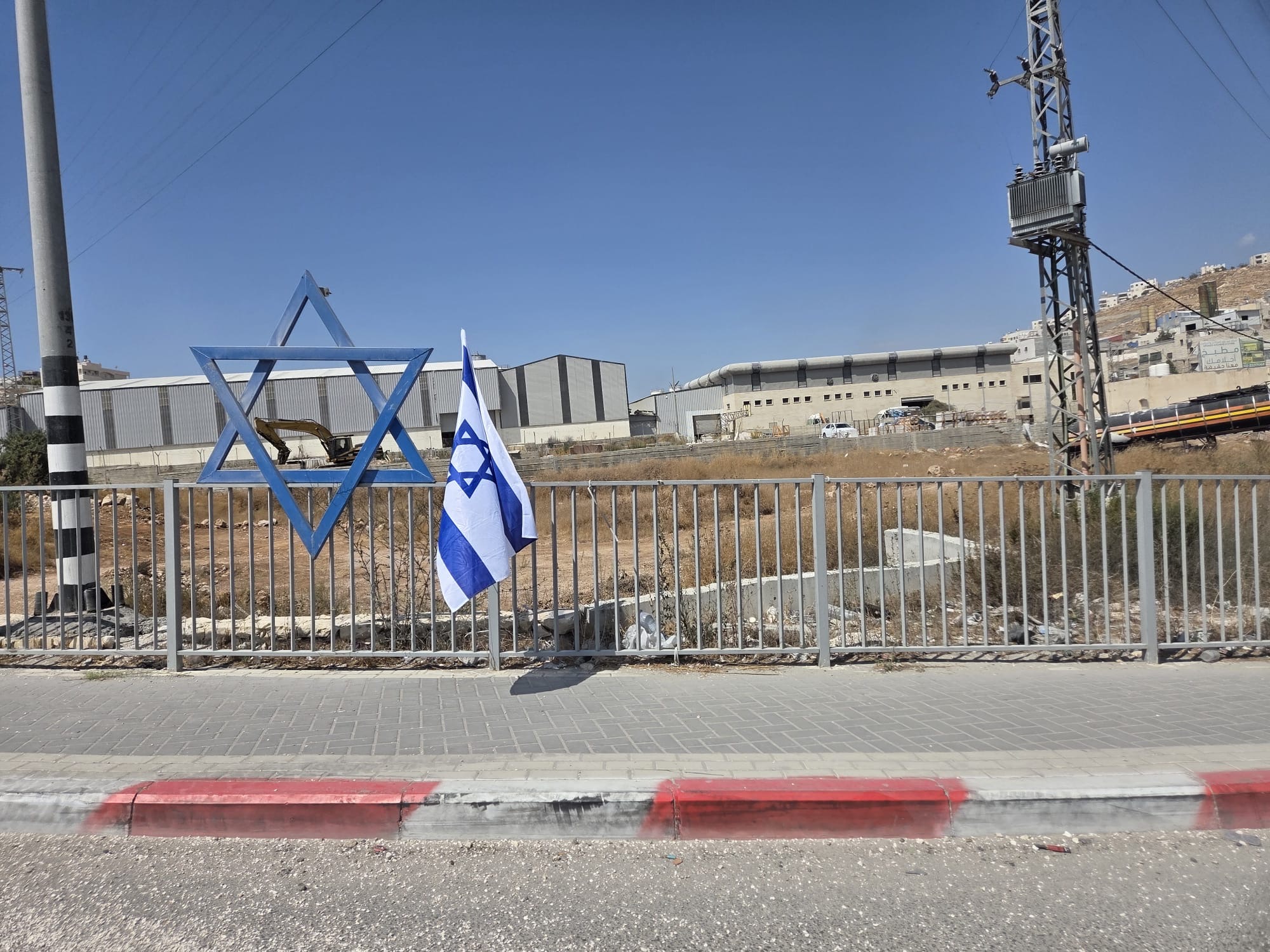 Timna OrevSep-24-2026Replacing flags on Highway 6
-
