
For a change, a reasonable day at Qalandiya.
05.15. It is already beginning to be light. Perhaps that is why we do not see the large groups at prayer at the parking lot. Tomorrow night we will be moving the clocks forward, so next week it will once again be dark at this hour. Inside the checkpoint the lines extend beyond the shed. The beigel seller is present, but the cake sellers have disappeared. A youth with a thermos sells coffee (he usually stands out on the road). The kiosk is open outside.
All 5 checking stations are open and passage is at a reasonable pace. The soldier in the aquarium lets in few people at each turn of the turnstile, but opens it frequently, so that people do feel they are advancing. Women are allowed to fit in at the entrance to the cages. Soon after 6, the woman soldier is replaced by a male soldier, who is less alert to the situation in the lines. But when people called out to him, he responded. People told us that the situation had been reasonable all week. Yesterday – in fact, when a human rights group visited – there were no lines at all and the turnstiles were kept open (as reported by our colleagues Ina and Virginia).
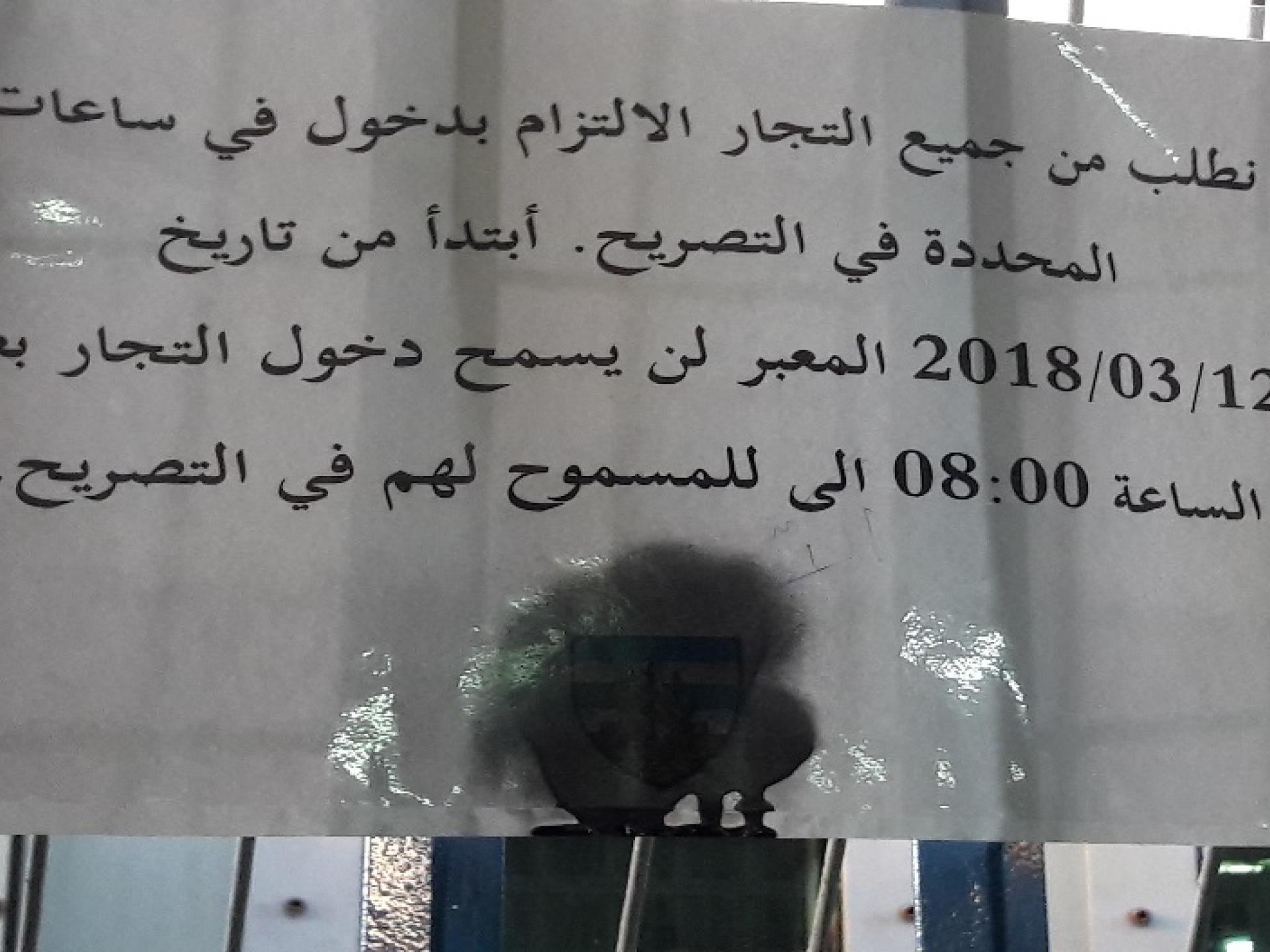
On the signs posted last week , intended for merchants, someone has sprayed black paint over the symbol of the Civil Administration. Apparently there is not much affection for this institution …
When we arrived, the gate to the humanitarian passage was open physically, but passage was of course impossible as after the gate is a turnstile operated from within the aquarium. As people gathered at the gate, they themselves closed it and waited outside it. Time passed, 6 o’clock was way past, phone-calls did not help. Meanwhile a crowd waited. Some people preferred to join the regular lines. A guard and a D.C.O. woman officer, accompanied by a woman soldier, arrived very late, to open the humanitarian gate. It seemed that it was the guard who controlled the situation. We know him to be firm, but efficient. In a few minutes the line at the humanitarian gate was through. He also instructed the soldier in the aquarium when to open the turnstiles, which eased the situation in the regular line.
We went outside for tea. As reported on Sunday, the broken metal fencing has been removed entirely. Now the queues are ‘bordered’ outside only on one side. As one can see in the picture, there are still lines next to the kiosk.
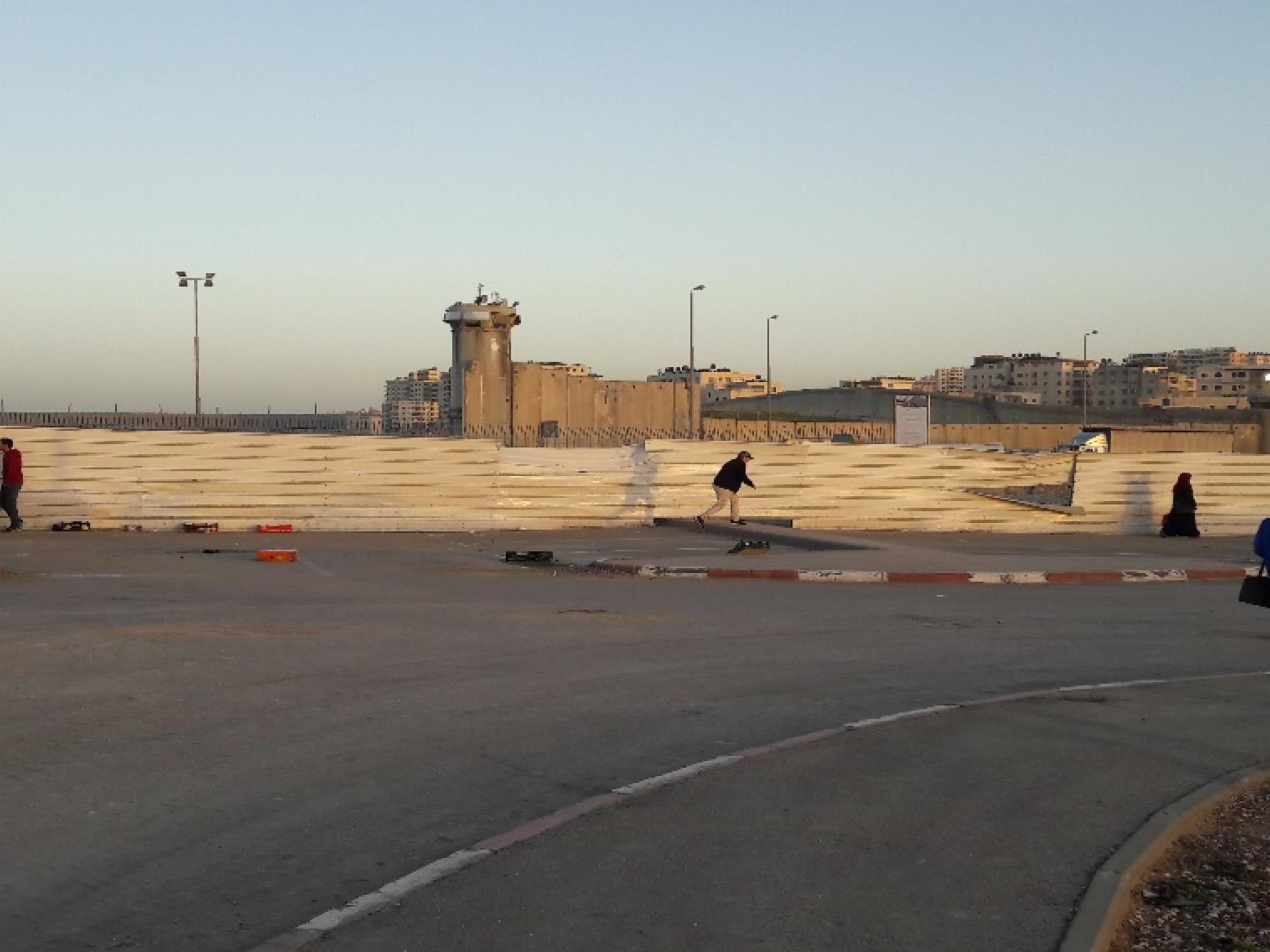
At one stage a man and woman with a small child arrived, with a car seat. After long negotiation with the soldier and guard, who tried by phone to clarify their situation, the woman turned back, and only the man and child passed. Another man helped him to take through the car seat.
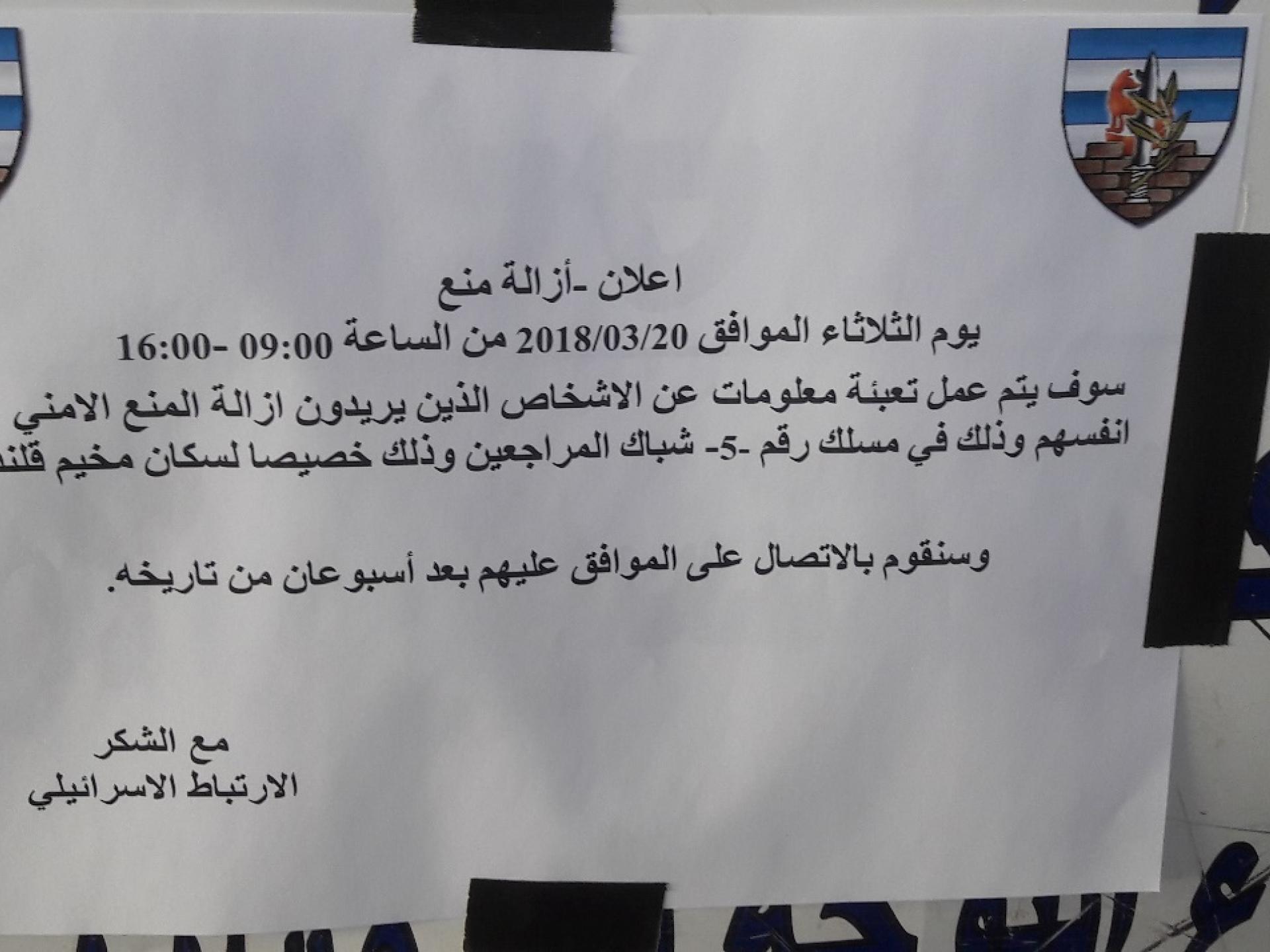
At about 7 the lines were within the shed. At 7.05 we joined one. After we passed the turnstiles we noticed signs that had apparently been there some days. They informed the public that yesterday was to be a “day of cancellation of refusals” for inhabitants of Qalandiya camp. All those refused permits by Security were invited to come to the D.C.O. From experience of other places, we know that some refusals are indeed cancelled, but many people are disappointed.
In the line at checking station no.2, youths who saw us photographing and reading the notice, tried to tell us that old folk are allowed through only after 8 o’clock. Another man smiled and said: Don’t you see that they are Jews? They can pass ..”. Afterwards we spoke with him and he claimed that yesterday, because of the visit by the human rights delegation, care was taken to let people pass without delay. He felt everything was under the control of the soldiers and that if their commander gave the order they could get people through much faster.
It took us about twenty minutes to pass.
Qalandiya Checkpoint / Atarot Pass (Jerusalem)
See all reports for this place-
Click here to watch a video from Qalandiya checkpoint up to mid 2019 Three kilometers south of Ramallah, in the heart of Palestinian population. Integrates into "Jerusalem Envelope" as part of Wall that separates between northern suburbs that were annexed to Jerusalem in 1967: Kafr Aqab, Semiramis and Qalandiya, and the villages of Ar-Ram and Bir Nabala, also north of Jerusalem, and the city itself. Some residents of Kafr Aqab, Semiramis and Qalandiya have Jerusalem ID cards. A terminal operated by Israel Police has functioned since early 2006. As of August 2006, northbound pedestrians are not checked. Southbound Palestinians must carry Jerusalem IDs; holders of Palestinian Authority IDs cannot pass without special permits. Vehicular traffic from Ramallah to other West Bank areas runs to the north of Qalandiya. In February 2019, the new facility of the checkpoint was inaugurated aiming to make it like a "border crossing". The bars and barbed wire fences were replaced with walls of perforated metal panels. The check is now performed at multiple stations for face recognition and the transfer of an e-card. The rate of passage has improved and its density has generally decreased, but lack of manpower and malfunctions cause periods of stress. The development and paving of the roads has not yet been completed, the traffic of cars and pedestrians is dangerous, and t the entire vicinity of the checkpoint is filthy. In 2020 a huge pedestrian bridge was built over the vehicle crossing with severe mobility restrictions (steep stairs, long and winding route). The pedestrian access from public transport to the checkpoint from the north (Ramallah direction) is unclear, and there have been cases of people, especially people with disabilities, who accidentally reached the vehicle crossing and were shot by the soldiers at the checkpoint. In the summer of 2021, work began on a new, sunken entrance road from Qalandiya that will lead directly to Road 443 towards Jerusalem and Tel Aviv. At the same time, the runways of the old Atarot airport were demolished and infrastructure was prepared for a large bus terminal. (updated October 2021)
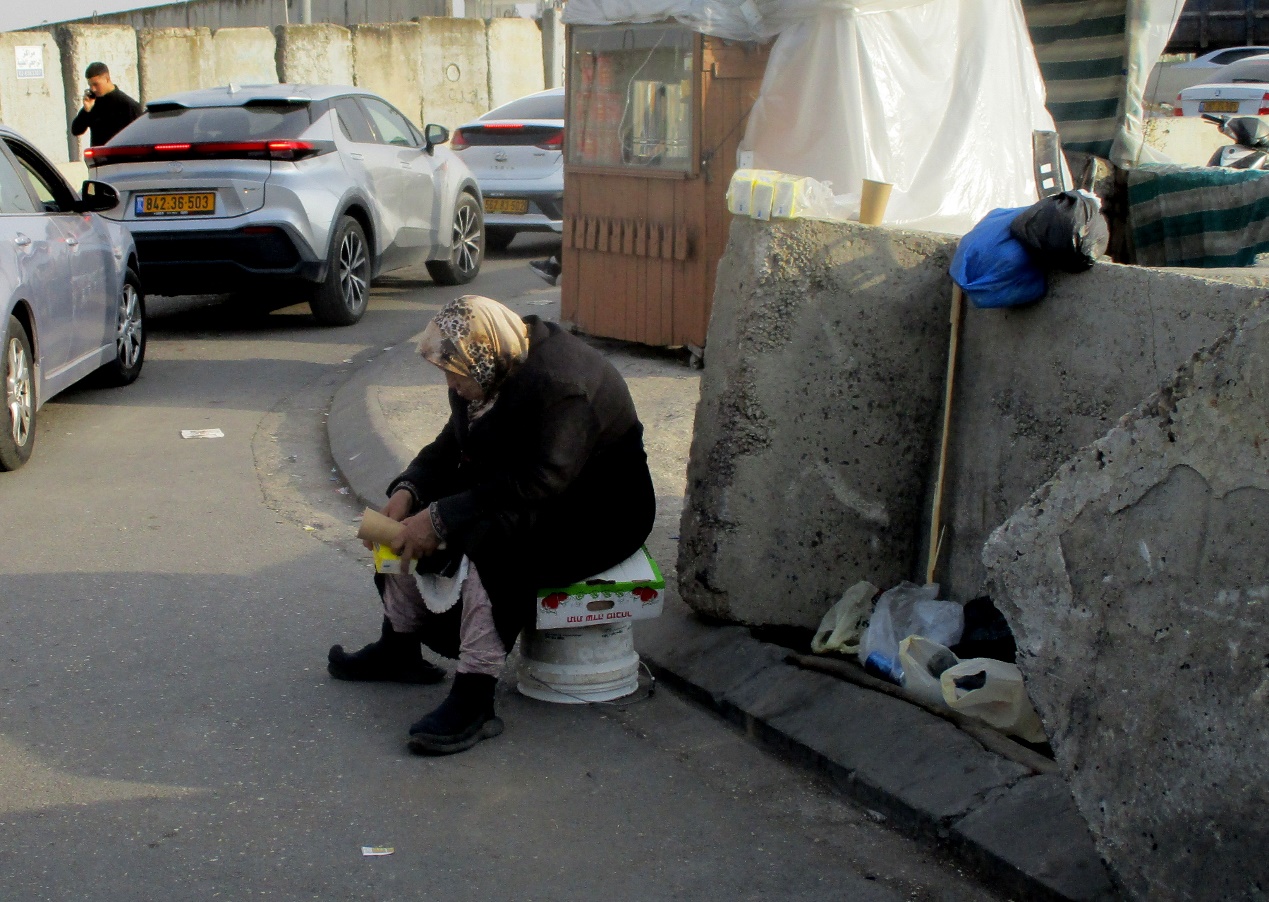 Tamar FleishmanOct-11-2026Qalandiya. Female Beggar
-
