
From Beta to Awarta: Settler Harassment of the Olive Harvest Under the Auspices of the Army
We entered via Route 55. We visited the Beta municipal office. The mayor was not present; we were received by a municipal council member, accompanied by a woman from the municipality (her specific role was unclear). We discussed the situation in the village and the surrounding area, as well as attacks by settlers and the military—particularly during the current olive harvest season.
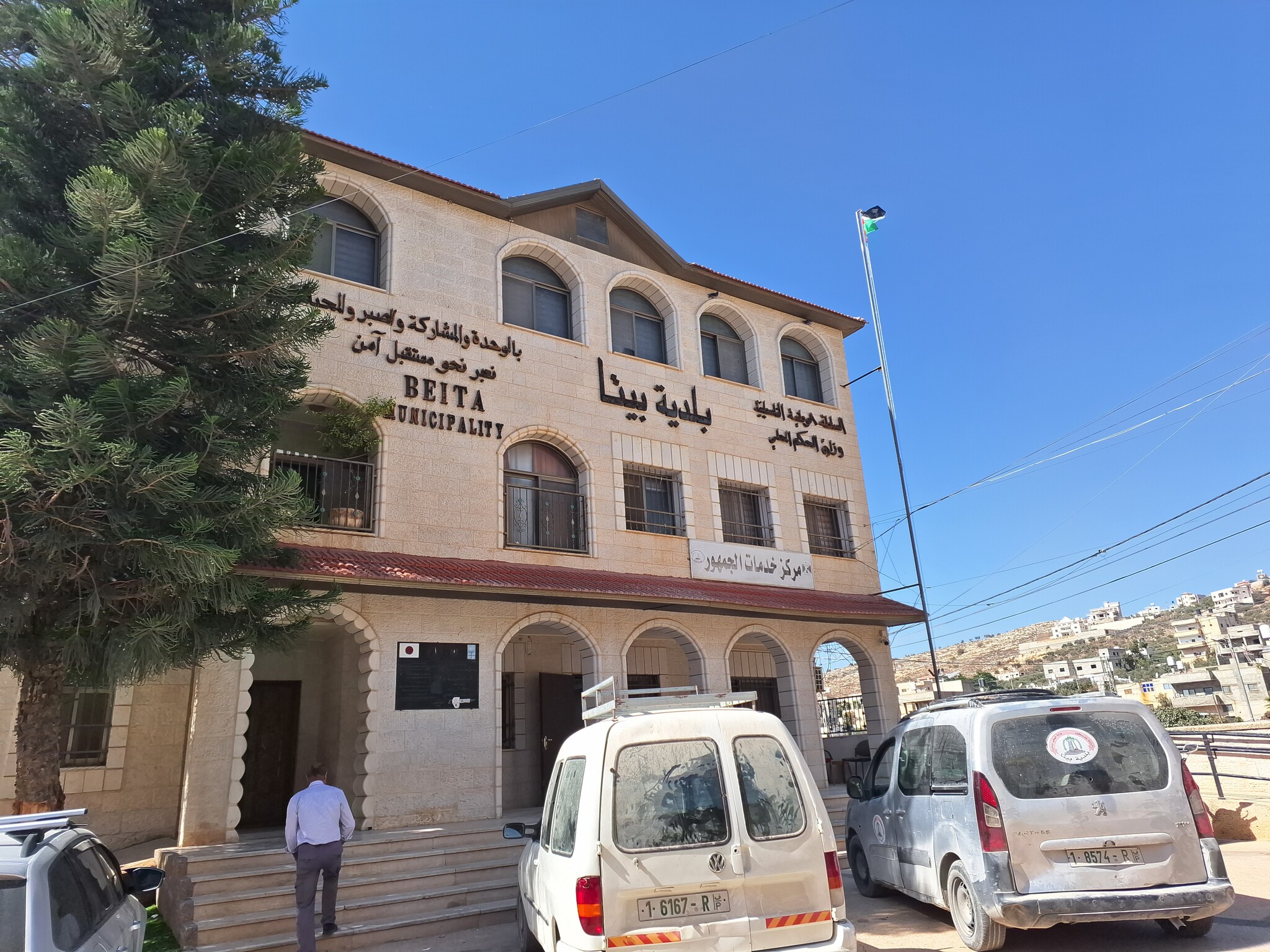
They reported that on Friday, settlers attacked people harvesting olives east of Beta. On Saturday, settlers arrived accompanied by the military, fired tear gas, and drove the harvesters away. According to them, there are constant issues. In some locations, residents are prevented from harvesting even the olive trees surrounding their own homes, especially in areas near outposts and farms.
The area known as Al-Orma suffers severely from settler attacks. Residents in this area are exposed to explosives, smoke, tear gas, and gunfire into the air; most importantly, they are unable to harvest their olives.
East of the Evyatar settlement, on Mount Qamas, a new settlement called Qamas has been established. On Saturday, settlers came down from that location and attacked people harvesting olives. About twenty settlers attacked the nearby houses, smashed windows, and beat and drove away the foreign volunteers who had come to help with the olive harvest. They also set up a roadblock. This time, the army assisted in expelling the settlers, because volunteers from abroad were present at the scene.
The people we met mentioned the names of Palestinians who had been harmed, but asked that these names not be disclosed, for fear that they might be targeted or harassed.
H., a resident of Beta, was in the Al-Dahr area on Mount Sabih to harvest his olives. He discovered settlers harvesting olives on his land. The soldiers guarding the settlers beat him. He sustained injuries and was taken to the hospital. According to the people we spoke with, the army beat him simply because he was present on the land.
The Qamas area contains mature olive trees that yield a large harvest; however, Palestinians are prevented from harvesting them. The settlers themselves harvest—and steal—the Palestinians’ olives. Afterward, they advertise that they are selling olive oil at a low price. (Fathiya sent a video of one such advertisement that had been forwarded to her.) Settlers from Qamas also stole a Palestinian vehicle, which they are now using. The entire route from Za’atra to Usarin is currently under the control of settlers. They also destroy Palestinian olive trees; we were shown videos in which they harvest the olives in a manner that breaks and damages the trees.
A., from Beta, invested one million shekels in establishing a large, sophisticated poultry coop on Mount Qamas. The settlers cut the electrical cables supplying the coop, and all the chickens died. Now, he is prevented from accessing the site to operate the chicken coop.
At a certain point, an older man—a Hajj—arrived and joined the conversation; he was dressed in traditional attire. He lives near the outpost and suffers from repeated attacks. He recounted that the settlers harvested his olives before the season began, while the fruit was still unripe. At this stage, one can extract far less oil than if one waits for the proper time. He remarked, “I have known Jews for many years; Jews possess good qualities.” “These are not Jews.”
We were told that there are attacks in nearby Osarin as well. They showed us photos from Saturday, depicting homes in Osarin that had been attacked, people who had been injured, and vehicles that had been smashed. We were also told that in Deir Sharaf, the army has closed the gates to the residents, preventing them from reaching their agricultural lands – lands that are now being taken over by settlers. They reported that on the same day, settlers attacked people in Wadi Sha’ar, near Talfit. They showed us a photo of an injured man. According to them, reports of attacks are coming in constantly, from everywhere.
They also spoke to us about the Beta wholesale market, which was established many years ago at the western entrance to the village. When the Huwara bypass road—which runs through Beta—was paved, the market was demolished because it was too close to the road. Since then, the market has been destroyed and relocated three times. First, it had to be moved due to the construction of the road; later, it was claimed to be too close to the road; and now, they are being told to move it again, this time on the grounds that it is located in Area C.
The conversation also turned to the elections in Israel. The people we met expressed hope that there would be a change for the better following the elections. We thanked them, said goodbye, and drove through Beta toward Awarta.
In Awarta, we visited a grocery store we had been to before and spoke with the shopkeeper and one of the customers. They said that… They are not being allowed to reach their olive trees. The army demands that they leave, and then the settlers arrive and harvest the olives. These settlers come from both Itamar and the new outpost near Awarta (Bnei Aharon). Currently, the army is preventing the residents from harvesting even those trees located in the middle of the village.
One resident recounted that his olive trees are situated just fifty meters from his home, yet he does not dare to harvest them. Another man stated that settlers have taken over fifty dunams of his land and are harvesting the olives there. According to the residents, the army informed the head of the Awarta local council and the villagers that if they brought volunteers from Israel to assist with the harvest, they would face repercussions. We were also told that people are not permitted to approach the *maqam* (shrine).
At the Awarta checkpoint, there were initially no soldiers stationed below. Later, on our return journey, we saw two soldiers down at the checkpoint, though only on the side facing traffic arriving from Nablus.
At the Beit Furik checkpoint, soldiers were stationed below on both sides. We pulled over to the side and observed from our vehicle. The soldiers primarily inspected cars arriving from the direction of Nablus, though they did not stop every vehicle. Subsequently, they moved to the opposite side, where three soldiers stood behind a concrete barrier with their weapons drawn. They did not stop any cars; shortly thereafter, they left and retreated into their compound.
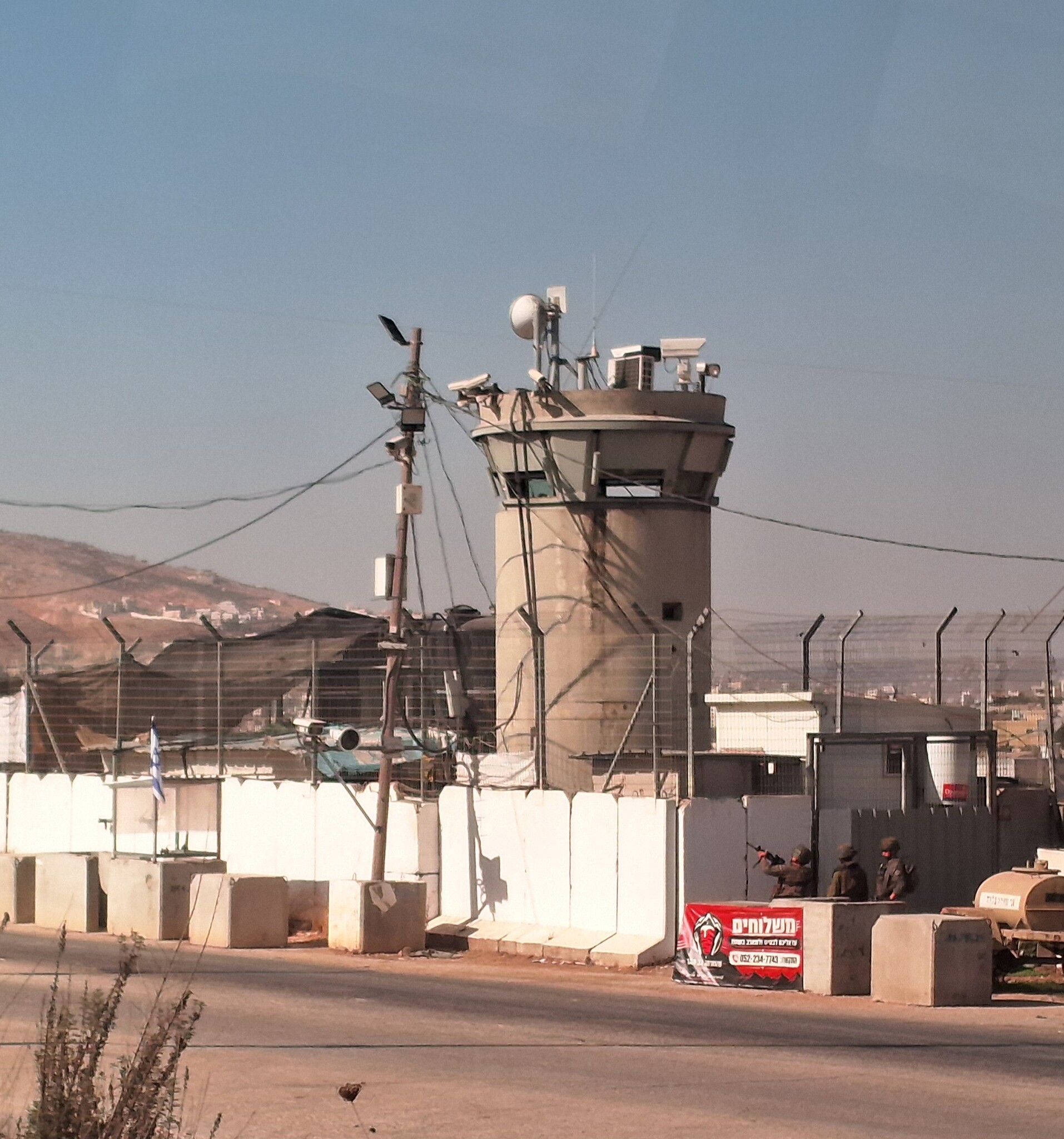
At the junction on Route 555, near Burin, in the direction of Burin and Huwara, soldiers were seen checking a vehicle. The entrance gate to Burin was closed. D. reported by phone that soldiers were moving among the houses in Burin, disturbing the residents, specifically in homes located near the Yitzhar road.
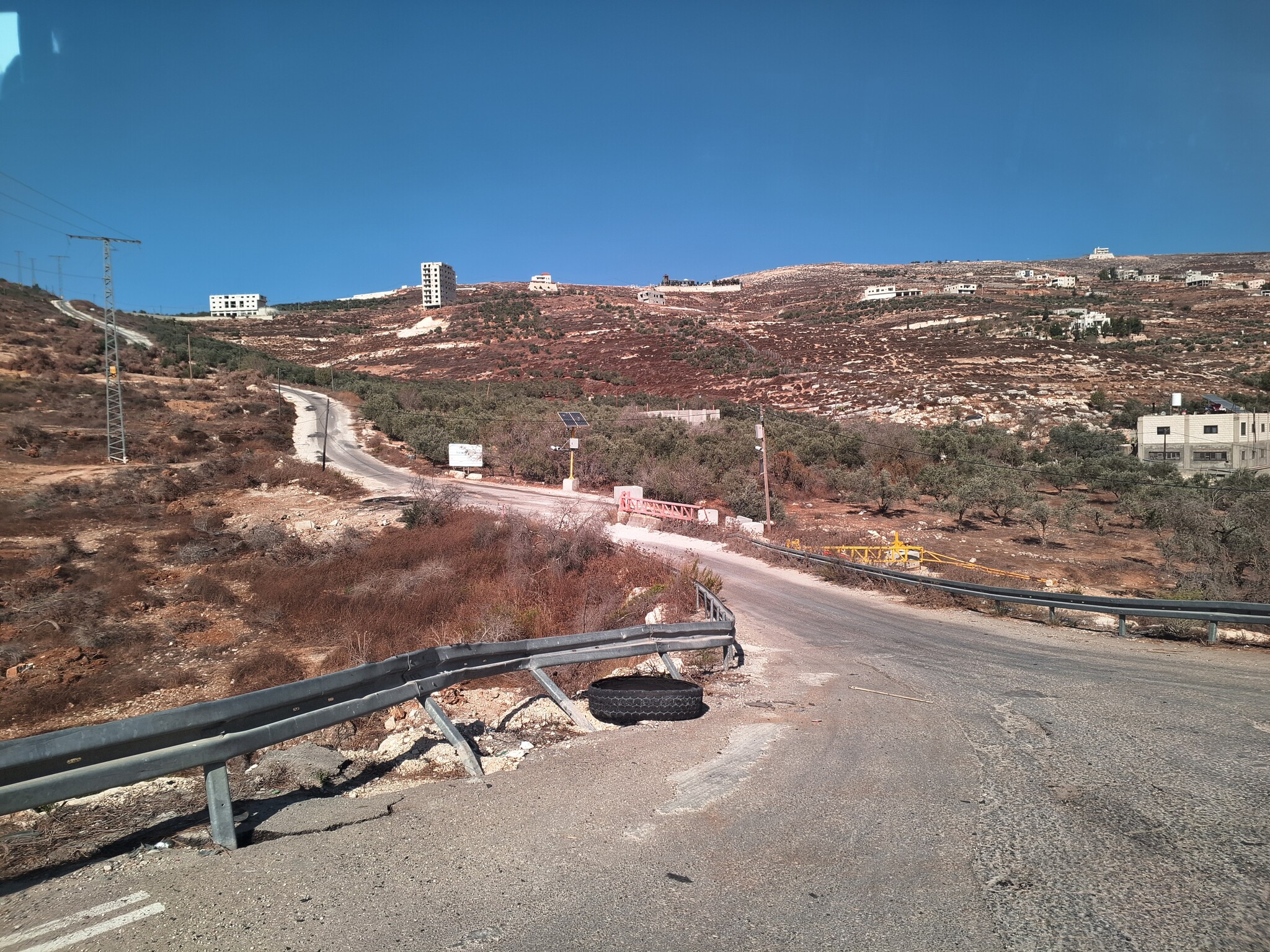
Later, we photographed the road descending from Burin toward Route 60. The red gate was open, allowing access to Route 60, while the yellow gate on the lower road, which leads to the center of Madama, was closed.
Construction work is ongoing at the Sarra junction; it appears a retaining wall is being built there. There were no soldiers at the Sarra checkpoint, and traffic was flowing in both directions.
Location Description
'Awarta
See all reports for this place-
Awarta, an internal checkpoint in the heart of the West Bank, is located east of the Hawara checkpoint, at the junction of Roads 555 (which was forbidden for Palestinian traffic in this area) and the entrance road to Nablus. It was one of the four checkpoints that surrounded Nablus until 2009. We used to watch it at Huwwara shifts because it was the only one where goods could be transferred to and from Nablus, using the back-to-back method. It was operated by the army, from 06:00 to 20:00. Until 2009.
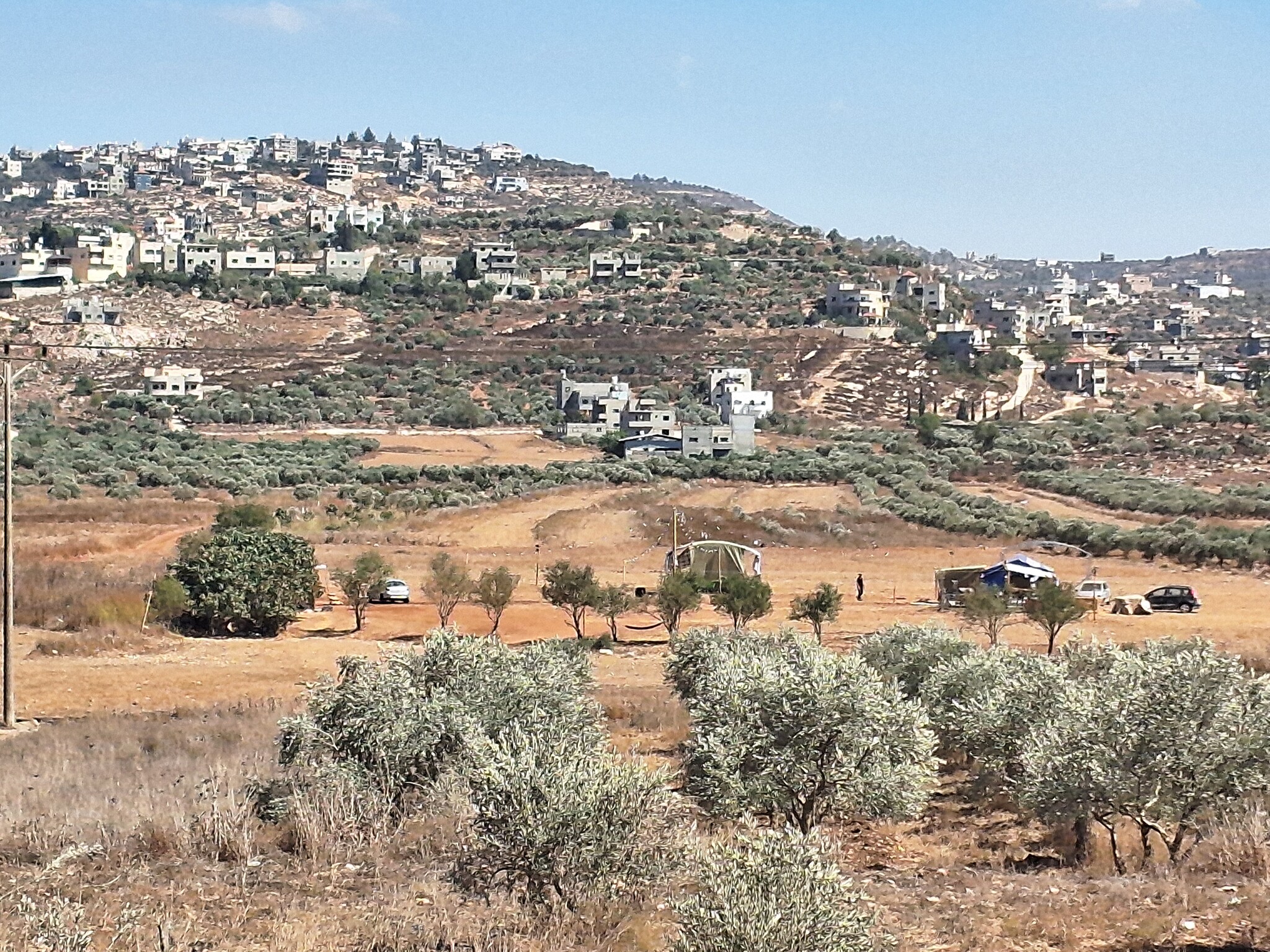 Ronit Dahan-RamatiSep-10-2026Awarta. Outpost below the town
-
Beit Furik checkpoint
See all reports for this place-
One of the three internal checkpoints that closed on the city of Nablus - Beit Furik to the east, Hawara to the south, Beit Iba to the west. The checkpoint is located at the junction of Roads 557 (an apartheid road that was forbidden for Palestinians), leading to the Itamar and Alon Morea settlements and Road 5487. The checkpoint was established in 2001 for pedestrians and vehicles; The opening hours were short and the transition was slow and very problematic.Allegedly, the checkpoint is intended to monitor the movement to and from Nablus of the residents of Beit Furik and Beit Dajan, being the only opening outside their villages. Since May 2009 the checkpoint is open 24 hours a day, the military presence is limited, vehicles can pass through it without inspections, except for random inspections. (Updated April 2010)
-
Beta
See all reports for this place-
Beta is a town of 12,000 people, high unemployment rate. Many work in Israel, others in agriculture. Neat ornamental system. Unemployment is high. Young people, even the educated, are forced to look for work in Israel. Medical services are available once a week.
Settlers from Yitzhar and Itamar harass residents frequently and prevent them from cultivating their fields: Permits are required from the DCO / DCL / DCL / DCL to go to work.
-
Burin (Yitzhar)
See all reports for this place-
Burin (Yitzhar)
This is a Palestinian village in the Nablus governorate, a little south of Nablus, on the main road passing through the West Bank. The settlements: Yitzhar and Har Bracha, settled in locations that surrounded the village, placed fences so it is cut off the main road.
There are around 4000 inhabitants. Most of them are engaged in agriculture and pasture, although many graduates of the two secondary schools continue to study at the university. Academic positions are hardly available, they find work as builderd, or leave for the Gulf countries.
The village lands were appropriated several times for the establishment of Israeli settlements and military bases, and as a result, Burin's land and water resources dwindled. lSince 1982, more than 2,000 dunams of village land have been declared "state land" and then transferred to Har Bracha settlement.
Over the past few years and more so since 2017, the villagers have been terrorized by the residents of Yitzhar and Har Bracha, the Givat Ronen outpost and others. Despite the close proximity of soldiers to an IDF base close to one of the village's schools, residents are suffering from numerous stone-throwing events, vehicle and fire arson, also reported in the press.
In 2023, the prevention of the olive harvest in the village plot was more violent than ever. Soldiers and settlers walked with drawn weapons between the houses of the village and demanded that people stop harvesting in the village itself and in the private plots outside the village. The settlers from Yitzhar and Giv'at Roned raided the olive groves and stole crops. 300 olive trees belonging to the residents of Burin, near Yitzhar, were uprooted. The loss of livelihood from the olives causes long-term economic damage to the farmers' families, bringing them to the point of starvation.
(updated for November 2023)
-
Madama
See all reports for this place-
Madama
This village is situated in the Nablus district, about 5 kilometers south of the city of Nablus, at an altitude of 517 meters above sea level. Madama was founded 400 years ago and its villagers originate from the Arabian Peninsula. It numbered 1,728 inhabitants in 2007. 62% of the village area is categorized as Area B, and 38% as Area C.
Over the years, hundreds of dunams have been robbed of the village for the purpose of building settler-colonies, army bases, and paving roads:139 dunams were sequestered to found settler-colony Yitzhar south of the village, and the land was also confiscated for paving road 60. The road and its buffer zone (75 meters on each side) lined by barbed wire fences separate the village’s farmlands to the north and the village farmers are denied access to tend them. The road also separates Madama and Burin, two villages with close neighborly ties, and now not able to access the road directly.
The settler-colony Yitzhar has become a daily threat to the village. The settler-colonists planted trees in fenced-in groves, steal crops, burn, uproot and vandalize Palestinians’ trees, and harm both holy sites and property. They also attack the Palestinian landowners in order to terrorize them and prevent them from accessing their lands.
For further information: http://vprofile.arij.org/nablus/pdfs/vprofile/Madama_vp_en.pdf
-
