
Habla
06:10 Soldiers already at the checkpoint but it’s not yet open.
06:20 The first five people exit.
07:14 The teachers’ bus comes from Habla, without any delays.
07:27 The school bus enters Habla, without any delays.
07:41 The checkpoint closes after everyone waiting on both sides went through and continued on their way.
This brief report does not show fully the reality of life under occupation. For example, to what extent the mood of those going through the checkpoint depends on the soldiers operating it. A bit of the reality of life under occupation is revealed in conversations with people like A., about how vulnerable a person is trying to preserve his land but likely to be threatened at any moment; about brief moments of hope when the Oslo Accords were signed, hope that had quickly faded. “The Oslo Accords spoke of establishing a university in Qalqilya. But what did we get? A wall and a fence.”
Habla
See all reports for this place-
Habla CP (1393)
The Habla checkpoint (1393) was established on the lands of the residents of Qalqilya, on the short road that
connected it for centuries to the nearby town of Habla. The separation barrier intersects this road twice and cut off the residents of Qalqilya from their lands in the seam zone.(between the fence and the green line).
There is a passage under Road 55 that connects Qalqilya to the sabotage This agricultural barrier is used by the farmers and nursery owners established along Road 55 from the Green Line and on both sides of the kurkar road leading to the checkpoint.
This agricultural checkpoint serves the residents of Arab a-Ramadin al-Janoubi (detached from the West Bank), who pass through it to the West Bank and back to their homes. The opening hours (3 times a day) of this agricultural checkpoint are longer than usual, about an hour (recently shortened to 45 minutes), and are coordinated with the transportation hours of a-Ramadin children studying in the occupied in the West Bank.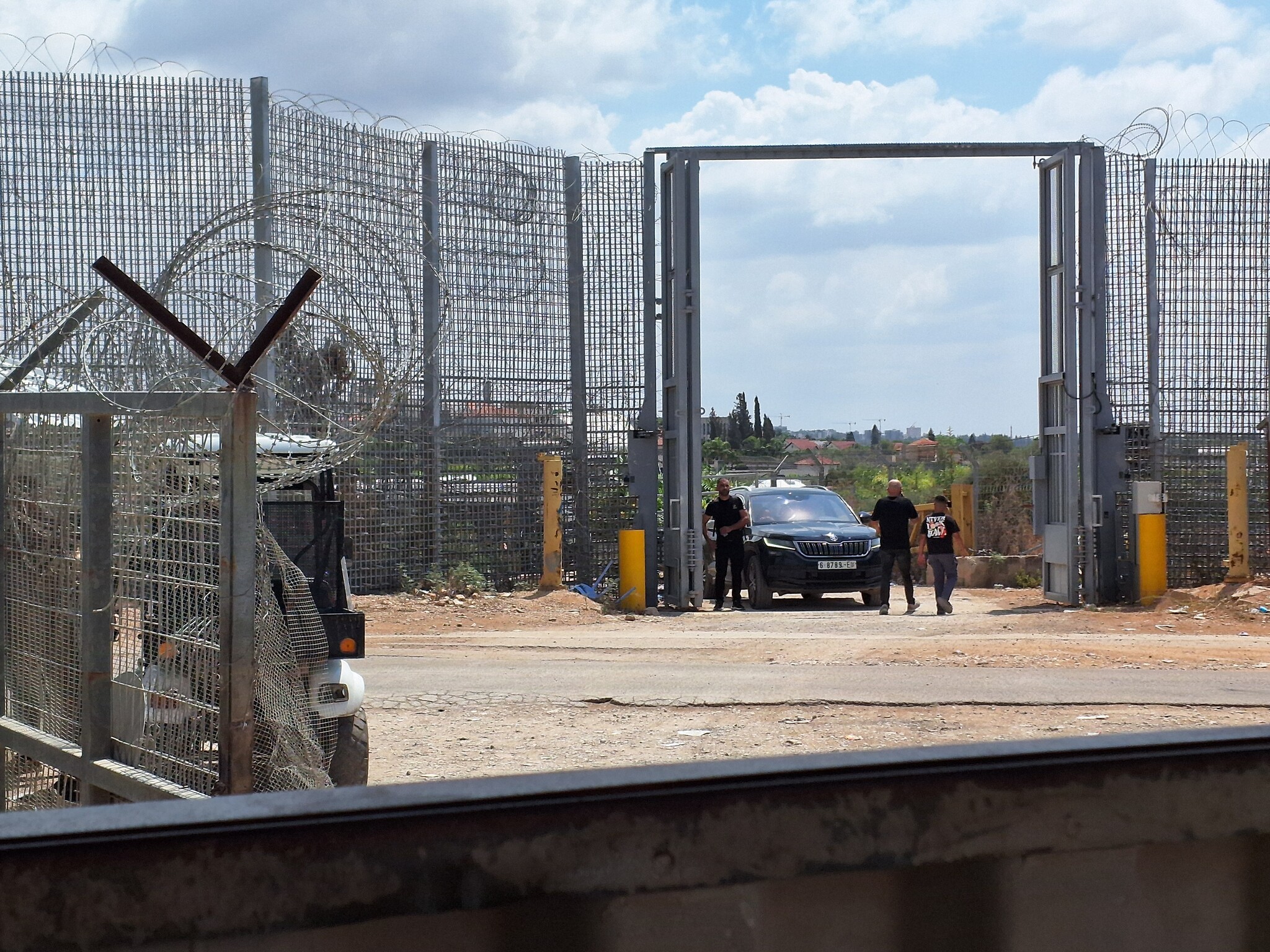 Ronit Dahan-RamatiAug-31-2026Habla. The gate is open
-
