
Habla, Huwwara, Za’tara (Tapuah), Tue 8.6.10, Morning
Habla as an allegory
The shift this morning perpetuates the whole gamut of our criticism of the evils of occupation: the suffering of the inhabitants, the damage inflicted by the agricultural gates, the insufferable bureaucracy and more that allthose the repeated failures in the conduct of the army.
06:40 We arrived at a shut gate and no soldier was to be seen around. Behind the Palestinian gate many people and means of transportation crowded together (from donkeys and horses hitched to carts, to bicycles and to motorized vehicles).
06:50 The soldiers arrived in a hummer and positioned themselves at the guard posts, near the Israeli side. When asked why they didn't open we succeeded, after some dispute, to get an explanation: somewhere at another gate (they didn't remember its name nor its number) there was a delay and they were asked to delay the opening here too (Later we found out that CP 109 was opened late this morning too).
At 07:00 the Hummer arrived on another round with the girl soldiers who manned the checking building. We demanded that things be sped up. We contacted the DCO for the first time.
The CP was opened at 07:05 instead of 06:45
From there on the passage was conducted in the most inadequate and frightfully slow manner – instead of speeding the process up in view of the delay.
Retroactively it transpired that since today there is a new unit posted here (armoured unit) but no overlapping unit, guide or DCO representative didn't accompany then. It was clear that they still don't understand their role and the meaning of the delay for the farmers and the other workers. Moreover, they don't understand the classification of the people passing (mostly Habla inhabitants who pass here every day, farmers, authorized workers) and especially they don't understand that working people, especially farmers, cannot begin their working day at 08:00 or 09:00, certainly not in summer. Most of the time they are standing in the middle between the gates and completely ignore those waiting at the Israeli gate.
07:25 People who had been waiting for a long time on both sides and were dried up from the sun, began being nervous and to quarrel. At the queue a big brouhaha began, despite the effort to settle it by distributing number. Out of fear that the brawl should turn into a major even, the soldiers closed for a few minutes the middle gate (the one in front of the path) and stopped allowing people to enter for checking. When the excitement subsided they reopened the gate. We again contacted the DCO and demanded that a representative be sent. We were told by R. that the details had been transmitted. As there was no improvement in the passage, and no authorized persons who were waiting at the Israeli side were allowed to enter, we contacted Wohl W (third connection) and asked him to come himself. He said the things were complicated this morning at the CP 109, but that he would try to come.
07:45 We passed the information on to Tami and asked her to contact whoever she thought should be contacted (fourth communication). It transpired that the information wasn't really passed on to the operations officer.
07:55 The people on the Israeli side (altogether 6) are still waiting, over half and hour. The soldiers don't even look at them, although there are intervals between one group and the other. When we asked why, the CP commander answered: "Let them come in half an hour"! (with spoilt milk? Equipment without which work is held up? Etc.) They are no doubt transparent. What makes them want to go to work and to return home? It is difficult to express in words the level of existential humiliation involved in this standing of workmen at the CP on their land. In expectation of the mercy of those responsible for the management of the CP (one doesn’t have to be rude. The mere inadequatebehaviour is enough).
08:15 Wohl arrives and tries to move and dissolve the congestion from both directions. The soldiers stick to the regulations of the operations room, and this doesn't exactly work. He also lets us understand that the is a manpower shortage. 4 of those waiting on the Israeli side finally pass, after 50 minutes the other two after one hour!!!
09:00 We leave not before Wohl promises that they won't shut the CP until everybody will have passed. In a later conversation he tells us that the CP remained open for another 20 minutes (approximately until 09:30) and that the management of the CP (especially after the closure of the gate at Ras Atiya) and the opening hours,and intensively discussed in the last days.
We are of the opinion that the inhabitants who are confined in the juncture area are intitled to a fair quality of life. This agricultural gate should be opened not later than 06:00, surely in summer, and should be kept open continually until the evening, and holders of authorization should not be forced to pass the via dolorosa again and again every day.Also, the mishap this morning is not the fault of the new soldiers but of those who positioned them on their first or second day without accompaniment and instruction.
09:30 Huwwara – the traffice flows from south to Nablus. At the opposite direction the checking is haphazard without special delays.
09:45 We made a detour through Awarta and Hudila. We saw many flags of the popular front for the liberation of Palestine, but there were not special events or obstructions.
Tapuah Junction – Zaatara – empty. The traffic flows.
Zeita Jam'in – is indeed open, and cars come out without any obstruction. We to opened our eyes wide and closed our shift with some consolation.
Habla
See all reports for this place-
Habla CP (1393)
The Habla checkpoint (1393) was established on the lands of the residents of Qalqilya, on the short road that
connected it for centuries to the nearby town of Habla. The separation barrier intersects this road twice and cut off the residents of Qalqilya from their lands in the seam zone.(between the fence and the green line).
There is a passage under Road 55 that connects Qalqilya to the sabotage This agricultural barrier is used by the farmers and nursery owners established along Road 55 from the Green Line and on both sides of the kurkar road leading to the checkpoint.
This agricultural checkpoint serves the residents of Arab a-Ramadin al-Janoubi (detached from the West Bank), who pass through it to the West Bank and back to their homes. The opening hours (3 times a day) of this agricultural checkpoint are longer than usual, about an hour (recently shortened to 45 minutes), and are coordinated with the transportation hours of a-Ramadin children studying in the occupied in the West Bank.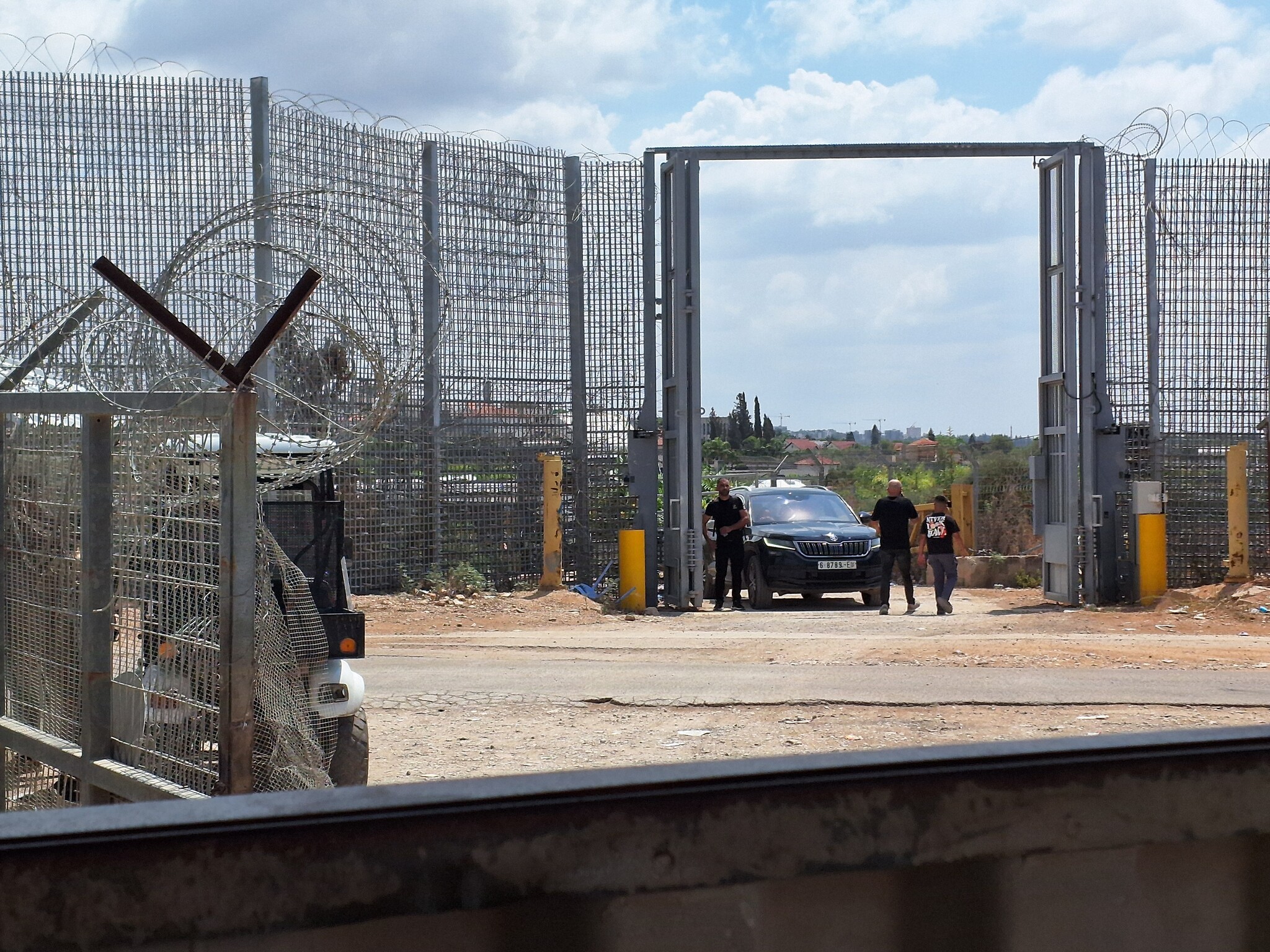 Ronit Dahan-RamatiAug-31-2026Habla. The gate is open
-
Huwwara
See all reports for this place-
The Huwwara checkpoint is an internal checkpoint south of the city of Nablus, at the intersection of Roads 60 and 5077 (between the settlements of Bracha and Itamar). This checkpoint was one of the four permanent checkpoints that closed on Nablus (Beit Furik and Awarta checkpoints to the east and the Beit Iba checkpoint to the west). It was a pedestrian-only barrier. As MachsomWatch volunteers, we watched therre since 2001 two shifts a day - morning and noon, the thousands of Palestinians leaving Nablus and waiting for hours in queues to reach anywhere else in the West Bank, from the other side of the checkpoint the destination could only be reached by public transport. In early June 2009, as part of the easing of Palestinian traffic in the West Bank, the checkpoint was opened to vehicular traffic. The passage was free, with occasional military presence in the guard tower. Also, there were vehicle inspections from time to time. Since the massacre on 7.10.2023, the checkpoint has been closed to Palestinians.
On February 26, 2023, about 400 settlers attacked the town's residents for 5 hours and set fire to property, such as houses and cars. Disturbances occurred in response to a shooting of two Jewish residents of Har Bracha by a Palestinian Terrorist. The soldiers stationed in the town did not prevent the arson and rescued Palestinian families from their homes only after they were set on fire. No one was punished and Finance Minister Smotrich stated that "the State of Israel should wipe out Hawara." Left and center organizations organized solidarity demonstrations and support actions for the residents of Hawara.Hawara continued to be in the headlines in all the months that followed: more pogroms by the settlers, attacks by Palestinians and a massive presence of the army in the town. It amounted to a de facto curfew of commerce and life in the center of the city. On October 5, 2023, MK Zvi established a Sukkah in the center of Hawara and hundreds of settlers backed the army blocked the main road and held prayers in the heart of the town all night and the next day. On Saturday, October 7, 23 The "Swords of Iron" war began with an attack by Hamas on settlements surrounding Gaza in the face of a poor presence of the IDF. Much criticism has been made of the withdrawal of military forces from the area surrounding Gaza and their placement in the West Bank, and in the Hawara and Samaria region in particular, as a shield for the settlers who were taking over and rioting.
On November 12, 2023, the first section of the Hawara bypass road intended for Israeli traffic only was opened. In this way, the settlers can bypass the road that goes through the center of Hawara, which is the main artery for traffic from the Nablus area to Ramallah and the south of the West Bank. For the construction of the road, the Civil Administration expropriated 406 dunams of private land belonging to Palestinians from the nearby villages. The settlers are not satisfied with this at the moment, and demand to also travel through Hawara itself in order to demonstrate presence and control.(updated November 2023)
.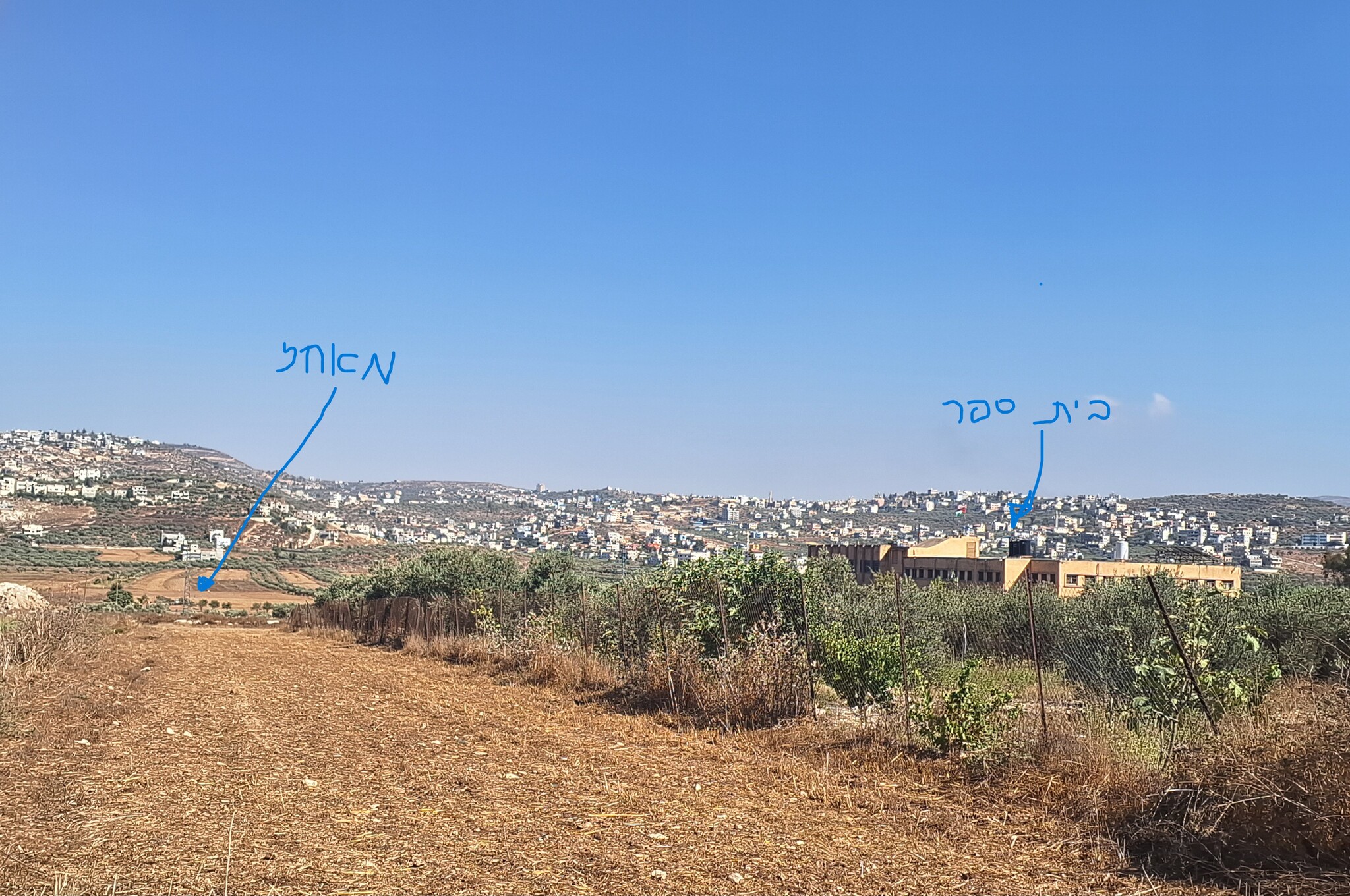 Ronit Dahan-RamatiAug-24-2026Huwara: The school on the outskirts of town and an outpost hidden among the trees
-
Za'tara (Tapuah)
See all reports for this place-
Za'tara (Tapuah) Za'tara is an internal checkpoint in the heart of the West Bank, at the intersection of Road 60 and Road 505 (Trans-Samaria), east of the Tapuah settlement. This checkpoint is the "border" marked by the IDF between the north and south of the West Bank, in accordance with the policy of separation between the two parts of the West Bank that has been in place since December 2005. At the Za'tara checkpoint, there are separate routes for Israelis and Palestinians. In the route for Israelis, there are no inspections and the route for Palestinians inspects. The queue lengthens and shortens suits. The checkpoint is open 24 hours a day. The checkpoint is partially staffed and the people who pass through it are checked at random.
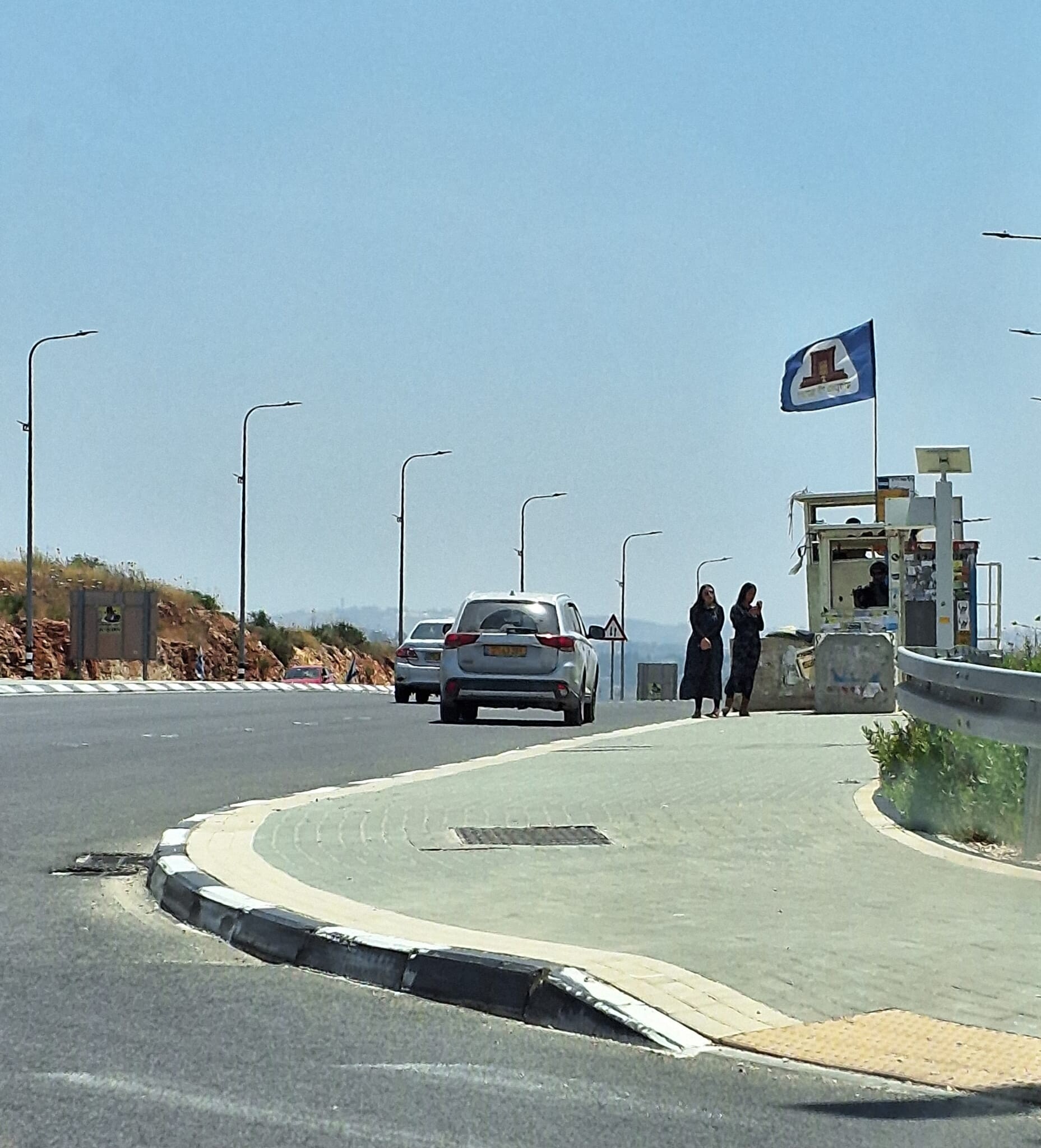 Ronit Dahan-RamatiJun-9-2026Za'atara (Tapuach Junction). The Temple Flag Above a Station
-
