
Habla, Nabi Elias: Walls, Violence, and Lost Hope
Shoshi collected lots of clothes and household utensils for Z.. Rachel Afek reported that the family is hungry, so we collected money from our generous members.
The exit from Azoun to Nabi Elias is open and closed, depending on the army that morning. One cannot fix a meeting with Z. and it is quite stressful, but Wednesday morning Z. called and told us the gate was open!
He and we so were relieved…
We load the vehicle and take off. Rachel meets us on the way and gives us the medication she bought for him. This happens every month.
Reminder: Z. is an expert tile-layer. Several years ago, Israeli soldiers beat up his whole body, including his head, and his nervous system has been severely damaged. His hands shake and he cannot work. Tzviya took it upon herself to help him, making the contact with a neurologist at the Hadassah Hospital in Jerusalem. He was operated on, and for a while the shaking stopped and his situation improved. But not for long. Now the shaking is back and there is no chance to get to a doctor, nor is there any work.
Z. has 4 adult sons. Sometimes they find a bit of work in town and receive 50 shekels a day, but usually they are out of work. Z. opened a second-hand shop run by his wife. In the past, several members would bring them clothes to sell. Now the only ones arriving regularly are Rachel and Shoshi.
We meet Z. at the entrance to Nabi Elias. We don’t actually enter this nice town, nor to Azoun, as we are warned not to do so in these times. Where are the days we used to walk around free in Nabi Elias, bringing participants in our Saturday tours for a meal, where we got to know Arais – that flatbread filled with grilled meat and all this deliciousness grilled again.
We can only miss it now, and be angry.
Z. and S., his wife, are very thin. He tells us that 8 months ago soldiers came to their home at night, got their eldest son out of bed and took him to jail around Beer Sheva, without any explanation. They hired a lawyer who saw him in jail for a few minutes and cost them 500 shekels. Since then, they have had no news about their son’s fate.
From there we drove to O.’s nursery. He has no workers, for the residents do not receive permits to enter the seamline zone and work there. The nursery is no longer as good-looking as it used to be, but still offers a nice variety of plants and the prices are good.
O. says the soldiers have become more violent and rude. They swear and beat him up from time to time. A month ago, they beat him cruelly and harmed his right hand. They claimed he was hiding illegal aliens, which is total fiction.
The Habla gate was opened at 1 p.m. for half an hour. We see the fence in the background for the first time.
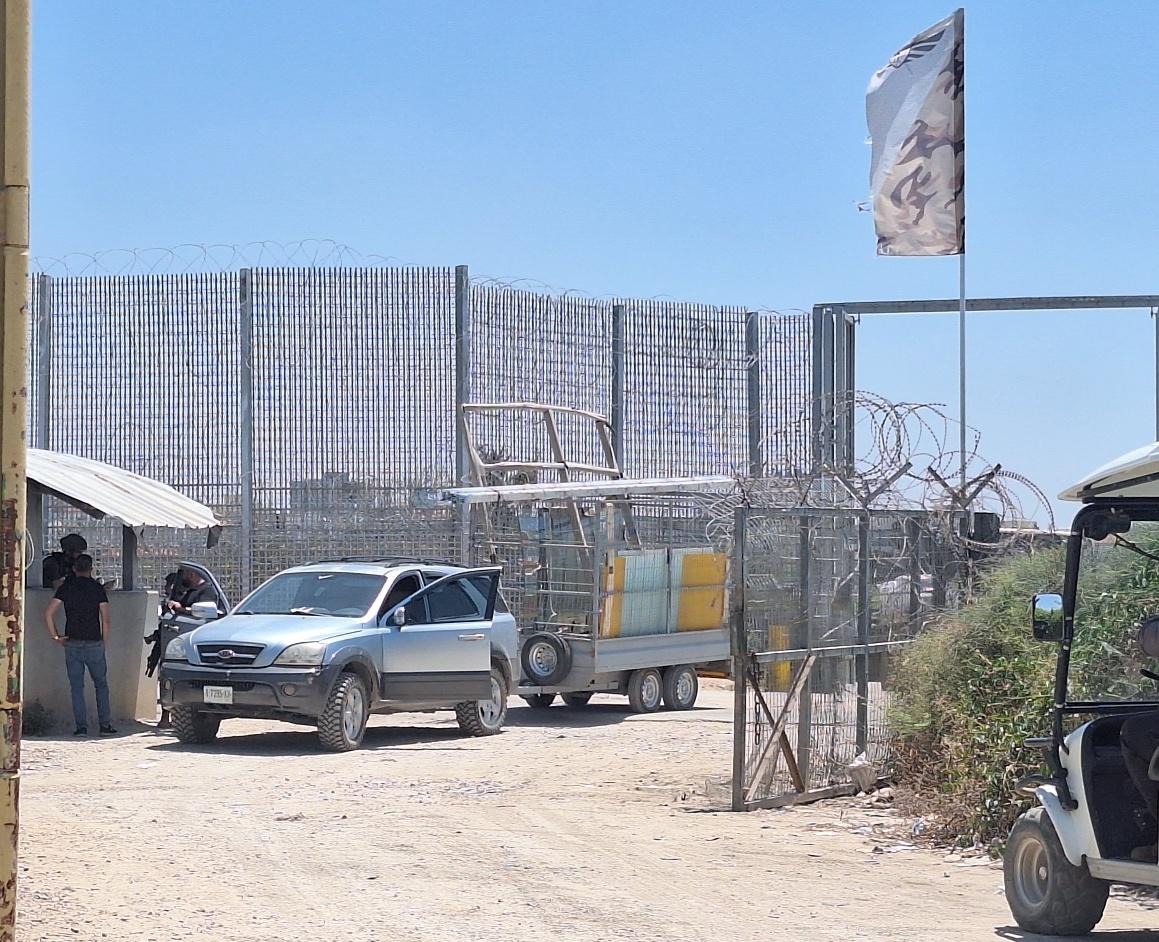
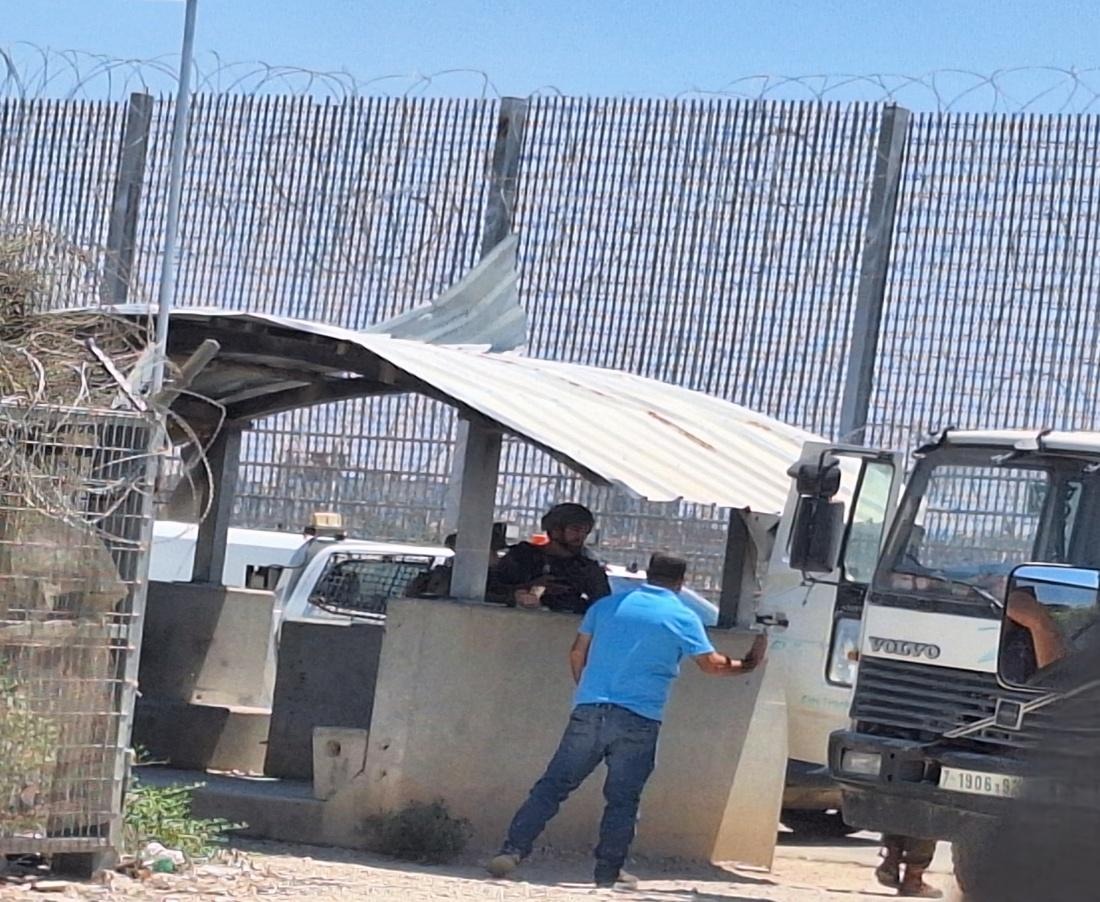
O., once the chief of the Habla Gate, has become a target of the soldiers’ harassment. He is angry, no longer speaks of shared life and possible peace. He says all his Israeli customers are right-wingers and therefore, in his view, the elections will not change a thing.
His two daughters study at the university and come home every day, their son studies in a university near Jenin, and lives in a small village there.
I think about what their future holds once they finish their studies. If there is no basic change in the area, there does not seem to be such a future.
This is sad, frustrating and makes us so angry.
Location Description
A-Nabi Elias
See all reports for this place-
A-Nabi Elias this is a Palestinian village in the northern West Bank, east of Qalqilia on Road 55, north-east of Alfei Menashe colony and west of Karnei Shomron colony and the Palestinian city of Nablus. As of 2016, the village was populated by 1,458 inhabitants.
Near the village is a maqam (holy site memorializing a sanctified person) - the prophet Elisha. Until 2021 Road 55 crossed the village. Then a bypass road was paved through olive groves that were sequestered from the villagers. Consequently, the farmers were left with small olive groves that they could not access nor cultivate. Inhabitants protested against the road for weeks, supported by peace activists, but nothing helped and the road is now a given fact.
The village's main street had been a shopping center for all residents, including colonists. We even saw a Kashrut (kosher food) inspector in a butcher shop close to the falafel stand… The bypass road, according to tradesmen, has impacted their businesses and clients, while others claim that there are customers now for parking has become easier.
Alfei Menashe and Tzofim colonies nibble at the village lands from the north and south and get closer to it all the time. Colonists of Alfei Menashe have outdone themselves, sending their surplus sewage from the oxygenation pools toward a-Nabi Elias land, even reaching the houses.
The villagers are known as seekers of peace. For years there was no hostility towards Israelis. On the contrary, we were always welcomed warmly and stopped there to enjoy their delicious, inexpensive falafel.
-
Habla CP (1393)
See all reports for this place-
Habla CP (1393)
The Habla checkpoint (1393) was established on the lands of the residents of Qalqilya, on the short road that
connected it for centuries to the nearby town of Habla. The separation barrier intersects this road twice and cut off the residents of Qalqilya from their lands in the seam zone.(between the fence and the green line).
There is a passage under Road 55 that connects Qalqilya to the sabotage This agricultural barrier is used by the farmers and nursery owners established along Road 55 from the Green Line and on both sides of the kurkar road leading to the checkpoint.
This agricultural checkpoint serves the residents of Arab a-Ramadin al-Janoubi (detached from the West Bank), who pass through it to the West Bank and back to their homes. The opening hours (3 times a day) of this agricultural checkpoint are longer than usual, about an hour (recently shortened to 45 minutes), and are coordinated with the transportation hours of a-Ramadin children studying in the occupied in the West Bank.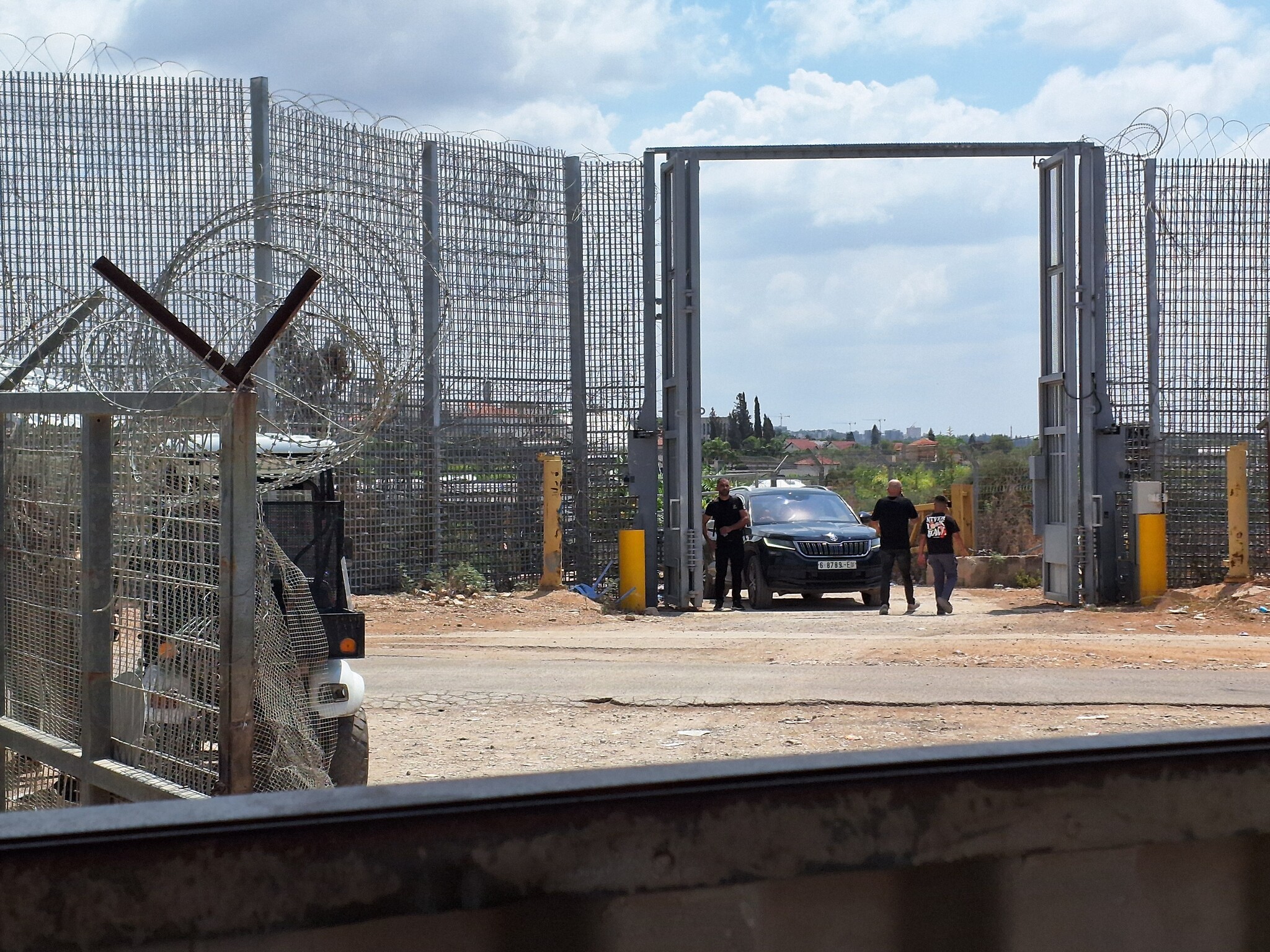 Ronit Dahan-RamatiAug-31-2026Habla. The gate is open
-
