
Habla, Visits to Villages, Za’tara (Tapuah), Tue 17.9.13, Morning
Jalud, Za'atara, Nebi Elias, Habla
Tuesday Shift, noon, 17.9.2013
Participating: Shoshi A. (took photographs) Karin L. (reported)
We drove to see the results of the harassement of the settlers at Jalud and Krayot.
Nadim suggested we drive to the entrance to Kablan and find out there how to continue.
10:40 – Samaria Gate. The passage was free in both directions.
Up to the Za'atara junction the driving was slow owing to the many heavy trucks with Israeli and also Palestinian number plates, indicating a construction boom.
11:00 Za'atra – The traffic in both directions flows freely. One doesn't see military vehicles on the road sides. We continue on road 505 in the direction of the Jordan Valley, turn immediately right in the direction of Yatma and continue to Kablan. On the left side of the road there are some new and imposing buildings. We ask for the way to Krayot. A courteous driver accompanies us to the junctions from which the way leads to Jalud and the Krayot.
Along the road there are many olive trees, few olives and only isolated people who harvest the olives.
A short distance from Talpiyot we stopped near a few cars to get directions and joined for a few minutes a family which was busy cleaning the dark olives from branches and leaves. One of the young men who talked only Arabic volunteered to accompany us and we continued to Jalud which, according to him, is more beautiful than Krayot. He consulted on the phone with a Hebrew speaking friend who heard our request and directed us to the impressive school in the village.
The school director, speaking English, apologized that he was quite busy as the children were getting vaccinations. When he was less busy he told us that he was not present at the settlers’ attack on the 9/10 at 11:30, as he was in hospital, but the teachers told him exactly what happened. The settlers assembled around the school (which is surrounded by a wall, and the big iron gate was locked) threw stones, smashed the windowpanes of the teachers' cars, lit a fire near the trees which surround the schoolyard, and those were burnt down in part, and also at the olive orchard near the school. The teachers called for help, a security officer from the nearby settlement arrived. He could photograph the attackers and identify them but he didn't do so and disappeared a few minutes later.
There are about 450 inhabitants in the village. In the well tended school there are 120 students from grade one to grade 11. The 12 graders learn at Krayot, but next year they too will have a grade 12 of their own. About 30 young men from the village study at the university. Most of the village inhabitants are farmers, all have olive orchards, some have unirrigated crops. They cannot diversify the crops or build greenhouses as they have no water. They don't receive water from Mekorot, but from the Palestinian Authority. The water arrives by pipe to one spot in the village, as it also does in Krayot, and there the inhabitants buy the water and transfer it to their homes. In each home the is a "well" which they fill with the water they bought. In the rainy season they make do with rain water. While writing this I cannot believe I heard it nor that it was told indifferently, as something natural.
We went up to the roof to see the burnt trees, and saw on the roof remnants of stones that were thrown on it.
Our companion had to hurry back, so we gave up the visit to Krayot in order to drive him to his village.
We returned through Za'atara. The traffic flowed. Then through Immanuel to road no. 55.
At Sha'ar Eliyahu the traffic was sparse, four vehicle were being checked at the installation, we saw no dogs.
13:40 HABLA
Only one of the great gates was open. The big trucks which entered Habla with oranges and tangerines and the outgoing trucks with saplings and olive trees manoeuvred around each other. The soldiers said that the gate was open from 13:15 to 14:15 but that changes were possible, as well as at the agricultural gates when the olive picking season would finish.
Habla
See all reports for this place-
Habla CP (1393)
The Habla checkpoint (1393) was established on the lands of the residents of Qalqilya, on the short road that
connected it for centuries to the nearby town of Habla. The separation barrier intersects this road twice and cut off the residents of Qalqilya from their lands in the seam zone.(between the fence and the green line).
There is a passage under Road 55 that connects Qalqilya to the sabotage This agricultural barrier is used by the farmers and nursery owners established along Road 55 from the Green Line and on both sides of the kurkar road leading to the checkpoint.
This agricultural checkpoint serves the residents of Arab a-Ramadin al-Janoubi (detached from the West Bank), who pass through it to the West Bank and back to their homes. The opening hours (3 times a day) of this agricultural checkpoint are longer than usual, about an hour (recently shortened to 45 minutes), and are coordinated with the transportation hours of a-Ramadin children studying in the occupied in the West Bank.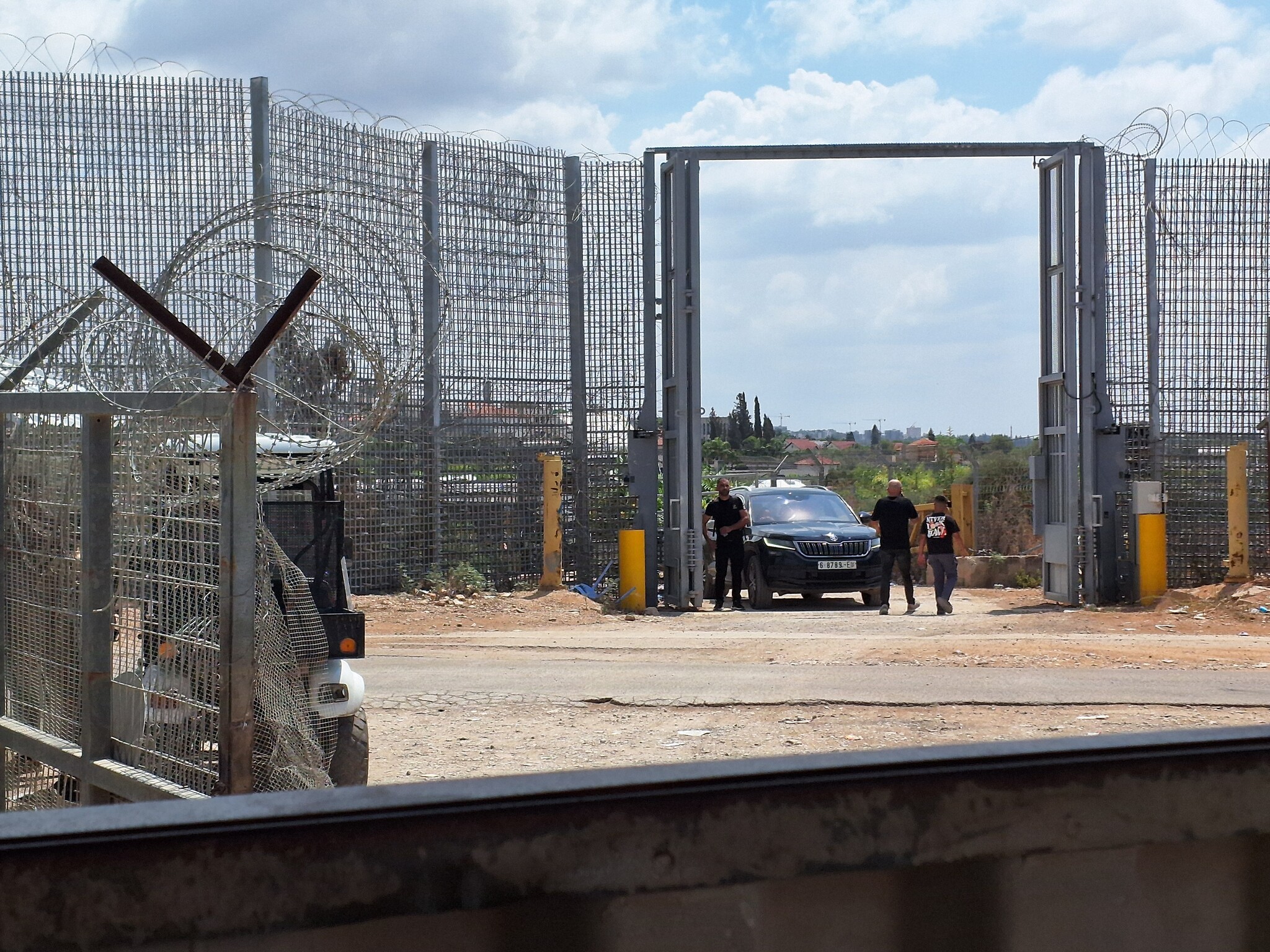 Ronit Dahan-RamatiAug-31-2026Habla. The gate is open
-
Za'tara (Tapuah)
See all reports for this place-
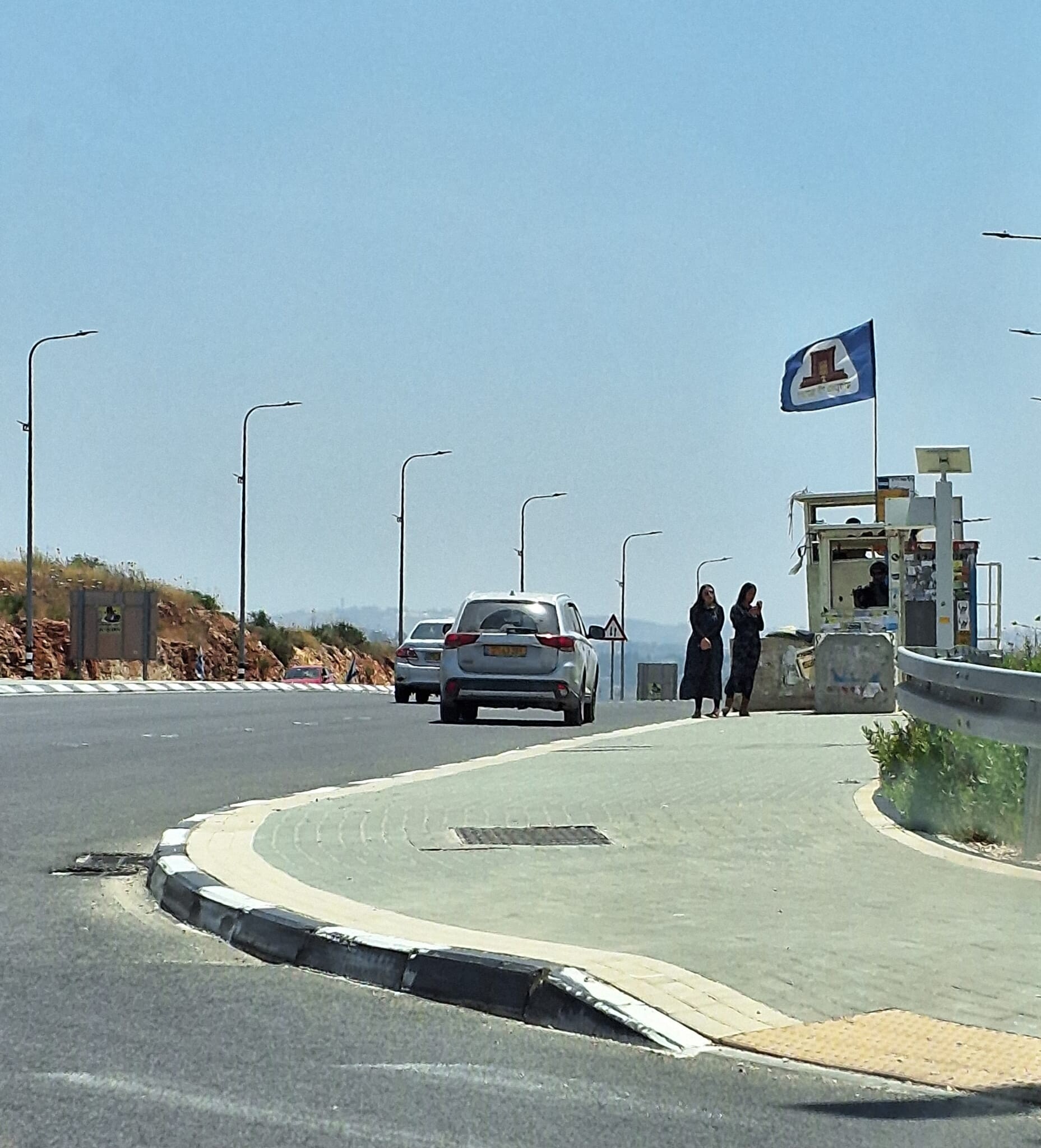
Za'tara (Tapuah) Za'tara is an internal checkpoint in the heart of the West Bank, at the intersection of Road 60 and Road 505 (Trans-Samaria), east of the Tapuah settlement. This checkpoint is the "border" marked by the IDF between the north and south of the West Bank, in accordance with the policy of separation between the two parts of the West Bank that has been in place since December 2005. At the Za'tara checkpoint, there are separate routes for Israelis and Palestinians. In the route for Israelis, there are no inspections and the route for Palestinians inspects. The queue lengthens and shortens suits. The checkpoint is open 24 hours a day. The checkpoint is partially staffed and the people who pass through it are checked at random.
 Ronit Dahan-RamatiJun-9-2026Za'atara (Tapuach Junction). The Temple Flag Above a Station
-
