
Hakvasim (sheep) Junction, Hebron, Sansana (Meitar Crossing), South Hebron Hills
Today two guests accompanied me, Sue and Polly, lecturers from York University in Britain.
It was important to me that they meet people who’ll tell them about the occupation, and not only that they see it.
We began at the Meitar checkpoint – it’s hard to view the architecture of evil.
It neither looks like nor recalls any other border crossing in the world between two countries. It reminded Polly of a cage for animals. We met the prisoners’ relatives before they left to visit prisons in Israel. Four buses left today. Small children and mothers.
We drove to the outskirts of Dahariyya to visit the family the walls of whose home in Dahariyya had been vandalized by “Price Tag” – the Jewish terror organization that sets cars on fire and sprays graffiti on walls. We spoke with family members who wanted to learn the results of the trial of those who burned the cars. One of them felt wonderful about his court testimony in Beersheba – a taste of freedom (we drove him there to testify). I didn’t know what to tell him. While we talked, Khalil Namora arrived who told us that the day before yesterday, at three in the morning, the army entered his home and upended it (the family had already cleaned some of it up):
They were looking for the 48-year-old father, claiming he’d thrown rocks. They caught him; he’s now jailed at the Ofer base without trial. The trial that had been scheduled for Thursday was postponed. The entire family surrounded us. The young children didn’t believe Jewish women would arrive unarmed – some were actually afraid of us. The army simply doesn’t understand what happens to people as a result of these night raids, and how much irreversible damage they cause.
We asked Khalil whether his father is a member of Hamas…no, of course not. And I don’t understand why they jail a 48 year old man without a trial? Polly and Sue didn’t understand either.
We went to the grocery in Dura al-Fawwar and spoke to the people who were there. They also told about raids of homes at all hours of the night and arrests of 11 and 12 year old children. How much more can you pressure us..you’re sentencing yourselves to death. Your soldiers must kill ten year olds. The despair and anger are obvious everywhere.
Someone goes to Hebron on errands and finds himself waiting at least three hours or more each day at a checkpoint? Don’t you think we’re human beings?
I’m already accustomed to these stories. But to hear them with new people is jolting.
The gate at Kvasim junction is closed and traffic from Yatta to Hebron must find alternate routes. A journey that usually takes ten minutes will now take two hours.
We entered Hebron via Giv’at Gal to visit the Tamimi family. We discovered that yesterday the IDF closed the usuall route from this neighborhood to the rest of Hebron. I asked Tamimi how they get to Hebron. Via Kvasim junction. He doesn’t yet know it’s closed.
That’s how you maintain control – by hiding information and arbitrary closures from one day to the next.
Polly and Sue talking with Tamimi:
The new closure:
We concluded the tour with the Tamimis because Polly didn’t feel well; we returned to Beersheba.
Hakvasim (sheep) Junction
See all reports for this place-
One of the roadblocks (earthworks, rocks, concrete blocks or iron gates) that prevent transit of vehicles to Route 60 in the southern West Bank and block the southern entrance to Hebron. A manned pillbox supervises the place.
-
Hebron
See all reports for this place-
According to Wye Plantation Accords (1997), Hebron is divided in two: H1 is under Palestinian Authority control, H2 is under Israeli control. In Hebron there are 170,000 Palestinian citizens, 60,000 of them in H2. Between the two areas are permanent checkpoints, manned at all hours, preventing Palestinian movement between them and controlling passage of permit holders such as teachers and schoolchildren. Some 800 Jews live in Avraham Avinu Quarter and Tel Rumeida, on Givat HaAvot and in the wholesale market.
Checkpoints observed in H2:
- Bet Hameriva CP- manned with a pillbox
- Kapisha quarter CP (the northern side of Zion axis) - manned with a pillbox
- The 160 turn CP (the southern side of Zion axis) - manned with a pillbox
- Avraham Avinu quarter - watch station
- The pharmacy CP - checking inside a caravan with a magnometer
- Tarpat (1929) CP - checking inside a caravan with a magnometer
- Tel Rumeida CP - guarding station
- Beit Hadassah CP - guarding station
Three checkpoints around the Tomb of the Patriarchs
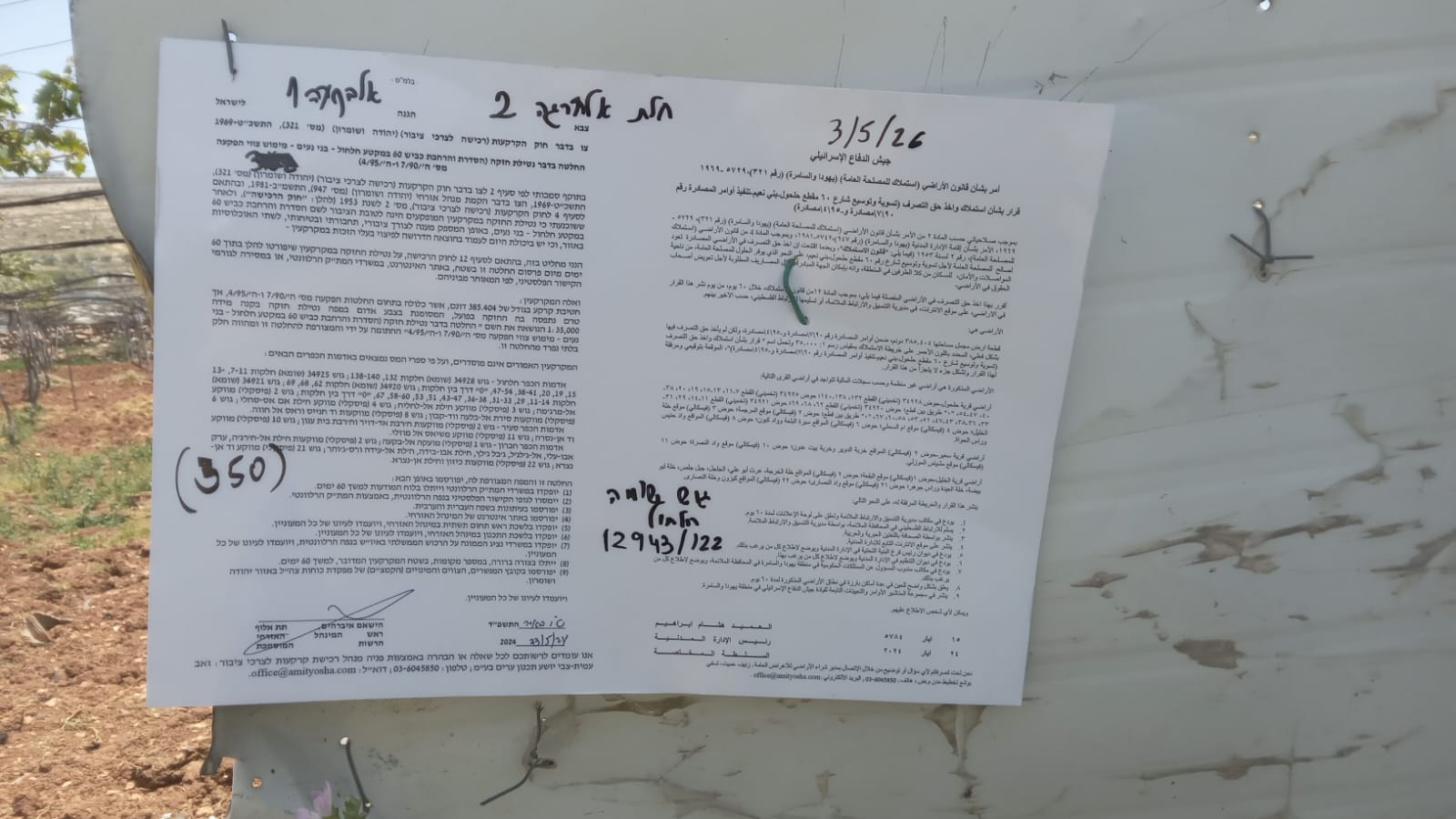 Muhammad D.May-13-2026Hebron - Request for compensation for land expropriation
-
Meitar checkpoint / Sansana
See all reports for this place-
Meitar Checkpoint / Sansana The checkpoint is located on the Green Line and serves as a border crossing between Israel and the West Bank. It is managed by the Border Crossing Authority of the Defense Ministry. It is comprised of sections for the transfer of goods as well as a vehicle checkpoint (intended for holders of blue identity cards, foreign nationals or diplomats and international organizations). Passing of Palestinians is prohibited, except for those with entry permits to Israel. Palestinians are permitted to cross on foot only. The crossing has a DCO / DCL / DCL / DCL (District Coordination Office), a customs unit, supervision, and a police unit. In the last year, a breach has been opened in the fence, not far from the crossing. This breach is known to all, including the army. There does not appear to be any interest in blocking it, probably as it permits needed Palestinian workers without the bureaucratic permits to get to work in Israel. Food stalls and a parking area economy have been created, but incidents of violent abuse by border police have also been recorded. Updated April 2022
-
South Hebron Hills
See all reports for this place-
South Hebron Hills
South Hebron Hills is a large area in the West Bank's southern part.
Yatta is a major city in this area: right in the border zone between the fertile region of Hebron and its surroundings and the desert of the Hebron Hills. Yatta has about 64,000 inhabitants.
The surrounding villages are called Masafer Yatta (Yatta's daughter villages). Their inhabitants subsist on livestock and agriculture. Agriculture is possible only in small plots, especially near streams. Most of the area consists of rocky terraces.Since the beginning of the 1980s, many settlements have been established on the agricultural land cultivated by the Palestinians in the South Hebron Hills region: Carmel, Maon, Susia, Masadot Yehuda, Othniel, and more. Since the settlements were established and Palestinians cultivation areas have been reduced; the residents of the South Hebron Hills have been suffering from harassment by the settlers. Attempts to evict and demolish houses have continued, along with withholding water and electricity. The military and police usually refrain from intervening in violent incidents between settlers and Palestinians do not enforce the law when it comes to the investigation of extensive violent Jewish settlers. The harassment in the South Hebron Hills includes attacking and attempting to burn residential tents, harassing dogs, harming herds, and preventing access to pastures.
There are several checkpoints in the South Hebron Hills, on Routes 317 and 60. In most of them, no military presence is apparent, but rather an array of pillboxes monitor the villages. Roadblocks are frequently set up according to the settlers and the army's needs. These are located at the Zif Junction, the Dura-al Fawwar crossing, and the Sheep Junction at the southern entrance to Hebron.
Updated April 2022
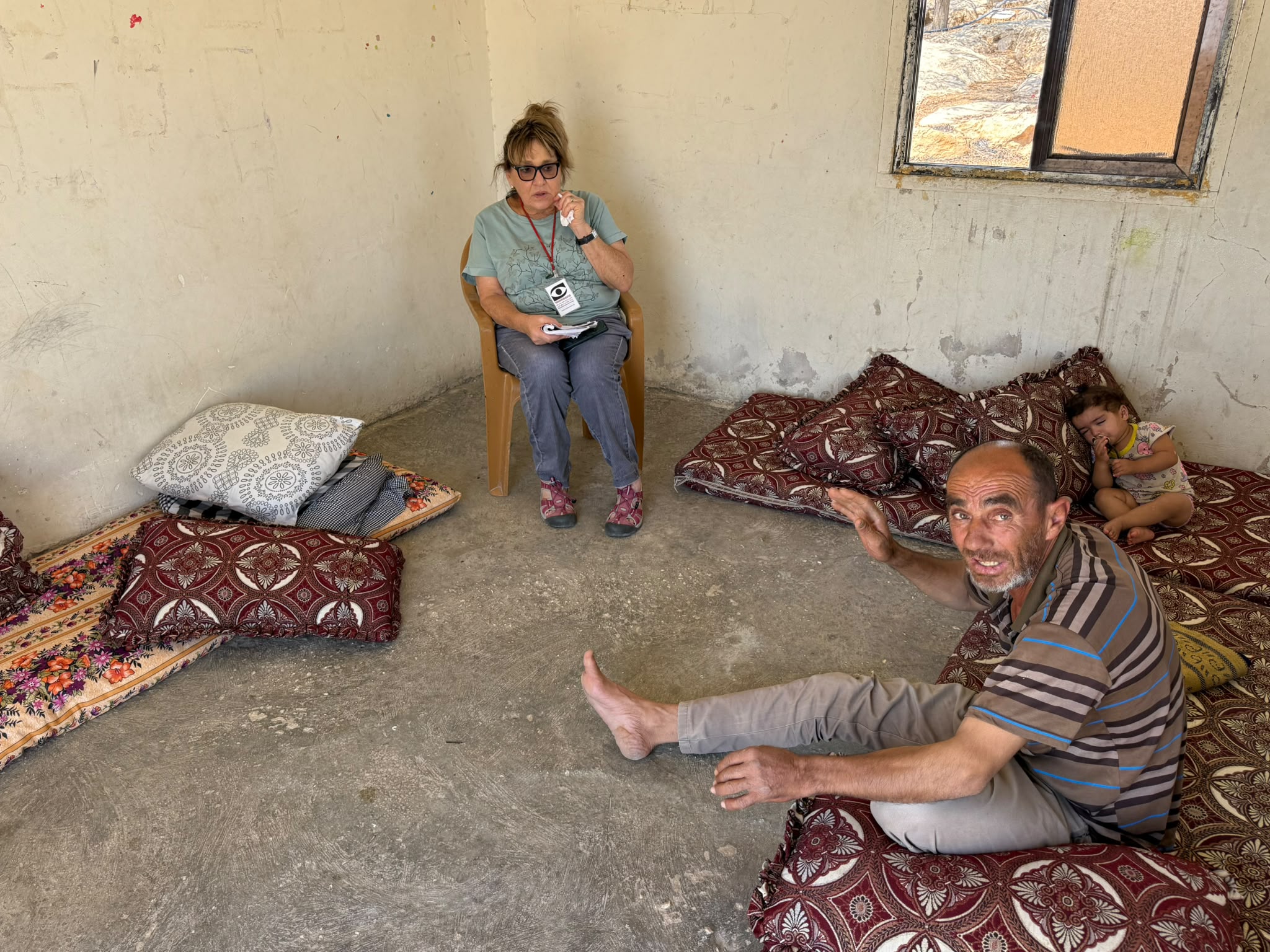 Muhammad D.Sep-14-2026Mufaqara - Fadel tells about the events of Saturday 12.9
-
