
Hamra (Beqaot), Ma’ale Efrayim, Tayasir, Sun 26.2.12, Morning
Translator: Charles K.
M. the shepherd, who was brutally beaten about three weeks ago by the security coordinator of the Rotem settlement (D.) and hospitalized for a few days, filed a complaint with the police, escorted by “Yesh Din.”
Attacks on the Bedouin by the area’s security coordinators have occurred at least once a month during the past two years that we’ve been coming here regularly. Beatings, unlawful detentions, expulsion of the shepherds from their grazing lands, chasing them away from the only spring in the area, killing a horse, tearing down a tent, intimidation, threats and much more. Until now, no one dared file a formal complaint with the police. Fear of the security coordinators paralyzes people, prevents them from defending themselves. Yes, they’re the lords of the area. Even though, formally, their authority is restricted to the area of the settlement itself. But the authorities, in particular the army, back them up, and there’s no one who will stop them. Appeals to the Civil Administration didn’t help either. And behold, finally someone dared to file a formal complaint. We very much hope he won’t be hurt by his action and that the matter will be dealt with appropriately to stop this behavior. We’ll follow up.
Shomron crossing – 10:50
Approximately a five-minute wait to cross from Israel to the West Bank. Cars are let through one at a time, each delayed to see who’s inside. Police and Border Police conduct the inspections. They wouldn’t tell us why. Two cars, detained, off to the side.
Tapuach junction – 11:15
No soldiers. Only one observing from the position at the junction. An army jeep parked by the side of the road a little past the entrance to Kabalan.
Ma’aleh Efrayim checkpoint – 11:30
No soldiers. A tractor excavating next to the Gitit 1 pumping station. It’s not clear why.
The packing house and all the fields (near the pumping station), which were being cultivated for a number of years by Eyal Levy, from the Na’ama moshav in the southern Jordan Valley, have been abandoned. It’s not clear why. We ran into two youths who’d come with a donkey from Akraba to collect material that had been left behind who informed us to that effect. On the other hand, the cultivated area next to the Mechora settlement keeps expanding to the south.
Hamra checkpoint – 12:00
The checkpoint was renovated and expanded in recent months. Every time we come a new building appears, a fence, an observation tower, a path. This time – a container turned into a waiting room, openings for windows in the walls, benches for pedestrians who’ve been inspected and are waiting for their vehicles to come through. It’s good they’ve thought about the welfare of the hundreds of Palestinians coming through daily in the rain, the cold and the terrible summer heat. A few years too late, of course. But what they didn’t consider, I think, is who’ll clean the area that is used by so many people. Already, only two weeks after it's been installed, there’s so much refuse inside that people are deterred from entering.
Two MP’s approached us and started asking who we were and why we came here. We immediately heard people from the checkpoint calling them to come back right away. There’s almost no traffic at this hour, so no lines form.
We got on a road at the start of which was a sign for the Umm Zuka nature preserve. The road, in pretty good condition, leads to an army base. Halfway in, a dirt road leads off from the road to the base. Could it be the way to the nature preserve? There’s a red sign at the beginning, declaring “Danger! Firing range! Entry prohibited.” Thus were our hopes dashed.
We visited a Bedouin family. Like all the others we've met, they are poor and barely make a living from raising sheep. They sell the cheese they produce in towns on the West Bank. The area where they live, like that of all the other Bedouin in the northern Jordan Valley, is defined as a “Firing range. Entry prohibited.”
Many soldiers arrived last week, erected tents and conducted live-fire exercises. The family fled far from the encampment (a son with two daughters, aged 2 and 4, lives with them). It’s clear they were all afraid. The soldiers remained there three days. The family returned to the tent at night to sleep.
Suddenly two strangers appeared: a brother and sister from the town of Rantis, in the Ramallah area. The man said he’s handicapped, mentally ill, with a son serving a four-year sentence in an Israeli prison, for vehicle theft. They hired a taxi, paying NIS 400/day, to beg for alms. They asked for a sheep. They appeared from the way they were dressed to be better off than those they were asking help from. We didn’t stay to see what happened. A strange story.
14:15 Tayasir checkpoint
Reservists have replaced the Border Police soldiers – not young, some of them settlers. People crossing said they’re OK. They arrived only a few days ago.
Traffic here is also light, and goes through with no lines.
We ran into M., from the Darajma family, who was brutally beaten about three weeks ago by the security coordinator of the Rotem settlement. He filed a complaint with the police.
15:10 – Gochia checkpoint
The gate is closed. That’s how it’s been for months, except for once (we’re reporting what we’ve seen). The checkpoint is supposed to open only three times a week for half an hour in the morning and in the afternoon, but even that doesn’t happen. We telephoned Zaharan, at the DCO, which has become part of our routine, after which nothing happens. But lo and behold, something marvelous, soldiers showed up half an hour later to open the gate. The problem is that if the gate opens so rarely, people who need it simply don’t come. What do they do instead?
Ma’aleh Efrayim checkpoint – 16:00
An army jeep stands at the checkpoint. We saw no cars detained for inspection.
Hamra (Beqaot)
See all reports for this place-
One of the Jordan Rift Valley checkpoints that prevent direct transit between the West Bank and the Jordan Valley, in addition to Tayasir Checkpoint. Located next to Hamra settlement, on Route 57 and the Allon Road.
Read about the peple of the Jordan Valley and the quiet transfer happening there.
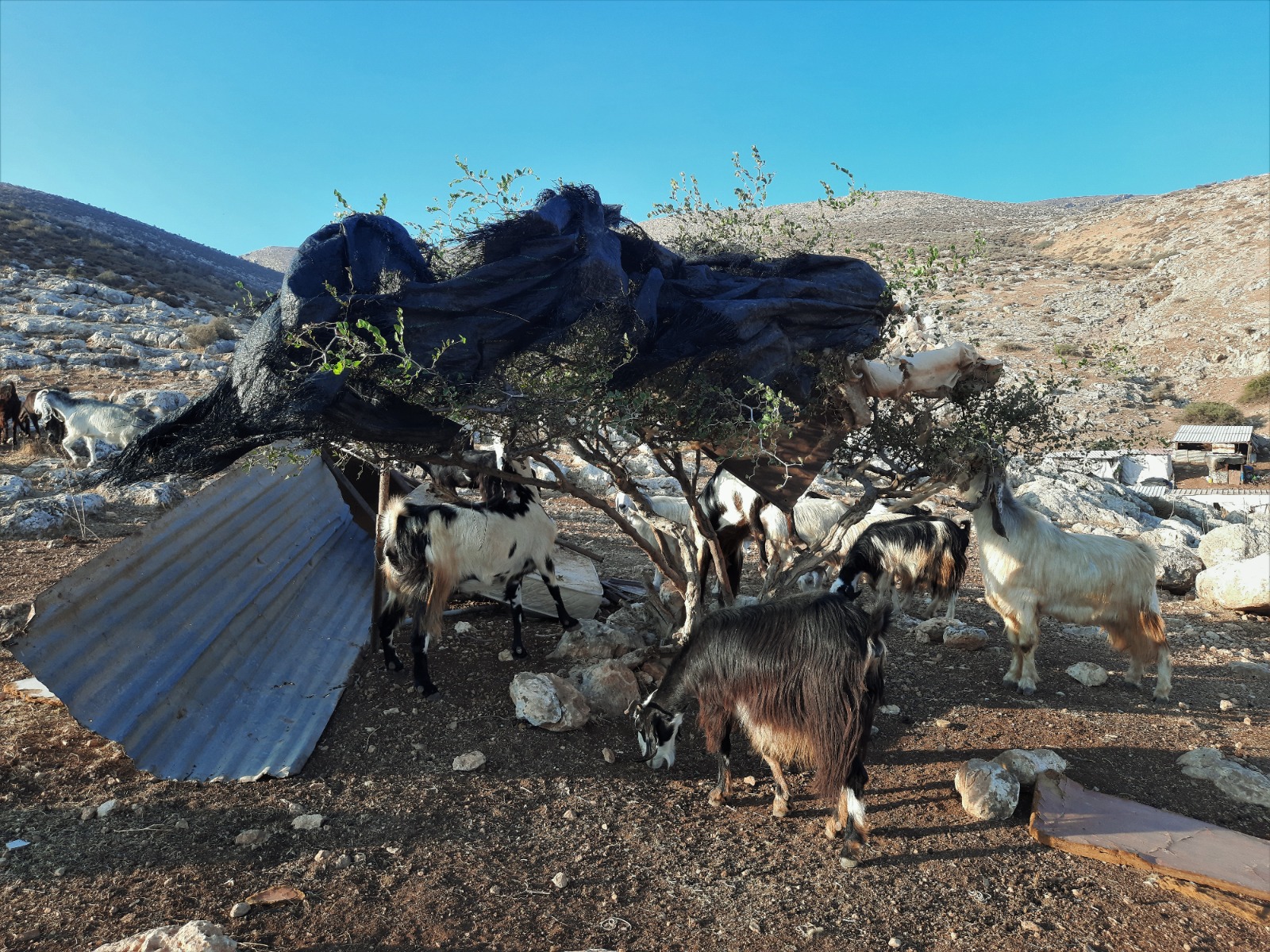 Shahar ShilohNov-3-2021Ein Shibli: grazing begins close to home
-
Ma'ale Efrayim
See all reports for this place-
Ma'ale Efrayim On the road connecting Route 90 (the Jordan Valley road) to the Allon Road.
-
Tayasir CP
See all reports for this place-
Located on road 5799, It is one of the checkpoints control the passage between the northern West Bank and the Jordan Valley. For a long time, it stood empty and open, with only a sign next to it warning against entering Area A. It was adjacent to an old military camp - now everything is neglected. How much money was invested here, and how much brainwashing was done to the soldiers of Netzah Yehuda and Kfir.
Today, it is very difficult to pass there. Many delays. Often, teachers from Tubas are not allowed to pass into the Valley to villages like Ein al-Bida where the local schools are located, and there are no classes. There are additional days when the checkpoint is closed. In general, there is a wait there of about two to four hours to go towards the Valley and also to return. Many times the Palestinians are forced to use the Hamra checkpoint, which also leads into Tubas and the West Bank, but there is also a huge queue there and a long wait.
Following a deadly attack on soldiers at the nearby base in February 2025, the checkpoint was completely closed for the time being. (Updated March 2025)
-
