
Hamra (Beqaot), Ma’ale Efrayim, Tayasir, Za’tara (Tapuah), Tue 9.7.13, Morning
Translator: Charles K.
Another device for harming the Bedouin in the northern Jordan Valley, using the National Parks Authority, is by impounding grazing cattle on the basis of various excuses, usually “obstructing traffic” (which is very sparse) on the Jordan Valley roads. The National Parks Authority's military liaison officer employs a contractor to gather straying cattle, quarantine them and impose stiff fines on their owners, when they come to retrieve them. The amount of the fine, determined by the number of cattle impounded, is set by him arbitrarily. Thus a private contractor implements the policy of expropriating Bedouins.
This pracvtice wouldn’t have been possible if the local population were stronger, better educated, better connected, better able to fight for its rights. There’s nothing easier than screwing the weak over.
09:30 Za’tara/Tapuach junction
An armored military vehicle parks in the plaza, ten soldiers in a circle alongside, perhaps being briefed. Another military pickup truck and some vehicles with yellow license plates are parked there. No Palestinian detainees. There’s a soldier in the guard tower at the junction.
Ma’aleh Efrayim
Empty when we entered the Jordan Valley, and when we left.
10:20 Hamra
Only vehicles are inspected, and only those heading east (entering the Jordan Valley), more or less rigorously. No lines because traffic is sparse.
One of the drivers, a resident of Tamun, says the checkpoint is ok today but sometimes you have to wait a long time.
With K., from the D. family
We’re told that A., a resident of Hamam el Malih, whose cattle had entered the army base at el Malih through a gap in the fence, contacted the police and the Civil Administration. In response they confiscated 7 of his cows and took them to a compound near the Adam Bridge, and he was fined NIS 10,000. The cows were to guarantee payment of the fine. I was told at the Jericho DCO that the person responsible for catching the cows and collecting the fines works for the National Parks Authority in the Jordan Valley; his name is Noam. A. had no choice other than to pay the fine.
A year ago K. contacted me; he lives near that same army base. He asked for help in retrieving his cows that had entered the base through a gap in the fence. I learned that there are gaps in the base’s fence that aren’t repaired, and according to soldiers at that base, about 20 cows wandered around there on a permanent basis. The problem was solved when the base commander asked K. to come remove the cows.
After investigations in the bureaucratic thickets of the occupation regime it seems that Noam is a contractor employed by the Civil Administration National Parks Authority liaison officer in Beit El, and apparently is subordinate to the Deputy Liaison Officer, Amir Aloni, with whom I hadn't manage to speak. I talked to Noam, who said that he operated under a general order dealing with wandering livestock. He got a call and caught the cows. He “does a favor” to the owners by “impounding only seven cows.” The fine is computed according to (I quote) “the expense of rounding them up and the number of trips (i.e., the number of cows he decides to catch), etc.” The owner receives notice of the fine from the Civil Administration. Noam says that there’s an officer at the Jericho DCO in charge of catching livestock, in contradiction to what I was told by that DCO’s operations office that they have no connection to Noam’s activities.
In conclusion: The National Parks Authority, a government body charged with protecting the environment, serves in the Jordan Valley as a punitive organization imposing large fines on the Bedouin who are extremely poor, and harasses them with baseless complaints. The goal, obviously, is to get them out of the Jordan Valley.
12:00 Tayasir checkpoint
The army base adjoining the checkpoint has been abandoned. We were told that some children from Tayasir who entered the base to see what they could find were caught by soldiers after one of them had been bitten by a snake and taken to the hospital. The rest of the children were released soon after.
Inspections at the checkpoint are conducted while people traveling in both directions are allowed to remain in their vehicles.
A visit to the A. family
They have an 8-year-old daughter, Bisan, who was born with a spinal defect which prevents her from standing or controling her sphincter. When she was two weeks old she was operated on in the Ramallah hospital, where the family was told she’d never walk. Our colleague, Shula Bar, is trying to find out what can be done to review that diagnosis.
Hamra (Beqaot)
See all reports for this place-
One of the Jordan Rift Valley checkpoints that prevent direct transit between the West Bank and the Jordan Valley, in addition to Tayasir Checkpoint. Located next to Hamra settlement, on Route 57 and the Allon Road.
Read about the peple of the Jordan Valley and the quiet transfer happening there.
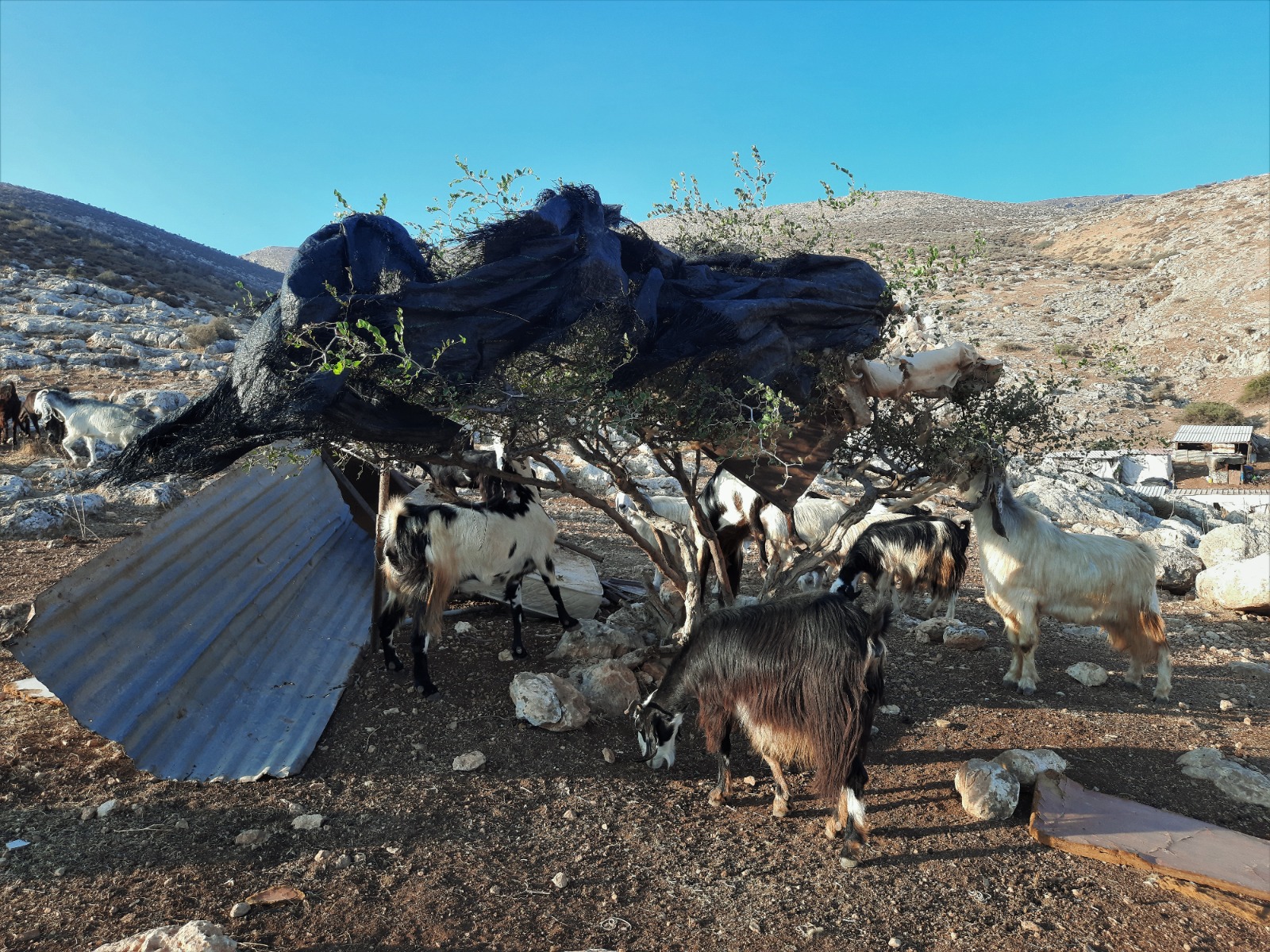 Shahar ShilohNov-3-2021Ein Shibli: grazing begins close to home
-
Ma'ale Efrayim
See all reports for this place-
Ma'ale Efrayim On the road connecting Route 90 (the Jordan Valley road) to the Allon Road.
-
Tayasir CP
See all reports for this place-
Located on road 5799, It is one of the checkpoints control the passage between the northern West Bank and the Jordan Valley. For a long time, it stood empty and open, with only a sign next to it warning against entering Area A. It was adjacent to an old military camp - now everything is neglected. How much money was invested here, and how much brainwashing was done to the soldiers of Netzah Yehuda and Kfir.
Today, it is very difficult to pass there. Many delays. Often, teachers from Tubas are not allowed to pass into the Valley to villages like Ein al-Bida where the local schools are located, and there are no classes. There are additional days when the checkpoint is closed. In general, there is a wait there of about two to four hours to go towards the Valley and also to return. Many times the Palestinians are forced to use the Hamra checkpoint, which also leads into Tubas and the West Bank, but there is also a huge queue there and a long wait.
Following a deadly attack on soldiers at the nearby base in February 2025, the checkpoint was completely closed for the time being. (Updated March 2025)
-
Za'tara (Tapuah)
See all reports for this place-
Za'tara (Tapuah) Za'tara is an internal checkpoint in the heart of the West Bank, at the intersection of Road 60 and Road 505 (Trans-Samaria), east of the Tapuah settlement. This checkpoint is the "border" marked by the IDF between the north and south of the West Bank, in accordance with the policy of separation between the two parts of the West Bank that has been in place since December 2005. At the Za'tara checkpoint, there are separate routes for Israelis and Palestinians. In the route for Israelis, there are no inspections and the route for Palestinians inspects. The queue lengthens and shortens suits. The checkpoint is open 24 hours a day. The checkpoint is partially staffed and the people who pass through it are checked at random.
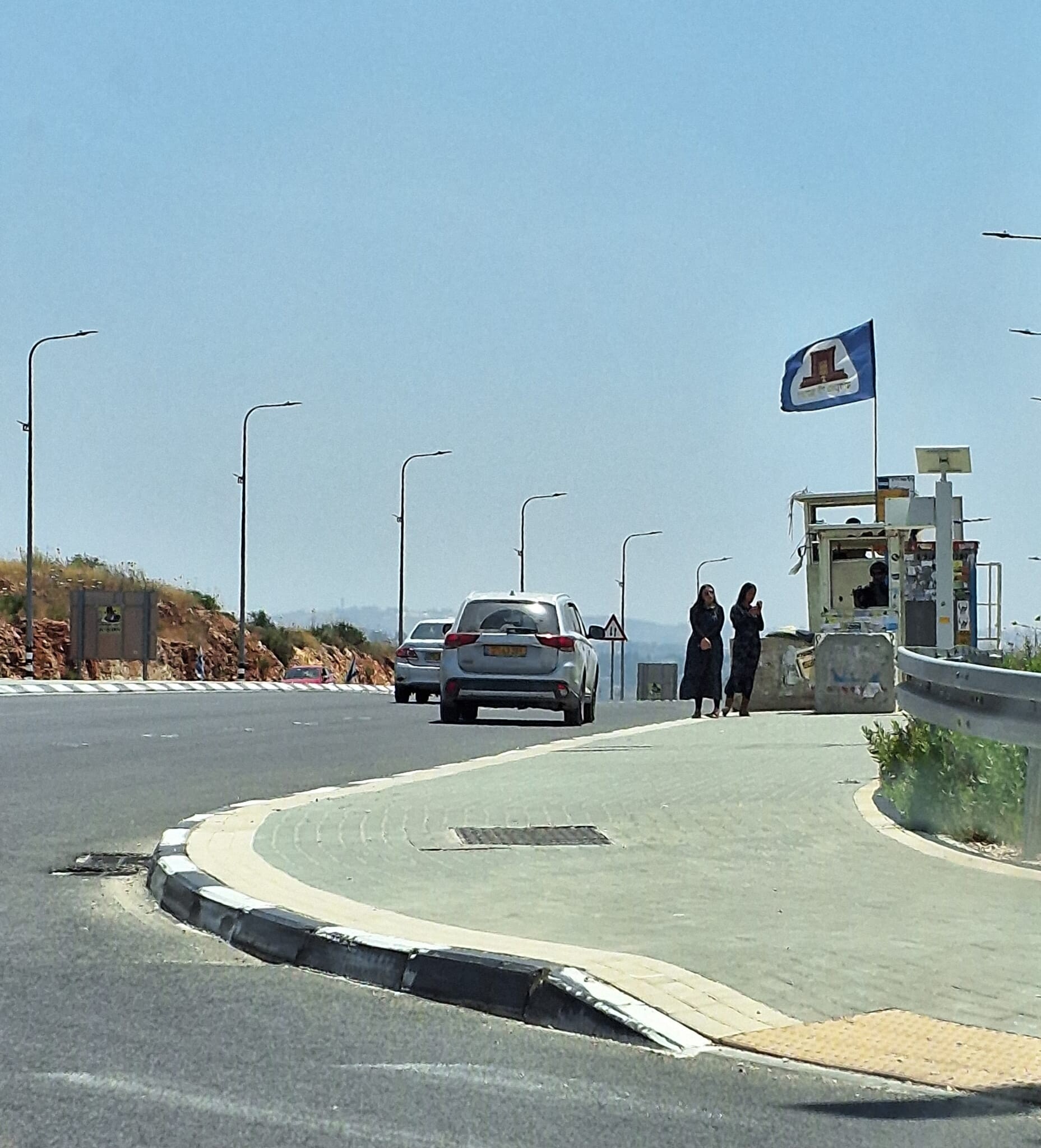 Ronit Dahan-RamatiJun-9-2026Za'atara (Tapuach Junction). The Temple Flag Above a Station
-
