
Back to reports search page

Hamra, Tayasir, Za’tara (Tapuah), Sun 5.4.09, Afternoon

Observers: Maya GZ, Daphna B, Yifat D (reporting)
Apr-05-2009
| Afternoon
Translated by L.W
 
11:20 Zaatra Checkpoint
There was a man the soldiers were not letting through. In the following 20 minutes two more were added. The men did not know why they were being held. The soldiers said that the Shabak wanted to talk to them: "Shabak wants to follow up on them. It does not mean that they did something,." They were put against the wall, their legs spread by a kick, ordered to raise their shirts, undervest too, to revolve on the spot a number of times, take of shoes, roll down socks…
The soldiers are stopping cars, checking IDs of passengers. The soldiers let two of the held men go. The fact is that there really is a list of names given by the Shabak and used by the soldiers to delay men. These are the men who are not willing to cooperate and inform on others. The Shabak has many ways to apply pressure and this is one of them.
 
12:31 Maalei Ephraim
The army has added coils of barbed wire in all sorts of places around the checkpoint. There is an empty Palestinian car next to the checkpoint. The soldier says that a worker was travelling in it from the West Bank to the Valley, but cars registered in the West Bank cannot enter the Valley. So they told him to leave the car, and he would collect it at the end of the day’s work. The Israeli separation policy between the Valley and the rest of the West Bank has its source in the Israeli desire to maintain the Jordan Valley as Israeli even in the terms of a peace agreement. Thus, Palestine will not border on any country apart from Israel, thereby becoming an enclave.
 
13:30 Tayasir Checkpoint
"Raise your shirt!"
"How old are you?"
"Thirteen (in Arabic)."
"How old is he – 14?" (To the second soldier).
"Where did you come from? School?" (The child does not understand. The soldier is reading the questions from a page, in broken Arabic.)
The child shakes his head hesitantly.
"Where are you going? Home? Where’s home?" (Again in Hebrew, which the child does not understand, only "home" perhaps.)
 
The soldiers have a list of questions. They check boys and girls and adults. The older people are asked what they did at the place from which they are coming, and why are they going to wherever… This interrogation, lasting two or three minutes, takes place after they have been ordered on the pa system to approach one by one, bare their abdomens in public, go through the metal detector, the barbed wire, bag check (including pink plastic Barbie satchels, and ID cards. The children who pass try to extricate food from the soldiers’ garbage bins. In a car behind sits a woman, a baby in her arms. The husband apparently explains that they are on their way back from hospital.
"Where’s the baby? Show me!" the soldier says rudely and pulls the blanket aside.
 
15:30 Hamra Checkpoint
The soldiers are shouting at people who want to pass – "back off," "I’m not interested!" Anybody not obeying quickly enough, or misunderstanding the order, gets educational punishment – to wait. Buses full of children pass. The children are drumming and singing. The soldier shouts to the driver to stop it, and the driver shouts at the children. Here too men are forced to expose their abdomens. A hitchhiker from Maalei Ephraim Checkpoint says that in the morning the soldiers check each car for quarter of abn hour, and for that reason the workers wait two hours till they are allowed to cross.
  • Hamra (Beqaot)

    See all reports for this place
    •  

      One of the Jordan Rift Valley checkpoints that prevent direct transit between the West Bank and the Jordan Valley, in addition to Tayasir Checkpoint. Located next to Hamra settlement, on Route 57 and the Allon Road.

      Read about the peple of the Jordan Valley and the quiet transfer happening there.
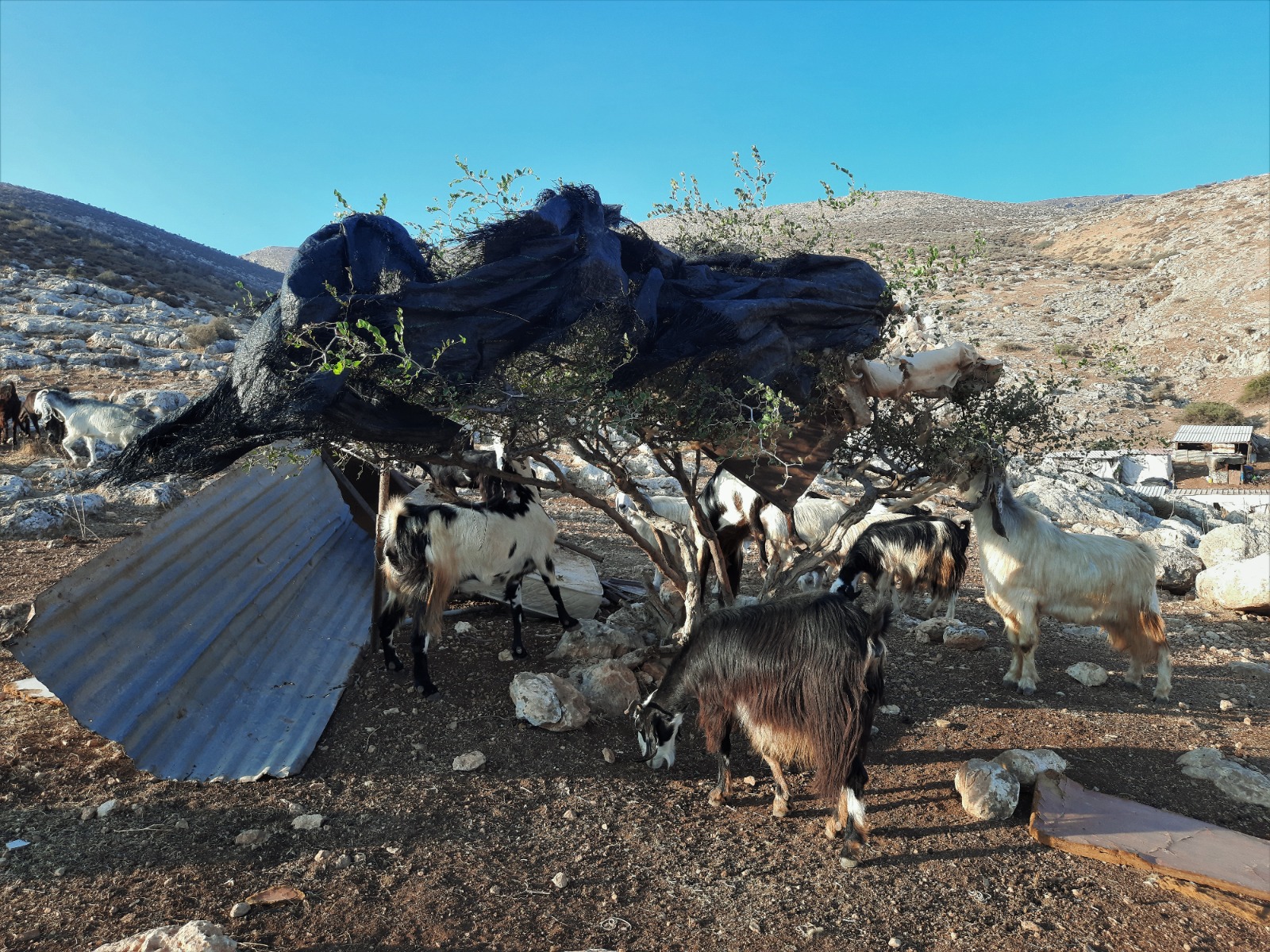
      עין שיבלי: עזים וכבשים
      Shahar Shiloh
      Nov-3-2021
      Ein Shibli: grazing begins close to home
  • Tayasir CP

    See all reports for this place
    • Located on road 5799, It is one of the checkpoints control the passage between the northern West Bank and the Jordan Valley. For a long time, it stood empty and open, with only a sign next to it warning against entering Area A. It was adjacent to an old military camp - now everything is neglected. How much money was invested here, and how much brainwashing was done to the soldiers of Netzah Yehuda and Kfir.


      Today, it is very difficult to pass there. Many delays. Often, teachers from Tubas are not allowed to pass into the Valley to villages like Ein al-Bida where the local schools are located, and there are no classes. There are additional days when the checkpoint is closed. In general, there is a wait there of about two to four hours to go towards the Valley and also to return. Many times the Palestinians are forced to use the Hamra checkpoint, which also leads into Tubas and the West Bank, but there is also a huge queue there and a long wait.


      Following a deadly attack on soldiers at the nearby base in February 2025, the checkpoint was completely closed for the time being. (Updated March 2025)

  • Za'tara (Tapuah)

    See all reports for this place
    • Za'tara (Tapuah) Za'tara is an internal checkpoint in the heart of the West Bank, at the intersection of Road 60 and Road 505 (Trans-Samaria), east of the Tapuah settlement. This checkpoint is the "border" marked by the IDF between the north and south of the West Bank, in accordance with the policy of separation between the two parts of the West Bank that has been in place since December 2005. At the Za'tara checkpoint, there are separate routes for Israelis and Palestinians. In the route for Israelis, there are no inspections and the route for Palestinians inspects. The queue lengthens and shortens suits. The checkpoint is open 24 hours a day. The checkpoint is partially staffed and the people who pass through it are checked at random.  
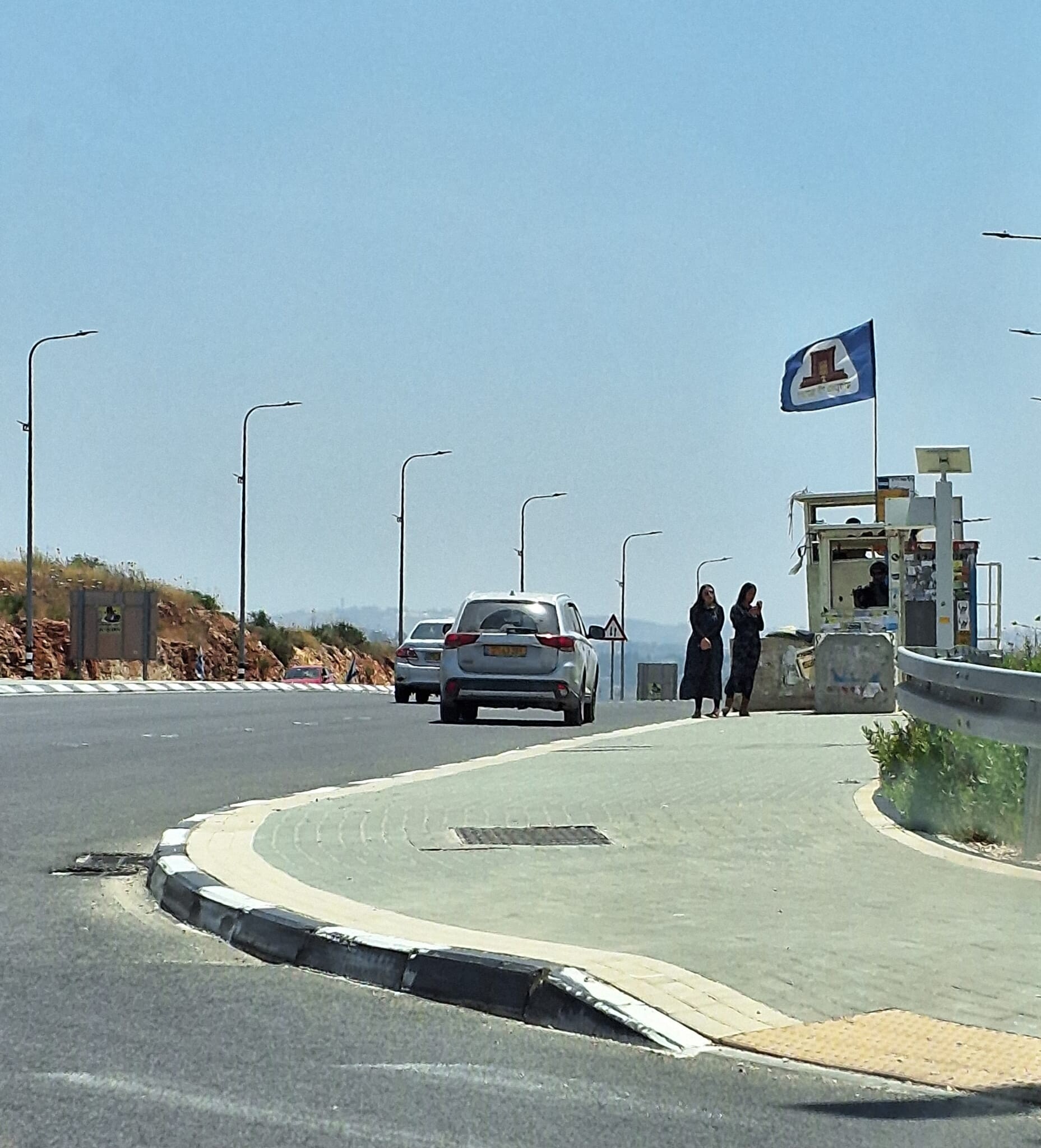
      זעתרא (צומת תפוח). שלטים
      Shoshi Anbar
      Sep-27-2023
      Za'atra (Tapuah Intersection). Signs
Donate
