
Hashem al Daraj kindergarten
9:30 a.m. – 13:00 p.m.
Meitar border point: Crowded as usual on Saturdays. Muhammad was detained for a long time, since he only had his driving licence with him, and did not have his ID. The person in the border point claimed that the driving license belongs to somebody else, since the photo seems different. Muhammad was allowed to pass only after Hanin, his wife, sent a photo of his passport. Fatןma and Zada waited over an hour.
Road 317: Little traffic and much military: Karmel, Tuwani, Susiya, Metzudot-Yehuda.
In the Susia junction, there were military vehicles and gathering of Palestinians and forein activists, that demonstrated against land appropriation (taken by the authorities) in favor of the settlers. We continued towards Mesafer Yata. The road from Um el-Qhair to Hashem el-Darage was bad and difficult due to stones and rocks that have been flooded by the heavy rain, and ruined the road margins as well. Hence, it took us over 2 hours to get to Hashem el-Darage. The weather was really cold, with strong dry winds.
Hashem el Daraj kindergarten: Huda and Hauka welcomed us, and we checked the classrooms and the yard. Classroom condition is very good. The kindergarten surrounding was all very sandy, because of the heavy wind. Zada checked the bags and books of the children, and provided some advice about correcting children activities and how to inspect their capabilities. She also discussed teaching using signs and movements.
Afterwards, there was a discussion about the issue of teaching children with disabilities. There is a deaf-mute child, that suffers also from loose muscles. He is the only child of his parents, and due to economic problems, the family is unable to give him appropriate medical treatment. The child loves the kindergarten, and likes the mixing with all other children. Huda said that the child had acquired several capabilities , and is able to get involved and understand. He comes regularly and tries not to stay home. Nevertheless, the kindergarten and the teachers are not trained for handling his special needs, and he deserves a special treatment.
In addition, there is another deaf grtl in the kindergarten, named lemar. She arrives regularly, and loves that. Huda and Haula mentioned that she has deaf cousins, which points to genetic illness in the family. Her family is also poor and does not have the necessary funds for a proper educational treatment. The teachers say that she is clever, and can participate in some general activities, in spite of her deafness disability. There was a discussion of the problem of having deaf children in a regular kindergarten. Zada suggested methods of description and explanations that are likely to improve her integration and understanding. A photo of Lemar is attached below.
Fatima and Zada brought a printer and explained to Huda and Haula how to use it for printing working pages for the children. They also brought large plastic boards for the teachers, to use with various teaching means. The boards are donated by the owner of a teaching and school materials shop.
Huda reminds that the kindergarten is always short of drawing and painting pages. One sided pages (that are already printed on the other side) will be welcomed. In particular, if somebody has coloring pages (like downloading coloring pages from the internet), that might be of great help. It would be enough even to provide files of coloring pages.
Pictures of past activities in the preschool – the album gallery of Gan Huda:
https://sites.google.com/view/gan–huda/home
Meitar checkpoint / Sansana
See all reports for this place-
Meitar Checkpoint / Sansana The checkpoint is located on the Green Line and serves as a border crossing between Israel and the West Bank. It is managed by the Border Crossing Authority of the Defense Ministry. It is comprised of sections for the transfer of goods as well as a vehicle checkpoint (intended for holders of blue identity cards, foreign nationals or diplomats and international organizations). Passing of Palestinians is prohibited, except for those with entry permits to Israel. Palestinians are permitted to cross on foot only. The crossing has a DCO / DCL / DCL / DCL (District Coordination Office), a customs unit, supervision, and a police unit. In the last year, a breach has been opened in the fence, not far from the crossing. This breach is known to all, including the army. There does not appear to be any interest in blocking it, probably as it permits needed Palestinian workers without the bureaucratic permits to get to work in Israel. Food stalls and a parking area economy have been created, but incidents of violent abuse by border police have also been recorded. Updated April 2022
-
South Hebron Hills
See all reports for this place-
South Hebron Hills
South Hebron Hills is a large area in the West Bank's southern part.
Yatta is a major city in this area: right in the border zone between the fertile region of Hebron and its surroundings and the desert of the Hebron Hills. Yatta has about 64,000 inhabitants.
The surrounding villages are called Masafer Yatta (Yatta's daughter villages). Their inhabitants subsist on livestock and agriculture. Agriculture is possible only in small plots, especially near streams. Most of the area consists of rocky terraces.Since the beginning of the 1980s, many settlements have been established on the agricultural land cultivated by the Palestinians in the South Hebron Hills region: Carmel, Maon, Susia, Masadot Yehuda, Othniel, and more. Since the settlements were established and Palestinians cultivation areas have been reduced; the residents of the South Hebron Hills have been suffering from harassment by the settlers. Attempts to evict and demolish houses have continued, along with withholding water and electricity. The military and police usually refrain from intervening in violent incidents between settlers and Palestinians do not enforce the law when it comes to the investigation of extensive violent Jewish settlers. The harassment in the South Hebron Hills includes attacking and attempting to burn residential tents, harassing dogs, harming herds, and preventing access to pastures.
There are several checkpoints in the South Hebron Hills, on Routes 317 and 60. In most of them, no military presence is apparent, but rather an array of pillboxes monitor the villages. Roadblocks are frequently set up according to the settlers and the army's needs. These are located at the Zif Junction, the Dura-al Fawwar crossing, and the Sheep Junction at the southern entrance to Hebron.
Updated April 2022
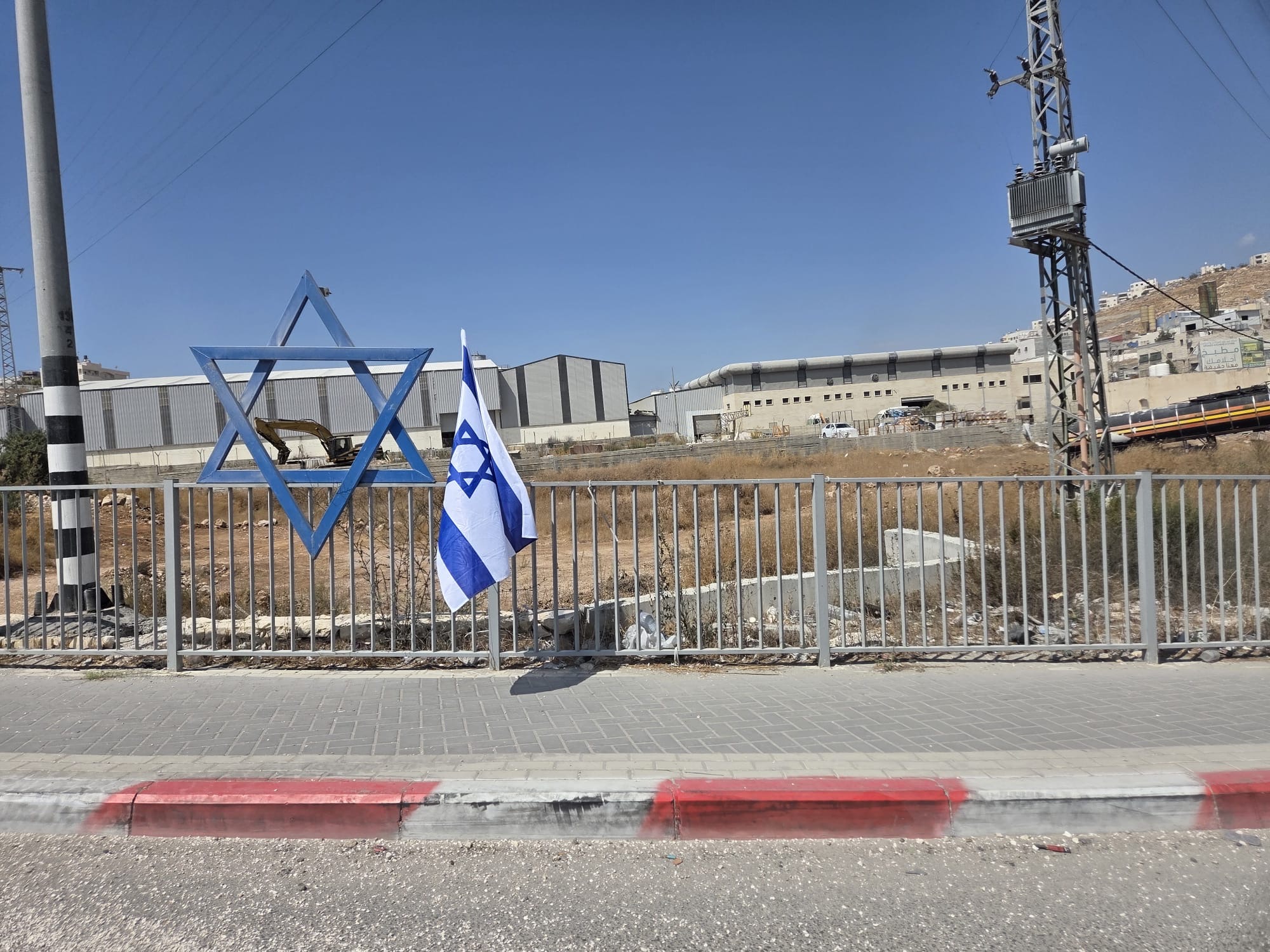 Timna OrevSep-24-2026Replacing flags on Highway 6
-
Susiya
See all reports for this place-
Susiya The Palestinian area lies between the settlement of Susya and a military base. The residents began to settle in areas outside the villages in the 1830s and lived in caves, tents and sukkot. To this day they maintain a traditional lifestyle and their livelihood is based on agriculture and herding. Until the 1948 war, the farmers cultivated areas that extended to the Arad area. As a result of the war, a significant portion of their land left on the Israeli side was lost. After the 1967 war and the Israeli occupation, military camps were established in the area, fire zones and nature reserves were declared, and the land area was further reduced. The Jewish settlement in Susya began in 1979. Since then, there has been a stubborn struggle to remove the remains of Palestinian residents who refuse to leave their place of birth and move to nearby town Yatta. With the development of a tourist site in Khirbet Susya in the late 1980s (an ancient synagogue), dozens of families living in caves in its vicinity were deported. In the second half of the 1990s, a new form of settlement developed in the area - shepherds' farms of individual settlers. This phenomenon increased the tension between the settlers and the original, Palestinian residents, and led to repeated harassment of the residents of the farms towards the Palestinians. At the same time, demolition of buildings and crop destruction by security forces continued, as well as water and electricity prevention. In the Palestinian Susya, as in a large part of the villages of the southern Hebron Mountains, there is no running water, but the water pipe that supplies water to the Susya Jewish settlement passes through it. Palestinians have to buy expensive water that comes in tankers. Solar electricity is provided by a collector system, installed with donation funds. But the frequent demolitions in the villages do not spare water cisterns or the solar panels and power poles designed to transfer solar electricity between the villages. Updated April 2021, Anat T.
-
