
Hawwara
Hawwara, Monday 4.7.05, PMWatchers: Macki S. Harag K. (reporting)English NatanyaResume: Ghastly14.15- road 505 next to the entrance to Marda.Already on our way to Hawarra we saw a massive presence of army vehicles at the side of the road. We stopped to check. 8 soldiers and senior officers stood there. A young Palestinian was handcuffed and sitting on the ground in the blazing sun. One has to say however that there was no shade in the area. We were told that there had been a demonstration next to the fence next to the village and that the army had entered the village. The commander explained to us that he had arrived there a bit later with soldiers and there were about 20 Palestinians in their 20s of whom they managed to arrest 5 or 6 and brought them to the entrance of the village a short time before we arrived.Such a large amount of military including a commander and high officers to deal with 5 youngsters of about 15 who had been throwing stones! (On our way back we heard that the hooligans from Gush Katif who had overtaken with violence the house of Hamousi had been sent home to house arrest). The flannel on the eyes which was soon put on was such a grotesques picture that one had to have an imagination to depict it. After that we could not see what was happening to the young men so we went on our way.14.50- Tapuach crossroads. Hardly any cars going to Nablus but coming from Nablus were about 25 cars. They had been waiting about half an hour according to the drivers. Even in the blazing afternoon sun some people had left the cars and had been going forward on foot. The flags of the women in Blue and white next to the outpost of the soldiers showed us that, luckily we “missed” them today.15.10- Hawarra. About 11 cars going slowly towards Nablus.2 elderly detainees in the enclave and another detainee, handcuffed at the concrete block next to the humanitarian post. One, 40-50 years old, had an urgent errand and tried to bypass the waiting line so as to speak to the soldiers (there had been no humanitarian line at the time) and therefore had been imprisoned as punishment. He had been there an hour and 10 minutes after our arrival was freed. But was first educated by T, the commander who was lecturing a man old enough to be his father,how to behave and more.The post was filled with soldiers. 4 at the checking post and a guard and between the carousels 4 additional soldiers. They were working VERY slowly and the line was getting longer. There was no humanitarian line and women, children and old people were all passing together. All the men including the elderly were made to open the belts of their trousers which was humiliating and embarrassing.T. First sergeant was the temporary commander as A. the commander was not feeling well. He had no control over the soldiers and much time was wasted on arguments, one of which was as to whether they should open a humanitarian line. Oleg from the DCO and one of the military police tried to persuade him to do so and in the end he agreed but by that time the babies were crying and the elderly people getting stuck in the revolving gate and people were getting so impatient that it was a problem. We phoned Riad and within 10 minutes at 15.45 a captain and a soldier from the DCO arrived and open the humanitarian line and freed the pressure.T’s tension was also shown in his attitude towards us. With whom we could talk and where to stand. We were not allowed to talk to the detainees and even when I gave one water he was angry.The second man who was in the enclosure was freed at 16.15 about an hour after we had arrived and half and hour after his investigation had started. He told us that we works for the Palestinian authorities and each time he is stopped, checked and freed. T. said that a terrorist must have forged his pass. Of course he was freed.All this time another detainee had been sitting with his eyes bandaged next to the cement block. He was sitting in the terrible sun and we could not find out why he was there.One of the soldiers kept on going up to him and aiming his rifle at his head and did this as if to be photographed by us. But even if this was done only to impress us, it was part of various ill-treatments which were the routine of this soldier. He made him get up and sit down and get up and sit down, tightened the handcuffs, etc. We could not stop this as no one seemed to be in command. When soldiers came from the DCO the soldier seemed to calm down slightly and we could find out what was happening. A. the temporary commander told us that the man had made a nuisance of himself on the Palestinian side where the taxis are and had then tried to evade arrest. In that case we said he was not a suspect or a criminal so why had he been handcuffed and blindfolded. (That is if one accepts the strange logic that he has to be detained and punished). This A. could not accept. He said that by his actions he was suspect. At 4.30 on our insistence he was put in the shade. About 20 minutes later he was freed with no more ado. His hands were purple from the brutality and ill-treatment. 17.15- Tapuach checkpoint. 25 cars from Nablus waiting about 20 minutes. A. At the southern checkpoint (past ) there is no water at the market or taxi rank. The soldiers were deaf to complaints. Maybe it should be taken higher.B. Tapuach crossroad the drivers complain about the long hours they have to wait. We were asked to have permanent watchers there.
Marda
See all reports for this place-
Marda
There are about 2500 inhabitants in the village. A large part of their lands was confiscated for the benefit of the settlement of Ariel, some of whose buildings are adjacent to the village.
They often feel under siege. At both entrances to the village from the main road (505) there are checkpoints and the army does close the yellow arms from time to time. The inhabitants of Marda own olive groves behind a fence. Rarely are they allowed to cultivate their agricultural plots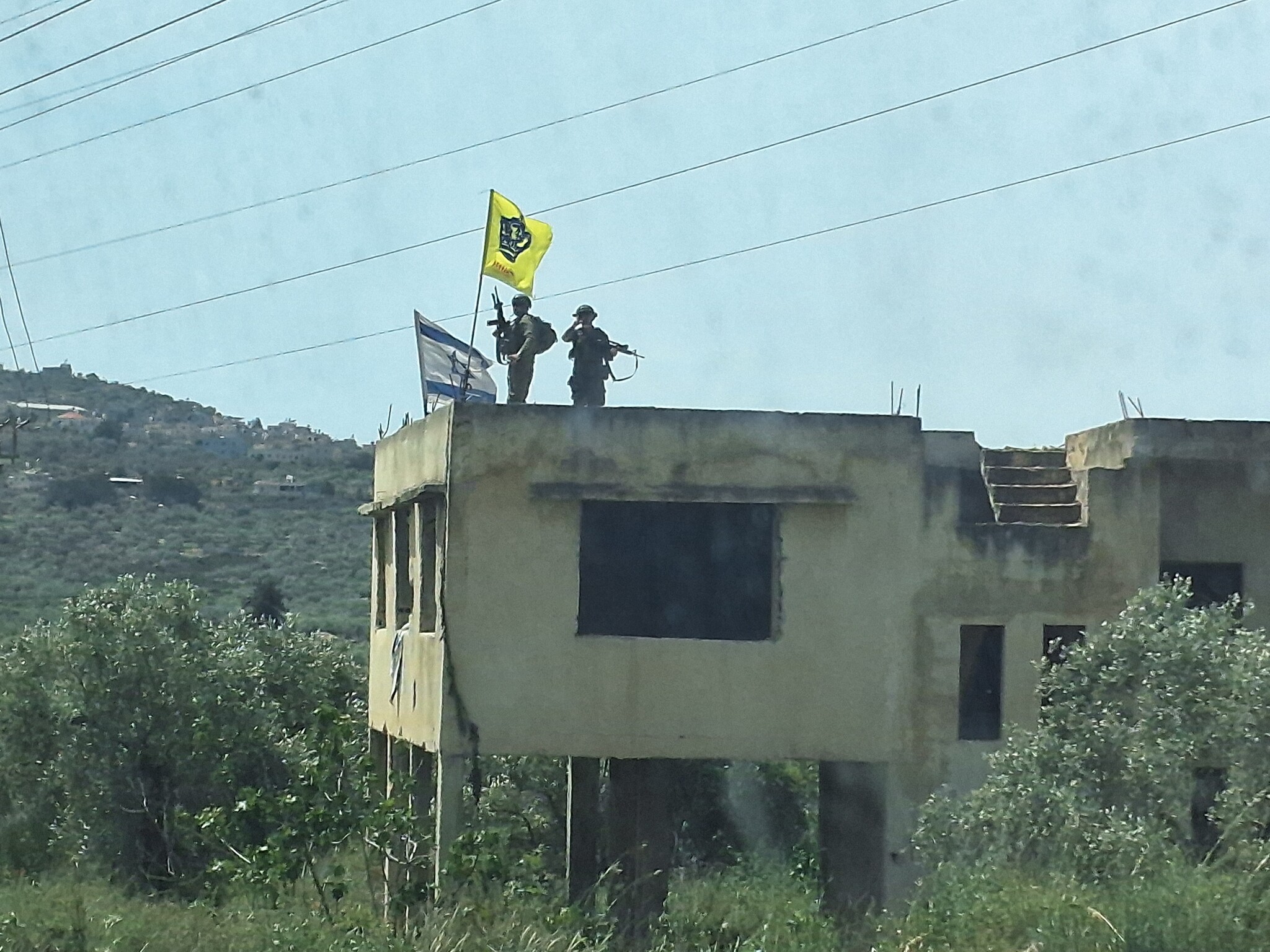 Ronit Dahan-RamatiApr-14-2026Marda. IDF post on the roof of a Palestinian home with the Messiah flag
-
