
Hebron, Jerusalem
Qalandiya, Ar-Ram, 04.05.05 p.m.Observers: Ivonne M, Tami B, Ruti B, Eli L.K. (reporting) guestWe travelled by minibus from Tel Aviv to Jerusalem. Even though we are not speaking about a checkpoint, this happening nonetheless symbolizes the effect of the occupation on the Israeli society. I sat in a minibus waiting at the side of the central bus station while it was waiting to fill up with passengers for the journey. A man got on and sat down. After him, a security guard from the private security firm “Raam” got on. The guard asked to see the i.d. of the man. The man took out his i.d. (orange — a resident of Hebron). The guard asked to see his papers showing that he was allowed to be within Israeli territory and the man presented them. The guard got off of the transit. When he got off, I asked the man if he had gone out of the central bus station and he said “no”. I asked by what right does a man from a private security firm ask to see the papers of another person and a discussion/argument ensured in the minibus. Within five minutes, the guard got on the bus again and wanted to see the i.d. of another man in the vehicle. I asked the guard by what right he was asking to see the documents, a right allowed only to police forces (when not speaking of a private area). The guard answered me with disdain. I asked if he was interested in seeing my i.d. and he said that no (apparently the security guard is not that interested in white women). The man from whom he took the i.d. joined me and said that he will present his documents only to a police representative. After three of us stood up against the guard, he got off of the bus and a policewoman was called. The policewoman asked “who here is the provacateur”. The passengers asked her if that is the manner in which the police today relate to its citizens and I tried to explain to her that there are still two or three personal rights which must be respected. After a short delay, she checked all the documents and we set off. 15:30 Ar-Ram Checkpoint. There were 9 detainees who were held for about an hour. We waited three quarters of an hour and left when they started to be released. Afterwards, we met most of them after they were released in Qalandiya.16:25 Qalandiya. There were checks with the magnetic hand. The inspecting soldier put on the glove and continually touched the iron gate, the wall, other people, and her personal weapon. When we told her that touching her weapon with the glove is an infraction of the law, she transferred the glove to her other hand. There is no concern about safeguarding the sterility of the glove. The trustworthiness of checks with the glove are in doubt, and more than once, we witnessed checks that were carried out until the “desired results’ were obtained. It appears that the checks are used more for their psychological effect than for any scientific revelation of ballistic materials.17:30 A bus of the Shain firm carrying adult passengers on their way to Ramallah was returned south by the military police. The driver said that they did not give him a reason for turning him back. The DCO representative told us that the bus does not have the specific permit for the Qalandiya checkpoint. We wanted to register a complaint against the fact that a public bus company must have a specific permit — especially in light of the fact that the passage north to Ramallah is permitted to everyone. The request for a permit is harrassment with no logical reason. 17:30 An i.d. was taken at 10:00 in the morning from a boy who stood on the street leading to Qalandiya. The representative of the unit was not able to find the i.d. and the DCO representative who made several telephone calls at our request was also unable to help. We called the division and they said that they were dealing with the matter. As of the writing of this report, the i.d. has not been returned.18:30 Ar-Ram. On our way back to Ar-Ram, we saw 5 detainees. All the process of filling out forms and getting signatures started when we got to the checkpoint and it took about an hour. Between the investigations and filling out the details, the soldiers kidded around among themselves (among other things, about the names of the detainees), speak on their cellphones, photograph us, eat, and change guard. All the detainees are asked the following questions: Name? You have no permit. Do you know that you need a permit? Why have you come? From where? Where and for whom do you work? How long have you worked there? How much are you paid? It should be said that each of the detainees was told exactly what was on the form and on what he was signing.
Hebron
See all reports for this place-
According to Wye Plantation Accords (1997), Hebron is divided in two: H1 is under Palestinian Authority control, H2 is under Israeli control. In Hebron there are 170,000 Palestinian citizens, 60,000 of them in H2. Between the two areas are permanent checkpoints, manned at all hours, preventing Palestinian movement between them and controlling passage of permit holders such as teachers and schoolchildren. Some 800 Jews live in Avraham Avinu Quarter and Tel Rumeida, on Givat HaAvot and in the wholesale market.
Checkpoints observed in H2:
- Bet Hameriva CP- manned with a pillbox
- Kapisha quarter CP (the northern side of Zion axis) - manned with a pillbox
- The 160 turn CP (the southern side of Zion axis) - manned with a pillbox
- Avraham Avinu quarter - watch station
- The pharmacy CP - checking inside a caravan with a magnometer
- Tarpat (1929) CP - checking inside a caravan with a magnometer
- Tel Rumeida CP - guarding station
- Beit Hadassah CP - guarding station
Three checkpoints around the Tomb of the Patriarchs
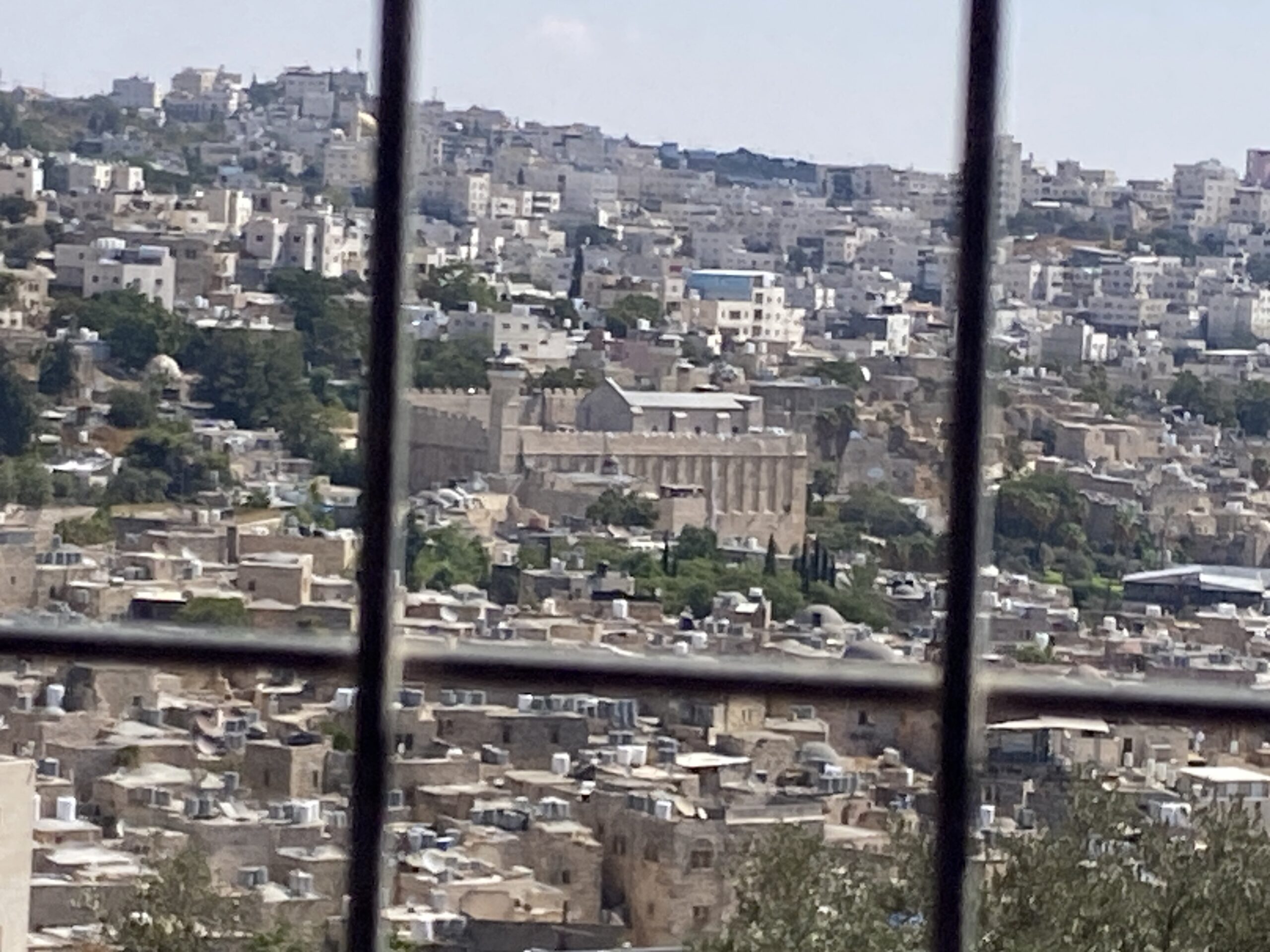 Yael ZoranSep-24-2026Hebron and the Cave of the Patriarchs from Beit Hashalom
-
Jerusalem
See all reports for this place-
The places in East Jerusalem which are visited routinely by MachsomWatch women are Silwan and Sheikh Jarrah. During the month of Ramadan, also the Old City and its environs are monitored.
-
