
Hebron, Sansana, South Hebron Hills, Tue 2.12.08, Morning
06:30 10:30
Hebron
Today, we've been able to experience first-hand what the Palestinians experience daily, hourly, nightly – the violence of those who say they've come to live in the house of "Peace" namely, the House of dispute (in Hebrew, more literally: quarrel). And all this, with the blessing of the fresh settler – the MP Nissim Ze'ev of Shas, who was there, saw it, and kept quiet.
At 7:50am we drove towards Hebron city's CPs – the Pharmacy CP, Tarpat CP, Tel Rumeida CP, the Patriarchs' Tomb Cave CPs; but we never reached any of these today. Being MachshomWatch observers, this is our permanent, fixed route. To arrive at these CPs, we cannot but drive through the only road leading from Kiryat Arba to Hebron – as is well known, this is an apartheid road: Palestinian cars are not allowed nor, as we've just discovered, leftists.
As we drove through, we could see a cluster of settlers standing on the road, and three soldiers right next to them. On the side of the House of Dispute, there were scores more settlers, some of whom walked around with black masks or long hats drawn over their faces, some armed with ammunition of the primitive, stone-age kind – i.e., a big stone tied to a string and its likes.
On the sign leading to the House of Dispute, new posters have been pasted – girls' pathway/boys' pathway. The road is the boys' part. The road itself is covered with glass and stones. A, our driver, stops the car – he's worried that the wheels might be punctured. So I got off to check if we could get through. I barely got to the road, when a salvo of stones was thrown at me. The menacing settler, Ofer Ohana, arrives with a camera, I could see MP Nissim Ze'ev (Shas) and other rabbis standing among the settlers clustering on top. They did nothing to prevent the stone throwing.
I hastened back to our car and got in. The only soldier who got near me mumbled 'please leave quickly'. The salvo of stones continues, Zipi kneels down in the transit (car), A' reverses quickly, in order to escape Hebron.
Then, all of a sudden, a white Fiat Punto arrives, the driver is David, the English-speaking spokesperson of the Jewish settlers in Hebron. He drives right at us and literally drives us away with his car. All during that time, the salvo of stones continues – at least 20 big ones. We managed to U-turn and flee.
We didn't file a complaint with the Hebron Police, as it is positioned on the Patriarchs' Hill – another settlers' neighborhood: the great settlers' lord, Itamar ben-Gvir, lives there, and we would have surely been treated to yet another salvo of stone.
The mental anxiety caused by such brutal incidents only intensifies with time, and the shame, too. The terror those people exercise is so incredibly brutal and cruel. During the drive, we contacted Ra'aya and, through her, whomever we know in the media.
On our way back home we stopped at the Zif junction grocery – we told the owner what we'd been through – we were totally shaken… to which he retorted, "we experience this all the time" – we, at least, go back to a place where we can repress this all…Fortunately, the transit was hit only slightly, and only rather superficially – no glass was broken. Before we got back home, we stopped at the towns' police-station to file a complaint. That's it.
Sansana-Metar CP
6:45 – There are no workers here. On out way back, at 8:45, the six buses, with the prisoners' families, had not yet left. The workers passed through smoothly, but checking 6 busloads takes plenty of time. Sand is being downloaded from the trucks smoothly.
Hebron
See all reports for this place-
According to Wye Plantation Accords (1997), Hebron is divided in two: H1 is under Palestinian Authority control, H2 is under Israeli control. In Hebron there are 170,000 Palestinian citizens, 60,000 of them in H2. Between the two areas are permanent checkpoints, manned at all hours, preventing Palestinian movement between them and controlling passage of permit holders such as teachers and schoolchildren. Some 800 Jews live in Avraham Avinu Quarter and Tel Rumeida, on Givat HaAvot and in the wholesale market.
Checkpoints observed in H2:
- Bet Hameriva CP- manned with a pillbox
- Kapisha quarter CP (the northern side of Zion axis) - manned with a pillbox
- The 160 turn CP (the southern side of Zion axis) - manned with a pillbox
- Avraham Avinu quarter - watch station
- The pharmacy CP - checking inside a caravan with a magnometer
- Tarpat (1929) CP - checking inside a caravan with a magnometer
- Tel Rumeida CP - guarding station
- Beit Hadassah CP - guarding station
Three checkpoints around the Tomb of the Patriarchs
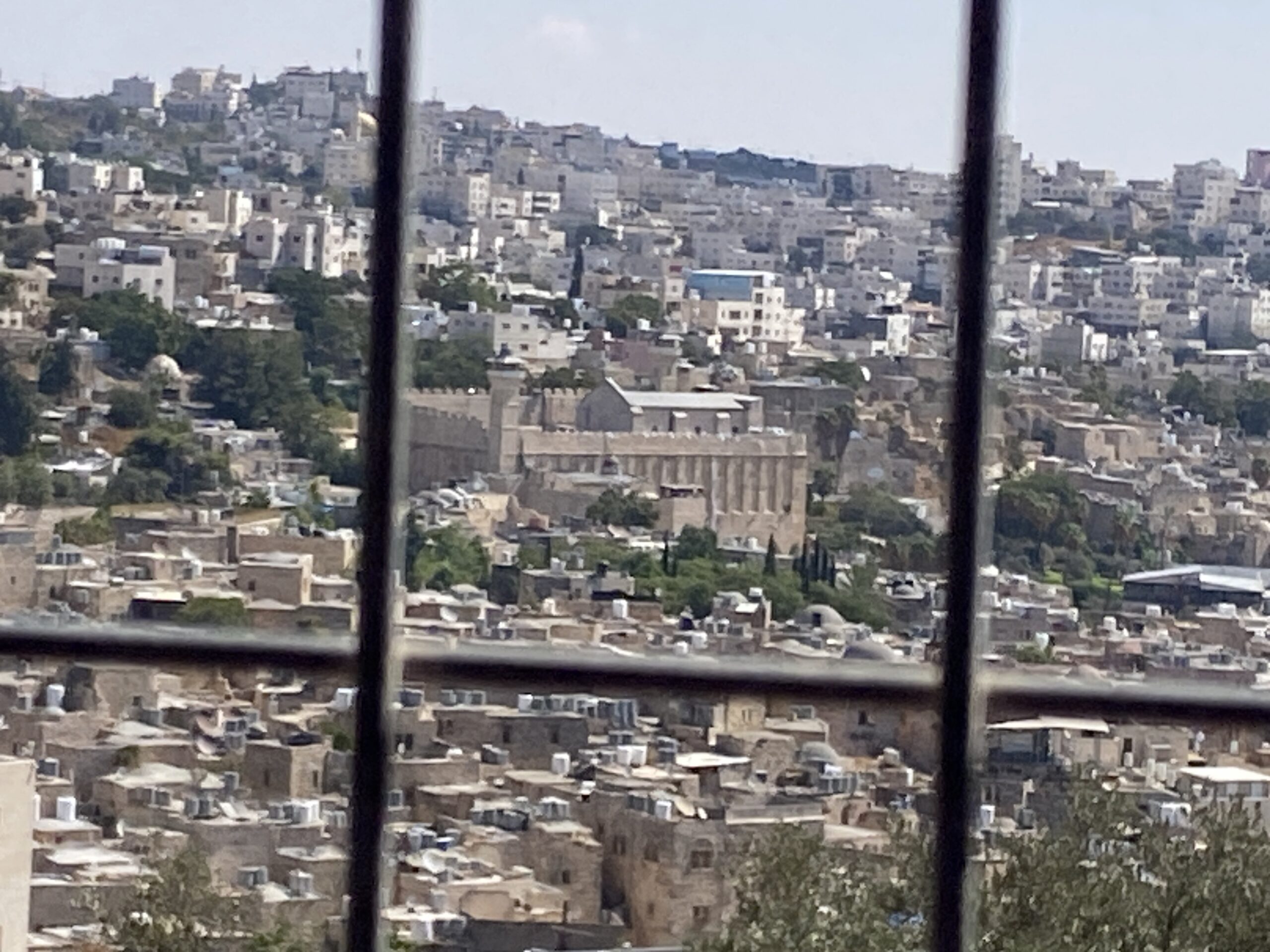 Yael ZoranSep-24-2026Hebron and the Cave of the Patriarchs from Beit Hashalom
-
Meitar checkpoint / Sansana
See all reports for this place-
Meitar Checkpoint / Sansana The checkpoint is located on the Green Line and serves as a border crossing between Israel and the West Bank. It is managed by the Border Crossing Authority of the Defense Ministry. It is comprised of sections for the transfer of goods as well as a vehicle checkpoint (intended for holders of blue identity cards, foreign nationals or diplomats and international organizations). Passing of Palestinians is prohibited, except for those with entry permits to Israel. Palestinians are permitted to cross on foot only. The crossing has a DCO / DCL / DCL / DCL (District Coordination Office), a customs unit, supervision, and a police unit. In the last year, a breach has been opened in the fence, not far from the crossing. This breach is known to all, including the army. There does not appear to be any interest in blocking it, probably as it permits needed Palestinian workers without the bureaucratic permits to get to work in Israel. Food stalls and a parking area economy have been created, but incidents of violent abuse by border police have also been recorded. Updated April 2022
-
South Hebron Hills
See all reports for this place-
South Hebron Hills
South Hebron Hills is a large area in the West Bank's southern part.
Yatta is a major city in this area: right in the border zone between the fertile region of Hebron and its surroundings and the desert of the Hebron Hills. Yatta has about 64,000 inhabitants.
The surrounding villages are called Masafer Yatta (Yatta's daughter villages). Their inhabitants subsist on livestock and agriculture. Agriculture is possible only in small plots, especially near streams. Most of the area consists of rocky terraces.Since the beginning of the 1980s, many settlements have been established on the agricultural land cultivated by the Palestinians in the South Hebron Hills region: Carmel, Maon, Susia, Masadot Yehuda, Othniel, and more. Since the settlements were established and Palestinians cultivation areas have been reduced; the residents of the South Hebron Hills have been suffering from harassment by the settlers. Attempts to evict and demolish houses have continued, along with withholding water and electricity. The military and police usually refrain from intervening in violent incidents between settlers and Palestinians do not enforce the law when it comes to the investigation of extensive violent Jewish settlers. The harassment in the South Hebron Hills includes attacking and attempting to burn residential tents, harassing dogs, harming herds, and preventing access to pastures.
There are several checkpoints in the South Hebron Hills, on Routes 317 and 60. In most of them, no military presence is apparent, but rather an array of pillboxes monitor the villages. Roadblocks are frequently set up according to the settlers and the army's needs. These are located at the Zif Junction, the Dura-al Fawwar crossing, and the Sheep Junction at the southern entrance to Hebron.
Updated April 2022
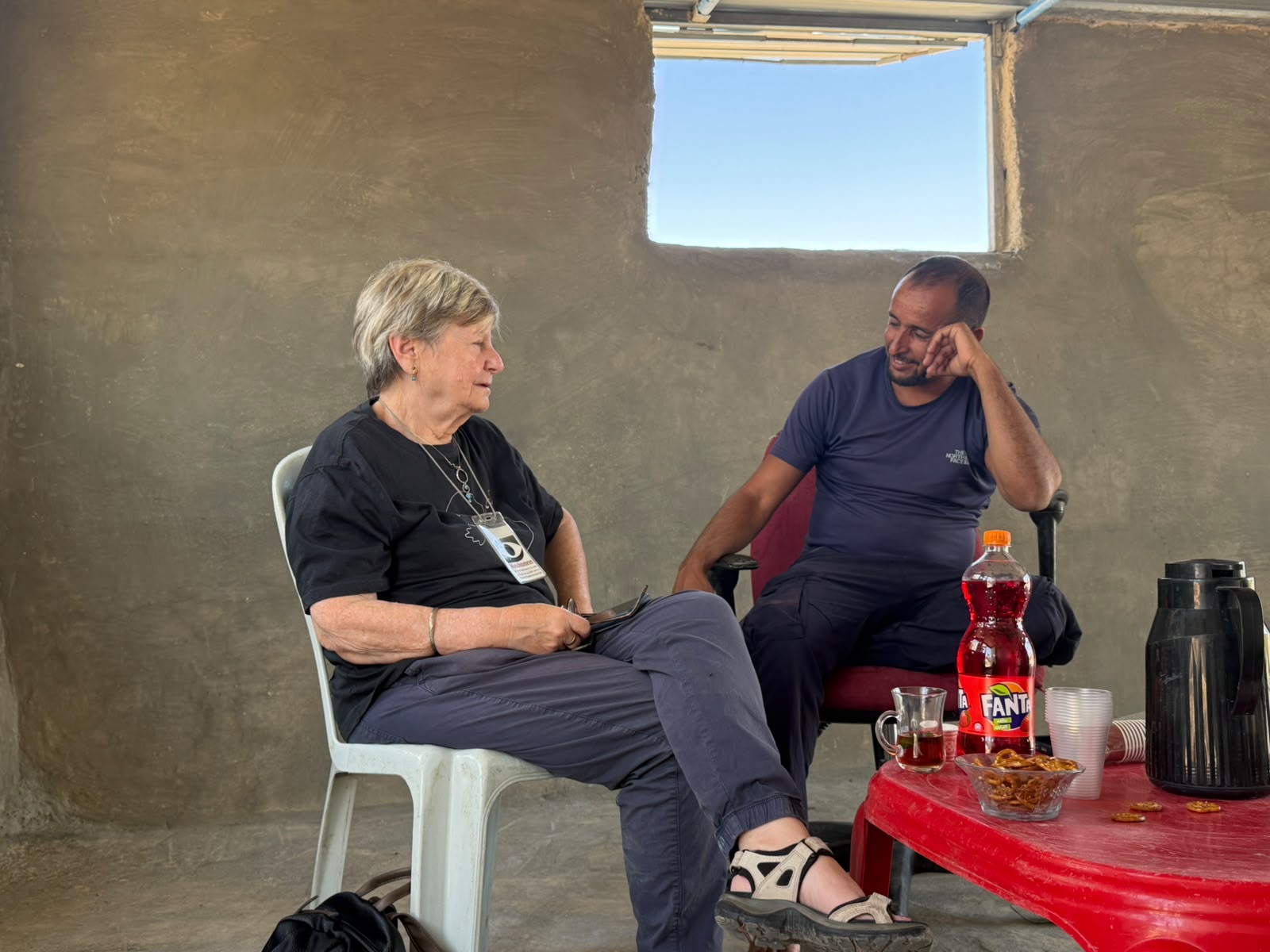 Muhammad D.Oct-10-2026Smadar with Najeh in Umm Qusa
-
