
Hebron, Sansana, Thu 6.8.09, Morning
Meytar
Several buses of prisoners' families waiting, otherwise empty.
Hebron
Curve 160: a single Border Police soldier mans the pillbox, but has nothing to do.
Pharmacy, Tarpat, Tel-Rumeidah CPs: empty and quiet.
Our discoveries on this shift:
Next to Beit Hadasah, we found some beautification of the occupation, courtesy of some girl scouts brigade (see photo, opposite): "happy times at the Hebronite hen-house" says the title of a showpiece including colorful decoration of a wire-covered part of the partition wall, and plenty of paintings illustrating a rather "normative" reality: the settler, the soldier, the Arab (wearing an explosive belt), the generous donator and even TIF people, all living peacefully and amicably in the Hebronite hen-house.
At the metal workshop we were told that the border police soldiers manning the new CP there have no bathroom, which makes them relieve themselves right opposite the workshop, to the workers' great discomfort – who, by the way, do not see this as an intended provocation on the soldiers' part.
The workers also update us, that lately the border police soldiers have started to detain youngsters at the new CP. One of the workshop's customers said that he's seen soldiers at this same CP whistle and harass a Palestinian girl walking through the CP a few days earlier on.
Azam tell us that they are now allowed to have a truck with a crane enter the workshop's grounds, located behind the concrete blocks (on the Palestinian side).
Last thing: at the workshop, we encountered a young man wearing a skullcap, Shoresh sandals (or, put otherwise: the stereotypical settler), speaking fluent Arabic. Well, as it turns out, he's both: both a Palestinian and a settler. The workers told us he's converted to Judaism about 20 years ago and now lives in Kiryat Arba… going to showing that even in Apartheid, boundaries might be crossed over.
Hebron
See all reports for this place-
According to Wye Plantation Accords (1997), Hebron is divided in two: H1 is under Palestinian Authority control, H2 is under Israeli control. In Hebron there are 170,000 Palestinian citizens, 60,000 of them in H2. Between the two areas are permanent checkpoints, manned at all hours, preventing Palestinian movement between them and controlling passage of permit holders such as teachers and schoolchildren. Some 800 Jews live in Avraham Avinu Quarter and Tel Rumeida, on Givat HaAvot and in the wholesale market.
Checkpoints observed in H2:
- Bet Hameriva CP- manned with a pillbox
- Kapisha quarter CP (the northern side of Zion axis) - manned with a pillbox
- The 160 turn CP (the southern side of Zion axis) - manned with a pillbox
- Avraham Avinu quarter - watch station
- The pharmacy CP - checking inside a caravan with a magnometer
- Tarpat (1929) CP - checking inside a caravan with a magnometer
- Tel Rumeida CP - guarding station
- Beit Hadassah CP - guarding station
Three checkpoints around the Tomb of the Patriarchs
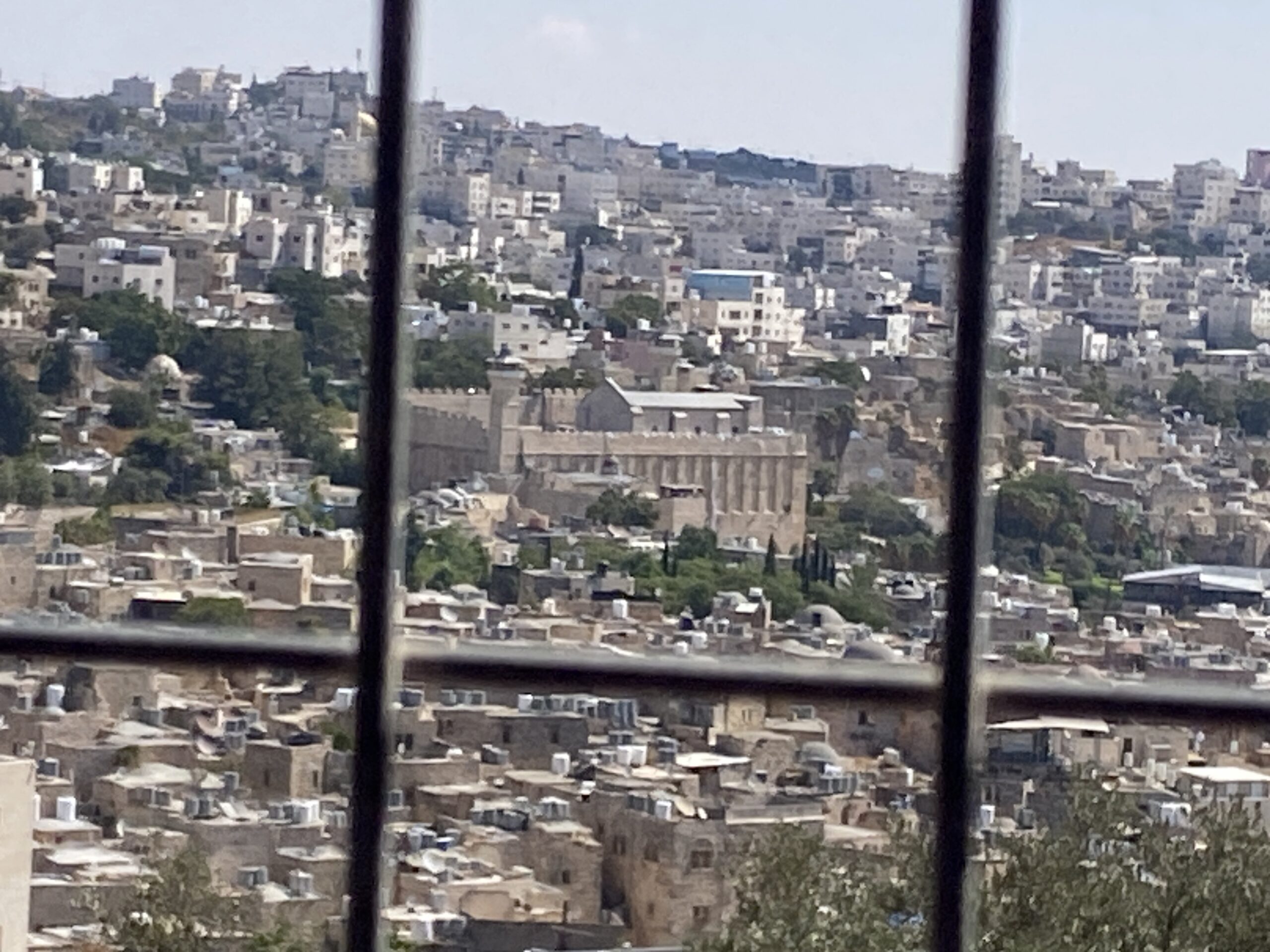 Yael ZoranSep-24-2026Hebron and the Cave of the Patriarchs from Beit Hashalom
-
Meitar checkpoint / Sansana
See all reports for this place-
Meitar Checkpoint / Sansana The checkpoint is located on the Green Line and serves as a border crossing between Israel and the West Bank. It is managed by the Border Crossing Authority of the Defense Ministry. It is comprised of sections for the transfer of goods as well as a vehicle checkpoint (intended for holders of blue identity cards, foreign nationals or diplomats and international organizations). Passing of Palestinians is prohibited, except for those with entry permits to Israel. Palestinians are permitted to cross on foot only. The crossing has a DCO / DCL / DCL / DCL (District Coordination Office), a customs unit, supervision, and a police unit. In the last year, a breach has been opened in the fence, not far from the crossing. This breach is known to all, including the army. There does not appear to be any interest in blocking it, probably as it permits needed Palestinian workers without the bureaucratic permits to get to work in Israel. Food stalls and a parking area economy have been created, but incidents of violent abuse by border police have also been recorded. Updated April 2022
-
