
Hebron, South Hebron Hills, Mon 22.10.12, Morning
Translator: Charles K.
The start of a boring morning.
Hebron
Only soldiers everywhere in Hebron, not detaining anyone at any of the checkpoints. Beit Hameriva [Hebrew for: House of Contention] is still occupied by the army. Beit Hamachpelah is closed and locked, with neither the army nor the settlers next to it. The children are in schoold. “Boring.”
We drove as far as Beit Anun, where the army isn’t “interfering” today either.
Southern Hebron Hills
The humdrum occupation routine. What’s there to report today?! I wondered aloud, since all the laborers had already gone through the Meitar checkpoint and there were military vehicles and soldiers all along Highway 60 who didn’t appear to be doing anything except making an appearance. The observation balloon hovers overhead.
Fortifications are being built for the new military base on the hill overlooking the road to Negohot. Below, in the valley, where the Adura’im base had been located, and then the Shabak installation, a wall is being constructed around a structure the locals call “Majnuna,” because it used to be that someone who entered wasn’t always sane when they emerged. It’s being turned into a fire-fighters' station and rescue center for the settlers in the Southern Hebron Hills.
So, on our way back, we decided to drive toward Dahariyya via the entrance on the other side of the road below the Othniel settlement (on a section of the road we’re permitted to travel, of course). Why? Only the Lord God of our struggle against the occupation knows the answer.
Suddenly – a group of people gathered around a large house. A new graffiti on the wall: “Sussiya Price Tag, regards from Ettinger.” A new Palestinian taxi had been set on fire. We stopped to see what was happening. People wander around helplessly. What happened? Turns out that, around 02:30am they heard a noise, went out, saw the burning vehicle and the graffiti on the wall.
“Did you call the police?!” we ask.
“Yes,” they reply despairingly. “But they didn’t answer.”
“And the Palestinian police?”
“Yes, they came…”
We go into action.
Hagit calls the press and I call the Hebron police station.
Wonder of wonders – they answer my call – politely, in fact.
“We’re sending a squad car. Why didn’t they call us?” asks the policeman.
“They did,” I answer, “but you didn’t answer.”
“That’s not possible,” they say.
Meanwhile the press has been updated; they instruct us how to provide them with information. By the time the squad car had arrived, journalists from the area had also shown up.
Now it’s certain that something will be done about the incident. The police arrived pretty quickly, searched the area, confirmed that it wasn’t a false alarm and drove away. Another squad car arrived a few minutes later; this time they got out and photographed the “scene.” That’s what they like to call the area where something happens. These policemen also leave; they’ll return later with the forensic team and the detectives.
More journalists arrive, from Reuters. They interview – us also – photograph, etc. OK, now we’re sure no one can say: We heard nothing, we saw nothing.
We ask the locals to notify us if something happens in the future, because the police always answer our calls. For now. And we drove on.
Today’s shift was certainly not at all boring.
Here are links to clips from today:
Hebron
See all reports for this place-
According to Wye Plantation Accords (1997), Hebron is divided in two: H1 is under Palestinian Authority control, H2 is under Israeli control. In Hebron there are 170,000 Palestinian citizens, 60,000 of them in H2. Between the two areas are permanent checkpoints, manned at all hours, preventing Palestinian movement between them and controlling passage of permit holders such as teachers and schoolchildren. Some 800 Jews live in Avraham Avinu Quarter and Tel Rumeida, on Givat HaAvot and in the wholesale market.
Checkpoints observed in H2:
- Bet Hameriva CP- manned with a pillbox
- Kapisha quarter CP (the northern side of Zion axis) - manned with a pillbox
- The 160 turn CP (the southern side of Zion axis) - manned with a pillbox
- Avraham Avinu quarter - watch station
- The pharmacy CP - checking inside a caravan with a magnometer
- Tarpat (1929) CP - checking inside a caravan with a magnometer
- Tel Rumeida CP - guarding station
- Beit Hadassah CP - guarding station
Three checkpoints around the Tomb of the Patriarchs
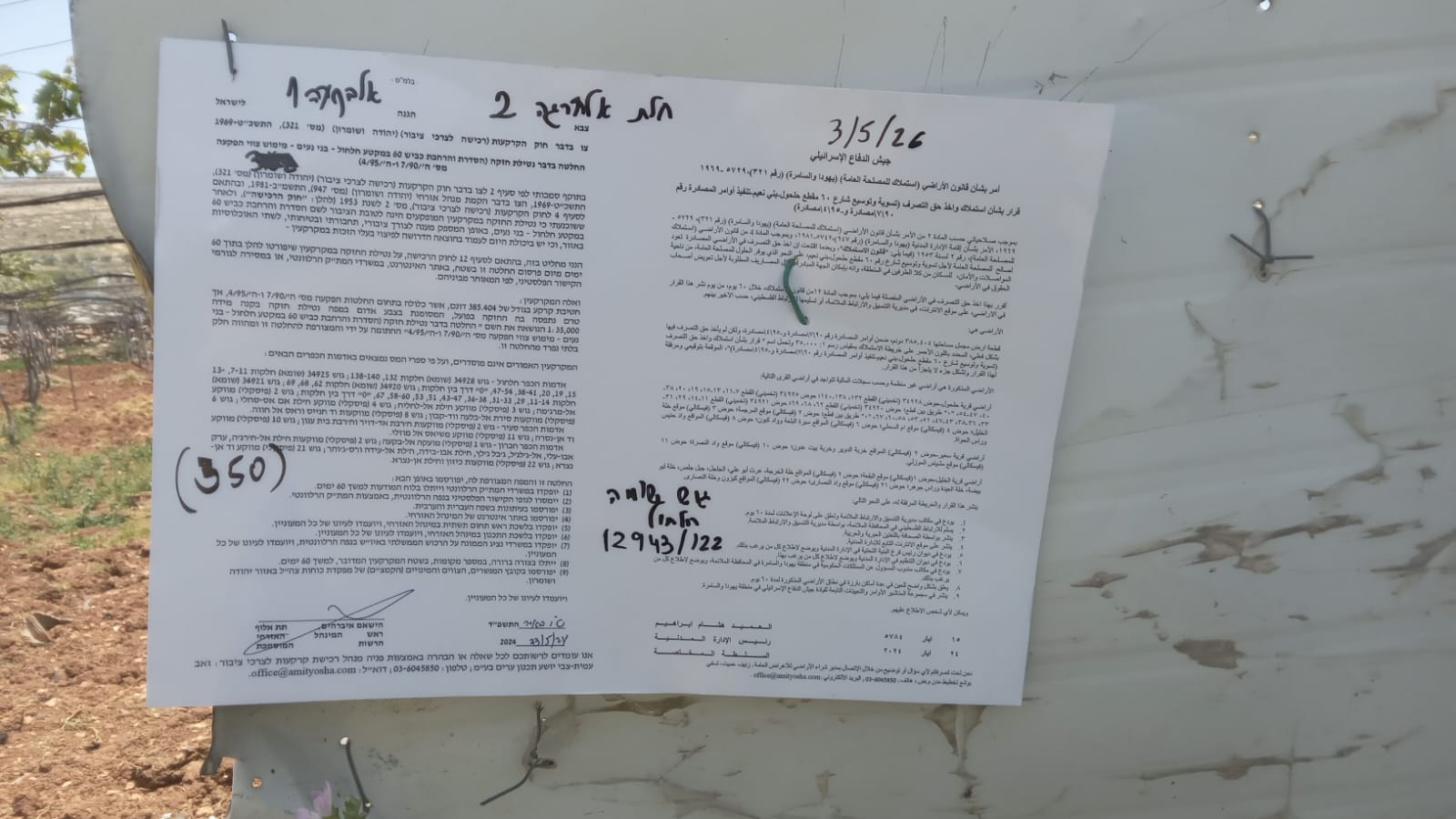 Muhammad D.May-13-2026Hebron - Request for compensation for land expropriation
-
South Hebron Hills
See all reports for this place-
South Hebron Hills
South Hebron Hills is a large area in the West Bank's southern part.
Yatta is a major city in this area: right in the border zone between the fertile region of Hebron and its surroundings and the desert of the Hebron Hills. Yatta has about 64,000 inhabitants.
The surrounding villages are called Masafer Yatta (Yatta's daughter villages). Their inhabitants subsist on livestock and agriculture. Agriculture is possible only in small plots, especially near streams. Most of the area consists of rocky terraces.Since the beginning of the 1980s, many settlements have been established on the agricultural land cultivated by the Palestinians in the South Hebron Hills region: Carmel, Maon, Susia, Masadot Yehuda, Othniel, and more. Since the settlements were established and Palestinians cultivation areas have been reduced; the residents of the South Hebron Hills have been suffering from harassment by the settlers. Attempts to evict and demolish houses have continued, along with withholding water and electricity. The military and police usually refrain from intervening in violent incidents between settlers and Palestinians do not enforce the law when it comes to the investigation of extensive violent Jewish settlers. The harassment in the South Hebron Hills includes attacking and attempting to burn residential tents, harassing dogs, harming herds, and preventing access to pastures.
There are several checkpoints in the South Hebron Hills, on Routes 317 and 60. In most of them, no military presence is apparent, but rather an array of pillboxes monitor the villages. Roadblocks are frequently set up according to the settlers and the army's needs. These are located at the Zif Junction, the Dura-al Fawwar crossing, and the Sheep Junction at the southern entrance to Hebron.
Updated April 2022
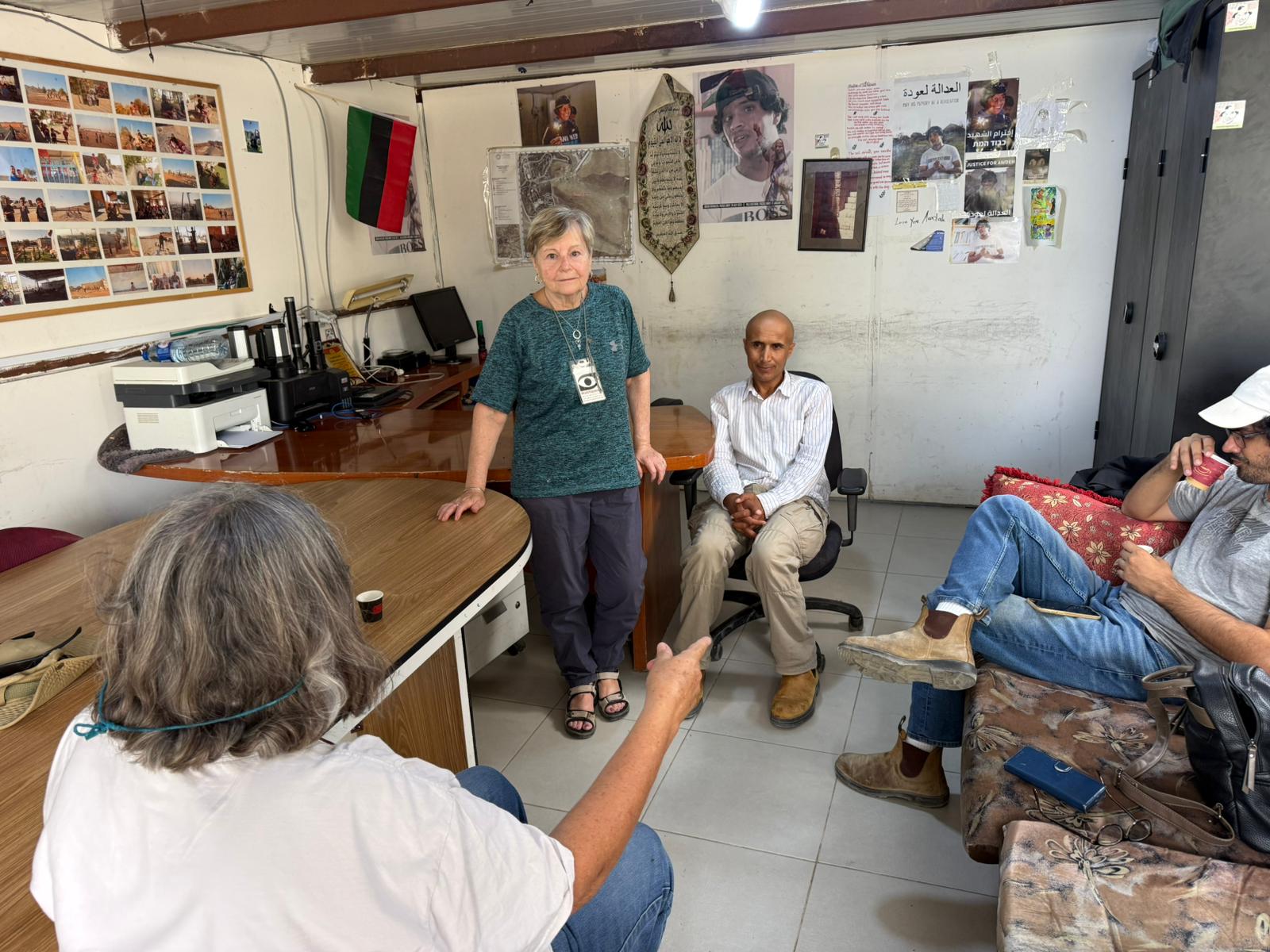 Muhammad D.Aug-30-2026Umm al-Khair, Smadar with Eid, Or and Timna, in the Situation Room
-
