
Hebron, South Hebron Hills, Mon 9.1.12, Morning
Translated by Jenny L.
Route 60
Strong winds blowing; very little traffic on Route 60. At the foot of Beit Haggai, the entrance to the southern approaches to Hebron has for some time been blocked with stone blocks. In the last year they also added a barbed wire fence, as if anyone could get through this blockade. This morning the fence has been folded back to the side of the road and soldiers in an armored vehicle are on guard there. "Who or what are you guarding?" "We don't know," they answer.
We decided today to travel in the direction of Tekoa, which means turning east at the entrance to Sa'ir and to continue on to Tekoa, toward Jerusalem. We went into Hebron on the way back.
Route 3517 – Route 3670
The road is pretty and silent. A section of it is in fact the continuation of Route 356. Further on, the road leading according to the sign to the veteran settlements Meizad/Asphar which looks to be well established and not far from it, the settlement 'Pnei Kedem', where they are still living in caravans. On a hilltop nearby caravans are to be seen, which aroused our interest. The track was very rough and fearing for our vehicle, our driver parked at the side of the road. All at once we noticed a group of soldiers at the top of the hill. We approached them, in the hope of getting answers to our questions. They are reserve soldiers, tolerant and smiling. "Ah, you're from Machsom Watch!! I'm for you!" exclaims the reservist with the biggest smile. "No. I didn't mean that, I'm just fooling around. On the contrary!" he continues. "What are you doing here," we ask. "Guarding the road" "What is there to guard?" "That there won't be any problems, any penetrations," they reply. "What's on the hill?" we ask. "We don't know," they answer. "Good and obedient" soldiers like these draw out our anger about the occupation. They quietly listen without saying anything. They explain where the settlements seen on the sign are to be found and we drive on to see them. They are located on hills at a high elevation from which all the surroundings can be seen. The military base is located immediately adjoing Meizad. Again we see the symbiosis the authorities have so cleverly created. The fact is again evident that everyone in these places is here with the Government's blessing. The signs indicate that the road continues to the Etzion Bloc.
We returned to the road leading to Tekoa, all the village road signs are primarily to Jewish settlements. Almost all their neighbors, in their villages since time immemorial, might as well be invisible. They don't exist on the map. We continued on to the southern approaches of Jerusalem. The Har Homa neighborhood stands out like a thorn on the landscape. We returned to Route 60.
Hebron
At the entrance to Kiryiat Arba, the guard again, for the thousandth time, requests ID from M. our driver. And yet again we too insist on presenting our IDs. Again a phone call is made to notify our arrival. The Golani flags are blowing in the wind. Again and again we see "Gideon Family" emblazed on their ensignia. In the city itself, the soldiers have hung posters: "The Lions of Wrath". This is what they call themselves.
We had arranged to meet someone who for eight years has been trying without success to obtain a permit to work in Israel. We gave him the relevant information and were again forced to remark that it wasn't at all certain that we could help him. Our sense of helplessness is a constant source of despair.
Because it was so late, we were "fortunate" enough to see a group of female teachers at the Tarpat checkpoint on their way back to H2. A soldier is trying to direct them to go through the magnometer. They refuse. To our joy, he "remembers" that it's permitted to allow people to go home without being checked and he opens the gate. An exchange of looks between us, small signs of victory exchanged between the women and us, and they turn to go home. "Such happiness."
Hebron
See all reports for this place-
According to Wye Plantation Accords (1997), Hebron is divided in two: H1 is under Palestinian Authority control, H2 is under Israeli control. In Hebron there are 170,000 Palestinian citizens, 60,000 of them in H2. Between the two areas are permanent checkpoints, manned at all hours, preventing Palestinian movement between them and controlling passage of permit holders such as teachers and schoolchildren. Some 800 Jews live in Avraham Avinu Quarter and Tel Rumeida, on Givat HaAvot and in the wholesale market.
Checkpoints observed in H2:
- Bet Hameriva CP- manned with a pillbox
- Kapisha quarter CP (the northern side of Zion axis) - manned with a pillbox
- The 160 turn CP (the southern side of Zion axis) - manned with a pillbox
- Avraham Avinu quarter - watch station
- The pharmacy CP - checking inside a caravan with a magnometer
- Tarpat (1929) CP - checking inside a caravan with a magnometer
- Tel Rumeida CP - guarding station
- Beit Hadassah CP - guarding station
Three checkpoints around the Tomb of the Patriarchs
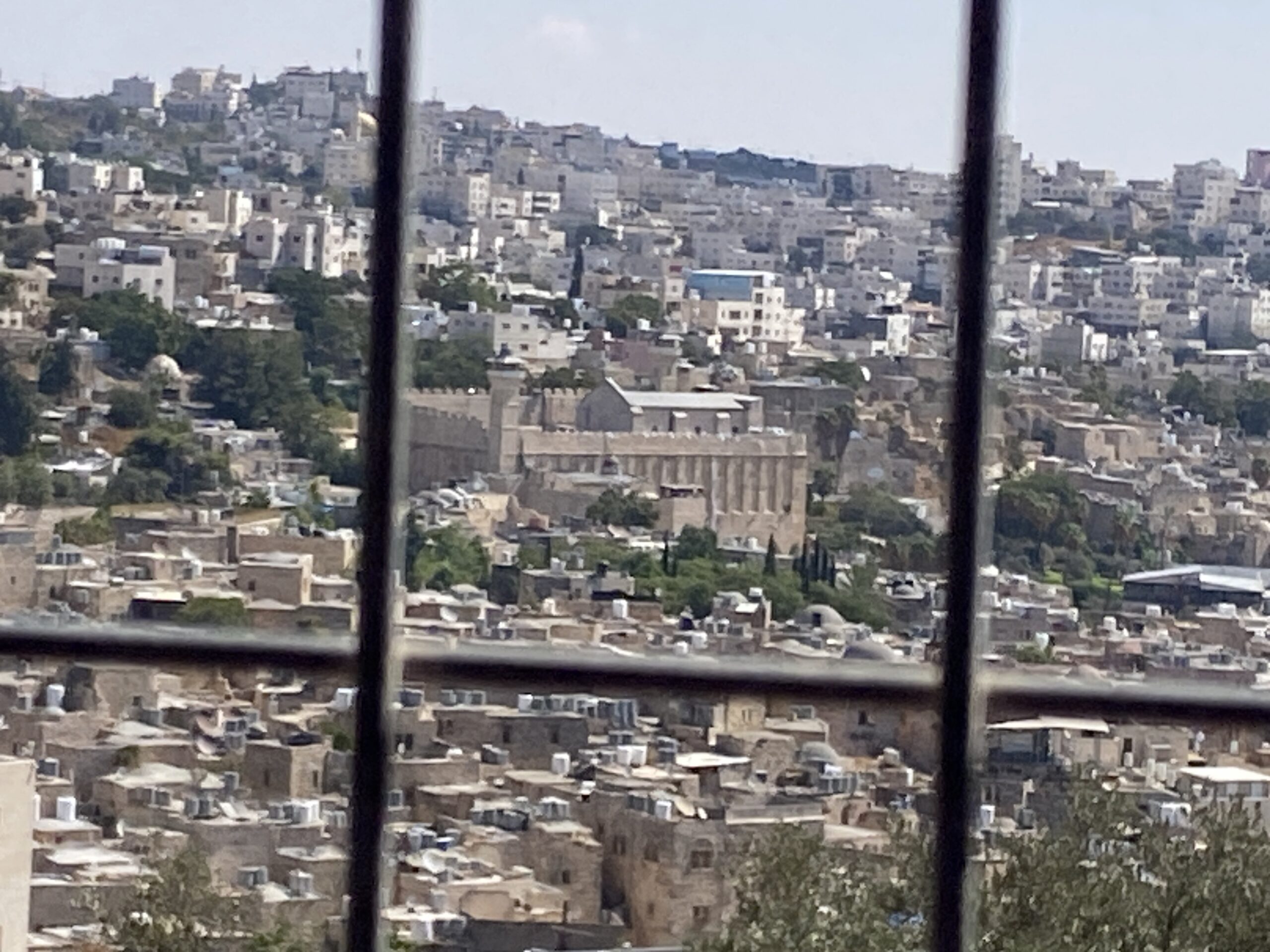 Yael ZoranSep-24-2026Hebron and the Cave of the Patriarchs from Beit Hashalom
-
South Hebron Hills
See all reports for this place-
South Hebron Hills
South Hebron Hills is a large area in the West Bank's southern part.
Yatta is a major city in this area: right in the border zone between the fertile region of Hebron and its surroundings and the desert of the Hebron Hills. Yatta has about 64,000 inhabitants.
The surrounding villages are called Masafer Yatta (Yatta's daughter villages). Their inhabitants subsist on livestock and agriculture. Agriculture is possible only in small plots, especially near streams. Most of the area consists of rocky terraces.Since the beginning of the 1980s, many settlements have been established on the agricultural land cultivated by the Palestinians in the South Hebron Hills region: Carmel, Maon, Susia, Masadot Yehuda, Othniel, and more. Since the settlements were established and Palestinians cultivation areas have been reduced; the residents of the South Hebron Hills have been suffering from harassment by the settlers. Attempts to evict and demolish houses have continued, along with withholding water and electricity. The military and police usually refrain from intervening in violent incidents between settlers and Palestinians do not enforce the law when it comes to the investigation of extensive violent Jewish settlers. The harassment in the South Hebron Hills includes attacking and attempting to burn residential tents, harassing dogs, harming herds, and preventing access to pastures.
There are several checkpoints in the South Hebron Hills, on Routes 317 and 60. In most of them, no military presence is apparent, but rather an array of pillboxes monitor the villages. Roadblocks are frequently set up according to the settlers and the army's needs. These are located at the Zif Junction, the Dura-al Fawwar crossing, and the Sheep Junction at the southern entrance to Hebron.
Updated April 2022
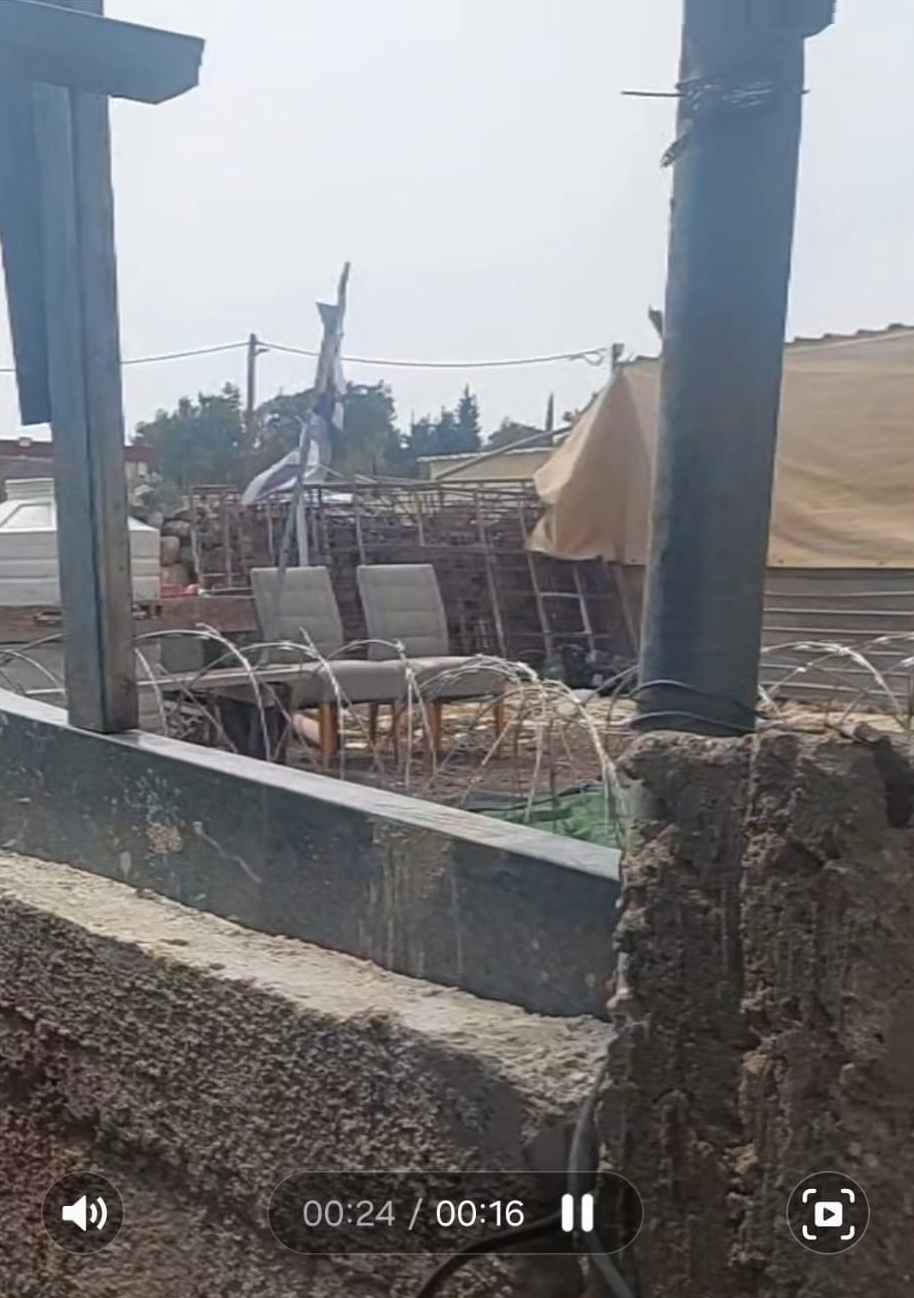 Michal TsadikOct-12-2026Umm al-Khair - Concertina wire and fences
-
