
Hebron, South Hebron Hills, Tarqumiya, Wed 22.10.08, Morning
Tarqumiya
At 9am all the workers have passed through and three family visits' buses are being checked. A Red Cross representative complains that the process is longer than usual today and that the check commenced only at 8am. After the holiday, workers will be coming late to work. He tells me also that passing through the Sansana CP is far quicker, and that they need not wait for police escort there.
We meet acquaintances from Tarqumiya at the CP, people we often meet at the grocery. They claim that they've had an agreement with the District Coordination Office (DCO) at Tarqumiya (which the Palestinians don't take enough advantage of) according to which they can pass through the CP today, to pick olives in their grove, about 500m from the CP, on the Israeli side. When they arrived with all their family members, they were not allowed through.
Ofra handled the matter and it turned out that Jamal from the DCO understood their agreement differently; that they could pass through only tomorrow and even then, not through the CP, but via the agricultural gate, located in the fence next to the village of Idna – 7km from their grove.
Why such ineptness? And the callousness? That's how hate and resentment emerge. The trucks' pathway is as packed as usual.
Road 35
Idna-Tarqumiya: The olive press is operating but only at half-load. Normally, people would come to take olive oil from Jenin too but, as the owner says, "there's no way…".
Pillbox is manned and on our way back, around 1-2pm, there are soldiers in the CP, stopping the cars approaching from the direction of Idna. The line is not long – but why not harass when one can?
"What do you want?" asks the soldier, "this is our daily activity." The other soldiers at the pillbox are busy cleaning its top – a 7th Brigade unit secures this area.
Halhul-Hebron Bridge: Some of us go onto the bridge to buy some glass products. Before long, a military Jeep stops by our transit car. He must protect us, even though we say we need no protection. He makes a detour upwards and gets to the shop selling the glass, protecting those of us who went to buy – thus, the Palestinians have gained another military encounter.
The Olive Passage: Around 10am, a rolling CP is laid out – only trucks are allowed in, while private cars are all sent back. As we stand there, the order is changed, and private cars are allowed too. On our way back, there are no soldiers next to the CP and vehicles of all kinds get into Hebron.
The Humanitarian CP: Pillbox is manned. No military vehicles.
Road 60
Shayuch-Sair – all blockages are in place. In this Hol Hamo’ed (Jewish holiday), no soldiers go into the house at the crossing – there are no military vehicles.
Hebron
We have the feeling that there are many more settlers' children and adolescents around now than usual – it's a day following the (Jewish) holiday and all schools are still shut. Actually, there are no special events anywhere. The feeling of a deserted city is intensified – Basm from the grocery says that, relatively speaking, this holiday has passed smoothly and there were no special incidences from the direction of the Disputed House (Beit Hameriva).
Patriarch's tomb cave: very close by, there are many military vehicles and Uri the policeman won't allow us up, towards Tel Rumeida. He shows us the "closed military zone" edict, effective 9am, tomorrow.
All this military force is here, to protect the olive harvest in Tel Rumeida – a harvest that only Palestinians are allowed to participate in because all the left-activists who want to give a hand and express solidarity are considered provocateurs.
We, who have come to show Hebron to our guests, manage to get to the Patriarchs' hill, the prayers' route, the Harsina hill, the Disputed House, where soldiers protect 14 particularly annoying families, and the pharmacy CP – here, too, despair is everywhere.
Hebron
See all reports for this place-
According to Wye Plantation Accords (1997), Hebron is divided in two: H1 is under Palestinian Authority control, H2 is under Israeli control. In Hebron there are 170,000 Palestinian citizens, 60,000 of them in H2. Between the two areas are permanent checkpoints, manned at all hours, preventing Palestinian movement between them and controlling passage of permit holders such as teachers and schoolchildren. Some 800 Jews live in Avraham Avinu Quarter and Tel Rumeida, on Givat HaAvot and in the wholesale market.
Checkpoints observed in H2:
- Bet Hameriva CP- manned with a pillbox
- Kapisha quarter CP (the northern side of Zion axis) - manned with a pillbox
- The 160 turn CP (the southern side of Zion axis) - manned with a pillbox
- Avraham Avinu quarter - watch station
- The pharmacy CP - checking inside a caravan with a magnometer
- Tarpat (1929) CP - checking inside a caravan with a magnometer
- Tel Rumeida CP - guarding station
- Beit Hadassah CP - guarding station
Three checkpoints around the Tomb of the Patriarchs
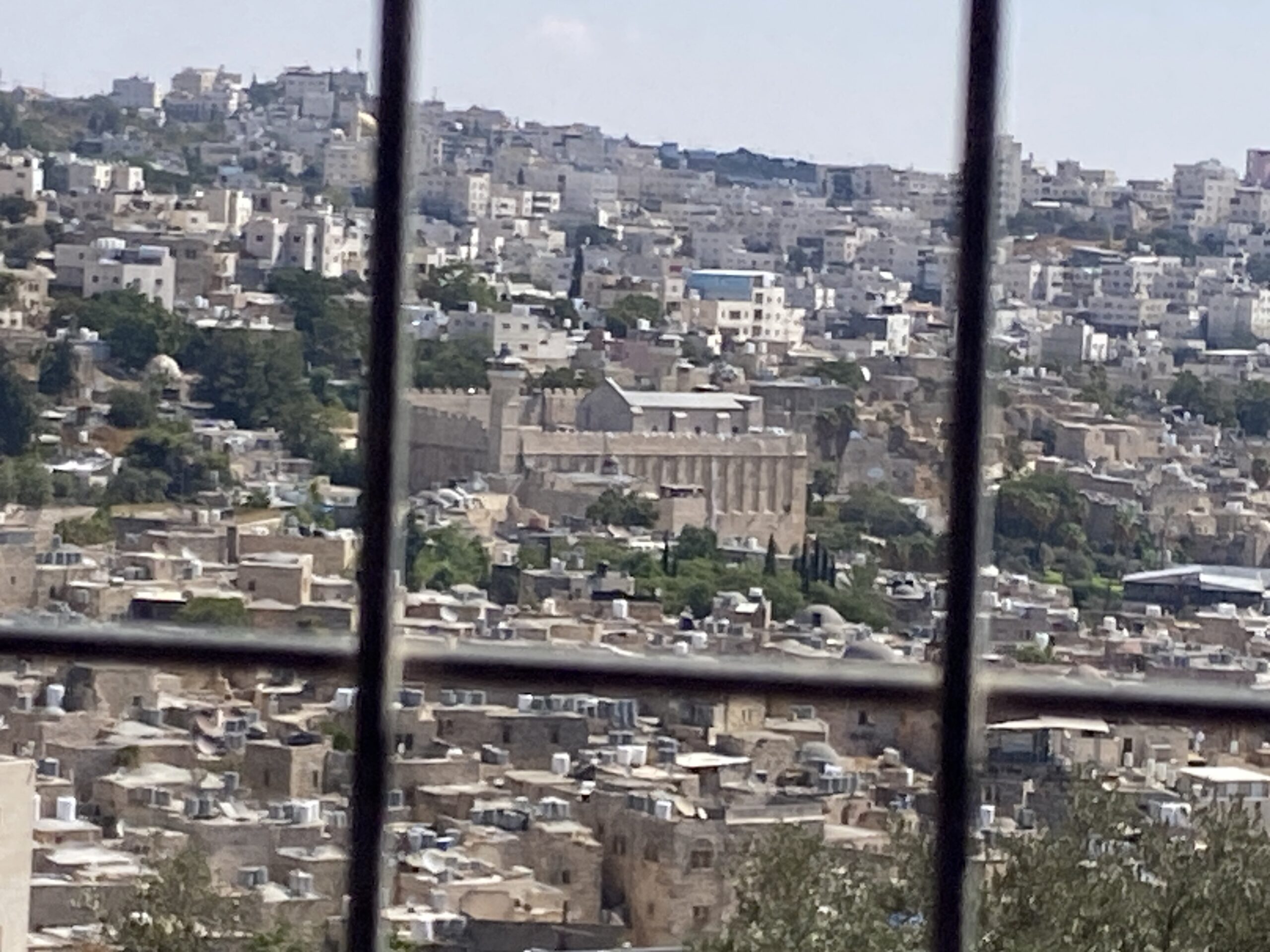 Yael ZoranSep-24-2026Hebron and the Cave of the Patriarchs from Beit Hashalom
-
South Hebron Hills
See all reports for this place-
South Hebron Hills
South Hebron Hills is a large area in the West Bank's southern part.
Yatta is a major city in this area: right in the border zone between the fertile region of Hebron and its surroundings and the desert of the Hebron Hills. Yatta has about 64,000 inhabitants.
The surrounding villages are called Masafer Yatta (Yatta's daughter villages). Their inhabitants subsist on livestock and agriculture. Agriculture is possible only in small plots, especially near streams. Most of the area consists of rocky terraces.Since the beginning of the 1980s, many settlements have been established on the agricultural land cultivated by the Palestinians in the South Hebron Hills region: Carmel, Maon, Susia, Masadot Yehuda, Othniel, and more. Since the settlements were established and Palestinians cultivation areas have been reduced; the residents of the South Hebron Hills have been suffering from harassment by the settlers. Attempts to evict and demolish houses have continued, along with withholding water and electricity. The military and police usually refrain from intervening in violent incidents between settlers and Palestinians do not enforce the law when it comes to the investigation of extensive violent Jewish settlers. The harassment in the South Hebron Hills includes attacking and attempting to burn residential tents, harassing dogs, harming herds, and preventing access to pastures.
There are several checkpoints in the South Hebron Hills, on Routes 317 and 60. In most of them, no military presence is apparent, but rather an array of pillboxes monitor the villages. Roadblocks are frequently set up according to the settlers and the army's needs. These are located at the Zif Junction, the Dura-al Fawwar crossing, and the Sheep Junction at the southern entrance to Hebron.
Updated April 2022
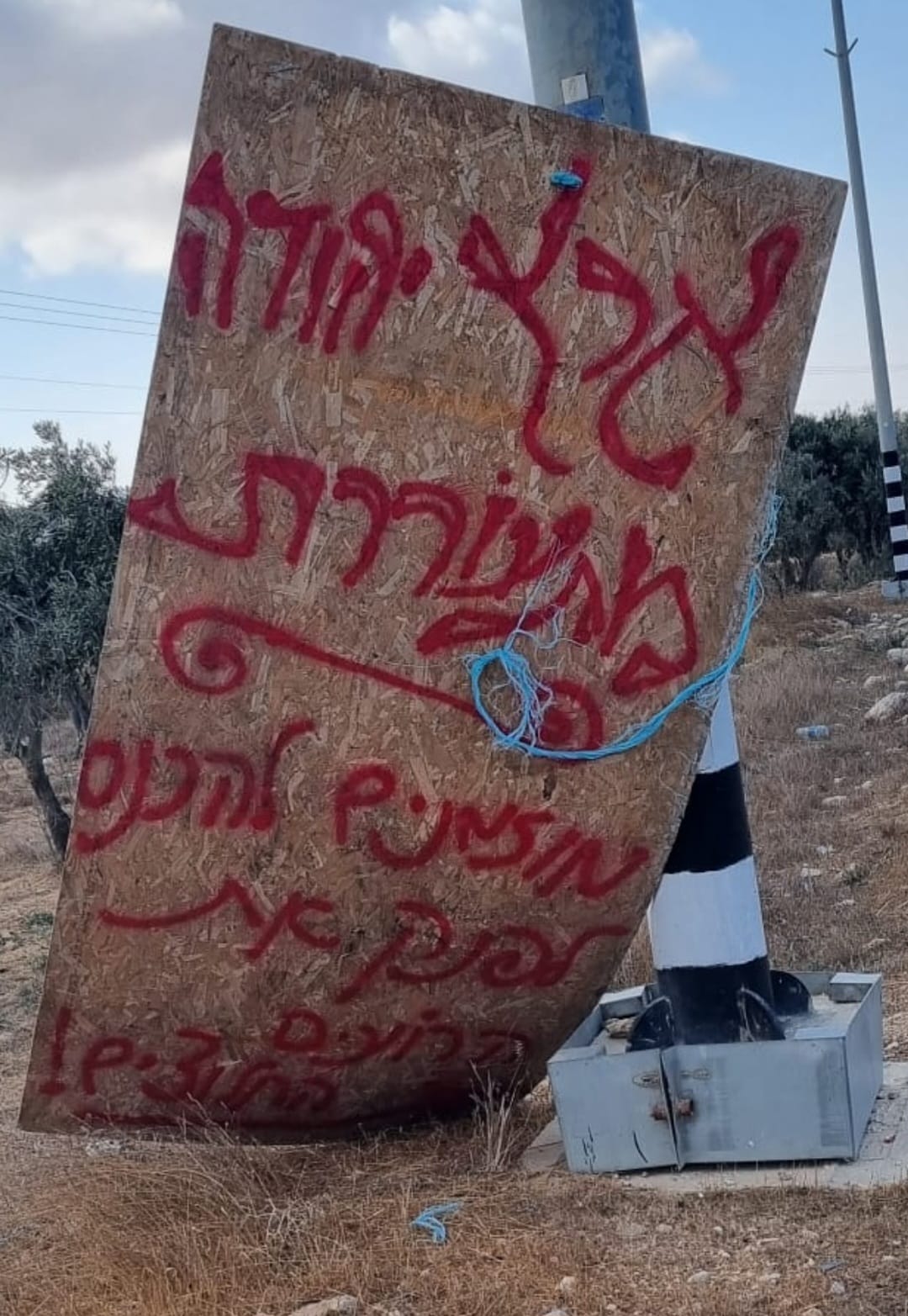 Smadar BeckerOct-17-2026A sign placed by those who call themselves the Pioneer Shepherds, at the outpost adjacent to Qawawis
-
Tarqumiya CP
See all reports for this place-
The Tarqumiya Checkpoint is one of the largest and busiest checkpoints where people and goods cross into Israel. It is located on the Separation Barrier close to the Green Line, on Road 35 (connecting Beer Sheva and Hebron). It is run by the Israel Defense Ministry’s Crossings Administration with civilian secuirty companies running the day to day operations. The checkpoint is indeed open to vehicles in both directions 24/7, but Palestinians are prevented from crossing in vehicles, except in special cases. MachsomWatch activists visit the checkpoint as it opens at 3:45 am, in order to observe the daily passage of nearly 10,000 Palestinian workers. The workers arrive from throughout the Southern West Bank. Our activists report on the tremendous overcrowding at this checkpoint; they have observed young men climbing and scrambling on the fences and roofs of the ‘access cages’. This is how the work day begins for those who ‘build the land of Israel’. updated November 2019
-
