
Hebron, South Hebron Hills, Tue 9.8.11, Morning
Meytar Crossing:
There are a lot of trucks and a few people. The checkpoint is empty and there is little traffic along Route 317.
Hebron
It is Ramadan and the city is empty. Stores are closed and there are only a few people about. No one is being detained at any of the checkpoints.
It is the Jewish fast day of the 9th of Av and there are consequently a lot of Jews at the Cave of the Patriarchs. A soldier from the Border Patrol directs us to a side route to avoid the traffic.
Both Jews and Arabs are fasting today. It is advisable for us to arrive in Hebron later since people go out later during Ramadan.
We decided to continue on Route 60 to Karmei Yosef. There is a sign at the entrance to the settlement saying: "Shay Nitzan is an Enemy of the Torah".
There are vineyards laden with grapes. Today because of the fast there is no one about, and usually there are reports that the settlers attempt to prevent the Palestinians from entering their fields.
On the hill overlooking the gate of the settlement about 300 meters away is a sign and an Israeli flag. The sign reads "Givat Shore." There is also a sign with an arrow at the side of the road there is also a sign pointing to the hill attesting that it is named after Eyal and Yael Shorek (the names somehow ring no bells). We should follow up to see if there is a genuine attempt to erect a settlement here or if this is simply an educational game of young settlers.)
We saw nothing out of the ordinary on the way back via Route 60.
Hebron
See all reports for this place-
According to Wye Plantation Accords (1997), Hebron is divided in two: H1 is under Palestinian Authority control, H2 is under Israeli control. In Hebron there are 170,000 Palestinian citizens, 60,000 of them in H2. Between the two areas are permanent checkpoints, manned at all hours, preventing Palestinian movement between them and controlling passage of permit holders such as teachers and schoolchildren. Some 800 Jews live in Avraham Avinu Quarter and Tel Rumeida, on Givat HaAvot and in the wholesale market.
Checkpoints observed in H2:
- Bet Hameriva CP- manned with a pillbox
- Kapisha quarter CP (the northern side of Zion axis) - manned with a pillbox
- The 160 turn CP (the southern side of Zion axis) - manned with a pillbox
- Avraham Avinu quarter - watch station
- The pharmacy CP - checking inside a caravan with a magnometer
- Tarpat (1929) CP - checking inside a caravan with a magnometer
- Tel Rumeida CP - guarding station
- Beit Hadassah CP - guarding station
Three checkpoints around the Tomb of the Patriarchs
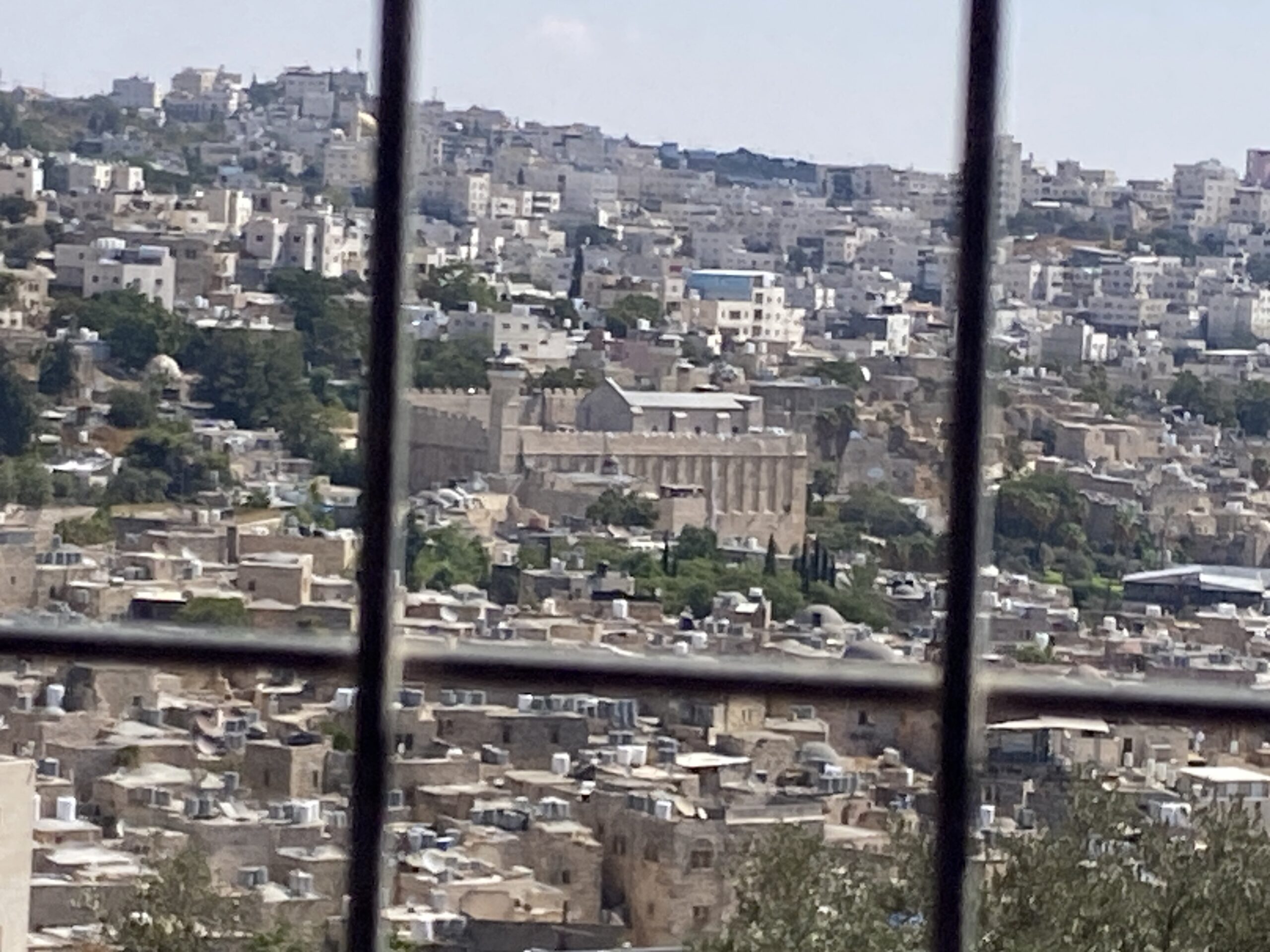 Yael ZoranSep-24-2026Hebron and the Cave of the Patriarchs from Beit Hashalom
-
South Hebron Hills
See all reports for this place-
South Hebron Hills
South Hebron Hills is a large area in the West Bank's southern part.
Yatta is a major city in this area: right in the border zone between the fertile region of Hebron and its surroundings and the desert of the Hebron Hills. Yatta has about 64,000 inhabitants.
The surrounding villages are called Masafer Yatta (Yatta's daughter villages). Their inhabitants subsist on livestock and agriculture. Agriculture is possible only in small plots, especially near streams. Most of the area consists of rocky terraces.Since the beginning of the 1980s, many settlements have been established on the agricultural land cultivated by the Palestinians in the South Hebron Hills region: Carmel, Maon, Susia, Masadot Yehuda, Othniel, and more. Since the settlements were established and Palestinians cultivation areas have been reduced; the residents of the South Hebron Hills have been suffering from harassment by the settlers. Attempts to evict and demolish houses have continued, along with withholding water and electricity. The military and police usually refrain from intervening in violent incidents between settlers and Palestinians do not enforce the law when it comes to the investigation of extensive violent Jewish settlers. The harassment in the South Hebron Hills includes attacking and attempting to burn residential tents, harassing dogs, harming herds, and preventing access to pastures.
There are several checkpoints in the South Hebron Hills, on Routes 317 and 60. In most of them, no military presence is apparent, but rather an array of pillboxes monitor the villages. Roadblocks are frequently set up according to the settlers and the army's needs. These are located at the Zif Junction, the Dura-al Fawwar crossing, and the Sheep Junction at the southern entrance to Hebron.
Updated April 2022
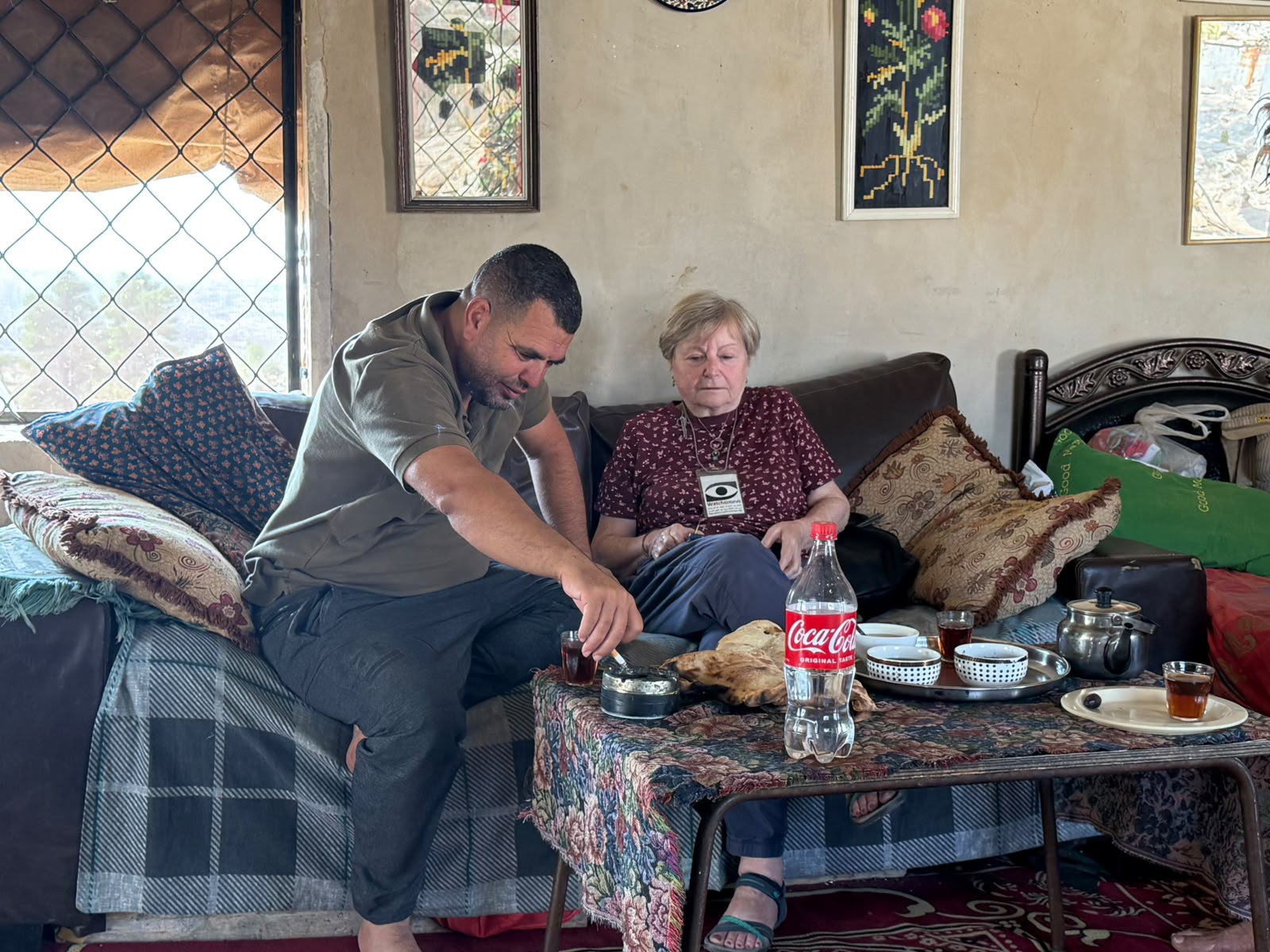 Muhammad D.Oct-24-2026Smadar with Nasr Nawaja'a, in Susiya
-
