
Huwwara
Huwwara, Tuesday 21 april 2006, a.m.Observers: Orit D, Nili P, Ofra T. Michal V. (reporting)Marda 08:50 – a humvee blocked the road. On site there also were blue policemen and border police. On both sides of the road two buses were waiting. The passengers, mostly women and children, were standing next to the buses. One of the passengers explained to us that these are hikers on a trip to Jericho and the Dead Sea and that all have permits. The buses were stopped in order to wait for a third bus. When they were stopped, the soldiers requested to see their ID’s. The soldiers did not get out of their vehicle. When we approached them, they slammed their door. One of the soldiers told us that they also wanted an ID of a nine-year-old child. Upon our question about the line the soldiers answered: “Also in Tel-Aviv, when you want to go to Sheinkin, there is a line”. In some ten minutes the minibus arrived, the examination ended and the three buses went on their way.At the southern entrance to Huwwara.9:10 – A humvee with sleeping soldiers inside.Huwwara checkpoint9:15 – Outside the checkpoint large rubbish-heaps were prominent. The nearest examination point was closed and the examination took place at the far point only, where we were not allowed to come near. When we asked one of the soldiers about the change, he answered: “that is the beauty of it all” and explained that transferring the examination point allows faster and more convenient passage for the workers and they now have to have one examination instead of two. The female soldier who stood at the checkpost said to the soldier “ throw them out of here”. Movement of people and vehicles was slight and as said we were not allowed to come near the examination point.Awarta checkpointAlso here the large rubbish-heaps next to the checkpoint were prominent. There was no traffic.Beit Furik The checkpoint was empty.10:20 – Tapu’ah-Zaatara junctionSome 26 cars, mostly trucks, were detained at the junction. One of the drivers told us that they had been waiting for over two hours. At the head of the line stood a bus whose passengers were women and children on their way to Ramallah and Jericho. The passengers were told to get off the bus and their ID’s were being checked. One of the soldiers came up to us and asked us to get away claiming that the place is a closed military area and that we are not allowed to be there. A soldier who stood next to him said: “what do you care, they have nothing else to do” (referring to us). One of the drivers told us that he is a doctor and complained that he was being sopped. As time went by the line of cars only grew longer. We contacted the headquarters of the DCO and got no answer. We contacted the humanitarian desk of the IDF. At the desk we were told that there is no prohibition of standing at the checkpoints but they do not intend to intervene. About the checkpoints they explained that for the last few days the bidul has been elevated to a higher level and that only those born in Ramallah and the environment may pass. At 10:40 the examinations were finished and the bus started to move. Three passengers of the bus , 2 women, an older woman, a young pregnant woman and a man, remained at the checkpoint. It appeared that the younger woman did not get a permit because she was born in Tulkarem and had not yet changed her address in her ID to the address of her husband, to whom she has been married for 2 years. The older woman and the man, Israeli Arabs where he is the employer of the 2 women volunteered to stay with the young woman. Later on a discussion broke out between a soldier from the border police, who speaks Arabic and a soldier from the IDF who was there about the passage permit of the young woman. The border policeman who spoke Arabic heard the three and tried to explain their problem to the soldier. In the end he succeeded to convince the soldier to allow the young woman to pass. The employer of the women, the Israeli Arab, told him that he tried to explain the problem to the soldier but the soldier did not believe him. He knows the soldier who in general causes similar problems.10:50 – after the bus passed, three lanes were activated. We noticed the unseemly behavior of the soldiers: notwithstanding the pressure of vehicles they worked slowly, part of them just loafing around, talked amongst themselves or were eating during the work. The cars had to stop several meters from the checkpoint and the drivers were forced to bring their ID’s on foot to the soldiers. One of the drivers was an elderly man and physically unfit who had difficulty walking towards him.One of the soldiers who refused to give permission to one of the drivers to pass, asked us: “are you worried that I will hit him?” According to him because of the explosion in Tel-Aviv the inhabitants of Nablus and Jenin are forbidden to pass. He asked if his name is going to be published in the newspaper and said that he doesn’t care that his parents, who live in France and cannot see him in the newspaper. At 11:30 the line of cars shortened.
Huwwara
See all reports for this place-
The Huwwara checkpoint is an internal checkpoint south of the city of Nablus, at the intersection of Roads 60 and 5077 (between the settlements of Bracha and Itamar). This checkpoint was one of the four permanent checkpoints that closed on Nablus (Beit Furik and Awarta checkpoints to the east and the Beit Iba checkpoint to the west). It was a pedestrian-only barrier. As MachsomWatch volunteers, we watched therre since 2001 two shifts a day - morning and noon, the thousands of Palestinians leaving Nablus and waiting for hours in queues to reach anywhere else in the West Bank, from the other side of the checkpoint the destination could only be reached by public transport. In early June 2009, as part of the easing of Palestinian traffic in the West Bank, the checkpoint was opened to vehicular traffic. The passage was free, with occasional military presence in the guard tower. Also, there were vehicle inspections from time to time. Since the massacre on 7.10.2023, the checkpoint has been closed to Palestinians.
On February 26, 2023, about 400 settlers attacked the town's residents for 5 hours and set fire to property, such as houses and cars. Disturbances occurred in response to a shooting of two Jewish residents of Har Bracha by a Palestinian Terrorist. The soldiers stationed in the town did not prevent the arson and rescued Palestinian families from their homes only after they were set on fire. No one was punished and Finance Minister Smotrich stated that "the State of Israel should wipe out Hawara." Left and center organizations organized solidarity demonstrations and support actions for the residents of Hawara.Hawara continued to be in the headlines in all the months that followed: more pogroms by the settlers, attacks by Palestinians and a massive presence of the army in the town. It amounted to a de facto curfew of commerce and life in the center of the city. On October 5, 2023, MK Zvi established a Sukkah in the center of Hawara and hundreds of settlers backed the army blocked the main road and held prayers in the heart of the town all night and the next day. On Saturday, October 7, 23 The "Swords of Iron" war began with an attack by Hamas on settlements surrounding Gaza in the face of a poor presence of the IDF. Much criticism has been made of the withdrawal of military forces from the area surrounding Gaza and their placement in the West Bank, and in the Hawara and Samaria region in particular, as a shield for the settlers who were taking over and rioting.
On November 12, 2023, the first section of the Hawara bypass road intended for Israeli traffic only was opened. In this way, the settlers can bypass the road that goes through the center of Hawara, which is the main artery for traffic from the Nablus area to Ramallah and the south of the West Bank. For the construction of the road, the Civil Administration expropriated 406 dunams of private land belonging to Palestinians from the nearby villages. The settlers are not satisfied with this at the moment, and demand to also travel through Hawara itself in order to demonstrate presence and control.(updated November 2023)
.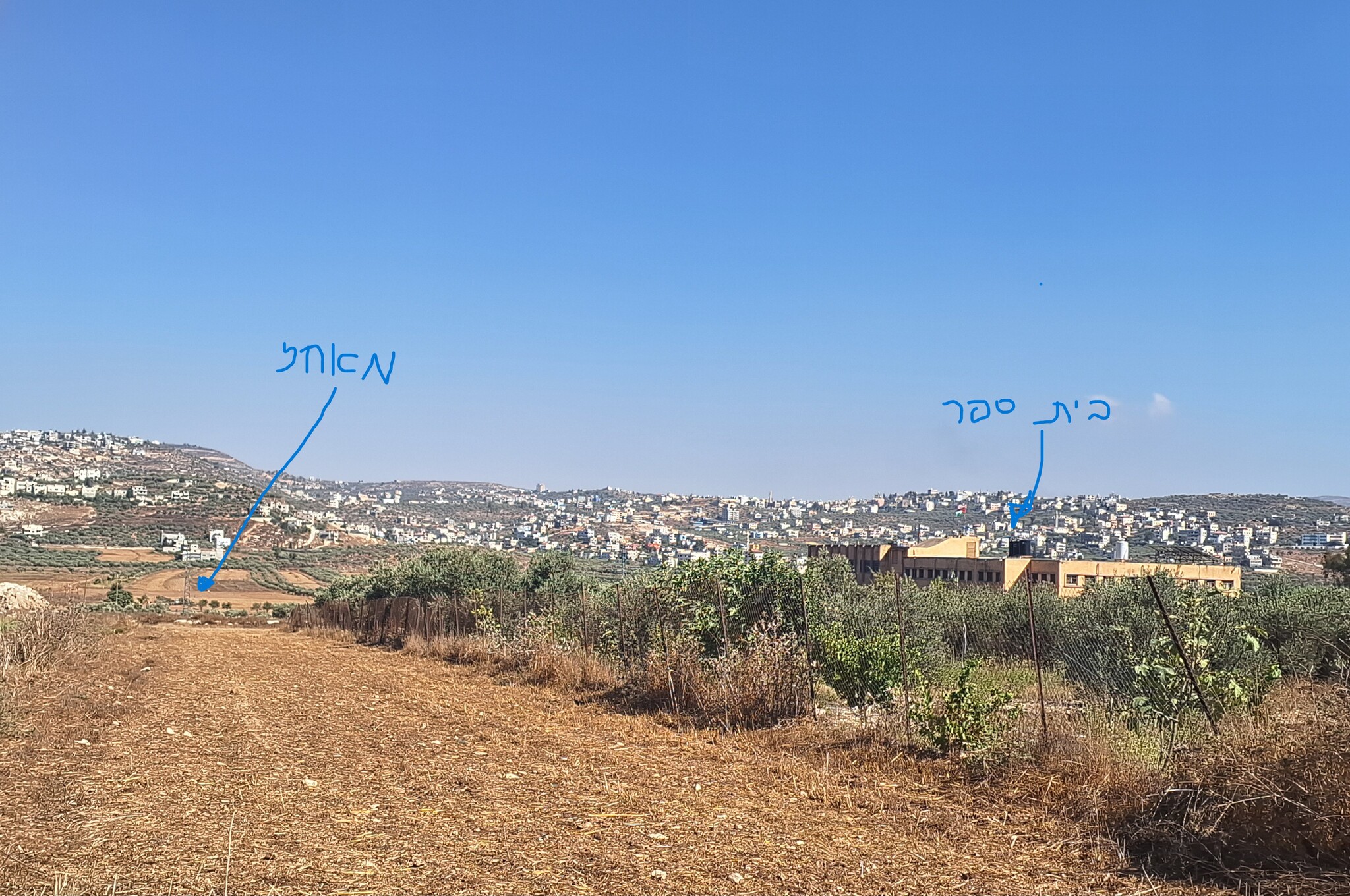 Ronit Dahan-RamatiAug-24-2026Huwara: The school on the outskirts of town and an outpost hidden among the trees
-
Marda
See all reports for this place-
Marda
There are about 2500 inhabitants in the village. A large part of their lands was confiscated for the benefit of the settlement of Ariel, some of whose buildings are adjacent to the village.
They often feel under siege. At both entrances to the village from the main road (505) there are checkpoints and the army does close the yellow arms from time to time. The inhabitants of Marda own olive groves behind a fence. Rarely are they allowed to cultivate their agricultural plots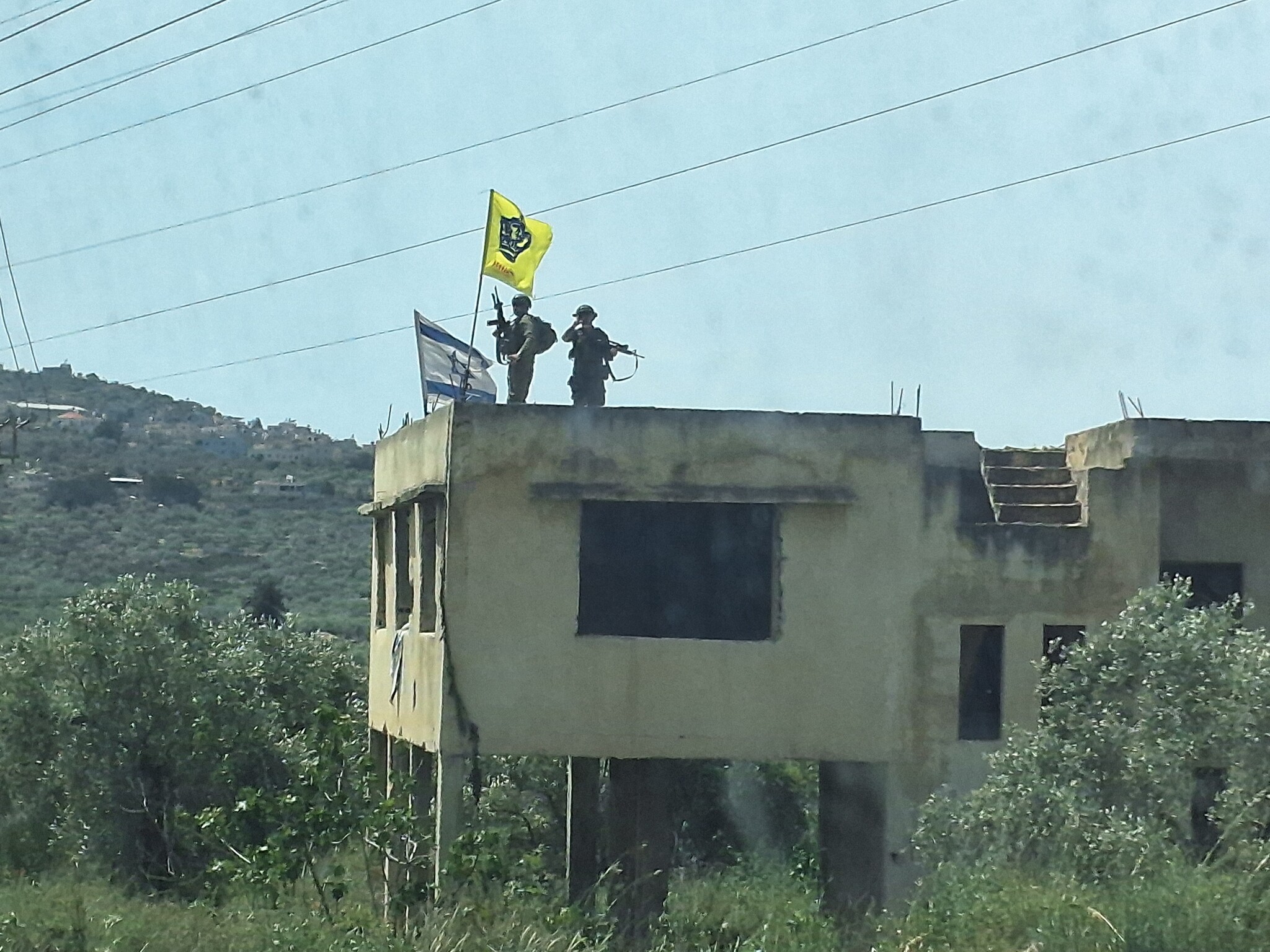 Ronit Dahan-RamatiApr-14-2026Marda. IDF post on the roof of a Palestinian home with the Messiah flag
-
