
Huwwara
HUWWARA ,Tuesday 5 October AMObservers: Rivka A., Yael P., Lirit L., Etty Paz (reporting)colour=red>Huwwara South 08:20 — A long line of some 100 people and five detainees in the “pen” [detainees are, typically, men aged from 16 to 30 or 35 who have no passage permits; their ID details are phoned through to the General Security Services (GSS, also known as the Shabak or the Shin Bet, the Hebrew acronym for the GSS) for checking against a central list of security suspects and the answers are then relayed back to the checkpoints. This cumbersome process can take considerable time, and that can be prolonged even more if the soldiers wait to accumulate a batch of ID cards before passing them on to the GSS , or if they behave in a similarly tardy manner at the end of the process, waiting until they have a batch of GSS clearances before they release individual detainees. Meanwhile, the detainees are virtually prisoners at the checkpoint where the soldiers retain the ID cards until the entire process is completed]. A young woman wanted to go through to obtain a new ID because she’d lost hers yesterday [this is usually a Catch 22 situation—one cannot go through a checkpoint without an ID, but to get an ID one needs to go through!]; Sergeant A. let her through although she had no documents. Because of the great pressure, another line, for older people, was started outside the “sleeves” in which the Palestinians wait. Two mature women soldiers, apparently volunteers, checked Palestinians politely and efficiently and established a pleasant atmosphere. The number of detainees increased and there were no releases because of communications difficulties . We saw for ourselves that telephone conversations were constantly cut off as the sergeant tried to read out names to be checked. An innovation: there were four benches in the detainees’ area although the detained men still tended to stand beside or sit on the low concrete wall that demarcates the area. The sergeant asked them quietly not to do this and they obeyed.The representative of the District Coordinating Office (DCO) [the army section that handles civilian matters; it generally has representatives at the checkpoints ostensibly to alleviate the lot of the Palestinians] tried to help a young man with a Palestinian passport who had no local ID because he’d been away for three years. It transpired that he needed a birth certificate or his father’s ID although he was 22.08:45 — The line was a little shorter but the number of detainees was growing. A DCO jeep with a major and two “apprentice” soldiers, a man and a woman, halted at the checkpoint. The major tried to help the young man, but he’d given up and gone home to bring the birth certificate.9:20 — Three detainees were released. A young man from the nearby village waiting with his sister went through. The major also helped a young man with a trader’s permit and explained that he couldn’t tell the commander what to do because the commander had security considerations which must take precedence over the needs of the Palestinians and the routine regulations.09:50 — Twenty-three detainees, and soon the number increased to 27.10:15 — Finally, 17 detainees were released!10:25 — Now there was no longer a line, only detainees waiting for the results of the check. We left for Beit Furik.Huwwara North Observers: Rivka A., Lirit L., as reported to Etty Paz.O8:30 — The line was short and passage was rapid, but there were 12 detainees. A woman reserve officer was courteous, as were the soldiers, but the detainees waited up to 09:30 at least, when we left for the south side. There appeared to be communications problems here as well.10:35 — Beit Furik: the checkpoint was completely empty.
Huwwara
See all reports for this place-
The Huwwara checkpoint is an internal checkpoint south of the city of Nablus, at the intersection of Roads 60 and 5077 (between the settlements of Bracha and Itamar). This checkpoint was one of the four permanent checkpoints that closed on Nablus (Beit Furik and Awarta checkpoints to the east and the Beit Iba checkpoint to the west). It was a pedestrian-only barrier. As MachsomWatch volunteers, we watched therre since 2001 two shifts a day - morning and noon, the thousands of Palestinians leaving Nablus and waiting for hours in queues to reach anywhere else in the West Bank, from the other side of the checkpoint the destination could only be reached by public transport. In early June 2009, as part of the easing of Palestinian traffic in the West Bank, the checkpoint was opened to vehicular traffic. The passage was free, with occasional military presence in the guard tower. Also, there were vehicle inspections from time to time. Since the massacre on 7.10.2023, the checkpoint has been closed to Palestinians.
On February 26, 2023, about 400 settlers attacked the town's residents for 5 hours and set fire to property, such as houses and cars. Disturbances occurred in response to a shooting of two Jewish residents of Har Bracha by a Palestinian Terrorist. The soldiers stationed in the town did not prevent the arson and rescued Palestinian families from their homes only after they were set on fire. No one was punished and Finance Minister Smotrich stated that "the State of Israel should wipe out Hawara." Left and center organizations organized solidarity demonstrations and support actions for the residents of Hawara.Hawara continued to be in the headlines in all the months that followed: more pogroms by the settlers, attacks by Palestinians and a massive presence of the army in the town. It amounted to a de facto curfew of commerce and life in the center of the city. On October 5, 2023, MK Zvi established a Sukkah in the center of Hawara and hundreds of settlers backed the army blocked the main road and held prayers in the heart of the town all night and the next day. On Saturday, October 7, 23 The "Swords of Iron" war began with an attack by Hamas on settlements surrounding Gaza in the face of a poor presence of the IDF. Much criticism has been made of the withdrawal of military forces from the area surrounding Gaza and their placement in the West Bank, and in the Hawara and Samaria region in particular, as a shield for the settlers who were taking over and rioting.
On November 12, 2023, the first section of the Hawara bypass road intended for Israeli traffic only was opened. In this way, the settlers can bypass the road that goes through the center of Hawara, which is the main artery for traffic from the Nablus area to Ramallah and the south of the West Bank. For the construction of the road, the Civil Administration expropriated 406 dunams of private land belonging to Palestinians from the nearby villages. The settlers are not satisfied with this at the moment, and demand to also travel through Hawara itself in order to demonstrate presence and control.(updated November 2023)
.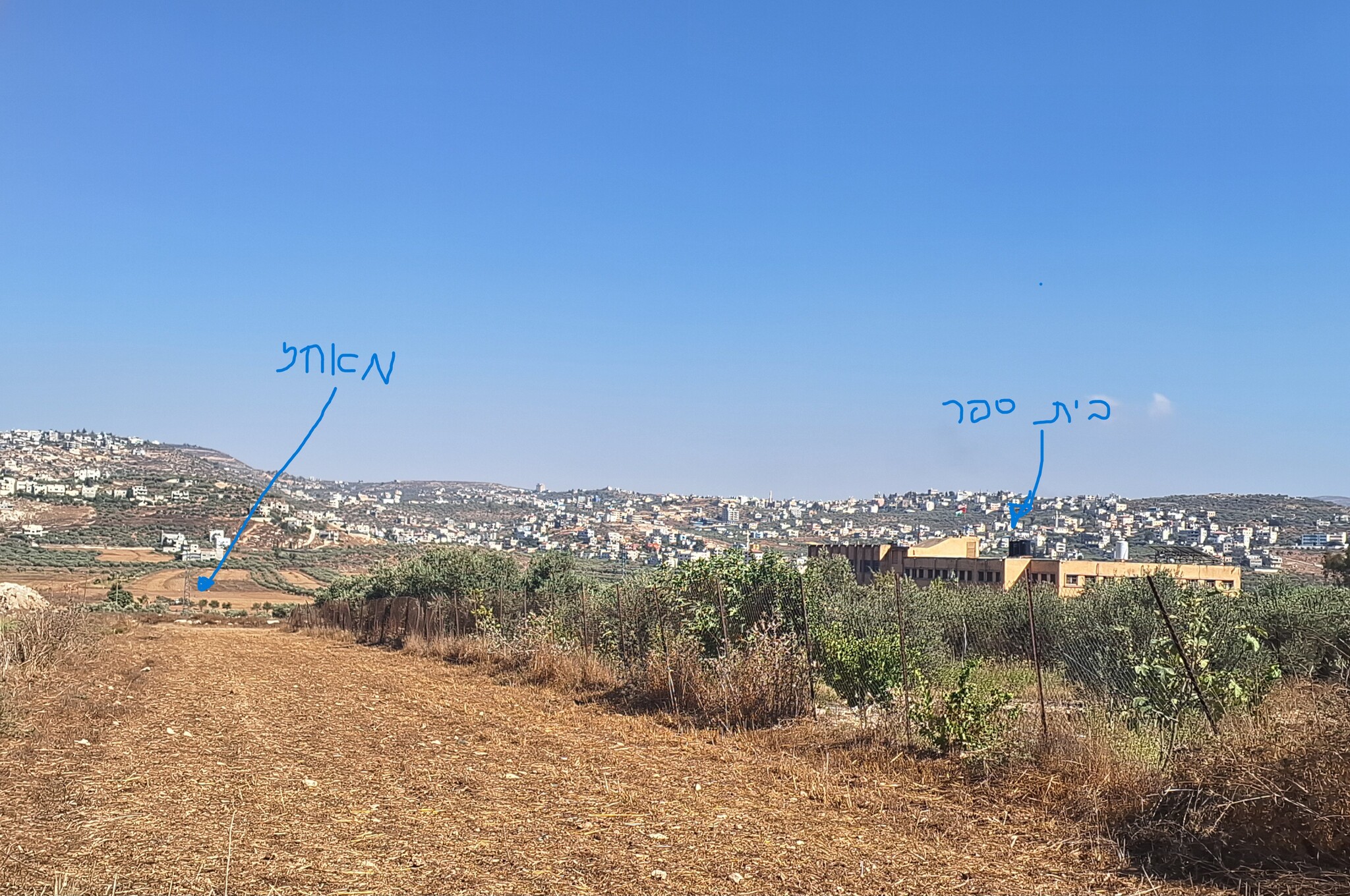 Ronit Dahan-RamatiAug-24-2026Huwara: The school on the outskirts of town and an outpost hidden among the trees
-
