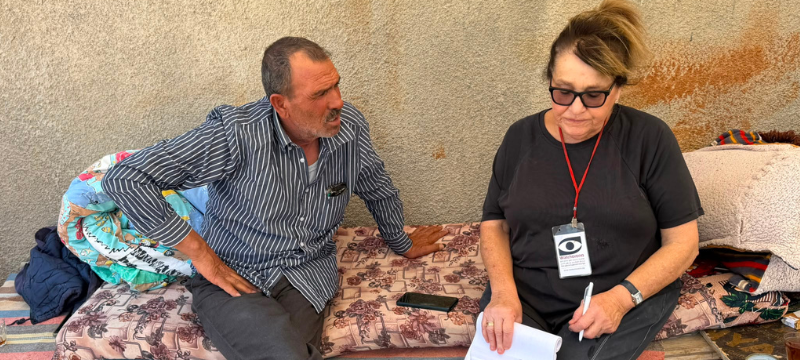
Huwwara
HUWWARA , Tuesday 26 October 2004 AMObservers: Lirit L., Yona A., Nurit V., Dina A., Aharona M., Etty P (reporting) colour=red>Jit junction – There were eight cars waiting to be checked when we passed through at 08:00.Before reaching Huwwara South checking post we could see from afar that all the detainees were being released Two older volunteers were checking men and women quietly and politely while soldiers came in and out and from time to time, checked cars, or “rearranged” the line by shouting. The lines were long and tightly packed, particularly the women’s line, and there were about 70 people waiting in all. The commander, a staff sergeant, was willing to explain but was very busy because the volunteers kept asking him questions. As the line lengthened to about 100 people, the pressure on the turnstiles caused them to jam from time to time and whenever one of the volunteers pressed the button to release it he had to wait till the women moved away so that it could again revolve properly . A soldier shouted at the men that he would stop the checks if they didn’t move back. An additional line was started for the men of over 40. A man of 38, with a sick child, asked permission to go through that line and the commander let them through. A young man carrying a small baby and loaded with parcels was nevertheless obliged to open the packages while holding the baby — but then he too was let through. 09:15 — Four Palestinians, two men and two women, with a letter from an official Canadian organization (connected to the government) concerned with technological training for Palestinian women, were waiting in the over-40s line. I explained to them that this line was intended for older people, but they said that one of the volunteers had told them that it was alright for them stand there. They reached the volunteer who began checking them, but then the commander saw them and sent them back to the regular line. I tried to explain that the volunteer himself had allowed them into the over 40s line. But it didn’t help. 09:30 – There were now fewer people in line – about 50 – but there was crowding in the women’s line and babies cried when they became trapped with their mothers in the turnstile or were crushed in the line. There were five detainees [detainees are, typically, men aged from 16 to 30 or 35 who have no passage permits; recently, young women, too, have been detained. The detainees’ ID details are phoned through to the General Security Services (GSS, also known as the Shabak or the Shin Bet, the Hebrew acronym for the GSS) for checking against a central list of security suspects and the answers are then relayed back to the checkpoints. This cumbersome process can take considerable time, and that can be prolonged even more if the soldiers wait to accumulate a batch of ID cards before passing them on to the GSS , or if they behave in a similarly tardy manner at the end of the process, waiting until they have a batch of GSS clearances before they release individual detainees. Meanwhile, the detainees are virtually prisoners at the checkpoint where the soldiers retain the ID cards until the entire process is completed]. One of the detainees was from the above-mentioned Canadian organization. Another member of that delegation, with a Nepalese passport, came up for checking and the commander told him he had to coordinate his entry with the District Coordinating Office (DCO) [the army section that handles civilian matters; it generally has representatives at the checkpoints ostensibly to alleviate the lot of the Palestinians] . The commander did not yet know that the regulations had been changed and that entry must be coordinated a week in advance. The Nepali telephoned his organization and told me that he wouldn’t be here in a week’s time. The rest of the group were there to accompany him and so had no reason to go through to Nablus without him. Meanwhile the over-40s line had been changed into an over-50s line because of various infiltrations.10:.00 – There were now three detainees.Suddenly our old acquaintance Heinz appeared, whom we met last week (familiar to us all from the film “Checkpoints”: the weird Swiss with a colorful hat who had refused to be photographed with a soldier unless the soldier removed his helmet). With him was a young Austrian. After asking us last week how to reach Nablus, they said they had scheduled a visit. Today, Austrian independence day, they were on vacation and wanted to visit an acquaintance in Nablus. I checked with the official concerned who said that Heinz had only called her yesterday and promised to do her best. Heinz showed me a fax he had sent a week ago which was apparently not read because the clerk could not read English! A series of phone calls with various army offices ensued in which they sent me from pillar to post.Meanwhile a pregnant woman with an Israeli ID card arrived. She had with her a small child, and said that her father just died in Nablus and she wanted to attend the funeral. I tried the DCO, but two phone calls produced no proper response. We called a welfare coordinator who promised to check, as did the DCO. The woman felt ill and the soldiers brought her a chair, but she wouldn’t drink water because of Ramadan. Twenty minutes later , the woman was allowed through and the welfare coordinator called us back to check that everything had been sorted out. 10:35 – There were now 7 detainees.10:45 – The number of detainees was up to 13 , but their ID details were being passed on to the GSS quickly.11:00 — There were 18 detainees but some ID cards had been returned. The Swiss and Austrian tourists were still there.Huwwara North 08:25 – There were five detainees; the number increased to 13, but almost all were released within less than an hour. The commander, a lieutenant, worked efficiently and courteously and sent the detainees’ ID details through rapidly. The soldiers and volunteers were pleasant. One of the volunteers asked a soldier to speed up the check for a detainee who was afraid he wouldn’t reach a certain checkpoint before it closed and the soldier did as asked.
Huwwara
See all reports for this place-
The Huwwara checkpoint is an internal checkpoint south of the city of Nablus, at the intersection of Roads 60 and 5077 (between the settlements of Bracha and Itamar). This checkpoint was one of the four permanent checkpoints that closed on Nablus (Beit Furik and Awarta checkpoints to the east and the Beit Iba checkpoint to the west). It was a pedestrian-only barrier. As MachsomWatch volunteers, we watched therre since 2001 two shifts a day - morning and noon, the thousands of Palestinians leaving Nablus and waiting for hours in queues to reach anywhere else in the West Bank, from the other side of the checkpoint the destination could only be reached by public transport. In early June 2009, as part of the easing of Palestinian traffic in the West Bank, the checkpoint was opened to vehicular traffic. The passage was free, with occasional military presence in the guard tower. Also, there were vehicle inspections from time to time. Since the massacre on 7.10.2023, the checkpoint has been closed to Palestinians.
On February 26, 2023, about 400 settlers attacked the town's residents for 5 hours and set fire to property, such as houses and cars. Disturbances occurred in response to a shooting of two Jewish residents of Har Bracha by a Palestinian Terrorist. The soldiers stationed in the town did not prevent the arson and rescued Palestinian families from their homes only after they were set on fire. No one was punished and Finance Minister Smotrich stated that "the State of Israel should wipe out Hawara." Left and center organizations organized solidarity demonstrations and support actions for the residents of Hawara.Hawara continued to be in the headlines in all the months that followed: more pogroms by the settlers, attacks by Palestinians and a massive presence of the army in the town. It amounted to a de facto curfew of commerce and life in the center of the city. On October 5, 2023, MK Zvi established a Sukkah in the center of Hawara and hundreds of settlers backed the army blocked the main road and held prayers in the heart of the town all night and the next day. On Saturday, October 7, 23 The "Swords of Iron" war began with an attack by Hamas on settlements surrounding Gaza in the face of a poor presence of the IDF. Much criticism has been made of the withdrawal of military forces from the area surrounding Gaza and their placement in the West Bank, and in the Hawara and Samaria region in particular, as a shield for the settlers who were taking over and rioting.
On November 12, 2023, the first section of the Hawara bypass road intended for Israeli traffic only was opened. In this way, the settlers can bypass the road that goes through the center of Hawara, which is the main artery for traffic from the Nablus area to Ramallah and the south of the West Bank. For the construction of the road, the Civil Administration expropriated 406 dunams of private land belonging to Palestinians from the nearby villages. The settlers are not satisfied with this at the moment, and demand to also travel through Hawara itself in order to demonstrate presence and control.(updated November 2023)
.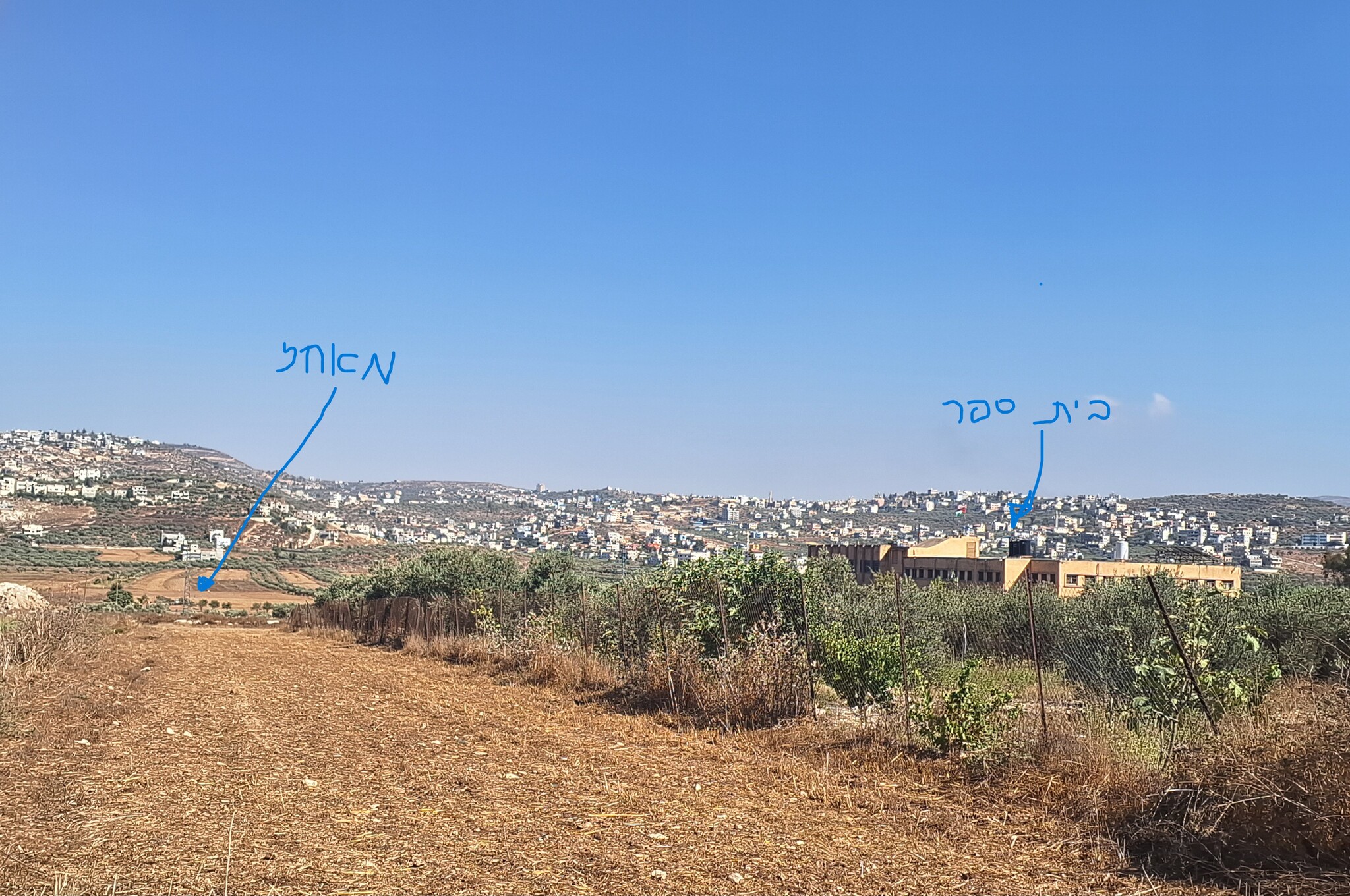 Ronit Dahan-RamatiAug-24-2026Huwara: The school on the outskirts of town and an outpost hidden among the trees
-
Jit Junction
See all reports for this place-
The checkpoint is located on Route 60 near at the junction with Route 55, near the village of Jit. There was a checkpoint for vehicles passing between the north and south of the West Bank, which was abolished towards 2010. Since then, surprise checkpoints have been set up there from time to time with a police or Border Police vehicle, and vehicles and their passengers are inspected.
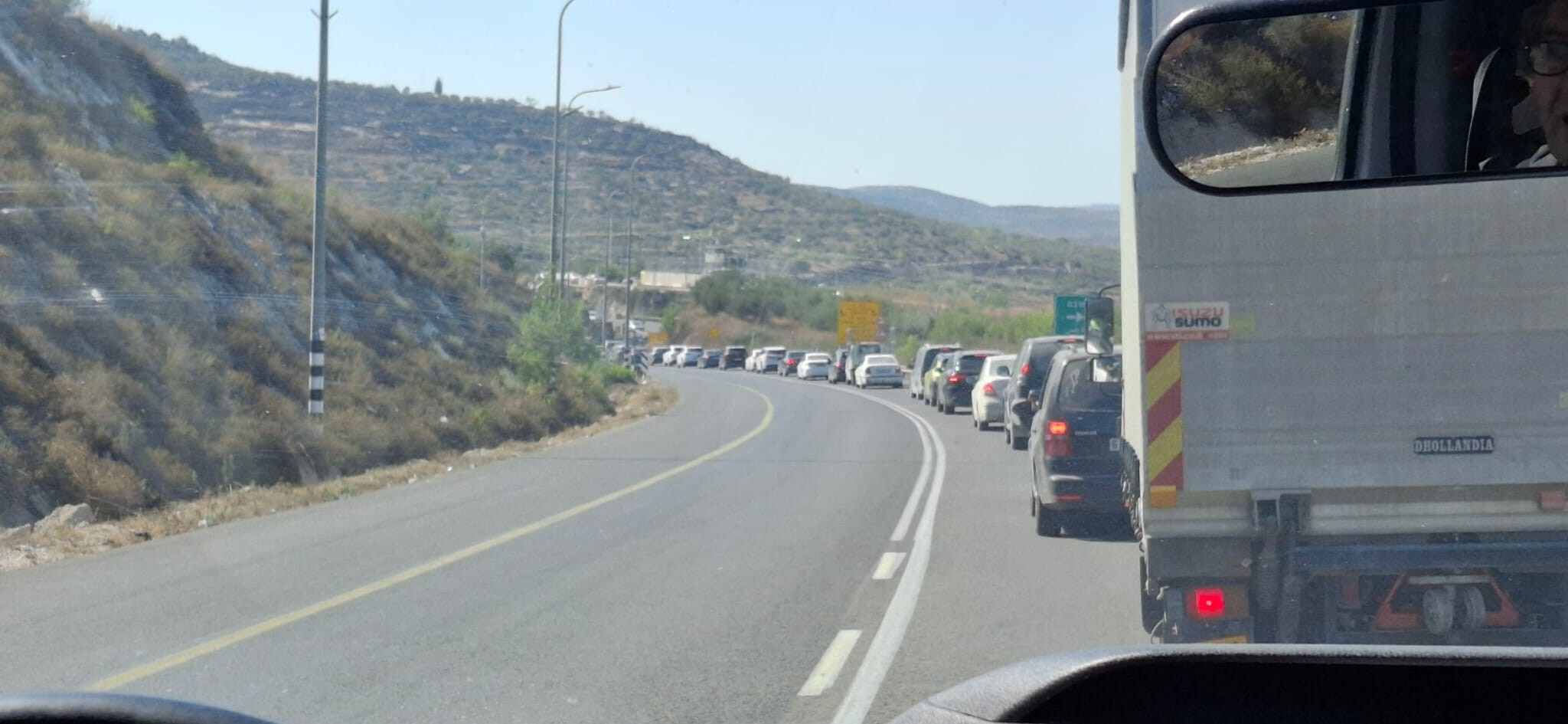 Anat PolakJul-17-2025Yitzhar Road, Jit Junction: traffic jam
-