Huwwara
KFAR KASSEM in Corona times.
COVID-19. In this city of 25,000 mostly Muslim people, only 15 are now Corona infected, but not hospitalized. One of them, the first to get sick here, works in Beilinson Hospital, and has already recovered. Another man had returned from the US and infected his parents and family.
EDUCATION: online teaching is available for all grades.
A’s daughter, who also teaches online, told him that her school recently discussed a gradual return to classes. However, all Kfar Kassem parents oppose their children’s return to school. Even for those in kindergarten and in special education classes, the two groups are functioning again in Israel. But not so in Kfar Kassem.
LOCKDOWN. Children are still at home—almost none go out. Except to work or do vital shopping, adults also stay home. Before Corona, A. drove children to their Special Educational Schools. Every day, he did 6 trips back and forth. Now, he and his neighbors are busy doing jobs they didn’t have time to do before the pandemic—repairing and painting their homes.
FAMILY. His son and daughter-in-law are both nurses and work in Hospitals. His sons-in-law also work in Hospitals. His family—children and grandchildren—don’t enter his house. His son who works in a hospital is especially careful not to infect his parents: he speaks to them in the street from a safe distance of 5m
According to A., there have been no new patients yesterday or today in these Hospitals. New patients come mostly from the North and the South. HUWWARA. In all the Shechem region, including Huwwara, there are no sick people. In Jenin, there are some. But in general, says A., only in the South, in Ramallah and Bethlehem, have Palestinians become infected.
He was there yesterday shopping, but the Palestinian police noticed the yellow numbers in his car and looked for him. Entering the shop where he was, they told him he should leave right away because he is not a resident.
Whereas before Corona, none were seen in Huwwara, many Palestinian police walk around this town now, enforcing the strict Corona rules.
CLOSURE.
Till yesterday, only vital shops were open: supermarkets, bakeries, and pharmacies. Their opening hours remain the same. Since yesterday, however, in preparation for the Ramadan which begins tomorrow at 3.25 am, other shops, including those selling construction materials, are now allowed to open, but only from 10 am till 5 pm. So many people were in the street.
In Nablus, all the shops were open.
However, in the South, in Ramallah and in Bethlehem, where the pandemic has spread, only vital shops were open.
WORKERS RETURNING FROM ISRAEL.
Unlike what we heard from Kufr Kalil and Sinjil, A. says that workers returning from Israel are checked at the checkpoints. For instance, near Nescha and Zawi villages, there is a mobile checkpoint. When workers got off here, their temperature was checked, and their names entered in a Registry of those having returned to the West Bank. A Palestinian policeman then accompanied them home. They are required to be in quarantine at home for 2 weeks. In Machsom Yakir, the main entrance to Bidya village, non-residents are stopped. Only residents are allowed to enter the village.
In the West Bank, they take no chances. They are more careful, claims A., than in Israel.
Huwwara
See all reports for this place-
The Huwwara checkpoint is an internal checkpoint south of the city of Nablus, at the intersection of Roads 60 and 5077 (between the settlements of Bracha and Itamar). This checkpoint was one of the four permanent checkpoints that closed on Nablus (Beit Furik and Awarta checkpoints to the east and the Beit Iba checkpoint to the west). It was a pedestrian-only barrier. As MachsomWatch volunteers, we watched therre since 2001 two shifts a day - morning and noon, the thousands of Palestinians leaving Nablus and waiting for hours in queues to reach anywhere else in the West Bank, from the other side of the checkpoint the destination could only be reached by public transport. In early June 2009, as part of the easing of Palestinian traffic in the West Bank, the checkpoint was opened to vehicular traffic. The passage was free, with occasional military presence in the guard tower. Also, there were vehicle inspections from time to time. Since the massacre on 7.10.2023, the checkpoint has been closed to Palestinians.
On February 26, 2023, about 400 settlers attacked the town's residents for 5 hours and set fire to property, such as houses and cars. Disturbances occurred in response to a shooting of two Jewish residents of Har Bracha by a Palestinian Terrorist. The soldiers stationed in the town did not prevent the arson and rescued Palestinian families from their homes only after they were set on fire. No one was punished and Finance Minister Smotrich stated that "the State of Israel should wipe out Hawara." Left and center organizations organized solidarity demonstrations and support actions for the residents of Hawara.Hawara continued to be in the headlines in all the months that followed: more pogroms by the settlers, attacks by Palestinians and a massive presence of the army in the town. It amounted to a de facto curfew of commerce and life in the center of the city. On October 5, 2023, MK Zvi established a Sukkah in the center of Hawara and hundreds of settlers backed the army blocked the main road and held prayers in the heart of the town all night and the next day. On Saturday, October 7, 23 The "Swords of Iron" war began with an attack by Hamas on settlements surrounding Gaza in the face of a poor presence of the IDF. Much criticism has been made of the withdrawal of military forces from the area surrounding Gaza and their placement in the West Bank, and in the Hawara and Samaria region in particular, as a shield for the settlers who were taking over and rioting.
On November 12, 2023, the first section of the Hawara bypass road intended for Israeli traffic only was opened. In this way, the settlers can bypass the road that goes through the center of Hawara, which is the main artery for traffic from the Nablus area to Ramallah and the south of the West Bank. For the construction of the road, the Civil Administration expropriated 406 dunams of private land belonging to Palestinians from the nearby villages. The settlers are not satisfied with this at the moment, and demand to also travel through Hawara itself in order to demonstrate presence and control.(updated November 2023)
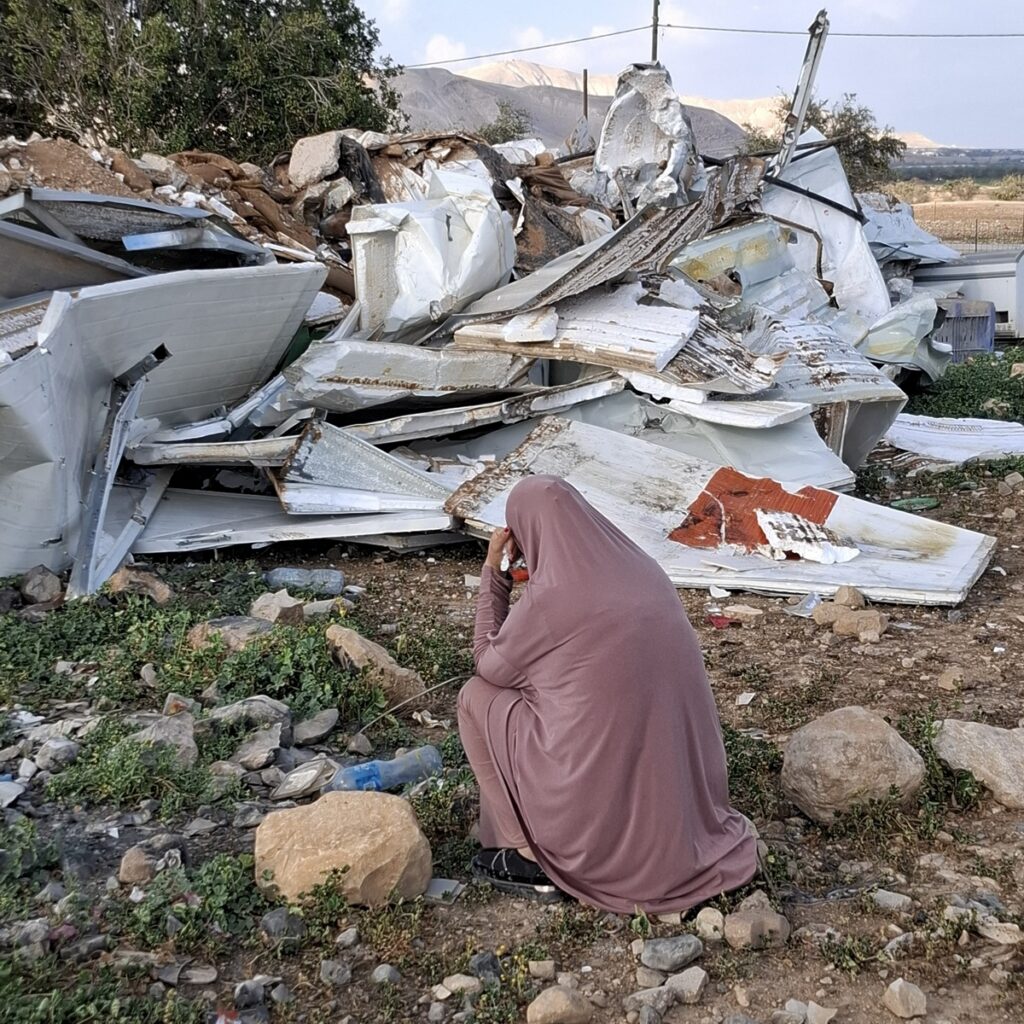
. Shoshi AnbarMay-18-2025Huwara: The old houses in Area C
-